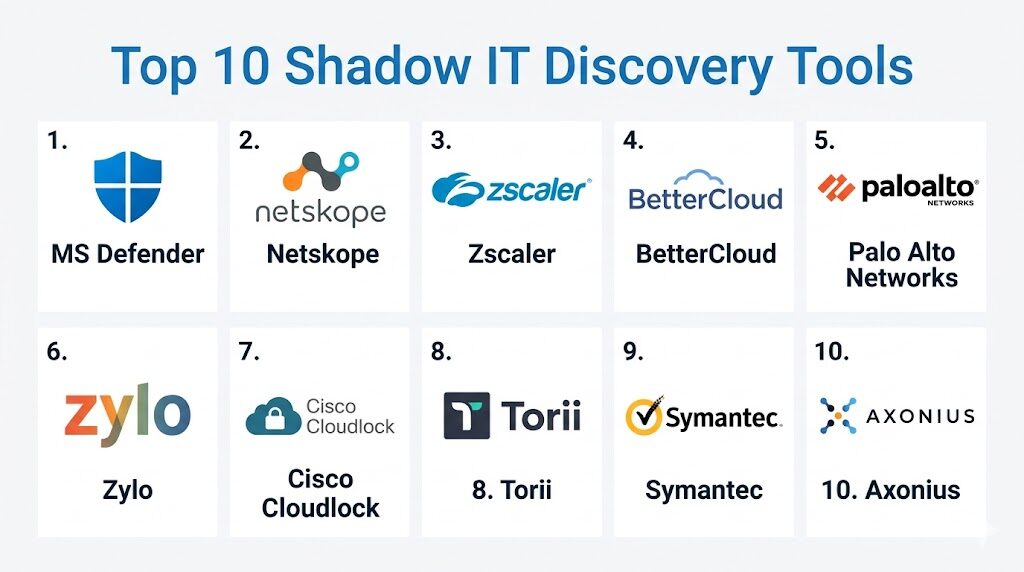
Introduction
Shadow IT discovery tools are specialized security solutions designed to identify and monitor hardware, software, and cloud services used within an organization without explicit approval from the central IT department. In the modern distributed work environment, the proliferation of “bring your own application” (BYOA) and unauthorized SaaS subscriptions has created a massive blind spot for security teams. These tools function by analyzing network traffic, monitoring endpoint activity, and utilizing API integrations to provide a comprehensive inventory of every digital asset touching the corporate ecosystem. By shedding light on these hidden risks, organizations can regain control over their data footprint and ensure that all tools meet corporate security and compliance standards.
The necessity of these tools is driven by the rapid decentralization of technology procurement. Today, any employee with a credit card can deploy a cloud-based database or project management tool, bypassing traditional security gatekeepers. This creates significant risks, including data silos, security vulnerabilities, and uncontrolled spending. When evaluating discovery solutions, strategic buyers should focus on the tool’s ability to perform deep packet inspection, its library of recognized SaaS applications, and its capability to automate the remediation process. A mature discovery tool does not just list applications; it provides a risk score for each, allowing security leaders to prioritize their intervention based on the sensitivity of the data at risk.
Best for: Chief Information Security Officers (CISOs), DevSecOps engineers, and IT compliance managers in mid-to-large enterprises who need to manage cloud sprawl and mitigate third-party risk.
Not ideal for: Very small businesses with restricted software environments or organizations that operate entirely on-premises with air-gapped systems where external SaaS adoption is physically impossible.
Key Trends in Shadow IT Discovery Tools
The industry is currently moving toward “Continuous Discovery,” where tools provide real-time alerts the moment an unauthorized application is accessed, rather than relying on weekly or monthly scans. There is also a significant trend toward AIOps integration, where machine learning models are used to distinguish between a harmless new productivity tool and a malicious data exfiltration attempt. We are seeing a shift from simple “discovery” to “management,” where tools now offer automated workflows to either bring the unauthorized app into compliance or block it entirely at the network edge.
Identity-centric discovery is another major evolution, where tools analyze Single Sign-On (SSO) logs and browser extensions to see exactly which identities are accessing which services. As privacy regulations tighten, these tools are also incorporating automated data classification to identify if Shadow IT apps are being used to process sensitive personal information. Finally, the rise of “FinOps for SaaS” has led many discovery tools to include cost-optimization features, helping organizations identify duplicate subscriptions and unused seats to reclaim wasted budget.
How We Selected These Tools
Our selection process involved a deep dive into the technical capabilities of market-leading Cloud Access Security Brokers (CASB) and SaaS Management Platforms (SMP). We prioritized tools that offer multiple discovery methods—such as log ingestion from firewalls, endpoint agents, and direct API connectors—to ensure no application remains hidden. Market mindshare and the breadth of the tool’s application database were critical factors, as a larger database ensures more accurate identification of obscure or emerging SaaS providers.
We also evaluated the integration ecosystem of each tool, specifically how well they communicate with existing Security Information and Event Management (SIEM) systems and identity providers. Performance was assessed based on the tool’s ability to handle high-volume traffic without introducing latency. Security and compliance postures of the tools themselves were scrutinized to ensure that the discovery process does not introduce new vulnerabilities. Finally, we looked for a balance between high-end enterprise platforms and more accessible solutions for organizations just beginning their Shadow IT journey.
1. Microsoft Defender for Cloud Apps
As a premier Cloud Access Security Broker (CASB), this tool provides deep visibility and control over data travel and sophisticated analytics to identify cyberthreats across all Microsoft and third-party cloud services. It is particularly powerful for organizations already embedded in the Microsoft ecosystem, leveraging existing logs to find unauthorized apps.
Key Features
The tool utilizes a massive database of over 31,000 apps, each ranked with a specific risk score based on over 90 different parameters. it integrates natively with Microsoft endpoint security to discover apps used on devices even when they are off the corporate network. The platform offers automated policies to alert or block apps based on their risk level or category. It provides deep visibility into “app permissions,” showing which unauthorized tools have access to sensitive corporate files. The system also includes behavioral analytics to detect unusual data patterns that might indicate a compromised Shadow IT account.
Pros
It offers seamless integration with the broader Microsoft 365 security suite, making deployment effortless for existing users. The risk assessment database is one of the most comprehensive in the industry.
Cons
The interface and configuration can be complex for teams not familiar with the Azure environment. Full functionality often requires high-tier licensing packages.
Platforms and Deployment
Cloud-based service with integration for Windows, macOS, and mobile endpoints.
Security and Compliance
Fully compliant with global standards including SOC 2, ISO 27001, and HIPAA. It uses advanced encryption and role-based access for all administrative tasks.
Integrations and Ecosystem
Native integration with the entire Microsoft security stack and external connectors for major SaaS players like Salesforce, AWS, and GCP.
Support and Community
Enterprise-grade global support backed by a massive community of certified security professionals and extensive technical documentation.
2. Netskope
Netskope is a leader in the Security Service Edge (SSE) space, providing a unified platform for data-centric security. Its discovery engine is known for its extreme granularity, allowing IT teams to see not just that an app is being used, but exactly what actions are being taken within that app.
Key Features
The platform features a proprietary “Cloud Confidence Index” that provides a technical assessment of thousands of applications. It uses a multi-mode approach, combining API-based discovery with real-time inline traffic analysis. The tool can distinguish between personal and corporate instances of the same application, such as personal vs. work Gmail accounts. It offers granular policy controls, such as allowing “view” access to a tool while blocking “upload” actions. The system also provides detailed forensic logs for every interaction within discovered Shadow IT services.
Pros
The level of granular control over user actions is unmatched by most competitors. It performs exceptionally well in hybrid work environments where employees move frequently between networks.
Cons
Being a high-end enterprise solution, the cost can be prohibitive for smaller organizations. Initial setup and traffic steering configuration require specialized expertise.
Platforms and Deployment
Cloud-native platform with lightweight endpoint agents and steering clients.
Security and Compliance
Maintains the highest levels of security certifications and provides specialized modules for GDPR and CCPA compliance tracking.
Integrations and Ecosystem
Strong integrations with major SIEM providers, identity managers like Okta, and endpoint management tools.
Support and Community
Offers a dedicated support portal, professional services for deployment, and an active user community focused on cloud security.
3. Zscaler Cloud CASB
Zscaler is famous for its “Zero Trust” approach, and its discovery tool is a core part of its Internet Access suite. It focuses on ensuring that users can only access the applications they need while automatically identifying and logging every other external request.
Key Features
It utilizes an inline proxy architecture, meaning it inspects all internet traffic in real-time without needing to ingest logs after the fact. The discovery dashboard provides a clear visualization of app usage trends across the organization. It identifies “risky” applications and provides a one-click option to block them across the entire global workforce. The tool provides a detailed breakdown of data volume per application, helping to identify potential data exfiltration. It also includes “Browser Isolation” features to keep sessions in unauthorized apps away from the local device.
Pros
The inline nature of the tool means discovery happens at wire speed with no delay in reporting. It is highly effective at managing security for remote users without the need for a VPN.
Cons
Because it acts as a gatekeeper for all traffic, any misconfiguration can impact user internet performance. It is generally sold as part of a larger platform rather than a standalone tool.
Platforms and Deployment
Cloud-native architecture with a “connect from anywhere” model.
Security and Compliance
Global data center security with FedRAMP certification and compliance with major international standards.
Integrations and Ecosystem
Deep ties to identity providers and a robust API for exporting discovery data to external analytics tools.
Support and Community
Provides global 24/7 support and a well-regarded training certification program for network security engineers.
4. BetterCloud
BetterCloud is a pioneer in the SaaS Management Platform (SMP) space, focusing specifically on the management and security of the SaaS stack. It excels at discovering the “hidden” integrations—SaaS apps that are connected to your core apps like Google Workspace or Slack.
Key Features
The discovery engine focuses on “OAuth” connections, revealing which third-party apps have been granted access to corporate data through “Sign in with Google” or similar. It provides an automated “Security Health Score” for the entire SaaS environment. The tool allows for automated remediation workflows, such as automatically revoking access to an app if it doesn’t meet certain criteria. It identifies redundant or abandoned SaaS accounts to help reduce costs. The platform also offers a “Content Discovery” module that scans unauthorized apps for sensitive data like credit card numbers.
Pros
Excellent for identifying “App-to-App” Shadow IT that network-based tools might miss. The automation engine can save IT teams hundreds of hours in manual cleanup.
Cons
It is less effective at discovering hardware-based Shadow IT or non-SaaS web traffic. It relies heavily on API connections, so its visibility is limited to its supported integration list.
Platforms and Deployment
Pure SaaS platform; no local installation required.
Security and Compliance
SOC 2 Type II compliant with a strong focus on maintaining the privacy of user data during the scanning process.
Integrations and Ecosystem
Features a massive library of native integrations with the most popular SaaS applications used in business today.
Support and Community
Known for a very active community of “SaaS Ops” professionals and excellent customer success programs.
5. Palo Alto Networks Prisma Access
Prisma Access provides a comprehensive SASE (Secure Access Service Edge) solution that includes powerful Shadow IT discovery. It leverages the company’s heritage in next-generation firewalls to provide deep visibility into application signatures.
Key Features
It uses advanced App-ID technology to identify thousands of applications based on their unique traffic patterns, not just port numbers. The discovery engine works across all ports and protocols, making it hard for Shadow IT to hide behind non-standard ports. It provides integrated data loss prevention (DLP) to monitor what information is being sent to discovered apps. The platform includes a “SaaS Security” module that provides specialized risk reports for over 15,000 apps. It also offers automated policy suggestions based on the behavior of the discovered applications.
Pros
The application identification technology is among the most accurate in the industry. It provides a truly unified view of both network and cloud security.
Cons
The platform can be complex to manage and usually requires a significant investment in the Palo Alto ecosystem. It is more hardware-integrated than pure-play cloud CASBs.
Platforms and Deployment
Hybrid deployment with support for hardware appliances and cloud-delivered security.
Security and Compliance
Enterprise-grade security with extensive certifications and support for highly regulated industries.
Integrations and Ecosystem
Integrates perfectly with the Cortex XSOAR platform for automated incident response and a wide range of third-party security tools.
Support and Community
Backed by one of the largest security communities and a global network of specialized partners.
6. Zylo
Zylo is a leading SaaS Management Platform that focuses on the intersection of IT, Procurement, and Finance. Its discovery engine is unique because it uses financial data—like expense reports and credit card statements—to find Shadow IT that never hits the network.
Key Features
The platform features an AI-powered “Discovery Engine” that ingests financial records to identify hidden SaaS subscriptions. It provides a unified “SaaS Inventory” that categorizes every app by function, cost, and user count. The tool offers a “Sentiment Survey” feature to ask employees why they are using unauthorized tools. It identifies overlapping software functionality to help consolidate the tech stack. The system also includes a “License Management” module to track the utilization of both authorized and unauthorized apps.
Pros
Discovers “Shadow Spend” that is invisible to network proxies and firewalls. Excellent for organizations looking to combine security discovery with cost optimization.
Cons
Because it relies on financial data, the discovery is often not real-time (it depends on when expenses are filed). It does not provide network-level blocking or traffic steering.
Platforms and Deployment
SaaS-based platform with connectors for financial and SSO systems.
Security and Compliance
Maintains SOC 2 compliance and ensures that sensitive financial data is handled with the highest level of privacy.
Integrations and Ecosystem
Integrates with major ERP and expense management systems like NetSuite, Concur, and Expensify, as well as SSO providers.
Support and Community
Offers dedicated “SaaS Consultants” to help organizations interpret their discovery data and implement management strategies.
7. Cisco Cloudlock
Cloudlock is a cloud-native CASB that focuses on a frictionless approach to discovery and security. It is designed to secure the “cloud-first” enterprise by focusing on the API layer of application interaction.
Key Features
It provides an “Apps Firewall” that discovers and controls third-party apps connected to your core cloud environments. The tool utilizes a crowd-sourced “Community Trust Rating” to help IT teams decide which new apps to approve. It automatically identifies “highly privileged” apps that have excessive access to corporate data. The system provides automated response actions, such as revoking an app’s access tokens if it violates a security policy. It also features advanced DLP to protect sensitive information across discovered cloud platforms.
Pros
The API-based approach means it can be deployed in minutes without changing any network settings. It provides excellent visibility into the ecosystem of apps built on platforms like Salesforce and Google.
Cons
Visibility is limited to the apps that are connected via API to your managed platforms. It does not see general web browsing or non-integrated SaaS.
Platforms and Deployment
Purely cloud-delivered service.
Security and Compliance
Leverages Cisco’s extensive security certifications and global threat intelligence network.
Integrations and Ecosystem
Deeply integrated with Cisco Umbrella and the broader Cisco security portfolio, as well as major SaaS providers.
Support and Community
Access to Cisco’s global TAC support and a large community of security engineers.
8. Torii
Torii is a modern SaaS Management Platform built for agility. It focuses on decentralized discovery, acknowledging that the future of IT is distributed, and provides the tools to manage that reality through extreme automation.
Key Features
The platform combines browser extensions, SSO logs, and ERP data to create a multi-layered discovery map. It features a powerful “Automation Engine” that can trigger complex workflows based on the discovery of a new app. The tool provides a real-time “App Catalog” where employees can see which tools are already approved. It tracks the “Usage Intensity” of discovered apps to determine if they are actually being used or just wasting money. The system also offers an “Employee Offboarding” automation that ensures all Shadow IT accounts are closed when a user leaves.
Pros
The automation capabilities are very high, allowing for “self-healing” IT environments. The user interface is exceptionally clean and modern.
Cons
Browser extensions are required for the most granular discovery, which can be difficult to deploy in some organizations. The focus is primarily on SaaS, not other forms of Shadow IT.
Platforms and Deployment
SaaS platform with optional lightweight browser extensions.
Security and Compliance
SOC 2 Type II certified and designed with a “privacy-by-design” approach to user monitoring.
Integrations and Ecosystem
Offers a wide range of connectors for identity, finance, and productivity tools, plus a flexible API.
Support and Community
Known for high customer satisfaction scores and a proactive support team that assists with custom automation.
9. Broadcom Symantec CloudSOC CASB
Symantec CloudSOC is an enterprise-grade CASB that provides deep visibility into “unstructured data” movements within Shadow IT. It is built for the largest organizations that need to protect complex data sets across thousands of applications.
Key Features
It utilizes the “Global Intelligence Network,” one of the largest civilian threat databases in the world, to identify risky apps. The discovery engine provides a “Shadow IT Audit” report that quantifies the risk and compliance status of every discovered app. It features advanced data science to detect “account takeover” within Shadow IT services. The tool includes integrated DLP that can apply consistent policies across both sanctioned and unsanctioned apps. It also provides specialized modules for “Visualizing the Data Path” of sensitive information.
Pros
The threat intelligence backing the tool is world-class. It is highly capable of handling the most complex enterprise data protection requirements.
Cons
The platform can feel heavy and traditional compared to newer SaaS-native competitors. It generally requires a significant commitment to the Symantec/Broadcom security stack.
Platforms and Deployment
Hybrid deployment supporting both cloud-native and on-premises log ingestion.
Security and Compliance
Meets all major global regulatory standards and provides specialized tools for financial and healthcare compliance.
Integrations and Ecosystem
Integrates with the full Symantec Endpoint and Web Security lines, as well as a large variety of third-party SIEMs.
Support and Community
Global enterprise support with professional services available for large-scale architectural design.
10. Axonius
Axonius is a Cyber Asset Attack Surface Management (CAASM) platform. It takes a unique approach by aggregating data from all your other tools (EDR, Firewalls, Cloud consoles) to give you a “Single Source of Truth” for all assets, including Shadow IT.
Key Features
The platform uses over 400 “Adapters” to pull data from existing security and management tools. It discovers Shadow IT by identifying devices or apps that show up in one tool (like a network scan) but are missing from another (like an MDM or SSO). The system provides a “Query Wizard” that allows you to find very specific security gaps, such as “all unauthorized apps with known vulnerabilities.” It offers automated “Enforcement Actions” to notify owners or isolate devices. The platform also identifies “unmanaged” cloud instances in AWS or Azure that IT didn’t know existed.
Pros
It doesn’t require its own agents or network changes; it leverages what you already have. It is the best tool for discovering “Shadow Infrastructure” (VMs, S3 buckets) in addition to SaaS.
Cons
It is only as good as the data provided by your other tools. It is an “aggregator,” so it doesn’t do real-time traffic inspection itself.
Platforms and Deployment
Available as a SaaS or self-hosted virtual appliance.
Security and Compliance
Maintains high security standards and helps automate the evidence collection for compliance audits.
Integrations and Ecosystem
Unrivaled library of over 400 integrations with every major security and IT tool on the market.
Support and Community
Excellent technical support and a growing community focused on asset-centric security.
Comparison Table
| Tool Name | Best For | Platform(s) Supported | Deployment | Standout Feature | Public Rating |
| 1. MS Defender | Microsoft Ecosystem | Win, Mac, Linux | Hybrid | 31k+ App Risk Database | 4.6/5 |
| 2. Netskope | Granular Policy | Win, Mac, iOS | Cloud | Cloud Confidence Index | 4.7/5 |
| 3. Zscaler | Zero Trust/Remote | Win, Mac, Mobile | Cloud | Inline Proxy Discovery | 4.5/5 |
| 4. BetterCloud | SaaS Operations | Web | Cloud | OAuth Connection Maps | 4.4/5 |
| 5. Palo Alto | Network Integration | Win, Mac, Linux | Hybrid | App-ID Signature Tech | 4.5/5 |
| 6. Zylo | Financial Visibility | Web | Cloud | Financial Data Ingestion | 4.3/5 |
| 7. Cisco Cloudlock | API-based Security | Web | Cloud | Apps Firewall/API focus | 4.2/5 |
| 8. Torii | App Lifecycle | Web, Browser | Cloud | Automation/Self-healing | 4.8/5 |
| 9. Symantec | Threat Intelligence | Win, Mac, Linux | Hybrid | Global Intelligence Net | 4.1/5 |
| 10. Axonius | Asset Inventory | Web, Self-hosted | Hybrid | Adapter-based Discovery | 4.7/5 |
Evaluation & Scoring of Shadow IT Discovery Tools
The scoring below is a comparative model intended to help shortlisting. Each criterion is scored from 1–10, then a weighted total from 0–10 is calculated using the weights listed. These are analyst estimates based on typical fit and common workflow requirements, not public ratings.
Weights:
- Core features – 25%
- Ease of use – 15%
- Integrations & ecosystem – 15%
- Security & compliance – 10%
- Performance & reliability – 10%
- Support & community – 10%
- Price / value – 15%
| Tool Name | Core (25%) | Ease (15%) | Integrations (15%) | Security (10%) | Performance (10%) | Support (10%) | Value (15%) | Weighted Total |
| 1. MS Defender | 10 | 7 | 10 | 9 | 9 | 9 | 8 | 8.85 |
| 2. Netskope | 10 | 6 | 9 | 10 | 9 | 9 | 7 | 8.55 |
| 3. Zscaler | 9 | 7 | 8 | 9 | 10 | 9 | 8 | 8.50 |
| 4. BetterCloud | 8 | 9 | 9 | 8 | 8 | 9 | 8 | 8.45 |
| 5. Palo Alto | 10 | 5 | 9 | 9 | 10 | 9 | 7 | 8.35 |
| 6. Zylo | 7 | 8 | 9 | 8 | 7 | 8 | 9 | 7.95 |
| 7. Cisco Cloudlock | 8 | 9 | 8 | 8 | 8 | 8 | 7 | 7.95 |
| 8. Torii | 9 | 10 | 8 | 8 | 8 | 9 | 9 | 8.85 |
| 9. Symantec | 9 | 5 | 8 | 9 | 9 | 8 | 6 | 7.65 |
| 10. Axonius | 9 | 8 | 10 | 9 | 8 | 9 | 9 | 9.00 |
How to interpret the scores:
- Use the weighted total to shortlist candidates, then validate with a pilot.
- A lower score can mean specialization, not weakness.
- Security and compliance scores reflect controllability and governance fit, because certifications are often not publicly stated.
- Actual outcomes vary with assembly size, team skills, templates, and process maturity.
Which Shadow IT Discovery Tool Is Right for You?
Solo / Freelancer
For individuals or micro-teams, a full-scale discovery tool is usually unnecessary. Focus instead on basic browser security and utilizing the “App security” settings within your primary identity provider like Google or Microsoft to keep an eye on what you’ve connected.
SMB
Small businesses should look for “frictionless” tools like Cisco Cloudlock or BetterCloud. These tools don’t require network engineering and provide an immediate view of the most common Shadow IT risks—specifically OAuth connections to your main productivity suite.
Mid-Market
Organizations in this tier benefit from SaaS Management Platforms like Torii or Zylo. These platforms provide a balance between security discovery and financial optimization, helping IT departments justify the tool’s cost by identifying wasted software spending.
Enterprise
Large enterprises with complex networks and global workforces need a SASE-based solution like Netskope, Zscaler, or Palo Alto Networks. These tools provide the deep traffic inspection and granular control necessary to protect high-value data across thousands of users.
Budget vs Premium
Budget: BetterCloud and Torii offer specialized SaaS discovery that is often more affordable than full CASB suites.
Premium: Microsoft Defender for Cloud Apps and Netskope represent the high end of the market with the most comprehensive risk intelligence and feature sets.
Feature Depth vs Ease of Use
Depth: Netskope and Palo Alto offer the deepest technical controls but require dedicated security staff.
Ease of Use: Torii and Axonius are designed with modern, intuitive interfaces that allow IT managers to get results quickly without deep networking knowledge.
Integrations & Scalability
If your goal is to have all your security data in one place, Axonius is the leader in integration breadth. For organizations scaling rapidly in the cloud, Microsoft and Zscaler offer the most seamless global scalability.
Security & Compliance Needs
For organizations in highly regulated fields like finance or healthcare, Symantec and Microsoft provide the most mature compliance reporting and specialized data protection modules tailored to rigid regulatory frameworks.
Frequently Asked Questions (FAQs)
1. What is the difference between a CASB and a SaaS Management Platform?
A CASB focuses on security and threat prevention by sitting in the middle of data traffic. A SaaS Management Platform (SMP) focuses on the business operations—discovery, licensing, and spend—usually by connecting directly to app APIs.
2. How do these tools find apps if they aren’t connected to SSO?
Discovery tools use several methods: they scan firewall and proxy logs for traffic to known SaaS domains, they use browser extensions to track web activity, and some even scan financial records for software-related expenses.
3. Will these tools slow down the internet for my employees?
Modern cloud-native tools like Zscaler and Netskope use high-speed global networks to ensure that security inspection adds negligible latency. API-based tools have zero impact on network speed as they work out-of-band.
4. Can Shadow IT discovery find personal devices being used for work?
Yes, many tools identify “unmanaged devices” by comparing network logs with your list of registered devices in tools like Intune or Jamf. If a device accessing corporate data isn’t on the list, it’s flagged.
5. Is it better to block all Shadow IT or allow it?
The modern approach is “Enablement with Governance.” IT teams use discovery tools to identify what employees need, then provide a secure way to use those tools or find a corporate-approved alternative.
6. How often should I run a Shadow IT discovery scan?
Discovery should be continuous. Employee software needs change daily, and a new unauthorized tool can be deployed in minutes. Real-time discovery allows IT to react before data is shared or a subscription renews.
7. Can these tools see the specific data being sent to an app?
Tools with Data Loss Prevention (DLP) features can inspect the contents of files and messages being sent to discovered apps to ensure that sensitive information like passwords or PII isn’t being leaked.
8. Do I need to install software on every laptop?
Not necessarily. While endpoint agents provide the best visibility for remote work, many tools can discover Shadow IT just by looking at your network logs or connecting to your identity provider’s API.
9. How do I handle “App-to-App” Shadow IT?
This is found through OAuth discovery. Tools like BetterCloud and Cloudlock look at the permissions granted to third-party apps inside your main office suite, identifying tools that can read your email or files.
10. What is the “financial discovery” method for Shadow IT?
This involves connecting the discovery tool to your accounting software or corporate credit card portal. It flags any transaction that matches a known software vendor, uncovering apps that IT hasn’t seen on the network.
Conclusion
The era of centralized IT control has evolved into an era of distributed digital stewardship. Managing Shadow IT is no longer about simply “saying no” to unauthorized applications, but about gaining the visibility required to protect corporate data in an increasingly fragmented software landscape. The top 10 discovery tools identified here offer a range of approaches—from network-centric traffic inspection to API-driven governance and financial auditing. The ideal strategy for a modern organization involves selecting a tool that not only reveals hidden risks but also integrates seamlessly into existing security and procurement workflows. By transforming Shadow IT from a hidden vulnerability into a transparent part of the tech stack, organizations can foster innovation while maintaining a robust security posture and optimized software spend.