Introduction
Security analytics platforms represent the evolution of traditional monitoring into a sophisticated intelligence-driven discipline. These systems aggregate, correlate, and analyze massive volumes of data from across the enterprise—including network traffic, endpoint logs, cloud telemetry, and user behavior—to identify threats that bypass perimeter defenses. Unlike legacy systems that rely solely on known signatures, modern security analytics utilize machine learning and behavioral modeling to detect “unknown unknowns” and sophisticated lateral movement. For organizations operating in an era of distributed workforces and hyper-connected supply chains, these platforms act as a centralized brain, providing the visibility necessary to maintain a proactive security posture and reduce the mean time to detect and respond to incidents.
The shift toward a “zero trust” architecture has made high-fidelity analytics a non-negotiable requirement for digital resilience. Organizations must now process telemetry at a scale that exceeds human capability, making automation and artificial intelligence the primary drivers of modern security operations. A robust platform enables security teams to move beyond “alert fatigue” by prioritizing risks based on business impact and providing the forensic depth required for rapid investigation. When evaluating a security analytics provider, leadership must consider the platform’s data ingestion capabilities, the accuracy of its behavioral baselines, the depth of its threat intelligence integration, and the scalability of its underlying architecture to support the organization’s multi-cloud expansion.
Best for: Security Operations Centers (SOCs), Chief Information Security Officers (CISOs), and incident response teams in mid-market to enterprise organizations that need to detect and neutralize advanced cyber threats in real-time.
Not ideal for: Very small businesses with simple network environments that can be managed by basic firewalls, or organizations without a dedicated security staff to act upon the insights generated by the platform.
Key Trends in Security Analytics Platforms
The integration of Generative AI has moved from a conceptual feature to a core component of the security stack, providing natural language interfaces that allow analysts to query complex datasets and generate incident summaries instantly. We are also seeing a significant move toward “Security Data Lakes,” where organizations decouple storage from analytics to manage the massive data growth caused by cloud-native environments. This allows for long-term historical analysis and hunting without the prohibitive costs of traditional SIEM indexing. Behavioral analytics are becoming more specialized, with a focus on “Identity Threat Detection and Response” to counter the rise in credential-based attacks.
Hyper-automation is another dominant trend, with platforms now offering sophisticated playbooks that can automatically isolate compromised endpoints or revoke access tokens based on high-confidence analytical triggers. There is a heightened focus on “Extended Detection and Response” (XDR) architectures that unify telemetry from siloed security tools into a single, correlated narrative. Furthermore, the “shift left” movement is bringing security analytics into the development pipeline, allowing teams to identify vulnerabilities in infrastructure-as-code before they are deployed. Finally, privacy-preserving analytics are emerging, allowing organizations to perform deep threat hunting on encrypted data without violating user privacy or compliance mandates.
How We Selected These Tools
Our selection process involved a rigorous assessment of technical efficacy and market influence within the cybersecurity sector. We prioritized platforms that have demonstrated the ability to scale to millions of events per second while maintaining low false-positive rates in complex, heterogeneous environments. A key criterion was the “signal-to-noise” ratio, evaluating how effectively each platform uses machine learning to filter out benign anomalies and highlight actual malicious intent. We looked for a balance between comprehensive visibility and the ability to provide actionable, contextualized evidence for human analysts.
Interoperability was also a major factor; we selected tools that maintain extensive libraries of native connectors for cloud providers, SaaS applications, and legacy on-premises infrastructure. We scrutinized the depth of each platform’s threat intelligence feed, favoring those that provide real-time updates on global adversary tactics. Security and reliability signals were analyzed to ensure the platforms themselves are resilient against tampering and downtime. Finally, we assessed the operational efficiency of each tool, considering the out-of-the-box content such as pre-built dashboards and detection rules that allow organizations to realize value quickly after deployment.
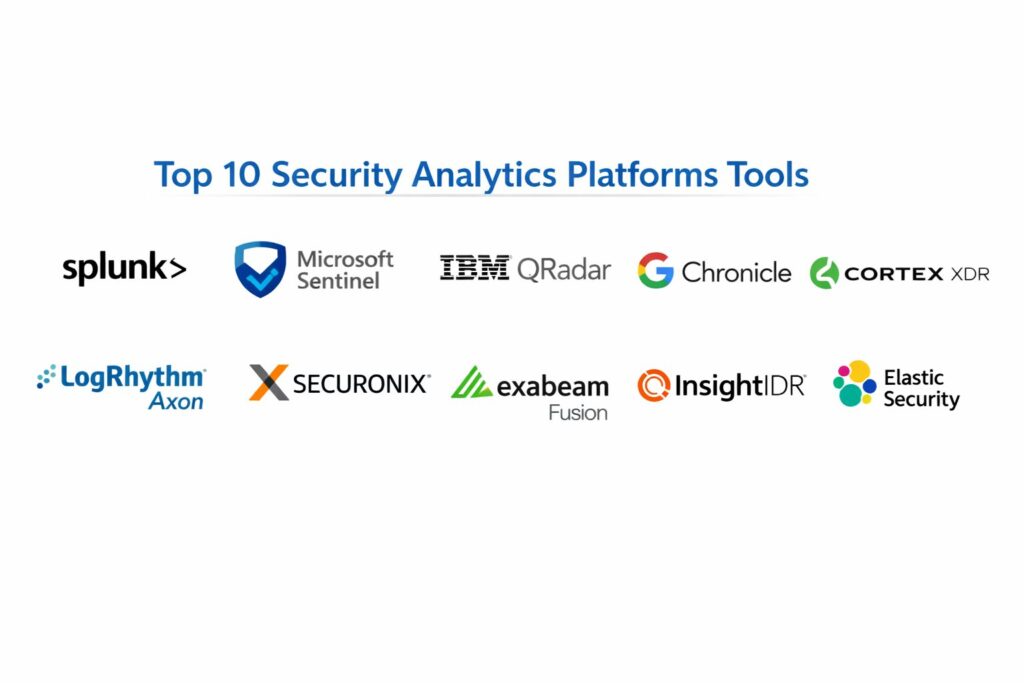
1. Splunk Enterprise Security
Splunk Enterprise Security is a premier analytics-driven SIEM platform that provides deep visibility into machine data across the enterprise. It is widely recognized for its powerful search capabilities and its ability to handle extremely diverse and unstructured datasets.
Key Features
The platform features the “Search Processing Language” (SPL), which allows for highly complex queries across massive datasets. It includes a robust “Mission Control” interface that unifies security operations, orchestration, and response. The system offers “User and Entity Behavior Analytics” (UEBA) to identify anomalies based on a baseline of normal activity. It features a massive library of pre-built detection rules mapped to the MITRE ATT&CK framework. Additionally, its “Risk-Based Alerting” feature reduces noise by aggregating multiple low-fidelity alerts into high-confidence incidents.
Pros
It offers unparalleled flexibility in data ingestion and custom dashboarding. The massive community of users and extensive app ecosystem ensure that most technical challenges already have a documented solution.
Cons
The pricing model is traditionally based on data volume, which can become expensive as an organization’s telemetry grows. It requires a high level of expertise to manage and optimize effectively.
Platforms and Deployment
Web-based (SaaS), Cloud-native, and On-premises.
Security and Compliance
Adheres to SOC 2, ISO 27001, HIPAA, and PCI DSS standards. It offers robust RBAC and data encryption features.
Integrations and Ecosystem
Integrates with nearly every major security tool via the Splunkbase marketplace, featuring thousands of add-ons and connectors.
Support and Community
Provides extensive professional training through Splunk University and a vibrant global user group community.
2. Microsoft Sentinel
Microsoft Sentinel is a cloud-native SIEM and SOAR platform that provides intelligent security analytics across the entire enterprise. It is particularly effective for organizations heavily invested in the Microsoft 365 and Azure ecosystems.
Key Features
The platform features seamless, one-click data ingestion from Microsoft 365 and Azure logs. It includes an AI-driven “Fusion” engine that correlates millions of low-fidelity signals into a small number of high-fidelity incidents. The system offers a built-in “Hunting” toolset that allows analysts to proactively search for threats using Kusto Query Language (KQL). It features automated orchestration via “Playbooks” built on Azure Logic Apps. It also provides advanced “Notebooks” based on Jupyter for deep data science-led investigations.
Pros
It eliminates the need for infrastructure maintenance as a fully managed cloud service. Integration with other Microsoft security products is exceptionally deep and often provides cost-savings on data ingestion.
Cons
Organizations with a non-Microsoft heavy infrastructure may find the connector ecosystem for third-party tools less intuitive. Data retention costs can accumulate quickly for long-term forensic needs.
Platforms and Deployment
Cloud-native (Azure).
Security and Compliance
Benefits from Azure’s global compliance certifications, including FedRAMP, HIPAA, and GDPR.
Integrations and Ecosystem
Strong native links to Microsoft Defender and Azure Active Directory, with a growing marketplace for third-party connectors.
Support and Community
Offers extensive documentation and integration with Microsoft’s global support network.
3. IBM Security QRadar
IBM Security QRadar is an enterprise-grade security analytics platform that focuses on providing high-fidelity alerts by correlating diverse data sources. It is known for its ability to integrate network flow data with traditional log events.
Key Features
The platform features “QFlow” technology, which analyzes network traffic to identify hidden threats and application-layer anomalies. It includes “QRadar Advisor with Watson,” an AI assistant that accelerates incident investigation by providing automated root-cause analysis. The system offers a unified architecture that combines SIEM, log management, and risk management. It features a “Rules Engine” that comes with thousands of pre-configured patterns for immediate threat detection. It also provides deep visibility into user activity to detect insider threats.
Pros
The platform is exceptionally strong at correlating disparate events into a single, cohesive offense. It provides a very high level of out-of-the-box value for security teams with limited time for custom rule creation.
Cons
The user interface has historically been considered less modern than cloud-native competitors. Scaling the on-premises version can require significant hardware planning and management.
Platforms and Deployment
Cloud, On-premises, and Hybrid.
Security and Compliance
Maintains rigorous standards including FIPS 140-2 and SOC 2 Type II compliance.
Integrations and Ecosystem
Features the “IBM Security App Exchange” for expanding functionality with third-party extensions.
Support and Community
Provides professional support tiers and access to IBM’s world-class X-Force threat intelligence team.
4. Google Chronicle Security
Google Chronicle is a cloud-native security analytics platform built on Google’s massive infrastructure. It is designed to allow organizations to store and analyze vast amounts of security telemetry with “Google-speed” search capabilities.
Key Features
The platform features “YARA-L” for creating sophisticated, multi-event detection rules. It includes a unique “Chronicle Search” that allows analysts to query petabytes of data in seconds. The system offers a “Unified Data Model” that automatically normalizes logs from different vendors into a consistent format. It features deep integration with Google Cloud’s threat intelligence and Mandiant research. It also provides “Risk Analytics” that prioritize alerts based on the criticality of the involved assets.
Pros
The platform offers a predictable pricing model based on employee count rather than data volume. Its speed for historical threat hunting is among the fastest in the industry.
Cons
The platform’s focus on search means it may lack some of the granular “workflow” management features found in traditional SIEMs. It is still maturing its community-driven content library.
Platforms and Deployment
Cloud-native (Google Cloud).
Security and Compliance
Inherits Google Cloud’s extensive compliance portfolio, including SOC 2, ISO 27001, and HIPAA.
Integrations and Ecosystem
Strong native integration with Google Cloud and Mandiant, with a growing list of ingestion connectors.
Support and Community
Provides enterprise support and technical documentation through the Google Cloud portal.
5. Palo Alto Networks Cortex XDR
Cortex XDR is a pioneer in the “Extended Detection and Response” category, unifying network, endpoint, and cloud data to stop sophisticated attacks. It focuses on breaking down the silos between different security products.
Key Features
The platform features an “Analytics Engine” that uses machine learning to profile behavior and detect stealthy anomalies. It includes “Managed Threat Hunting” for organizations that want additional expert oversight. The system offers a single agent for both prevention and data collection on endpoints. It features “Automated Root Cause Analysis,” which visually maps out how an attack started and spread. It also provides native integration with Palo Alto’s industry-leading firewalls for immediate response.
Pros
The correlation between network and endpoint data is exceptionally tight, leading to very high detection accuracy. It simplifies the security stack by replacing multiple siloed agents with one unified platform.
Cons
To get the full value, organizations usually need to be invested in the broader Palo Alto Networks ecosystem. The licensing can be complex depending on the number of data sources.
Platforms and Deployment
Cloud-delivered SaaS.
Security and Compliance
Maintains high standards including SOC 2 and GDPR compliance, ensuring secure data residency.
Integrations and Ecosystem
Integrates natively with the Cortex XSOAR platform for advanced automation and orchestration.
Support and Community
Offers a professional services group and an active user community focused on “Precision AI” in security.
6. LogRhythm Axon
LogRhythm Axon is a cloud-native security analytics platform designed to simplify the work of the SOC. It focuses on ease of use and providing a “single pane of glass” for threat detection and response.
Key Features
The platform features a modern, intuitive dashboard designed to reduce the learning curve for new analysts. It includes “SmartResponse” playbooks that automate common remediation tasks. The system offers “Network Detection and Response” (NDR) capabilities integrated into the core analytics. It features a robust “Log Management” engine that can handle diverse data formats with ease. It also provides “Scenario-Based Detection” rules that are specifically designed to catch common attack patterns like ransomware.
Pros
The user interface is exceptionally clean and designed for analyst productivity. It offers a faster deployment time compared to more complex enterprise suites.
Cons
It may lack some of the advanced data science customization options found in Splunk or Microsoft Sentinel. It is primarily focused on mid-to-large enterprises, making it potentially too complex for small teams.
Platforms and Deployment
Cloud-native SaaS and Hybrid.
Security and Compliance
Adheres to SOC 2 Type II and ISO 27001 standards, with a focus on data privacy.
Integrations and Ecosystem
Offers a wide range of pre-built integrations for cloud and on-premises infrastructure.
Support and Community
Known for having a very supportive customer success team and a detailed knowledge base for users.
7. Securonix Next-Gen SIEM
Securonix is a leader in using behavior analytics and machine learning to solve modern security challenges. It is built on a big-data architecture and is particularly strong at detecting insider threats and fraud.
Key Features
The platform features “Advanced UEBA” that uses long-term baselining to identify subtle changes in user behavior. It includes a “Threat Content-as-a-Service” model that provides continuous updates on new detection logic. The system offers a “Cloud-Native” architecture built on Snowflake, allowing for massive data scale. It features “Identity-Centric” analytics that prioritize threats based on the risk level of the user. It also provides automated response actions via a built-in SOAR engine.
Pros
The focus on user behavior makes it one of the best tools for catching insider threats. The Snowflake-backed architecture allows for efficient and cost-effective long-term data storage.
Cons
The big-data nature of the platform can make initial configuration complex. It requires a clear understanding of your organization’s “normal” behavior to avoid initial false positives.
Platforms and Deployment
Cloud-native (SaaS).
Security and Compliance
Maintains SOC 2 and HIPAA compliance, with support for global data residency requirements.
Integrations and Ecosystem
Features extensive connectors for cloud SaaS applications and traditional security infrastructure.
Support and Community
Offers professional training and a dedicated customer success manager for enterprise accounts.
8. Exabeam Fusion
Exabeam Fusion is a cloud-delivered security operations platform that specializes in behavioral analytics and automated incident response. It focuses on improving the efficiency of the SOC through “User and Entity Behavior Analytics.”
Key Features
The platform features “Smart Timelines” that automatically reconstruct the sequence of events during an incident. It includes “Behavioral Risk Scoring” to help analysts focus on the most critical threats. The system offers a “Cloud-Native SIEM” with powerful log management and search capabilities. It features automated “Incident Responders” that can execute playbooks across third-party tools. It also provides a library of “Compliance Dashboards” for automated reporting on GDPR, HIPAA, and PCI.
Pros
The automated timeline creation significantly reduces the time spent on manual investigation. It excels at stitching together disparate logs into a coherent story of an attack.
Cons
The platform’s specialized focus on behavior may mean it needs to be paired with other tools for raw network traffic analysis. Pricing can be high for organizations with massive data footprints.
Platforms and Deployment
Cloud-native (SaaS).
Security and Compliance
SOC 2 Type II and ISO 27001 certified, ensuring high standards for data integrity.
Integrations and Ecosystem
Integrates with hundreds of security and IT products to enable full-stack visibility.
Support and Community
Provides extensive online training via the Exabeam Academy and a supportive user community.
9. Rapid7 InsightIDR
InsightIDR is a cloud-native SIEM and XDR platform designed for fast-paced security teams. It focuses on providing comprehensive visibility and detection without the traditional complexity of a SIEM.
Key Features
The platform features “Attacker Behavior Analytics” (ABA) that focuses on the techniques used by modern adversaries. It includes an “Endpoint Agent” that provides real-time visibility and containment capabilities. The system offers integrated “Deception Technology” (honeypots) to catch attackers in the early stages of a breach. It features “Centralized Log Management” with powerful search and visualization tools. It also provides automated workflows for incident remediation.
Pros
It is one of the easiest platforms to deploy and start seeing value from. The inclusion of deception technology provides a unique and effective layer of defense.
Cons
Some advanced users may find the customization options less flexible than “build-your-own” SIEMs. It is primarily a cloud-based solution, which may not fit all highly sensitive air-gapped environments.
Platforms and Deployment
Cloud-native (SaaS).
Security and Compliance
Maintains SOC 2 compliance and adheres to global data protection regulations.
Integrations and Ecosystem
Strong integrations with other Rapid7 products and a wide array of cloud and IT services.
Support and Community
Provides excellent customer support and a wealth of educational resources through the Rapid7 blog and community.
10. Elastic Security
Elastic Security combines the power of the Elasticsearch search engine with a dedicated security analytics suite. It is highly favored by organizations that want total control over their security data and hunting environment.
Key Features
The platform features the “Elastic Common Schema” (ECS) for standardized log ingestion. It includes a robust “Detection Engine” with pre-built rules for various threat frameworks. The system offers “Endpoint Security” with built-in ransomware and malware prevention. It features “Frozen Tiers” of storage, allowing organizations to keep years of data searchable at a very low cost. It also provides “Machine Learning” jobs that can be customized to find specific anomalies in any dataset.
Pros
The open-source roots provide unmatched transparency and customization. It offers exceptional performance for searching across massive historical datasets.
Cons
It requires significant technical expertise to manage the underlying Elasticsearch clusters. The complexity of building custom ML models can be high for small teams.
Platforms and Deployment
Cloud, On-premises, and Hybrid.
Security and Compliance
Offers robust encryption, RBAC, and is certified for various global compliance standards.
Integrations and Ecosystem
Boasts a massive ecosystem of “Beats” and “Logstash” plugins for almost any data source.
Support and Community
Supported by a massive global community of developers and offers professional support through Elastic NV.
Comparison Table
| Tool Name | Best For | Platform(s) Supported | Deployment | Standout Feature | Public Rating |
| 1. Splunk | Enterprise Search | Web, Cloud | Hybrid | Risk-Based Alerting | 4.6/5 |
| 2. Microsoft Sentinel | Cloud-Native / MS 365 | Azure | Cloud-Native | Fusion AI Engine | 4.7/5 |
| 3. IBM QRadar | Network Correlation | Web, Cloud | Hybrid | QFlow Network Analysis | 4.4/5 |
| 4. Google Chronicle | High-Speed Hunting | Google Cloud | Cloud-Native | Petabyte-Scale Search | 4.5/5 |
| 5. Cortex XDR | Endpoint / Network Fix | Web-Based | Cloud SaaS | Root Cause Analysis | 4.8/5 |
| 6. LogRhythm Axon | SOC Efficiency | Web-Based | Cloud / Hybrid | SmartResponse Playbooks | 4.3/5 |
| 7. Securonix | Insider Threats / UEBA | Web, Snowflake | Cloud-Native | Identity-Centric Scoring | 4.6/5 |
| 8. Exabeam Fusion | Behavioral Timelines | Web-Based | Cloud-Native | Smart Timelines | 4.5/5 |
| 9. InsightIDR | Rapid Deployment | Web-Based | Cloud-Native | Integrated Deception | 4.6/5 |
| 10. Elastic Security | Customization / Speed | Web, On-Prem | Hybrid | Frozen Tier Storage | 4.7/5 |
Evaluation & Scoring of Security Analytics Platforms
The scoring below is a comparative model intended to help shortlisting. Each criterion is scored from 1–10, then a weighted total from 0–10 is calculated using the weights listed. These are analyst estimates based on typical fit and common workflow requirements, not public ratings.
Weights:
- Core features – 25%
- Ease of use – 15%
- Integrations & ecosystem – 15%
- Security & compliance – 10%
- Performance & reliability – 10%
- Support & community – 10%
- Price / value – 15%
| Tool Name | Core (25%) | Ease (15%) | Integrations (15%) | Security (10%) | Performance (10%) | Support (10%) | Value (15%) | Weighted Total |
| 1. Splunk | 10 | 3 | 10 | 9 | 9 | 9 | 5 | 8.15 |
| 2. Microsoft Sentinel | 9 | 8 | 9 | 10 | 9 | 9 | 8 | 8.85 |
| 3. IBM QRadar | 9 | 5 | 8 | 9 | 8 | 8 | 7 | 7.80 |
| 4. Google Chronicle | 8 | 7 | 8 | 10 | 10 | 8 | 9 | 8.25 |
| 5. Cortex XDR | 9 | 8 | 9 | 10 | 9 | 9 | 7 | 8.65 |
| 6. LogRhythm Axon | 8 | 9 | 8 | 9 | 8 | 8 | 8 | 8.15 |
| 7. Securonix | 9 | 7 | 8 | 9 | 9 | 8 | 8 | 8.20 |
| 8. Exabeam Fusion | 8 | 8 | 8 | 9 | 8 | 8 | 8 | 8.00 |
| 9. InsightIDR | 7 | 9 | 8 | 9 | 8 | 9 | 9 | 8.15 |
| 10. Elastic Security | 9 | 4 | 9 | 9 | 10 | 7 | 10 | 8.35 |
How to interpret the scores:
- Use the weighted total to shortlist candidates, then validate with a pilot.
- A lower score can mean specialization, not weakness.
- Security and compliance scores reflect controllability and governance fit, because certifications are often not publicly stated.
- Actual outcomes vary with assembly size, team skills, templates, and process maturity.
Which Security Analytics Platform Tool Is Right for You?
Solo / Freelancer
For startups or solo founders, the goal is “security out of the box.” You need a platform that doesn’t require a team of engineers to maintain. A cloud-native solution with pre-built detections and a simplified interface allows you to focus on your core product while maintaining a baseline of security visibility.
SMB
Organizations with limited security expertise should prioritize “democratized” platforms. Look for tools that emphasize ease of use and automated remediation. A platform that combines log management with simple alerting and incident tracking will provide the most value without overwhelming a small IT staff.
Mid-Market
Mid-sized companies need to move toward proactive detection. You should look for a platform that includes strong behavioral analytics and automated playbooks. This allows your small SOC team to work smarter, effectively scaling their impact by letting the platform handle the routine correlation of events.
Enterprise
Large, complex organizations require a platform that can act as a “security data lake.” Security, custom detection logic, and the ability to integrate with deep forensic tools are the top priorities. You need a system that can handle diverse global data residency requirements and offer high-performance hunting across years of data.
Budget vs Premium
If cost is the primary concern, cloud-native tools with “pay-as-you-go” ingestion or platforms with efficient “frozen tier” storage provide professional visibility for a predictable price. Premium platforms, however, offer specialized features like network flow analysis and expert-led hunting services that can provide a higher level of assurance for critical infrastructures.
Feature Depth vs Ease of Use
Highly technical tools offer infinite customization but can stall a team if they are too difficult to master. Often, a platform with a 90% “out-of-the-box” detection rate that the whole team can use is more valuable than a specialized system that only one senior analyst understands.
Integrations & Scalability
Your security analytics platform must be the “central hub” for your telemetry. As you grow, the ability to add new cloud regions or SaaS applications without a total system reconfiguration is vital. Ensure the platform has a robust API and a proven track record of scaling to petabytes of data.
Security & Compliance Needs
If you handle health data, financial records, or sensitive government contracts, your choice is a compliance decision as much as a technical one. Ensure the provider has the specific certifications required for your operational region and offers the necessary audit logs and data protection features.
Frequently Asked Questions (FAQs)
1. What is the difference between a traditional SIEM and a security analytics platform?
A traditional SIEM focuses on log collection and compliance reporting based on fixed rules. A security analytics platform uses machine learning and behavioral modeling to identify threats that don’t match known patterns, providing a more proactive approach to detection.
2. Can security analytics platforms replace a firewall or antivirus?
No, these platforms are designed to “see” what those preventative tools miss. While a firewall stops known threats, a security analytics platform analyzes the activity that is allowed through to identify stealthy attacks or insider threats.
3. Why is behavioral analytics important?
Attackers often use legitimate credentials to move through a network. Behavioral analytics creates a baseline of “normal” for every user and asset, allowing the system to flag when a user suddenly accesses sensitive files they have never touched before.
4. How does a cloud-native platform help with costs?
Cloud-native platforms eliminate the need for upfront hardware investment and ongoing maintenance. They often offer flexible storage tiers, allowing you to pay less for data that you only need for compliance or occasional forensic hunting.
5. What is SOAR and do I need it?
Security Orchestration, Automation, and Response (SOAR) allows your platform to execute actions in other tools, like blocking an IP on a firewall. It is essential for teams that want to reduce response times by automating repetitive manual tasks.
6. Do these platforms support hybrid-cloud environments?
Yes, modern platforms are designed to ingest data from on-premises servers, public clouds like AWS or Azure, and SaaS applications, providing a single, unified view of the entire organization’s security posture.
7. How much data should I be ingesting?
The goal is “signal, not just data.” You should start with critical telemetry like authentication logs, network flow, and endpoint activity. Most platforms offer guidance on which logs provide the highest security value to help manage ingestion costs.
8. Is data privacy a concern with these platforms?
Security platforms handle sensitive telemetry, so data residency and privacy are critical. Modern platforms offer features like data masking and allow you to choose which global region your data is stored in to comply with local laws like GDPR.
9. Can these tools help with compliance audits?
Yes, most platforms include pre-built dashboards and reports for standards like HIPAA, PCI, and GDPR. This significantly reduces the time required to prove to auditors that you are monitoring for unauthorized access and data exfiltration.
10. Do I need a data scientist to run a security analytics platform?
While advanced customization can benefit from data science skills, most platforms now include “packaged” machine learning models and AI assistants that make sophisticated analytics accessible to standard security analysts.
Conclusion
In a modern threat landscape where adversaries operate at digital speed, security analytics platforms are the critical engine for organizational defense. By centralizing disparate telemetry and applying intelligent behavioral models, these systems empower security teams to identify and neutralize threats before they can achieve their objectives. Whether you are building a new SOC or modernizing a legacy environment, the choice of an analytics platform will define your ability to manage risk and maintain operational continuity. The ideal system is one that not only scales with your data but also provides the actionable intelligence and automated response necessary to secure your digital future.