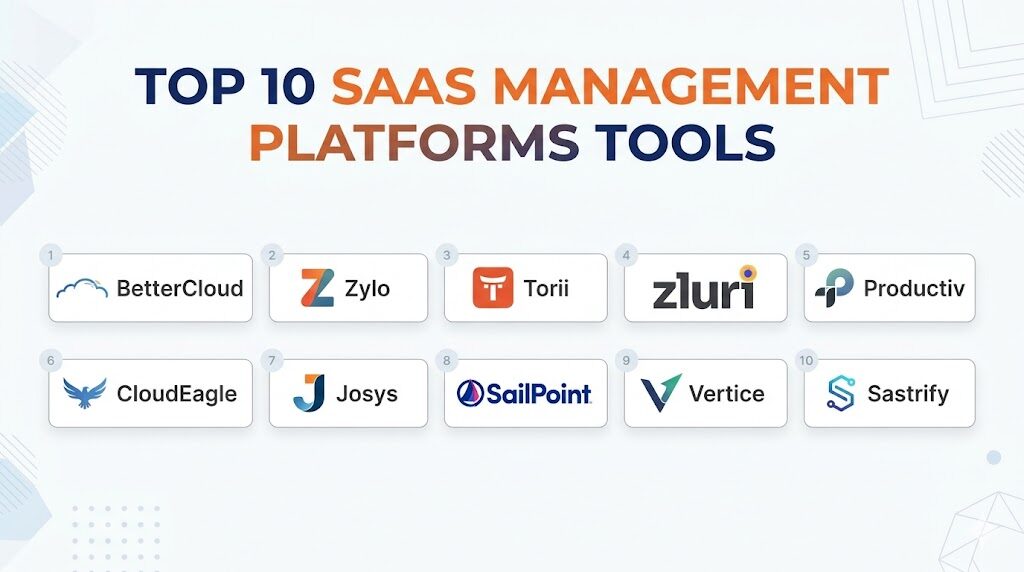
Introduction
As enterprises accelerate their digital transformation, the proliferation of Software-as-a-Service (SaaS) applications has created a complex “sprawl” that challenges traditional IT governance. A SaaS Management Platform (SMP) is a specialized category of software designed to provide IT, Finance, and Security teams with a unified command center for discovering, managing, and securing their entire cloud application ecosystem. These platforms utilize advanced API integrations, browser extensions, and financial data analysis to uncover “Shadow IT”—unauthorized software purchased outside of official procurement channels. By centralizing visibility, SMPs enable organizations to mitigate security risks, ensure regulatory compliance, and optimize software spend by identifying underutilized licenses.
The strategic implementation of an SMP moves an organization from a reactive to a proactive operational posture. Beyond simple inventory tracking, these tools automate the entire user lifecycle, from friction-less onboarding to secure, automated offboarding. In the modern distributed work environment, where a single employee may touch dozens of applications daily, the ability to manage these digital touchpoints at scale is no longer a luxury but a fundamental requirement for operational excellence. A robust platform provides the data-driven insights necessary to negotiate better vendor contracts and right-size subscriptions, directly impacting the bottom line while fortifying the organization’s security perimeter against unauthorized data access.
Best for: IT Directors, Procurement Managers, and FinOps leads in mid-market and enterprise organizations who need to eliminate manual tracking and gain total visibility over their software investments and security risks.
Not ideal for: Early-stage startups with fewer than ten employees or static software stacks where the cost of the platform and the time required for setup might outweigh the immediate savings from license optimization.
Key Trends in SaaS Management Platforms
The primary shift in the SMP market is the integration of “SaaS Intelligence,” where platforms use machine learning to provide predictive recommendations for license reclamation and spend forecasting. Rather than just reporting past usage, these systems now suggest specific actions, such as downgrading a user from a “Pro” to a “Basic” tier based on their actual feature engagement. We are also seeing a convergence between SaaS management and Identity Governance and Administration (IGA), where access reviews are becoming continuous and automated rather than periodic and manual.
Another significant trend is the rise of no-code automation workflows that bridge the gap between HR systems and IT operations. When an employee’s status changes in an HRIS like Workday or Hibob, the SMP can instantly trigger complex workflows across hundreds of apps, ensuring that access is revoked or granted in real-time. Finally, there is a growing focus on “SaaS Procurement as a Service,” where platforms are not just providing the software to manage apps, but also offering expert negotiation services and benchmarking data to help companies pay the lowest possible price for their subscriptions.
How We Selected These Tools
Our selection process for the top SaaS Management Platforms involved a rigorous evaluation of technical depth, integration breadth, and market reputation. We prioritized platforms that offer multiple discovery methods—such as direct API connections, SSO integrations, and financial system scraping—to ensure no application remains hidden in the shadow IT landscape. The ability to provide granular usage data at the feature level was a key differentiator, as basic login tracking is no longer sufficient for modern license optimization.
Security and compliance capabilities were also heavily weighted in our assessment. We looked for platforms that provide risk scoring for third-party applications and automated alerts for unauthorized data sharing. Operational reliability, specifically the speed and accuracy of the dashboard reporting, was tested to ensure the tools could support real-time decision-making. Finally, we considered the user experience for both the IT administrator and the end employee, favoring platforms that simplify complex governance tasks into intuitive, automated workflows.
1. BetterCloud
BetterCloud is widely recognized as a pioneer in the SaaS Operations (SaaSOps) space, focusing heavily on automation and security. It serves as a central hub for IT teams to manage the user lifecycle and enforce granular security policies across a wide range of cloud applications. It is particularly strong for organizations that rely on core suites like Google Workspace or Microsoft 365.
Key Features
The platform features a powerful no-code workflow builder that automates complex tasks like multi-app onboarding and offboarding. It provides deep data discovery tools that can identify sensitive information, such as PII or credit card numbers, being shared inappropriately within SaaS tools. It offers automated alerts for security policy violations, such as a file being made public. The “Action Engine” allows admins to make changes across multiple apps simultaneously from a single interface. It also includes comprehensive audit logs that track every change made across the integrated SaaS environment.
Pros
Exceptional automation capabilities significantly reduce the manual workload for IT teams. The focus on security and data governance provides peace of mind for compliance-heavy industries.
Cons
The setup process can be complex and requires a high level of technical proficiency. The pricing model is often higher than competitors who focus solely on spend tracking.
Platforms and Deployment
Cloud-based web platform with extensive API-led integrations.
Security and Compliance
SOC 2 Type II compliant and provides robust tools for GDPR and CCPA adherence.
Integrations and Ecosystem
Connects with over 700 SaaS applications, including deep integrations with Slack, Zoom, and Salesforce.
Support and Community
Offers “BetterCloud University” for training and an active community of SaaSOps professionals.
2. Zylo
Zylo is an enterprise-grade platform that specializes in SaaS spend management and license optimization. It is built for large organizations that need to rationalize their software inventory and drive significant cost savings through data-driven procurement and renewal management.
Key Features
The platform utilizes a discovery engine that cross-references financial records (ERP and expense data) with SSO logs to find every active subscription. It provides a centralized “Renewal Calendar” that alerts teams 30, 60, and 90 days before a contract expires. It features “Zylo Insights,” which provides benchmarking data to show if a company is overpaying compared to industry averages. The platform includes an employee-facing “App Catalog” to promote sanctioned software. It also offers a managed service where experts handle vendor negotiations on the client’s behalf.
Pros
The financial discovery and spend tracking are among the most accurate in the industry. Benchmarking data gives procurement teams a massive advantage during contract renewals.
Cons
Its strength is in finance and procurement, so it may lack the deep operational “action” tools found in BetterCloud. Some features are limited to the North American market.
Platforms and Deployment
Enterprise cloud platform optimized for high-volume data ingestion.
Security and Compliance
Maintains SOC 2 Type II and HIPAA compliance standards for secure data handling.
Integrations and Ecosystem
Deep ties with financial systems like NetSuite and SAP, as well as Okta and Azure AD.
Support and Community
Provides dedicated executive business reviews and a high level of personalized account management.
3. Torii
Torii is known for its ease of use and its ability to bridge the gap between IT and finance. It focuses on distributed SaaS discovery and automated operations, making it a favorite for mid-to-large businesses that want to gain control over their stack without a long implementation period.
Key Features
Torii offers “Real-Time Discovery” that uncovers apps as soon as an employee signs up, even with a personal credit card. It features an intuitive workflow builder for automating onboarding and license reclamation. The platform provides a unique “Browser Extension” that tracks usage for apps that don’t have direct API connections. It includes a robust contract management module that stores all vendor agreements in one place. Additionally, it offers automated “License Harvesting” to reclaim seats from inactive users without human intervention.
Pros
One of the fastest platforms to deploy, often showing results within 24 hours. The user interface is highly intuitive and requires minimal training for new administrators.
Cons
While it has automation, the depth of its security policy enforcement is not as granular as specialized security tools. Reporting can sometimes feel less customizable for very large enterprises.
Platforms and Deployment
Cloud-native web dashboard with an optional browser extension for enhanced discovery.
Security and Compliance
SOC 2 Type II certified and provides tools to help manage GDPR requests across SaaS apps.
Integrations and Ecosystem
Supports hundreds of native integrations and offers a flexible API for custom connectors.
Support and Community
Offers responsive chat support and a comprehensive knowledge base for self-service learning.
4. Zluri
Zluri is a comprehensive platform that combines SaaS management with identity governance. It is designed to help IT teams gain full visibility and control over their application ecosystem while simplifying the compliance and audit processes.
Key Features
The platform boasts a library of over 250,000 applications for automatic classification and metadata enrichment. It provides a “Security & Compliance” module that assigns risk scores to every app in the environment. It offers automated user provisioning and deprovisioning through direct integrations with HRIS and SSO tools. The platform includes an “Access Review” feature that automates the periodic checking of user permissions for compliance audits. It also features a cost-optimization dashboard that identifies overlapping functionalities between different software tools.
Pros
The combined focus on SaaS management and identity governance makes it a “one-stop shop” for IT leaders. The massive app database ensures very high discovery accuracy.
Cons
The interface can feel crowded due to the high density of features and data points. Some advanced automation features may require professional services for initial setup.
Platforms and Deployment
Web-based platform with a strong emphasis on data visualization and reporting.
Security and Compliance
Compliant with SOC 2, ISO 27001, and GDPR; includes automated risk assessments.
Integrations and Ecosystem
Integrates with over 800 apps, including specialized tools for DevOps, HR, and finance.
Support and Community
Provides 24/7 global support and has a strong presence in the IT governance community.
5. Productiv
Productiv shifts the focus from simple license tracking to “SaaS Intelligence,” emphasizing how employees actually engage with software. It is ideal for companies that want to drive productivity and ROI by understanding adoption patterns at a deep level.
Key Features
The platform provides “Engagement Analytics” that go beyond logins to show which specific features within an app are being used. It features an “App Center” that allows employees to request software and see approved alternatives. It offers automated renewal workflows that pull in usage data to inform negotiation strategies. The system uses AI to provide “Right-sizing” recommendations for license tiers. It also includes a “Collaboration” feature that lets IT, Finance, and Procurement teams work together on software decisions within the platform.
Pros
Provides the most granular usage data available, helping companies distinguish between “active” and “passive” users. Strong focus on employee productivity and software adoption.
Cons
The platform is highly sophisticated and may be “overkill” for organizations with simple management needs. Pricing is typically geared toward the enterprise segment.
Platforms and Deployment
Cloud-based “Intelligence” platform with a focus on data-driven dashboards.
Security and Compliance
Maintains high enterprise security standards, including SOC 2 and advanced data encryption.
Integrations and Ecosystem
Strong integrations with SSO, finance, and major productivity suites like Slack and Jira.
Support and Community
Offers a dedicated “Customer Success” manager and regular benchmarking reports.
6. CloudEagle
CloudEagle is an AI-powered platform that focuses on the entire SaaS lifecycle, with a heavy emphasis on procurement and cost savings. It is designed to act as an automated assistant for IT and procurement teams looking to optimize their tech stack.
Key Features
The platform features an “AI Procurement Bot” that helps automate the intake and approval process for new software. It provides “Price Benchmarking” for thousands of SaaS vendors to ensure fair market pricing. It includes automated license reclamation workflows that integrate directly with Slack for user verification. The platform offers a unified dashboard for tracking spend, usage, and security risk across all apps. It also provides a managed “Negotiation Service” where their team of experts handles contract discussions to secure discounts.
Pros
The hybrid model of automated software and human expert negotiation services provides immediate ROI. The Slack-integrated workflows make it very easy for employees to respond to license queries.
Cons
The focus is heavily on procurement and spend, so it may lack some of the deeper security features found in SaaSOps platforms. The interface is newer and may have fewer legacy features.
Platforms and Deployment
Modern cloud platform with a mobile-responsive interface and Slack bot.
Security and Compliance
SOC 2 Type II compliant with a focus on secure vendor data management.
Integrations and Ecosystem
Integrates with 500+ apps, focusing on the most common business and finance tools.
Support and Community
High-touch support, especially for clients using the procurement negotiation service.
7. Josys
Josys is a unified platform that manages both SaaS applications and hardware devices. It is an excellent choice for mid-market companies that want to centralize their entire IT asset management into a single pane of glass.
Key Features
The platform offers a “Unified Dashboard” for managing laptops, mobile devices, and SaaS subscriptions together. It features automated onboarding and offboarding workflows that sync with HR systems to provision both hardware and software access. It provides “Shadow IT Discovery” using multiple scanning methods. The platform includes a “Device Lifecycle” tool that tracks the health and assignment of physical assets. It also offers a marketplace for purchasing new hardware and software directly through the Josys interface.
Pros
Managing both physical and digital assets in one place significantly simplifies the IT operational footprint. The platform is specifically designed to be easy for lean IT teams to manage.
Cons
By trying to manage both hardware and software, it may not be as “deep” in SaaS-specific features as a dedicated SMP like Productiv or Zylo.
Platforms and Deployment
Cloud-based management suite with support for global device fulfillment.
Security and Compliance
Adheres to strict IT governance standards and provides clear audit trails for all asset changes.
Integrations and Ecosystem
Integrates with major HRIS, SSO, and a growing list of SaaS and MDM tools.
Support and Community
Offers comprehensive global support and localized services in various international markets.
8. SailPoint (formerly Intello)
SailPoint’s SaaS management offering (built from the Intello acquisition) focuses on identity-centric security. It is the best choice for organizations that view SaaS management as a critical component of their overall security and identity governance strategy.
Key Features
The platform provides “Real-Time SaaS Discovery” integrated directly into SailPoint’s Identity Security Cloud. It features automated access reviews that ensure employees only have the permissions they need for their roles. It includes a “Compliance Dashboard” that tracks certifications like SOC 2 and GDPR across the SaaS stack. The platform uses AI to detect anomalous access patterns that might indicate a compromised account. It also offers spend visibility to help IT teams justify the cost of their security and identity tools.
Pros
Unrivaled security and identity governance capabilities. It integrates seamlessly with a broader enterprise identity strategy, reducing the need for siloed security tools.
Cons
The platform is enterprise-focused and can be intimidating for smaller teams. It is best used as part of the larger SailPoint ecosystem, which involves a higher total cost.
Platforms and Deployment
Cloud-based security platform that integrates with on-premise and cloud identity systems.
Security and Compliance
Highest-level enterprise security certifications, including ISO 27001 and FedRAMP.
Integrations and Ecosystem
Deeply integrated with IAM and IGA tools, as well as over 500 common SaaS applications.
Support and Community
Enterprise-grade support with global coverage and a large network of security partners.
9. Vertice
Vertice is a procurement-focused SMP that uses AI and human expertise to help companies manage their SaaS and Cloud infrastructure spend. It is designed for CFOs and Finance teams who want a “guaranteed savings” model for their technology investments.
Key Features
The platform features “AI-Enhanced Intake Workflows” that streamline the request-to-procure process. It provides access to a massive database of over 16,000 vendor pricing benchmarks. The system includes a “Usage Monitoring” tool that identifies inactive accounts for reclamation. It offers a dedicated “Procurement Partner” who manages the entire negotiation lifecycle for the company. The platform also provides visibility into cloud infrastructure costs (AWS, Azure, GCP) alongside traditional SaaS spend.
Pros
Focuses on tangible financial results with a “savings guarantee.” The combination of SaaS and Cloud infrastructure management provides a more holistic view of IT spend.
Cons
Less focus on IT operational automation (like onboarding) compared to BetterCloud. It is more of a financial and procurement tool than a day-to-day IT management tool.
Platforms and Deployment
Cloud platform with a heavy emphasis on financial reporting and procurement workflows.
Security and Compliance
Fully compliant with standard data protection regulations and maintains secure vendor communication logs.
Integrations and Ecosystem
Integrates with ERPs, financial systems, and major cloud infrastructure providers.
Support and Community
High-touch consultative support from procurement and finance experts.
10. Sastrify
Sastrify is a European-based platform that focuses on rapid onboarding and compliance for small to mid-sized enterprises. It provides a simple, efficient way to manage SaaS contracts and discover discounts through a built-in marketplace.
Key Features
The platform features “SastriMarket,” where users can access pre-negotiated discounts on popular SaaS tools. It provides an automated “Contract Discovery” tool that scans emails and folders to centralize all vendor agreements. It offers a “Compliance Tracker” specifically designed for European standards like GDPR. The platform includes renewal management alerts and simple usage tracking. It also provides an automated “Software Intake” process to prevent unauthorized tool adoption before it happens.
Pros
Very quick to set up and offers immediate value through its discount marketplace. Strong localized support for the European (DACH) region.
Cons
The feature set is lighter than the major enterprise players like Zylo or Productiv. It may not offer the deep API-level usage analytics required by very large organizations.
Platforms and Deployment
Web-based platform designed for simplicity and ease of use.
Security and Compliance
High focus on GDPR compliance and secure document storage for sensitive contracts.
Integrations and Ecosystem
Connects with major financial, HR, and communication tools used by European SMBs.
Support and Community
Excellent customer support with a focus on helping smaller teams scale their SaaS management.
Comparison Table
| Tool Name | Best For | Platform(s) Supported | Deployment | Standout Feature | Public Rating |
| 1. BetterCloud | SaaSOps Automation | Web, API | Cloud | No-Code Workflows | 4.7/5 |
| 2. Zylo | Spend Optimization | Web, ERP Sync | Cloud | Price Benchmarking | 4.6/5 |
| 3. Torii | Shadow IT Discovery | Web, Extension | Cloud | Browser-Based Tracking | 4.8/5 |
| 4. Zluri | Identity Governance | Web, API | Cloud | 250k+ App Database | 4.7/5 |
| 5. Productiv | Usage Intelligence | Web, API | Cloud | Feature-Level Analytics | 4.5/5 |
| 6. CloudEagle | AI Procurement | Web, Slack | Cloud | AI Negotiation Bot | 4.6/5 |
| 7. Josys | Unified IT Assets | Web, MDM Sync | Cloud | Hardware/SaaS Sync | 4.4/5 |
| 8. SailPoint | Security/Identity | Web, Hybrid | Cloud | Continuous Access Review | 4.3/5 |
| 9. Vertice | Finance/Cloud Spend | Web, Cloud API | Cloud | Savings Guarantee | 4.5/5 |
| 10. Sastrify | SMB / Europe | Web | Cloud | Discount Marketplace | 4.4/5 |
Evaluation & Scoring of SaaS Management Platforms
The scoring below is a comparative model intended to help shortlisting. Each criterion is scored from 1–10, then a weighted total from 0–10 is calculated using the weights listed. These are analyst estimates based on typical fit and common workflow requirements, not public ratings.
Weights:
- Core features – 25%
- Ease of use – 15%
- Integrations & ecosystem – 15%
- Security & compliance – 10%
- Performance & reliability – 10%
- Support & community – 10%
- Price / value – 15%
| Tool Name | Core (25%) | Ease (15%) | Integrations (15%) | Security (10%) | Performance (10%) | Support (10%) | Value (15%) | Weighted Total |
| 1. BetterCloud | 10 | 7 | 10 | 10 | 9 | 9 | 8 | 9.05 |
| 2. Zylo | 9 | 8 | 9 | 8 | 9 | 9 | 9 | 8.75 |
| 3. Torii | 9 | 10 | 9 | 8 | 9 | 9 | 9 | 9.05 |
| 4. Zluri | 9 | 8 | 10 | 9 | 8 | 9 | 9 | 8.85 |
| 5. Productiv | 10 | 7 | 9 | 9 | 9 | 8 | 8 | 8.70 |
| 6. CloudEagle | 8 | 9 | 8 | 8 | 9 | 10 | 10 | 8.75 |
| 7. Josys | 8 | 9 | 8 | 8 | 8 | 9 | 9 | 8.40 |
| 8. SailPoint | 9 | 6 | 8 | 10 | 9 | 9 | 7 | 8.25 |
| 9. Vertice | 8 | 8 | 8 | 8 | 9 | 9 | 10 | 8.55 |
| 10. Sastrify | 7 | 9 | 8 | 9 | 8 | 9 | 10 | 8.35 |
How to interpret the scores:
- Use the weighted total to shortlist candidates, then validate with a pilot.
- A lower score can mean specialization, not weakness.
- Security and compliance scores reflect controllability and governance fit, because certifications are often not publicly stated.
- Actual outcomes vary with assembly size, team skills, templates, and process maturity.
Which SaaS Management Platform Tool Is Right for You?
Solo / Freelancer
For individuals or solo founders, these platforms are generally more than is needed. However, if you are a consultant managing multiple client stacks, a simple tool like Sastrify or the free tiers of basic spend trackers might offer a good starting point for organization without the enterprise cost.
SMB
Small to medium businesses should look for ease of deployment and immediate value. Torii and Josys are excellent choices because they offer quick discovery and, in the case of Josys, provide a way to manage physical laptops alongside software in a single, simple interface.
Mid-Market
Organizations in this segment are often dealing with rapid growth and messy app proliferation. Zluri and CloudEagle offer a great balance of automation and cost management, helping growing teams implement governance before the “sprawl” becomes unmanageable.
Enterprise
For large-scale operations with thousands of users, the depth of data and security becomes paramount. BetterCloud is the gold standard for operational automation, while Productiv and Zylo provide the deep financial and engagement analytics required to manage multi-million dollar software budgets across global departments.
Budget vs Premium
If the primary goal is reducing immediate costs, Vertice or CloudEagle are the winners due to their focus on negotiation and guaranteed savings. If the goal is long-term operational efficiency and security, the “premium” investment in BetterCloud or SailPoint is justified by the reduction in manual IT work and breach risk.
Feature Depth vs Ease of Use
Productiv offers the deepest feature-level usage data but requires more time to interpret. Conversely, Torii offers a “plug and play” experience that provides broad visibility across the organization with almost zero learning curve, making it ideal for teams that need fast results.
Integrations & Scalability
BetterCloud and Zluri lead the market in the number of native integrations. For an enterprise, the ability to connect with every niche tool in the stack is critical for preventing blind spots. A platform that can’t scale its integration library will eventually limit the company’s growth.
Security & Compliance Needs
For companies in highly regulated sectors like finance or healthcare, SailPoint and BetterCloud offer the most robust compliance frameworks. Their ability to automate continuous access reviews and identify sensitive data movement within SaaS apps is essential for meeting modern audit requirements.
Frequently Asked Questions (FAQs)
1. What is the primary difference between SAM and SMP?
Software Asset Management (SAM) traditionally focuses on on-premise license compliance (like Microsoft or Adobe desktop apps). SaaS Management Platforms (SMP) are cloud-native and focus on subscription models, usage-based billing, and API-led discovery and automation.
2. How do these platforms discover “Shadow IT”?
They use several methods: syncing with SSO providers like Okta, scanning financial records via ERP or expense systems, analyzing email headers for receipt notifications, and sometimes using browser extensions to track web-app traffic.
3. Is it difficult to migrate from spreadsheets to an SMP?
The transition is usually straightforward because SMPs are designed to ingest existing data. Most platforms allow you to upload your CSV lists, which they then cross-reference with their automated discovery findings to clean up your records.
4. Can an SMP help during a security audit?
Yes, most SMPs provide automated reports showing who has access to which systems, when their access was last reviewed, and a history of onboarding/offboarding workflows. This provides a clear, verifiable trail for auditors.
5. Do these platforms support usage-based pricing models?
The more advanced platforms like Productiv and Zylo are specifically designed to handle usage-based SaaS. They can identify users who have a license but aren’t actually utilizing the features that drive the cost.
6. How long does the average implementation take?
Basic discovery can happen in hours, but setting up complex, multi-app automation workflows and cleaning up historical contract data typically takes between 4 to 8 weeks for a mid-to-large organization.
7. Can an SMP automate employee offboarding?
Yes, this is a core feature. A platform can instantly revoke access across 50+ applications, transfer file ownership, and reclaim licenses the moment an employee is marked as “terminated” in the HR system.
8. Is my financial data safe with these platforms?
SMPs use highly secure, read-only API connections for financial data and are typically SOC 2 Type II compliant. They only see the transaction metadata needed to identify the vendor and the spend amount.
9. Do these platforms work for internal/custom-built apps?
Most SMPs allow you to manually add custom apps or use their API to build custom connectors, ensuring that your internal tools are governed alongside your third-party SaaS subscriptions.
10. How much can a company save with an SMP?
While it varies, industry data suggests companies can save 20% to 30% of their annual SaaS spend in the first year by identifying redundant apps, reclaiming unused seats, and using benchmarking data to negotiate better terms.
Conclusion
Navigating the contemporary SaaS landscape requires more than just a list of subscriptions; it demands a strategic layer of intelligence and automation that only a dedicated SaaS Management Platform can provide. The distinction between “managed” and “unmanaged” software is becoming the primary indicator of an organization’s operational health and security resilience. Implementing one of these top-tier platforms allows your IT and Finance teams to reclaim hundreds of hours of manual labor while ensuring that every dollar spent on software is directly contributing to the company’s productivity goals. By centralizing visibility and automating the complex lifecycle of the digital workplace, these tools empower leaders to stop fighting the “sprawl” and start leveraging their technology stack as a competitive advantage. The future of IT operations is automated, data-driven, and unified—a reality that begins with choosing the right management partner today.