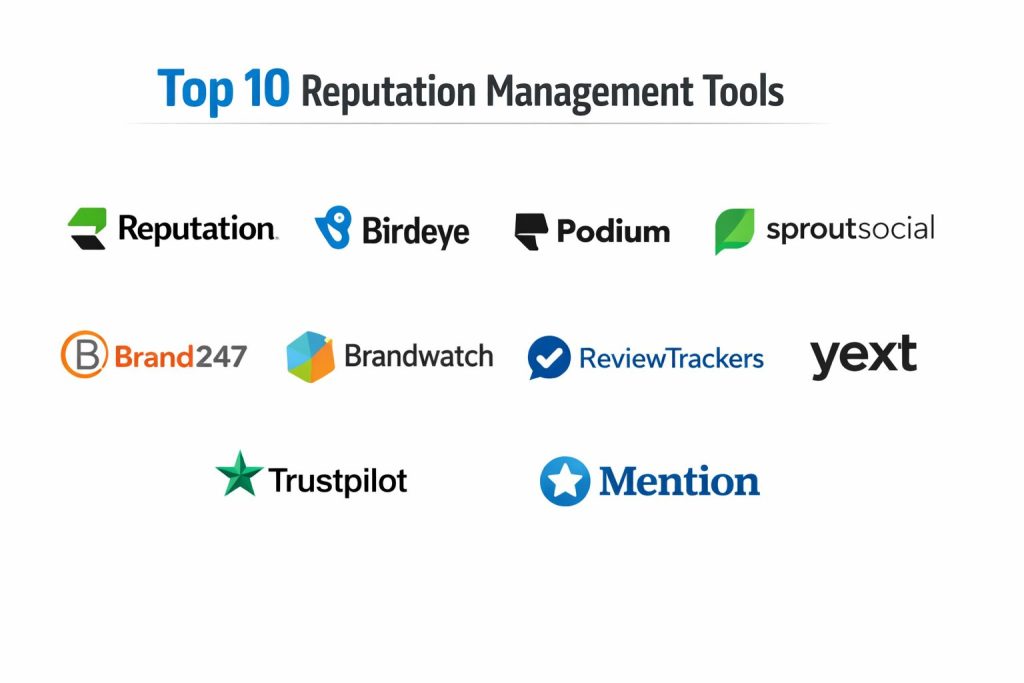
Introduction
Reputation management tools have evolved into essential command centers for modern organizations, bridging the gap between public perception and operational reality. In a digital-first economy, a brand’s value is no longer dictated solely by its marketing output but by the aggregate of millions of decentralized conversations across social media, review aggregates, and news cycles. These platforms provide the technical infrastructure to monitor these signals in real-time, allowing businesses to intercept potential crises and amplify positive sentiment before narratives become entrenched. By utilizing advanced natural language processing and data aggregation, these tools transform unstructured public feedback into actionable intelligence that informs product development, customer service, and executive strategy.
The shift toward proactive reputation defense is driven by the increasing speed of information dissemination. A single negative interaction can escalate into a global brand crisis within minutes, making manual monitoring an obsolete strategy. Modern enterprises leverage these tools to maintain a consistent digital presence across hundreds of physical locations and thousands of digital touchpoints. Beyond simple monitoring, these platforms serve as a vital link in the customer experience chain, enabling closed-loop feedback systems where every review is an opportunity for engagement. When selecting a tool, decision-makers must prioritize the depth of data coverage, the accuracy of sentiment detection, and the seamlessness of integration with existing communication stacks to ensure a unified response strategy.
Best for: Multi-location enterprises, global consumer brands, healthcare providers, and high-growth retail organizations that require centralized control over their public image and customer feedback loops.
Not ideal for: Small local businesses with minimal online traffic or personal brands that do not require complex data visualization and automated response workflows.
Key Trends in Reputation Management Tools
The integration of Generative AI is the most significant trend, allowing platforms to draft contextually aware responses to customer reviews and predict emerging sentiment shifts before they hit the mainstream. We are also seeing a major focus on “AI Search Optimization,” where tools now track how brands are described within AI-generated summaries like those found in modern search engines. This marks a transition from managing “blue links” to managing the “summarized narrative” that AI provides to consumers.
Visual listening has become another critical capability, with software now identifying brand logos and products within images and videos across social platforms, even when the brand isn’t explicitly tagged. There is also a move toward deeper integration between reputation data and broader business intelligence, treating review sentiment as a leading indicator of financial performance. Finally, privacy-first data collection methods are being prioritized to ensure that reputation gathering complies with increasingly strict global data protection regulations while still providing deep consumer insights.
How We Selected These Tools
The selection process focused on identifying platforms that offer the most comprehensive coverage of the digital ecosystem, from niche review sites to major social networks. We prioritized tools that demonstrate high technical reliability in sentiment analysis, moving beyond simple keyword matching to understanding nuance and context. Market leadership and the ability to scale for enterprise-level demands were also key factors in our evaluation.
We examined the robustness of each platform’s API and its ability to integrate with the most common customer relationship management and helpdesk systems. The frequency of product updates and the incorporation of cutting-edge AI features were scrutinized to ensure the list reflects the most modern solutions. Lastly, we considered the balance of user experience, looking for interfaces that empower local managers while providing the high-level governance required by corporate headquarters.
1. Reputation (Reputation.com)
Reputation is an enterprise-grade platform that specializes in unifying the entire customer experience journey. It is designed for large organizations with hundreds or thousands of locations, providing a single source of truth for reviews, social mentions, and business listings. Its proprietary “Reputation Score” provides a standardized metric for measuring brand health across the entire organization.
Key Features
The platform features a centralized dashboard that aggregates feedback from every major review site and social channel. It includes advanced sentiment analysis that breaks down customer feedback into specific operational themes. The tool offers automated review requesting systems via SMS and email to boost volume consistently. It also provides a robust social suite for localized publishing and community engagement. Furthermore, it includes specialized tools for listings management to ensure business information is accurate across the web.
Pros
It offers the most comprehensive set of features for large-scale enterprises and provides deep competitive benchmarking. The platform is highly effective at turning qualitative feedback into quantitative performance scores.
Cons
The platform’s complexity and high price point make it less accessible for smaller businesses. The initial setup and configuration for thousands of locations can be time-consuming.
Platforms and Deployment
Web-based SaaS with mobile application support for on-the-go management.
Security and Compliance
Features enterprise-level security, including single sign-on and rigorous data encryption protocols compliant with global standards.
Integrations and Ecosystem
Integrates deeply with major CRM systems like Salesforce and various digital marketing stacks to sync customer data.
Support and Community
Offers dedicated account management for enterprise clients and a comprehensive knowledge base for platform training.
2. Birdeye
Birdeye is an all-in-one reputation and customer experience platform tailored for local businesses and multi-location franchises. It focuses on turning every customer interaction into a marketing opportunity by automating the collection of reviews and simplifying the communication process.
Key Features
The software includes a unified inbox that brings together messages from social media, text, and webchat. It features AI-powered review response templates that help staff reply to feedback quickly and professionally. The platform automates the generation of reviews through triggered messages following a purchase or appointment. It also includes tools for creating and managing surveys to capture deeper customer insights. Additionally, it offers a visual dashboard for tracking sentiment and star ratings over time.
Pros
The interface is very intuitive, making it easy for local staff to use without extensive training. It is exceptionally strong at increasing review volume through automated messaging.
Cons
Some advanced features like social listening are not as deep as those found in specialized monitoring platforms. The cost can scale quickly as more locations or features are added.
Platforms and Deployment
Cloud-based SaaS accessible via browser and a dedicated mobile app for localized teams.
Security and Compliance
Adheres to standard data protection regulations and provides secure, role-based access for different levels of staff.
Integrations and Ecosystem
Strong integrations with over 3,000 different business systems through its own marketplace and API connections.
Support and Community
Provides 24/7 customer support and an extensive library of webinars and tutorials for users.
3. Podium
Podium is a conversational engagement platform that uses text messaging as the primary driver for reputation management. It is designed for businesses that want to simplify the review process for their customers by meeting them on the devices they use most.
Key Features
The core of the platform is a centralized messaging system that handles everything from review requests to customer support. It allows businesses to send review invitations via SMS, which traditionally has much higher open rates than email. The tool features a mobile-friendly dashboard that gives managers a real-time view of their online rating across various sites. It also includes payment processing features within the chat interface to streamline the customer journey. Furthermore, it offers basic social media monitoring for brand mentions.
Pros
The text-first approach is incredibly effective at generating high volumes of authentic customer reviews. The platform significantly improves the speed of communication between the business and its clients.
Cons
The focus on messaging means it lacks some of the deeper sentiment analysis found in more analytical platforms. It is less suitable for brands that do not have a direct, transaction-based relationship with their customers.
Platforms and Deployment
SaaS platform with a high-performance mobile app designed for frontline employees.
Security and Compliance
Includes secure messaging protocols and is compliant with industry-specific standards for data privacy.
Integrations and Ecosystem
Connects with common point-of-sale systems and customer management software to automate messaging triggers.
Support and Community
Offers solid customer support and a focused community of local business owners and operators.
4. Sprout Social
Sprout Social is a leading social media management tool that offers robust reputation features through its social listening and review management modules. It is ideal for brands where the majority of the reputation risk and opportunity lives on social platforms.
Key Features
The platform features a unified Smart Inbox that centralizes all social interactions and reviews from sites like Facebook and Google. Its advanced social listening tools allow brands to track keywords and sentiment across millions of public conversations. The software provides detailed reports on brand health, share of voice, and competitor performance. It includes a collaborative workflow system for teams to assign and track responses to negative feedback. It also features AI-driven insights to identify emerging trends in audience perception.
Pros
The reporting and analytics capabilities are among the best in the industry, offering very clear visual data. It provides a seamless transition between general social media marketing and reputation management.
Cons
The pricing structure can be high for teams requiring multiple users. Its review site coverage, while good, is not as extensive as platforms dedicated solely to review management.
Platforms and Deployment
Web-based SaaS with comprehensive mobile applications for iOS and Android.
Security and Compliance
Provides high-level security features including audit logs and flexible permission settings for large teams.
Integrations and Ecosystem
Integrates perfectly with the major social networks and connects with top CRM and helpdesk platforms.
Support and Community
Offers excellent professional support and a massive community of social media and PR professionals.
5. Yext
Yext is a digital presence platform that focuses on brand consistency and review management across the entire search ecosystem. It is particularly powerful for businesses that need to ensure their information is correct across hundreds of different directories and maps.
Key Features
The software provides a central engine for managing business listings across the web, ensuring that NAP data is always consistent. It includes a robust review management tool that allows users to monitor and respond to feedback from search engines and directories directly. The platform features an AI-led search experience for brand websites that helps direct users to positive content. It also offers competitive intelligence by tracking how rivals are performing in local search results. Additionally, it provides detailed analytics on how users find and interact with the brand online.
Pros
It is the industry standard for listings management and local SEO, which is a major component of online reputation. The platform is highly automated, reducing the manual labor involved in maintaining a digital footprint.
Cons
The software can be expensive, and some users may find they are paying for features they don’t strictly need for reputation management. It requires a consistent data management strategy to be effective.
Platforms and Deployment
Cloud-based enterprise SaaS.
Security and Compliance
Maintains rigorous security standards and is widely used by government and healthcare organizations.
Integrations and Ecosystem
Boasts a large ecosystem of integrations with search engines, social media platforms, and internal business tools.
Support and Community
Provides top-tier enterprise support and extensive educational resources through its online platform.
6. Brand24
Brand24 is a specialized social listening and brand monitoring tool that provides real-time access to mentions across the web. It is favored by PR professionals and marketers who need to be the first to know when their brand is being discussed.
Key Features
The platform features a “Mentions Feed” that displays brand discussions in real-time from social media, news, blogs, and forums. It uses a proprietary sentiment analysis algorithm to categorize mentions as positive, negative, or neutral. The tool includes a “Reputation Score” that tracks how public perception changes over time. It provides instant alerts via Slack or email when a significant spike in negative mentions occurs. It also features an influencer score to help identify the most impactful voices discussing the brand.
Pros
The tool is very fast at picking up new mentions that might be missed by slower platforms. It offers a high level of detail for a relatively affordable price compared to enterprise suites.
Cons
It does not offer direct review management or listing management features. It is a monitoring and analysis tool rather than an all-in-one reputation suite.
Platforms and Deployment
Web SaaS with a dedicated mobile application for real-time notifications.
Security and Compliance
Standard SaaS security protocols with secure account management and data handling.
Integrations and Ecosystem
Integrates with communication tools like Slack and can export data into various reporting formats.
Support and Community
Offers responsive customer support and a wealth of educational content on social listening strategies.
7. Brandwatch
Brandwatch is a high-level consumer intelligence platform that offers some of the most sophisticated social listening and sentiment analysis tools available. It is designed for large companies that need to understand the “why” behind their reputation trends.
Key Features
The software uses advanced AI to analyze massive datasets of public conversations from across the globe. It features customizable dashboards that can visualize everything from demographic data to the emotional drivers of brand perception. The tool includes an image recognition system that detects brand logos in photos, even without text mentions. It allows for deep historical data analysis to see how long-term reputation strategies have performed. It also provides a dedicated suite for crisis management and real-time alert systems.
Pros
The depth of its data analysis and the scale of its monitoring capabilities are unmatched. It is the best choice for organizations that treat reputation data as a core part of their market research.
Cons
The complexity of the platform requires specialized knowledge to get the most out of its features. It carries a significant price tag suitable for large corporate budgets.
Platforms and Deployment
Enterprise cloud platform with advanced data visualization interfaces.
Security and Compliance
High-grade security and data governance standards, making it suitable for global multinational corporations.
Integrations and Ecosystem
Integrates with top-tier business intelligence tools and large-scale marketing platforms.
Support and Community
Provides extensive professional services and specialized training for data analysts and brand managers.
8. ReviewTrackers
ReviewTrackers is a platform dedicated to aggregating and analyzing customer reviews for multi-location businesses. It focuses on the operational side of reputation, turning review data into insights that can improve business performance.
Key Features
The platform centralizes reviews from over 100 different sites into a single, clean dashboard. It features a sophisticated sentiment analysis engine that identifies specific customer pain points across different locations. The tool includes a mobile app that allows on-site managers to receive notifications and respond to reviews instantly. It also provides competitive benchmarking to show how each location compares to local rivals. Furthermore, it offers tools for generating new reviews through automated email campaigns.
Pros
The software is very focused and does its primary job—review tracking—exceptionally well. Its reporting is designed to be shared with operational leaders to drive real-world changes.
Cons
It lacks broader social listening and media monitoring features. The focus is strictly on review sites rather than the wider public conversation.
Platforms and Deployment
SaaS platform with a robust mobile application for field teams.
Security and Compliance
Provides standard secure access controls and data encryption for all users.
Integrations and Ecosystem
Integrates with popular CRM, helpdesk, and local SEO tools to create a more efficient workflow.
Support and Community
Offers reliable customer support and focused resources on review management best practices.
9. Trustpilot
Trustpilot is a public-facing review platform and reputation tool that builds trust through transparency. While it is a place where reviews live, its business suite provides powerful tools for managing and showcasing that feedback.
Key Features
The platform allows businesses to invite customers to leave reviews through automated systems that integrate with the checkout process. It features customizable widgets that display live star ratings and testimonials directly on the brand’s website. The tool includes a dedicated portal for responding to reviews and flagging those that violate community guidelines. It provides analytics on review trends and sentiment to help identify areas for improvement. It also offers a “Review Insights” tool that uses AI to detect patterns in customer feedback.
Pros
The high brand recognition of the Trustpilot name adds immediate credibility to the reviews displayed. It is very effective at boosting conversion rates by showcasing social proof directly on the site.
Cons
As a public platform, businesses have less control over the display of negative reviews compared to internal systems. The cost of the professional features can be high for smaller companies.
Platforms and Deployment
Web-based platform with integrations for most e-commerce systems.
Security and Compliance
Maintains high standards for review integrity and data protection for both businesses and consumers.
Integrations and Ecosystem
Seamlessly integrates with major e-commerce platforms like Shopify, Magento, and WooCommerce.
Support and Community
Provides good customer support and a large community of businesses and consumers focused on trust.
10. Mention
Mention is a streamlined monitoring tool that provides comprehensive coverage of the web and social media. It is designed for small to medium businesses and agencies that need an efficient way to stay on top of their digital presence.
Key Features
The software monitors brand mentions across social media, forums, news sites, and blogs in real-time. It features a “Smart Feed” that uses AI to prioritize the most important mentions so users don’t miss critical feedback. The tool includes a basic social media management suite for publishing and responding to interactions. It provides automated reports that can be customized and sent to clients or stakeholders. It also features a “Pulse” system that alerts users to sudden spikes in brand-related activity.
Pros
It is one of the most user-friendly monitoring tools on the market. It offers a great balance of features and affordability for teams that need more than just basic alerts.
Cons
The sentiment analysis is not as advanced as higher-end enterprise tools. It does not offer specialized review management or local listing features.
Platforms and Deployment
Cloud-based SaaS accessible via web browser and mobile app.
Security and Compliance
Adheres to standard professional data security practices and account safety.
Integrations and Ecosystem
Integrates with popular tools like Slack and Buffer to streamline the monitoring and social media workflow.
Support and Community
Offers responsive support and helpful resources for growing brands and digital agencies.
Comparison Table
| Tool Name | Best For | Platform(s) Supported | Deployment | Standout Feature | Public Rating |
| 1. Reputation | Enterprise / CX | Web, Mobile | SaaS | Reputation Score Metric | 4.6/5 |
| 2. Birdeye | Local Multi-location | Web, Mobile | SaaS | AI Review Response | 4.7/5 |
| 3. Podium | SMS-led Engagement | Web, Mobile | SaaS | Text-based Review Requests | 4.6/5 |
| 4. Sprout Social | Social-first Brands | Web, Mobile | SaaS | Social Listening Suite | 4.4/5 |
| 5. Yext | Listing / SEO Focus | Web | SaaS | Listing Consistency Engine | 4.4/5 |
| 6. Brand24 | Real-time Monitoring | Web, Mobile | SaaS | Rapid Mention Detection | 4.6/5 |
| 7. Brandwatch | Consumer Research | Web | SaaS | Visual Content Recognition | 4.2/5 |
| 8. ReviewTrackers | Operation Insights | Web, Mobile | SaaS | Location-level Analytics | 4.6/5 |
| 9. Trustpilot | Social Proof / ROI | Web | SaaS | Trusted Public Profile | 4.5/5 |
| 10. Mention | SMB / Agencies | Web, Mobile | SaaS | AI-prioritized Mentions | 4.7/5 |
Evaluation & Scoring of Reputation Management Tools
The scoring below is a comparative model intended to help shortlisting. Each criterion is scored from 1–10, then a weighted total from 0–10 is calculated using the weights listed. These are analyst estimates based on typical fit and common workflow requirements, not public ratings.
Weights:
- Core features – 25%
- Ease of use – 15%
- Integrations & ecosystem – 15%
- Security & compliance – 10%
- Performance & reliability – 10%
- Support & community – 10%
- Price / value – 15%
| Tool Name | Core (25%) | Ease (15%) | Integrations (15%) | Security (10%) | Performance (10%) | Support (10%) | Value (15%) | Weighted Total |
| 1. Reputation | 10 | 6 | 9 | 10 | 9 | 10 | 7 | 8.80 |
| 2. Birdeye | 9 | 9 | 10 | 8 | 9 | 9 | 8 | 8.85 |
| 3. Podium | 8 | 10 | 9 | 8 | 9 | 8 | 8 | 8.50 |
| 4. Sprout Social | 9 | 8 | 10 | 9 | 9 | 9 | 7 | 8.65 |
| 5. Yext | 9 | 7 | 10 | 10 | 10 | 9 | 7 | 8.65 |
| 6. Brand24 | 7 | 9 | 7 | 7 | 10 | 8 | 9 | 7.90 |
| 7. Brandwatch | 10 | 4 | 9 | 9 | 9 | 10 | 6 | 8.05 |
| 8. ReviewTrackers | 8 | 9 | 8 | 8 | 9 | 9 | 8 | 8.35 |
| 9. Trustpilot | 7 | 10 | 8 | 8 | 9 | 8 | 7 | 8.00 |
| 10. Mention | 7 | 10 | 8 | 7 | 9 | 8 | 9 | 8.15 |
How to interpret the scores:
- Use the weighted total to shortlist candidates, then validate with a pilot.
- A lower score can mean specialization, not weakness.
- Security and compliance scores reflect controllability and governance fit, because certifications are often not publicly stated.
- Actual outcomes vary with assembly size, team skills, templates, and process maturity
Which Reputation Management Tool Is Right for You?
Solo / Freelancer
For individuals, a focus on monitoring and speed is key. A tool that provides real-time alerts without a complex setup allows a solo operator to protect their name effectively across the web.
SMB
Small businesses should prioritize tools that automate the manual labor of asking for reviews and managing basic social interactions. The goal is to build a professional image with minimal daily time investment.
Mid-Market
Growing companies need a balance of detailed analytics and multi-user collaboration. Software that offers clear reporting and a unified inbox helps these teams scale their reputation efforts alongside their business growth.
Enterprise
Large organizations require a platform that provides high-level governance and deep data security. The ability to monitor thousands of locations while extracting macro-level sentiment trends is the primary requirement.
Budget vs Premium
Budget options focus on core monitoring features, providing high value for basic needs. Premium suites offer advanced AI, predictive analytics, and enterprise-grade support that justify their higher price points for high-stakes environments.
Feature Depth vs Ease of Use
Some platforms offer scientific-level data analysis but require dedicated analysts to operate. Others are designed for the average employee to pick up and use instantly, sacrificing some technical depth for operational speed.
Integrations & Scalability
A reputation tool’s value is multiplied when it connects with your existing CRM and support software. Scalability ensures that as your brand grows into new markets or locations, the software can grow with you.
Security & Compliance Needs
For highly regulated industries, the choice is often dictated by the platform’s security certifications and its ability to handle sensitive customer data according to legal standards.
Frequently Asked Questions (FAQs)
1. How does sentiment analysis actually work?
The software uses natural language processing to identify specific words and sentence structures that indicate emotion. Modern tools go beyond just “good” or “bad” to understand context, sarcasm, and specific operational categories like “cleanliness” or “pricing.”
2. Can these tools remove negative reviews from Google or Yelp?
No legitimate software can simply delete a review because it is negative. Instead, they help you identify reviews that violate a site’s terms of service so you can flag them for removal, or help you respond professionally to mitigate the impact.
3. Is it better to respond to every review?
Ideally, yes. Responding to positive reviews builds loyalty, while responding to negative ones shows potential customers that you are proactive and care about fixing problems. Automation tools help you manage this volume efficiently.
4. How often should I check my reputation dashboard?
For most businesses, daily monitoring is the standard. However, real-time alerts should be set up for critical mentions or spikes in negative sentiment so that urgent issues can be addressed within minutes rather than hours.
5. Do these tools help with search engine rankings?
Yes, consistently generating positive reviews and maintaining accurate business listings are major factors in local SEO. These tools directly improve your visibility in “Map Pack” results and organic search.
6. What is social listening?
Social listening is the process of monitoring the entire digital landscape for mentions of your brand, competitors, or industry keywords, even when your official social handles are not directly tagged.
7. Can I manage multiple locations from one login?
Yes, enterprise-level tools are specifically designed to provide a “parent” view of all locations while allowing local managers to see only the data relevant to their specific branch.
8. Is text messaging better than email for review requests?
Data consistently shows that text messages have significantly higher open and response rates compared to email. Most modern platforms now prioritize SMS as the most effective way to build review volume.
9. Can these tools track my competitors?
Most professional tools allow you to input your competitors’ names or social handles, providing you with a side-by-side comparison of your reputation scores and sentiment trends versus theirs.
10. Do I need technical skills to use these platforms?
Most modern reputation software is designed with a user-friendly interface that requires no coding knowledge. However, setting up complex enterprise integrations may require some assistance from your IT team or the software’s support staff.
Conclusion
Navigating the complexities of modern brand perception requires a strategic transition from manual monitoring to a tech-enabled, proactive reputation framework. The choice of a reputation management platform should be viewed as a long-term investment in your brand’s most valuable intangible asset: trust. By centralizing feedback loops and leveraging AI-driven insights, organizations can transform public sentiment from a chaotic external factor into a controllable operational lever. Success in this field is not merely about suppressing negative content, but about creating an authentic, responsive digital presence that aligns with your core values. As consumer behavior continues to favor brands that demonstrate transparency and accountability, the ability to listen, analyze, and act on public feedback will remain a decisive competitive advantage for any professional enterprise.