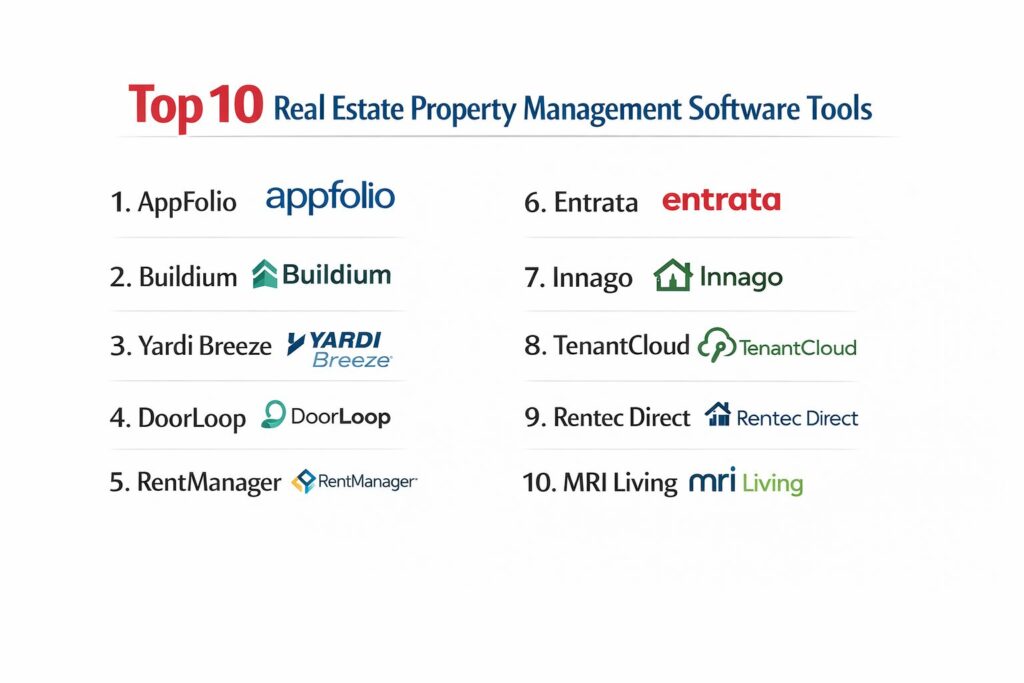
Introduction
Property management software (PMS) has transitioned from a simple digital ledger into a comprehensive operational command center for real estate professionals. In the current market, managing a portfolio requires the seamless orchestration of tenant relations, maintenance logistics, and complex financial reporting. These platforms utilize automation to handle the “heavy lifting” of rent collection, lease renewals, and vacancy marketing, allowing property managers to focus on asset appreciation rather than administrative minutiae. By centralizing data into a single source of truth, modern PMS tools mitigate the risks associated with manual data entry and ensure that portfolios remain compliant with evolving local and federal housing regulations.
The strategic value of a robust PMS lies in its ability to provide real-time visibility into the financial health of an investment. For property owners and managers, these tools offer sophisticated analytics that track net operating income (NOI), occupancy rates, and maintenance trends across multiple geographies. As the industry moves toward “smart” buildings and integrated ecosystems, the ability for a software platform to act as an open hub—connecting with IoT devices, screening services, and specialized accounting tools—is paramount. Choosing the right software is not merely a technical decision; it is a fundamental business choice that impacts tenant satisfaction, staff efficiency, and the long-term scalability of the real estate enterprise.
Best for: Professional property managers, real estate investors with growing portfolios, and community association managers (HOAs) seeking to automate rent collection and streamline maintenance workflows.
Not ideal for: Single-unit DIY landlords who prefer manual oversight or high-volume commercial developers who require specialized construction project management tools rather than operational leasing software.
Key Trends in Real Estate Property Management Software
The most significant trend is the rise of autonomous task execution, where AI agents handle routine inquiries from prospects and tenants without human intervention. This shift is reducing the overhead for leasing teams, allowing for 24/7 lead responses and automated showing schedules. Furthermore, there is a massive move toward “mobile-first” management, where every function—from move-in inspections to vendor payments—can be completed via a smartphone app. This mobility is essential for on-site staff and property managers who spend the majority of their time in the field rather than behind a desk.
Security and data privacy have also become top-tier operational requirements. With the increasing amount of sensitive tenant data stored in the cloud, platforms are implementing military-grade encryption and multi-factor authentication (MFA) as standard features. Another emerging trend is the integration of “fintech” solutions directly into the PMS, offering tenants flexible payment options like “Buy Now, Pay Later” for rent or credit-building services. These features not only improve the tenant experience but also ensure a more predictable and consistent cash flow for the property owner.
How We Selected These Tools
Our selection process focused on platforms that demonstrate technical resilience and high user adoption rates. We prioritized software that offers a unified interface for both residential and commercial assets, as mixed-use portfolios are becoming increasingly common. Market mindshare played a role, but we also looked for “category killers”—tools that excel in a specific niche, such as free options for small landlords or enterprise-grade ERPs for global firms. We evaluated each tool’s ability to handle complex accounting, as financial integrity is the cornerstone of successful property management.
Technical performance was measured by API stability and the robustness of third-party integrations. We sought platforms that offer an “ecosystem” approach, allowing users to plug in their preferred screening, insurance, or marketing tools. Security compliance was a non-negotiable factor; we only included vendors that adhere to strict data protection standards and offer audit-grade financial reporting. Finally, we considered the “onboarding friction,” prioritizing platforms that offer comprehensive training and support to ensure a smooth transition from legacy systems.
1. AppFolio
AppFolio is widely regarded as the most modern and intuitive platform for mid-to-large-scale portfolios. Its “Performance” tier is famous for integrating advanced AI—known as “AppFolio Stack”—which automates everything from invoice processing to tenant communication. It is designed for managers who want a sleek, mobile-first experience that prioritizes user adoption and operational speed.
Key Features
The platform includes an AI-powered leasing assistant that handles prospect inquiries and schedules showings around the clock. It features a robust “Smart Maintenance” system that categorizes and assigns work orders based on urgency and vendor availability. The financial suite offers automated bank reconciliations and multi-entity accounting. It also includes an integrated “Risk Management” tool for tenant screening and insurance tracking. Additionally, its mobile app is highly rated for providing full functionality to both property managers and residents on the go.
Pros
The user interface is exceptionally clean and easy for staff to learn, leading to very high adoption rates. The AI automation significantly reduces the time spent on repetitive administrative tasks.
Cons
It requires a 50-unit minimum for new customers, making it inaccessible for very small landlords. Some users find the pricing structure to be higher than traditional legacy systems.
Platforms and Deployment
Cloud-based SaaS with native mobile applications for iOS and Android.
Security and Compliance
Features SOC 2 Type II compliance and robust MFA to protect sensitive financial and tenant data.
Integrations and Ecosystem
Offers “AppFolio Stack,” a curated marketplace of verified third-party integrations for screening, energy management, and more.
Support and Community
Provides extensive online training via AppFolio Academy and dedicated account management for higher-tier customers.
2. Buildium
Buildium is the go-to solution for small-to-mid-sized property managers who need a professional-grade tool without a unit minimum. It strikes a perfect balance between ease of use and deep accounting functionality, making it ideal for those transitioning away from spreadsheets or basic accounting software.
Key Features
The software offers a comprehensive tenant screening service that includes credit, criminal, and eviction history. It features a built-in “Open API” that allows for custom connections to other business tools. The platform includes a specialized module for HOA and community association management, including board member portals. It provides automated rent collection via “EasyPay” and a dedicated portal for owners to view financial reports. It also offers a marketplace for finding and hiring vetted local contractors for maintenance tasks.
Pros
There is no minimum unit count, allowing small managers to start affordably and scale as they grow. The accounting features are robust enough to satisfy professional bookkeepers and CPAs.
Cons
The interface, while functional, can feel slightly more “utilitarian” compared to the high-end design of AppFolio. Some advanced reporting features are locked behind the more expensive “Growth” and “Premium” plans.
Platforms and Deployment
Web-based platform with a dedicated mobile app for field operations.
Security and Compliance
Adheres to strict bank-grade security protocols and provides automated 1099 e-filing for tax compliance.
Integrations and Ecosystem
Strong native integrations with companies like Allstate for renters insurance and TransUnion for screening.
Support and Community
Offers a 24/7 help hub and a very active community of property management professionals.
3. Yardi Breeze
Yardi Breeze is the cloud-native, “simplified” version of the legendary Yardi enterprise suite. It is designed to bring Yardi’s powerful accounting engine to smaller residential and commercial portfolios in an easy-to-use, “refreshingly simple” package.
Key Features
The platform supports both residential and commercial properties, including specialized features for CAM (Common Area Maintenance) recovery. It includes a built-in “Chat IQ” AI bot for automated tenant interaction. The system provides a unified dashboard for tracking rent roll, vacancies, and maintenance requests across different asset classes. It offers an “Investment Manager” module for tracking capital and distributions for multiple owners. It also features a “Breeze Premium” version that adds property websites and corporate accounting capabilities.
Pros
It is backed by the most trusted name in real estate technology, ensuring long-term stability and reliability. The ability to handle both commercial and residential assets in one simple tool is a major advantage.
Cons
The pricing is quote-based and not as transparent as some smaller competitors. The “simple” interface might lack some of the extreme customization options found in Yardi’s larger enterprise tool, Voyager.
Platforms and Deployment
Pure cloud-based solution accessible from any device via a web browser.
Security and Compliance
Leverages Yardi’s enterprise-grade security infrastructure and data center redundancy.
Integrations and Ecosystem
Connects with the broader Yardi ecosystem, including Yardi Matrix for market data and Yardi Kube for flexible workspace management.
Support and Community
Provides live chat support and a comprehensive library of video tutorials for new users.
4. DoorLoop
DoorLoop is one of the fastest-growing PMS platforms, known for its ultra-modern user interface and its “all-in-one” approach. It is specifically built for ease of use, making it a favorite for managers who want to get up and running in minutes rather than weeks.
Key Features
The platform includes a powerful “Custom Website” builder for showcasing vacancies and taking applications. It features an automated “Rent Collection” engine that supports ACH, credit cards, and even cash payments through retail partners. The maintenance module allows for photo and video attachments to work orders for better clarity. It offers a unique “Rapid Onboarding” service that helps users migrate their data from other platforms. It also includes a robust document management system with e-signature capabilities for digital leasing.
Pros
The software is incredibly intuitive, requiring almost zero training for new staff members. It offers some of the most responsive customer support in the industry.
Cons
Because it is a newer platform, it may lack some of the deep “legacy” features found in Yardi or MRI for highly complex commercial structures.
Platforms and Deployment
Web-based dashboard with highly-rated mobile apps for both iOS and Android.
Security and Compliance
Uses 256-bit encryption and is fully PCI-compliant for all financial transactions.
Integrations and Ecosystem
Integrates natively with QuickBooks, Zapier, and a wide variety of third-party marketing sites.
Support and Community
Known for offering a dedicated “Success Manager” to help new clients optimize their workflows.
5. RentManager
RentManager is the ultimate “customizable” property management software. It is favored by tech-savvy managers and large firms that need to tailor their software workflows to fit highly specific or unconventional business processes.
Key Features
The software offers both an “Online” (SaaS) and a “Standalone” (local install) version to suit different security preferences. It features a “Scripting” engine that allows developers to create custom automations and reports. The platform includes a built-in VoIP phone system that tracks all tenant and lead communication automatically. It provides a “Property Management API” that is one of the most open and flexible in the market. It also features a “Work Order” system that integrates with GPS tracking for mobile maintenance teams.
Pros
The level of customization is unparalleled; if you can imagine a workflow, you can probably build it in RentManager. The integration of communication tools (phone/text/email) into the core ledger is a massive efficiency booster.
Cons
The high degree of flexibility comes with a steeper learning curve than “plug-and-play” tools like DoorLoop. The interface can feel overwhelming for smaller, less technical teams.
Platforms and Deployment
Available as a cloud SaaS, private cloud, or traditional desktop installation.
Security and Compliance
Provides granular user permissions and comprehensive audit trails for every transaction in the system.
Integrations and Ecosystem
Supports over 160 third-party integrations, including specialized tools for utility billing and pest control.
Support and Community
Offers a “RentManager University” for deep-dive training and hosts a large annual user conference.
6. Entrata
Entrata is a comprehensive, enterprise-level “Operating System” for multifamily real estate. It is famous for its “Single Login” philosophy, where every tool—from marketing to insurance—lives under one roof without the need for external integrations.
Key Features
The platform features a world-class resident portal that is designed to feel like a high-end consumer app. it includes “ResidentPay,” an integrated payment system that manages everything from rent to security deposits. The “LeaseExecution” module automates the entire application and signing process with built-in screening. It offers “Entrata Insights,” a deep business intelligence tool for portfolio-wide performance tracking. It also features a “Student Housing” module specifically designed for the complexities of individual-room leasing.
Pros
The “All-in-One” nature means you never have to worry about broken integrations between different software vendors. It is widely considered to have the most “resident-friendly” interface on the market.
Cons
It is a high-end enterprise solution with a pricing model that is typically out of reach for small-to-mid-sized portfolios. The implementation process can be lengthy due to the sheer size of the platform.
Platforms and Deployment
Enterprise cloud-based platform with specialized apps for residents and site staff.
Security and Compliance
Adheres to global enterprise security standards and offers advanced risk-mitigation tools for large portfolios.
Integrations and Ecosystem
While it is an “all-in-one” system, it does offer an open API for those who need to connect proprietary corporate tools.
Support and Community
Provides dedicated enterprise-level support teams and a massive library of on-demand training resources.
7. Innago
Innago has disrupted the market by offering a “free” property management tool for small-to-mid-sized landlords. They generate revenue through transaction fees (like tenant screening or payment processing), making it an ideal choice for budget-conscious owners.
Key Features
The platform offers unlimited properties, tenants, and team members on its free plan. It features a simple “Lease Builder” with e-signature capabilities. The rent collection system supports ACH and credit card payments, with the option to pass processing fees to the tenant. It includes a basic maintenance tracking tool where tenants can upload photos of issues. The system also provides automated late fee calculations and reminders. Additionally, it offers a “Tenant Screening” module that provides credit and background checks within minutes.
Pros
There are no monthly subscription fees, which is a massive advantage for landlords managing just a few units. The interface is very straightforward and requires no technical expertise.
Cons
It lacks the “deep” accounting and multi-entity reporting required for large-scale professional firms. Customer support is mostly email-based for the free tier.
Platforms and Deployment
Web-based platform with a companion mobile app for tenants and landlords.
Security and Compliance
Uses standard SSL encryption and secure third-party payment gateways for all financial data.
Integrations and Ecosystem
More limited in its integration options compared to the “marketplaces” offered by AppFolio or Buildium.
Support and Community
Offers a help center and basic email support, focusing on a “self-service” model.
8. TenantCloud
TenantCloud is a “freemium” platform that bridges the gap between basic DIY tools and professional management software. It is unique for its “End-to-End” approach, offering specialized portals for tenants, owners, and even service pros.
Key Features
The platform includes a “Service Pro” portal where contractors can manage their own schedules and invoices. It features a “Visual Maintenance” tool that allows for video walk-throughs of repair needs. The system provides a “Lead Tracking” CRM to manage potential tenants from initial inquiry to move-in. It offers a “Premium” tier that includes tax reporting and QuickBooks synchronization. It also features a unique “Rental Portfolio” tracker that helps owners see their equity and appreciation over time.
Pros
The tiered pricing makes it very affordable for landlords who are just starting out but want room to grow. The inclusion of a portal specifically for contractors is a unique efficiency feature.
Cons
The free version is quite limited in terms of storage and advanced features. The accounting module is not as robust as dedicated tools like Rentec Direct.
Platforms and Deployment
Cloud-based web application with native apps for iOS and Android.
Security and Compliance
Provides secure document storage and is compliant with standard data protection regulations.
Integrations and Ecosystem
Integrates with Stripe for payments and Google Calendar for scheduling.
Support and Community
Offers a helpful blog and a ticketing system for technical support.
9. Rentec Direct
Rentec Direct is the preferred choice for property managers who prioritize financial accuracy and “accounting-first” functionality. It is widely praised for its stability and its “no-nonsense” approach to portfolio management.
Key Features
The software includes a full-featured “General Ledger” that can replace standalone accounting programs. It features a built-in “Work Order Management” system that tracks labor and material costs. The platform provides a “Master Portal” for managers to oversee multiple property owners simultaneously. It offers an “Automated Marketing” tool that pushes vacancies to over 20 major rental websites. It also includes a specialized “Trust Accounting” module that ensures compliance with strict state real estate regulations.
Pros
The accounting and financial reporting are among the most accurate and reliable in the industry. It has a reputation for being extremely stable with very little downtime.
Cons
The user interface can feel a bit dated compared to “newer” entrants like DoorLoop or AppFolio. It lacks some of the modern AI and automation “bells and whistles” found in high-end competitors.
Platforms and Deployment
Secure cloud-based platform accessible via web browser and mobile app.
Security and Compliance
Uses two-factor authentication and rigorous security audits to protect financial records.
Integrations and Ecosystem
Strong integrations with QuickBooks, Forte for payments, and various tenant screening services.
Support and Community
Renowned for having some of the best human-led technical support in the PMS space.
10. MRI Living
MRI Living is part of the MRI Software family, a global leader in enterprise real estate. It is designed for massive, complex portfolios that require “open architecture” to integrate with proprietary corporate systems and diverse asset classes.
Key Features
The platform features an “Open API” that allows for total customization and integration with any third-party software. It includes a “Market Connect” module for sophisticated lead management and marketing automation. The system offers “MRI Investment Modeling” for complex financial forecasting and valuations. It provides a “Resident Suite” that focuses on building community and improving retention. It also features a “Commercial Management” module that is world-class for managing retail and office spaces.
Pros
The “Open Architecture” means you are never locked into a single vendor’s ecosystem. It is capable of handling the largest and most complex global real estate portfolios.
Cons
It is an enterprise-level tool with a price tag and implementation complexity to match. It is generally “too much software” for small-to-mid-sized residential managers.
Platforms and Deployment
Global cloud platform with enterprise mobile applications for various roles.
Security and Compliance
Meets the highest global security standards, including ISO 27001 and GDPR compliance.
Integrations and Ecosystem
Part of the “MRI Partner Connect” program, offering hundreds of verified integrations across the globe.
Support and Community
Provides 24/7 global support and an extensive “MRI Users Group” for networking and learning.
Comparison Table
| Tool Name | Best For | Platform(s) Supported | Deployment | Standout Feature | Public Rating |
| 1. AppFolio | Mid-to-Large Residential | Web, iOS, Android | Cloud | AI “Smart” Automation | 4.8/5 |
| 2. Buildium | Growing Portfolios | Web, iOS, Android | Cloud | Strong HOA Support | 4.6/5 |
| 3. Yardi Breeze | Mixed Residential/Comm | Web | Cloud | Simplified ERP Engine | 4.4/5 |
| 4. DoorLoop | Ease of Use/Small Teams | Web, iOS, Android | Cloud | Ultra-Modern UI | 4.7/5 |
| 5. RentManager | High Customization | Web, Desktop, Cloud | Hybrid | Integrated VoIP/Comm | 4.5/5 |
| 6. Entrata | Enterprise Multifamily | Web, iOS, Android | Cloud | All-in-One “Single Login” | 4.6/5 |
| 7. Innago | Budget-Conscious DIY | Web, iOS, Android | Cloud | Truly Free Core Tools | 4.5/5 |
| 8. TenantCloud | DIY to SMB Scaling | Web, iOS, Android | Cloud | Service Pro Portal | 4.3/5 |
| 9. Rentec Direct | Accounting Accuracy | Web, iOS, Android | Cloud | Bank-Grade Trust Acct | 4.6/5 |
| 10. MRI Living | Global Enterprise | Web, API | Cloud | Open Architecture | 4.2/5 |
Evaluation & Scoring of Property Management Software
The scoring below is a comparative model intended to help shortlisting. Each criterion is scored from 1–10, then a weighted total from 0–10 is calculated using the weights listed. These are analyst estimates based on typical fit and common workflow requirements, not public ratings.
Weights:
- Core features – 25%
- Ease of use – 15%
- Integrations & ecosystem – 15%
- Security & compliance – 10%
- Performance & reliability – 10%
- Support & community – 10%
- Price / value – 15%
| Tool Name | Core (25%) | Ease (15%) | Integrations (15%) | Security (10%) | Performance (10%) | Support (10%) | Value (15%) | Weighted Total |
| 1. AppFolio | 10 | 10 | 9 | 10 | 10 | 9 | 7 | 9.35 |
| 2. Buildium | 9 | 9 | 10 | 9 | 9 | 10 | 9 | 9.15 |
| 3. Yardi Breeze | 9 | 8 | 8 | 10 | 10 | 8 | 8 | 8.75 |
| 4. DoorLoop | 8 | 10 | 9 | 9 | 9 | 10 | 9 | 9.00 |
| 5. RentManager | 10 | 6 | 10 | 10 | 9 | 9 | 8 | 8.85 |
| 6. Entrata | 10 | 8 | 7 | 10 | 10 | 9 | 6 | 8.55 |
| 7. Innago | 6 | 9 | 5 | 8 | 8 | 7 | 10 | 7.35 |
| 8. TenantCloud | 7 | 9 | 7 | 8 | 8 | 8 | 9 | 7.95 |
| 9. Rentec Direct | 9 | 7 | 8 | 10 | 9 | 10 | 9 | 8.80 |
| 10. MRI Living | 10 | 6 | 10 | 10 | 10 | 8 | 6 | 8.60 |
How to interpret the scores:
- Use the weighted total to shortlist candidates, then validate with a pilot.
- A lower score can mean specialization, not weakness.
- Security and compliance scores reflect controllability and governance fit, because certifications are often not publicly stated.
- Actual outcomes vary with assembly size, team skills, templates, and process maturity.
Which Real Estate Property Management Software Is Right for You?
Solo / Freelancer
If you are managing a few properties on your own, Innago or the starter tier of TenantCloud are the most logical choices. These tools provide the essential functions—rent collection and basic screening—without the overhead of a monthly subscription, ensuring your small-scale operation remains profitable.
SMB
For small-to-mid-sized property management companies, Buildium or DoorLoop are the top contenders. They offer a professional appearance and robust features that help you scale without requiring the massive technical investment of an enterprise system. DoorLoop is better for those who prioritize a modern UI, while Buildium is superior for those needing deep accounting and HOA features.
Mid-Market
Property managers with 50 to 500 units should look toward AppFolio. Its AI-driven automation and “Performance” tier features are specifically designed to help mid-market firms handle higher volumes without needing to hire additional administrative staff.
Enterprise
Large firms with thousands of units or diverse global assets should prioritize Yardi Voyager or Entrata. These platforms are designed for the high-stakes environment of institutional real estate, offering the complex financial consolidation and multi-entity reporting that smaller tools simply cannot handle.
Budget vs Premium
If the budget is the primary driver, Innago is the winner for zero-cost core features. However, for those who view software as an investment in efficiency, the premium cost of AppFolio or Entrata pays for itself through reduced labor costs and higher resident retention.
Feature Depth vs Ease of Use
RentManager offers the most depth and customization but requires a significant time commitment to master. Conversely, DoorLoop and AppFolio offer “out-of-the-box” ease of use that allows a new property manager to become productive almost immediately.
Integrations & Scalability
MRI Living is the king of integrations thanks to its open architecture. For companies that have a proprietary “tech stack” and need their property management software to talk to everything else, MRI is the only realistic choice.
Security & Compliance Needs
For portfolios that require strict “Trust Accounting” and audit-readiness, Rentec Direct and Yardi are the industry gold standards. They provide the level of financial oversight necessary to satisfy the most demanding state regulators and institutional investors.
Frequently Asked Questions (FAQs)
1. Does property management software handle taxes?
Most professional platforms like Buildium and RentManager provide 1099 e-filing and detailed expense reports that make tax season much easier. However, they are not a replacement for a qualified tax professional.
2. Can tenants pay rent through these platforms?
Yes, almost all modern PMS tools offer a tenant portal where residents can pay via ACH, credit card, or even Apple Pay. This typically increases on-time payments and reduces the manual work of processing checks.
3. Is it hard to move my data from spreadsheets to a new software?
Many platforms like DoorLoop and AppFolio offer “Data Migration” services or bulk-upload templates to help you move your tenant and lease info. However, expect a few days of data cleanup to ensure everything is accurate.
4. How does the software handle maintenance?
Typically, a tenant submits a request through their portal (often with a photo). The manager then assigns a vendor through the software, tracks the progress, and pays the invoice once the job is completed—all within the system.
5. Can I manage commercial properties with these tools?
While most are residential-focused, Yardi Breeze and MRI Living have powerful commercial modules that handle CAM reconciliations and complex commercial lease structures that a residential-only tool would struggle with.
6. Are there any free property management software options?
Innago is the most popular “truly free” option for landlords. They don’t charge a monthly fee, but they do charge tenants for things like screening reports or payment processing, which is how they fund the service.
7. Do I need to buy a separate accounting program?
In many cases, no. Tools like Rentec Direct and Buildium have built-in “General Ledgers” that are robust enough to handle all your business accounting. However, many still offer a “sync” with QuickBooks for those who prefer it.
8. Can I see how my properties are performing in real-time?
Yes, high-end platforms like AppFolio and Entrata offer “Business Intelligence” dashboards that show your occupancy, collections, and maintenance costs in real-time across your entire portfolio.
9. How secure is my tenant’s data?
Top-tier vendors use enterprise-grade encryption and are often SOC 2 compliant. This means they are audited by third parties to ensure they follow the best practices for data security and privacy.
10. What is a “Tenant Portal”?
It is a secure website or app where your tenants can sign their lease, pay their rent, report a leaky faucet, and communicate with you directly, keeping all history in one organized place.
Conclusion
In the modern real estate market, the adoption of a professional property management platform is no longer optional—it is a prerequisite for operational resilience and sustainable growth. The transition from fragmented, manual processes to an integrated digital ecosystem allows property managers to reclaim their time, minimize legal risks, and provide a superior experience for their tenants. As artificial intelligence and “smart” integrations continue to redefine the landscape, the choice of a PMS partner must be viewed through the lens of long-term scalability and technical flexibility. Whether you are managing a handful of local units or an international enterprise portfolio, the right software provides the structural integrity needed to navigate the complexities of today’s property market while positioning your assets for maximum future value.