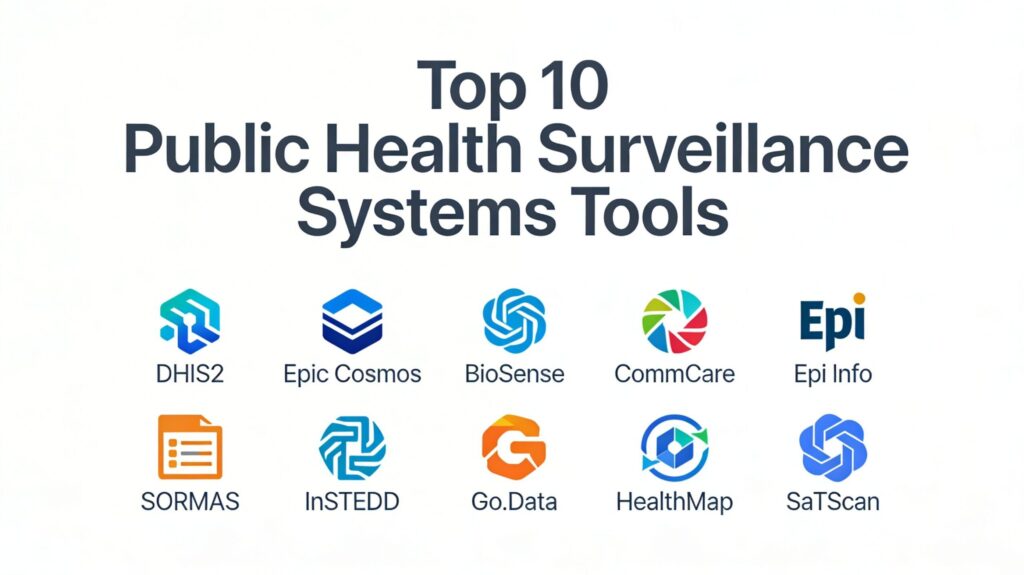
Introduction
Public health surveillance systems serve as the specialized sensory network of global healthcare infrastructure, designed to collect, analyze, and interpret health-related data for the purpose of disease prevention and control. Unlike traditional clinical records that focus on individual patient outcomes, surveillance systems operate on a population-wide scale to identify clusters of illness, monitor environmental hazards, and track the effectiveness of immunization programs. These platforms act as a centralized intelligence layer where every data point—from an emergency room visit to a laboratory result—is processed to provide a comprehensive view of community health. For modern health departments and international NGOs, this technology is the primary driver of rapid response and long-term policy development.
In the current global landscape, the necessity of a dedicated surveillance system is driven by the shift toward “syndromic surveillance,” where organizations must identify potential outbreaks before they are laboratory-confirmed. Fragmented legacy reporting and manual data entry create informational delays that lead to missed intervention windows and public health crises. A robust surveillance platform enables automated case reporting, geographic heat mapping of disease spread, and sophisticated predictive modeling that satisfies the transparency demands of modern governmental bodies. When selecting a system, health organizations must evaluate the technical depth of the epidemiological database, the seamlessness of Electronic Health Record (EHR) integrations, the strength of data encryption for sensitive patient information, and the scalability of the infrastructure to support pandemic-level data surges.
Best for: National and regional health departments, epidemiologists, hospital infection control teams, and international health organizations requiring a unified source of truth for infectious disease monitoring and environmental health tracking.
Not ideal for: Individual private practices looking only for patient scheduling, small wellness clinics without a reporting mandate, or organizations purely looking for a general-purpose database without specialized epidemiological modeling tools.
Key Trends in Public Health Surveillance Systems
The integration of machine learning has moved from a research concept to a core operational requirement, with systems now offering anomaly detection to flag “unusual” health events in real-time. We are also seeing a significant move toward unified data architectures that bridge the gap between human health data and veterinary or environmental datasets, facilitating the “One Health” approach to preventing zoonotic spillover. Real-time data visualization is replacing delayed weekly bulletins, allowing health officials to make strategic adjustments to resource allocation while a localized outbreak is still manageable.
Genomic surveillance is another dominant trend, with platforms now supporting direct integrations for pathogen sequencing data to track viral mutations in real-time. There is a heightened focus on data sovereignty and decentralized reporting, as organizations handling sensitive data for marginalized populations adopt secure computing models to keep records private while still contributing to aggregate national statistics. Furthermore, the shift toward mobile-enabled field reporting allows community health workers to feed data directly into the central CRM foundation from remote areas, ensuring that the surveillance net covers rural and underserved populations as effectively as urban centers.
How We Selected These Tools
Our selection process involved a rigorous assessment of system reliability and functional depth specifically within the global health sector. We prioritized platforms that have demonstrated long-term stability and high reliability scores during significant public health events. A key criterion was the “interoperability value,” evaluating how well each system integrates with essential standards such as HL7 and FHIR, which are non-negotiable for modern health data exchange. We looked for a balance between sophisticated statistical capabilities and a user interface that can be navigated by field staff and clinical reporters who may not have a background in data science.
Scalability was also a major factor; we selected systems that can grow alongside a health authority, from managing local clinic reports to handling millions of laboratory records at a national level. Security certifications were scrutinized to ensure alignment with international standards like HIPAA and GDPR, which are critical for organizations handling sensitive health information. Finally, we assessed the total operational footprint, including the requirements for implementation and the strength of the developer community, to ensure that the list provides viable options for various infrastructure levels across different global regions.
1. DHIS2 (District Health Information Software)
DHIS2 is a world-leading, open-source platform used primarily by national governments and international agencies for the management of health programs. It offers a comprehensive “capture-to-analysis” workflow, allowing organizations to manage complex aggregate data and individual tracker records within a single secure environment. Its highly flexible nature makes it the standard for low-resource settings that require offline capabilities and localized configuration.
Key Features
The platform features a robust metadata engine that allows users to define custom data elements and indicators without writing code. It includes an integrated mapping module for geographic analysis of health service delivery and disease prevalence. The “Tracker” component provides a longitudinal view of individual patient journeys for programs like HIV or maternal health. Advanced data visualization tools allow for the creation of interactive dashboards for district and national managers. It also supports a massive range of data entry options, including mobile SMS, Android applications, and direct web entry.
Pros
The level of global community support is unmatched, providing access to a massive library of pre-configured metadata packages. There are no licensing fees, which significantly lowers the total cost of ownership for government ministries.
Cons
The platform is highly complex and usually requires a dedicated technical team for initial server configuration and maintenance. Significant staff training is often required to master the advanced analytical features.
Platforms and Deployment
Web-based (SaaS or Self-hosted) and Android applications for mobile field workers.
Security and Compliance
Adheres to strict data privacy standards and provides granular role-based access controls to protect sensitive health records.
Integrations and Ecosystem
Integrates with various applications through a robust Web API, including links to laboratory information systems and logistics management tools.
Support and Community
Offers a global “Academy” for professional training and a vibrant community of developers and implementation partners across over 70 countries.
2. Epic Cosmos
Epic Cosmos is a massive, cloud-based surveillance and research platform built on the foundation of the world’s most widely used electronic health record system. It is designed for large health systems that want to leverage de-identified, real-time clinical data to identify health trends and treatment outcomes across millions of patient records.
Key Features
The standout feature is the “SlicerDicer” tool, which allows epidemiologists to visually query massive datasets to identify disease clusters in real-time. It includes automated alerts for “notifiable conditions,” ensuring that hospitals remain compliant with mandatory government reporting. The system features integrated tools for tracking vaccine effectiveness and adverse events across diverse populations. It also offers a “Look-Alike” dashboard that helps clinicians find similar cases to a rare presentation. Predictive models are built-in to help health systems anticipate surges in respiratory illnesses or other seasonal surges.
Pros
The data is derived directly from clinical workflows, ensuring a high level of accuracy and timeliness. It provides immediate access to a vast network of participating health organizations for collaborative research.
Cons
It is only accessible to organizations already utilizing the Epic EHR ecosystem, which limits its availability. The implementation is part of a larger, high-cost enterprise healthcare transformation.
Platforms and Deployment
Cloud-native platform accessible through the existing Epic Hyperspace interface.
Security and Compliance
Features industry-leading security including SOC 2 Type II and full HIPAA compliance for patient data protection.
Integrations and Ecosystem
Seamlessly integrated with the broader Epic ecosystem and major third-party clinical research databases.
Support and Community
Known for excellent vendor support and a very large network of professional users within the Epic User Group.
3. BioSense (NSSP)
BioSense, part of the National Syndromic Surveillance Program, is a specialized platform tailored for real-time situational awareness. It combines clinical data with unconventional sources to help public health officials identify potential threats before they are confirmed by traditional laboratory methods.
Key Features
It includes “ESSENCE” (Electronic Surveillance System for the Early Notification of Community-based Epidemics), which provides advanced statistical algorithms for anomaly detection. The system features automated daily data feeds from emergency departments and urgent care centers. It features a collaborative “Community of Practice” dashboard where different jurisdictions can share insights during an event. The platform offers geographic mapping of chief complaint data to visualize geographic spread. It also provides advanced data cleaning tools that normalize disparate data formats into a standardized view.
Pros
It is built specifically for early warning, allowing health departments to act days or weeks before laboratory results are finalized. The prospect of regional collaboration is built into the data architecture.
Cons
The software has a notable learning curve for data analysts transitioning from traditional static reporting. It is primarily focused on acute events and may lack features for long-term chronic disease management.
Platforms and Deployment
Cloud-based SaaS accessible via secure government and institutional portals.
Security and Compliance
Maintains rigorous government security standards including FISMA and SOC 2 for secure data transit and storage.
Integrations and Ecosystem
Part of the broader national health security infrastructure, integrating with state and local health information exchanges.
Support and Community
Provides professional training programs and access to a large network of state and local public health epidemiologists.
4. CommCare
CommCare is a specialized mobile-first surveillance and case management platform designed to help community health workers provide personalized care in remote areas. It uses automation and “decision support” to help field teams identify and report health risks during home visits.
Key Features
The platform uses “Logic-Based Workflows” to guide health workers through complex clinical protocols and survey questions. It features a robust offline mode that allows data to be captured in areas without internet connectivity and synced later. The “Supervisor Dashboard” suggests the best allocation of field staff based on reported caseloads and geographic needs. It includes integrated tools for SMS reminders to patients for follow-up care. The system also offers a specialized module for tracking nutritional status in children.
Pros
The mobile interface is highly intuitive and can be used by staff with limited technical literacy. Its offline capabilities are some of the most advanced for field-based surveillance.
Cons
The focus on mobile “case management” may require additional tools for high-level national aggregate analysis. It is a premium product for larger scales with a corresponding price tag.
Platforms and Deployment
Cloud-based SaaS for management with Android and iOS apps for field staff.
Security and Compliance
Full data encryption and HIPAA compliance, ensuring that sensitive community health data is handled with enterprise-grade care.
Integrations and Ecosystem
Strong API for custom connections and a wide array of native integrations with DHIS2 and Tableau.
Support and Community
Offers a dedicated customer success model and a vast library of resources on the “Frontline Worker” methodology.
5. Epi Info
Epi Info is a versatile, longstanding platform provided by the CDC that serves epidemiologists looking to manage everything from outbreak investigations to long-term community surveys. It is known for its high level of statistical rigor and customizable data entry forms.
Key Features
The software includes a comprehensive “Form Designer” that handles complex skip logic and data validation rules. It features an integrated “Analysis” module that performs frequency distributions, cross-tabulations, and advanced regression modeling. Users can create custom “Maps” that link epidemiological data directly to geographic coordinates. It offers automated data entry for paper-based surveys through advanced scanning features. The reporting engine is highly flexible, allowing for the creation of custom “Dashboard” views for different outbreak scenarios.
Pros
The “all-in-one” nature for investigation and analysis reduces the need for multiple disparate statistical software subscriptions. It is provided for free, making it accessible for local health departments.
Cons
The sheer volume of legacy features can make the initial configuration process feel a bit dated to modern users. Some users find the interface less modern compared to web-native entrants.
Platforms and Deployment
Windows-based desktop application with mobile companions for data entry.
Security and Compliance
Follows standard government data protection regulations and secure local data encryption.
Integrations and Ecosystem
Offers a solid integration with various payment and logistics tools, and exports data easily to SAS or R for further analysis.
Support and Community
Provides a range of support tiers, including a dedicated help desk and an extensive online training repository.
6. SORMAS (Surveillance Outbreak Response Management and Analysis System)
SORMAS is a highly respected surveillance tool designed specifically for outbreak management and contact tracing. It provides a robust set of tools for infectious disease control at a price point that is accessible for national public health institutes.
Key Features
The platform features a “Process-Oriented” view that consolidates case reports, contact tracing status, and laboratory results. It includes a simple but powerful task management tool that helps field teams stay organized during an active investigation. Users can manage vaccination campaigns with integrated tracking for coverage rates. The software offers customizable dashboards for real-time situational awareness that sync instantly with the database. It also provides a specialized module for managing quarantine and isolation orders.
Pros
It is one of the most effective professional tools for managing the lifecycle of an epidemic. The software is remarkably stable and follows international epidemiological standards out of the box.
Cons
It lacks some of the high-end chronic disease tracking features found in more expensive platforms. The interface is functional but lacks the high-end aesthetic of private sector tools.
Platforms and Deployment
Web-based (SaaS or Self-hosted) with Android mobile apps.
Security and Compliance
Maintains secure, encrypted servers and follows industry-standard GDPR privacy practices.
Integrations and Ecosystem
Integrates well with laboratory systems and several popular data visualization tools like Power BI.
Support and Community
Known for having a very helpful and responsive support team and a detailed international user community.
7. InSTEDD Platform
InSTEDD is an integrated platform designed for mid-market and enterprise health organizations that want to consolidate their entire communication and surveillance stack. It is particularly strong in multi-channel alerts and complex collaborative workflows.
Key Features
The system features an in-house “Resource Map” module, which allows for the collaborative tracking of assets and health events. It includes advanced tools for managing “SMS-based” surveillance programs with automated logic for reporting. The “Verboice” module allows organizations to run voice-based reporting campaigns and track community feedback. It offers sophisticated workflow automation for moves management in disaster scenarios. The platform also includes a full-featured data aggregation system for disparate data streams.
Pros
Having a single vendor for both the communication and surveillance stack simplifies support and deployment. The toolset is exceptionally deep for crisis response.
Cons
The setup process is intensive and requires a significant time commitment from the organization. The interface can be complex due to the density of communication tools.
Platforms and Deployment
Web-based SaaS and open-source options.
Security and Compliance
Adheres to top-tier security for both data and communication transactions, including standard encryption protocols.
Integrations and Ecosystem
Designed to be an all-in-one solution, though it maintains an open API for essential third-party clinical connections.
Support and Community
Offers dedicated project support for larger organizations and a comprehensive training program.
8. Go.Data
Go.Data is the leading outbreak investigation tool built specifically by the WHO and partners for the global public health sector. It offers unparalleled flexibility for organizations that need to manage complex contact tracing and chains of transmission.
Key Features
Because it is built for outbreaks, the feature set is highly focused on contact tracing, with a community-driven library of best practices. It includes deep modules for managing “contact-case” relationships and visualizing clusters of infection. The software integrates directly into existing field workflows through its mobile application. It allows for highly complex data structures and custom relationships between cases. It also features a robust laboratory result linking system.
Pros
It is provided by the WHO, making it a highly credible option for national ministries. You have 100% ownership and control of your local data and investigation code.
Cons
It requires significant technical expertise to install and customize for a specific local context. Without a dedicated IT team, the initial setup can be challenging.
Platforms and Deployment
Web-based (Self-hosted) or local installation. It runs on standard server environments.
Security and Compliance
Security depends heavily on the local hosting environment, though the core code follows strict international standards.
Integrations and Ecosystem
Has a growing ecosystem of community-developed plugins and integrates natively with major epidemiological tools.
Support and Community
Supported by a global community of experts and the WHO, with extensive documentation available for free.
9. HealthMap
HealthMap is a modern, social-focused surveillance platform that includes a built-in “informal” data crawler. It is designed for organizations that want to combine traditional health reports with “news and social” data for a global view of emerging threats.
Key Features
The platform features integrated “Internet Crawling” support to appeal to modern situational awareness needs. It includes a built-in “Alert” tool for viral events and localized disease mentions. The system automatically creates “Event Profiles” for every outbreak mentioned in global news sources. It offers peer-to-peer data sharing features with “Visual Timeline” features like outbreak feeds. The system also includes a simple summary marketing suite for direct public health outreach.
Pros
The platform is free for public use, which is ideal for small organizations on a tight budget. The geographic visualizations are among the most engaging in the industry.
Cons
The surveillance functionality is not as deep as clinical relational databases like DHIS2. It is primarily a situational awareness tool with case management added on.
Platforms and Deployment
Web-based SaaS and mobile app.
Security and Compliance
Uses industry-standard encryption and secure data processing through secure server environments.
Integrations and Ecosystem
Strong native integration with various research platforms and several hundred other apps via custom APIs.
Support and Community
Known for being extremely user-friendly with a vibrant community and very fast public support.
10. SaTScan
SaTScan is an “intelligence-driven” statistical platform for health departments that uses spatial and temporal data to help teams find disease clusters. It provides a balanced suite of tools for data analysis, cluster identification, and prospective surveillance.
Key Features
The “Scan Statistic” tool uses spatial data to suggest the best location of a suspected cluster. It features a built-in “Prospective” system that links new data directly to historical baselines. Users can create beautiful, automated cluster reports to share with health officials. The platform includes integrated “Time-Series” analysis with a high-performance statistical engine. It also offers “Space-Time” features where researchers can manage their own recurring surveillance datasets.
Pros
The combination of spatial and temporal analysis helps keep the whole surveillance team aligned. The statistical insights provide professional-level data science to smaller departments.
Cons
The reporting tools, while powerful, can take some time to master for complex custom queries. The software is strictly for analysis rather than data collection.
Platforms and Deployment
Windows and Linux desktop application.
Security and Compliance
Strong data privacy protocols and secure local data processing, adhering to standard public health regulations.
Integrations and Ecosystem
Integrates with various GIS software and statistical packages like R and SAS.
Support and Community
Offers a high-quality “Help Center” and a dedicated user forum for statistical troubleshooting.
Comparison Table
| Tool Name | Best For | Platform(s) Supported | Deployment | Standout Feature | Public Rating |
| 1. DHIS2 | National Governance | Web, Android | Self-Hosted | Global Metadata Engine | 4.8/5 |
| 2. Epic Cosmos | Large Health Systems | Web-Based | Cloud SaaS | Real-time Clinical Data | 4.6/5 |
| 3. BioSense | Early Outbreak Warning | Web-Based | Cloud SaaS | ESSENCE Anomaly Detection | 4.5/5 |
| 4. CommCare | Frontline Case Management | Web, iOS, Android | Cloud SaaS | Offline Mobile Logic | 4.7/5 |
| 5. Epi Info | Investigation / Analysis | Windows, Mobile | Local / Desktop | Integrated Analysis Suite | 4.4/5 |
| 6. SORMAS | Outbreak Management | Web, Android | Self-Hosted | Process-Oriented Contact Tracing | 4.7/5 |
| 7. InSTEDD | Crisis Communication | Web-Based | Cloud SaaS | Resource Mapping | 4.3/5 |
| 8. Go.Data | Transmission Tracking | Web-Based | Self-Hosted | WHO Standard Tracking | 4.6/5 |
| 9. HealthMap | Situational Awareness | Web, iOS, Android | Cloud SaaS | Informal Data Crawling | 4.5/5 |
| 10. SaTScan | Statistical Clustering | Windows, Linux | Desktop | Spatial-Temporal Scan | 4.8/5 |
Evaluation & Scoring of Public Health Surveillance Systems
The scoring below is a comparative model intended to help shortlisting. Each criterion is scored from 1–10, then a weighted total from 0–10 is calculated using the weights listed. These are analyst estimates based on typical fit and common workflow requirements, not public ratings.
Weights:
- Core features – 25%
- Ease of use – 15%
- Integrations & ecosystem – 15%
- Security & compliance – 10%
- Performance & reliability – 10%
- Support & community – 10%
- Price / value – 15%
| Tool Name | Core (25%) | Ease (15%) | Integrations (15%) | Security (10%) | Performance (10%) | Support (10%) | Value (15%) | Weighted Total |
| 1. DHIS2 | 10 | 4 | 9 | 9 | 8 | 10 | 10 | 8.80 |
| 2. Epic Cosmos | 9 | 7 | 10 | 10 | 10 | 8 | 5 | 8.35 |
| 3. BioSense | 9 | 6 | 8 | 9 | 9 | 8 | 8 | 8.10 |
| 4. CommCare | 8 | 9 | 8 | 9 | 8 | 9 | 7 | 8.25 |
| 5. Epi Info | 8 | 6 | 7 | 8 | 7 | 8 | 10 | 7.65 |
| 6. SORMAS | 9 | 8 | 8 | 9 | 8 | 8 | 9 | 8.50 |
| 7. InSTEDD | 8 | 7 | 8 | 8 | 8 | 8 | 8 | 7.90 |
| 8. Go.Data | 9 | 5 | 8 | 8 | 8 | 9 | 10 | 8.25 |
| 9. HealthMap | 7 | 9 | 7 | 8 | 9 | 8 | 10 | 8.15 |
| 10. SaTScan | 8 | 5 | 7 | 8 | 10 | 7 | 9 | 7.70 |
How to interpret the scores:
- Use the weighted total to shortlist candidates, then validate with a pilot.
- A lower score can mean specialization, not weakness.
- Security and compliance scores reflect controllability and governance fit, because certifications are often not publicly stated.
- Actual outcomes vary with assembly size, team skills, templates, and process maturity.
Which Public Health Surveillance System Tool Is Right for You?
Solo / Freelancer
For very small public health initiatives or localized community monitoring, a tool that is free and requires minimal server infrastructure is critical. You need something that provides immediate “out-of-the-box” survey forms, allowing you to focus on early-stage data collection and community engagement without technical hurdles.
SMB
Organizations with a small staff should prioritize mobile-first data entry and automated reporting. Your goal is to reduce the administrative burden of field workers so your team can spend more time on community health education. A platform with offline mobile capabilities is the most efficient choice here.
Mid-Market
Mid-sized health authorities need to start thinking about data interoperability and GIS mapping. You should look for a surveillance system that offers automated alerts or anomaly detection to help your growing epidemiology team identify risks before they become widespread crises.
Enterprise
Large, complex health ministries require a system that can act as a national health data warehouse. Security, standardized clinical coding, and the ability to integrate with high-end laboratory software are the top priorities to ensure national health security and data integrity across diverse regions.
Budget vs Premium
If budget is the primary concern, open-source models provided by global health bodies provide professional tools for zero licensing fees. Premium platforms, however, offer specialized features like real-time clinical data access and deep EHR integration that can provide a much higher level of situational awareness for established systems.
Feature Depth vs Ease of Use
Highly complex investigative tools offer infinite possibilities but can stall a team if they are too hard to deploy during a crisis. Often, a slightly more streamlined tool that every field worker actually understands how to use is more valuable than a “perfect” system that is too difficult for the average clinician.
Integrations & Scalability
Your surveillance system must be able to talk to your laboratory and pharmacy platforms. As you grow, the ability to add modules for different diseases or connect to new data streams without a total system migration is a vital consideration for long-term health infrastructure health.
Security & Compliance Needs
If you handle infectious disease records, genomic data, or sensitive maternal health records, your surveillance choice is a legal decision as much as a technical one. Ensure the provider has the specific certifications required for your operational region and patient data type.
Frequently Asked Questions (FAQs)
1. What is the difference between passive and active surveillance?
Passive surveillance relies on health providers to initiate the report when a case is found. Active surveillance involves health department staff regularly contacting providers or communities to specifically search for cases of a disease, ensuring more complete data.
2. Is it difficult to migrate clinical data to a surveillance system?
Most modern systems use HL7 or FHIR standards to simplify this, but it requires “mapping” your data first. Ensuring consistent clinical coding and removing duplicate patient IDs before you start the migration process will save months of work later.
3. Why do some systems require specialized mobile apps?
Field-based surveillance often occurs in areas with no internet. Specialized apps allow for “offline data entry” and complex validation logic that standard web browsers cannot handle, ensuring data quality at the point of collection.
4. Can a surveillance system help with vaccine distribution?
Yes, many professional systems include modules to track vaccine coverage, identify “cold chain” breaks, and monitor for adverse events, ensuring that immunization programs are both safe and effective.
5. Is open-source software like DHIS2 truly free?
While there are no licensing fees, you still have to pay for server hosting, security maintenance, and likely a technical team to help with the initial setup. For many, this “ownership” model is preferred over recurring per-user SaaS fees.
6. Do these tools integrate with hospital EHRs?
Almost every modern tool on this list has a connection via standardized health APIs to systems like Epic or Cerner. This is essential for ensuring that clinical cases are automatically flagged for public health follow-up.
7. How does surveillance help with antimicrobial resistance?
By tracking laboratory results over time, a surveillance system can alert officials to increasing rates of resistance in a specific community. This allows for updated clinical guidelines and targeted antibiotic stewardship programs.
8. Is health data security different for surveillance?
Surveillance often handles “notifiable” data that must be shared with governments while protecting individual identities. Therefore, standard encryption and specialized de-identification protocols are absolute requirements for these systems.
9. Can I use a surveillance system to manage environmental health?
Many public health systems have specialized modules that track air quality, water safety, and vector-borne risks. This allows you to treat environmental factors as part of your overall population health strategy.
10. Do these platforms provide training for field staff?
Most global health vendors offer a combination of video libraries, field manuals, and paid training workshops. Choosing a tool with a robust “Academy” or WHO-backed training is a major advantage for rapid deployment.
Conclusion
In the modern landscape of global health security, a surveillance system is no longer a secondary tool—it is the digital foundation upon which population-level health is protected. Whether you are a local community clinic or a national health ministry, the ability to transform raw clinical data into actionable epidemiological insights is the key to preventing the next crisis. By choosing a system that balances technical depth with operational flexibility, you empower your health workers to move away from reactive care and back to the proactive, preventative work that saves lives. The ideal platform is one that not only secures your current data but also provides the scalable infrastructure needed to navigate the complexities of future health threats.