Introduction
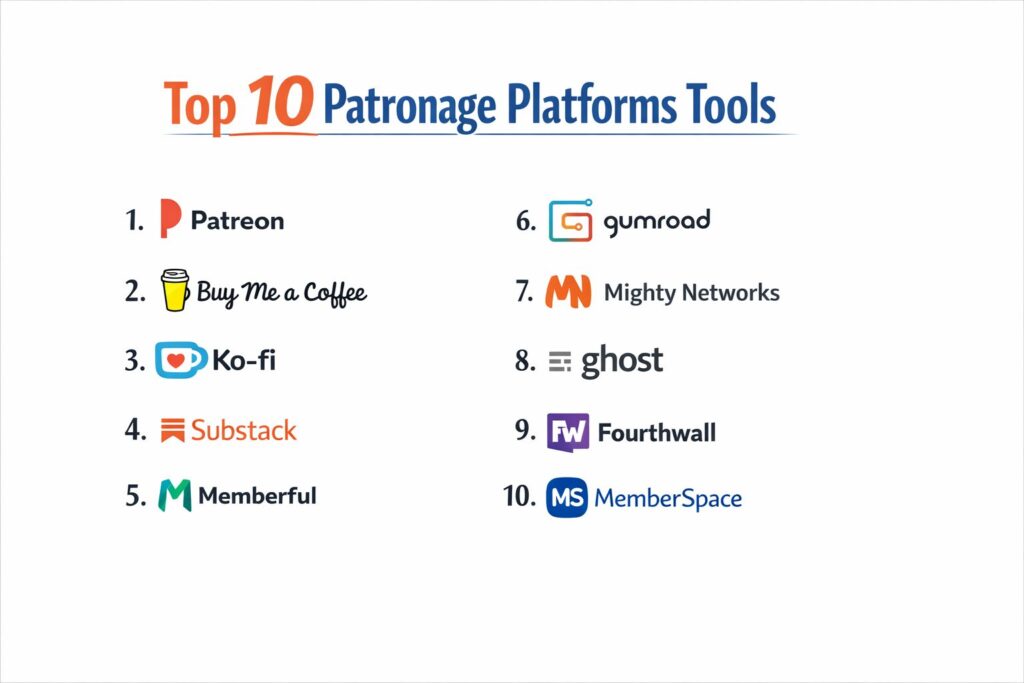
Patronage platforms represent a fundamental shift in the digital economy, moving away from erratic advertising revenue toward sustainable, community-driven financial models. These systems provide the technical infrastructure for creators to establish direct relationships with their most dedicated followers, facilitating recurring payments in exchange for exclusive access, early releases, or deeper engagement. In the professional creative landscape, these tools are no longer optional “tip jars” but sophisticated business engines that manage tax compliance, global currency conversion, and automated content delivery. By centralizing the transaction layer, patronage platforms allow artists, writers, and developers to focus on their primary output while building a resilient financial “moat” that is independent of shifting social media algorithms.
The modern necessity for these tools is driven by a desire for platform independence and income predictability. Organizations and individual creators use these platforms to transition from a “reach-first” strategy to a “depth-first” strategy, prioritizing high-value engagement with a smaller, more loyal audience over low-value views from the masses. When evaluating which patronage tool to adopt, professionals must assess the fee structures, the degree of branding control, and the robustness of integration with their existing content distribution channels. The decision often hinges on whether a creator needs a simplified donation link or a full-scale membership infrastructure that can serve as the primary host for their digital community.
Best for: Independent journalists, podcasters, visual artists, software developers, and niche educators who require a reliable way to monetize their audience through recurring support and gated content.
Not ideal for: One-off transactional e-commerce where customer relationship management is not a priority, or creators who rely solely on viral reach without a core community to convert into patrons.
Key Trends in Patronage Platforms
The creator economy is experiencing a significant move toward “white-label” solutions, where creators can host their membership programs on their own domains while using these platforms as the underlying engine. This shift is driven by a need for long-term brand ownership and data control. There is also an increasing integration of artificial intelligence to help creators analyze patron behavior, predicting churn before it happens and suggesting personalized rewards to increase retention. Real-time interaction tools, such as integrated group chats and live-streaming capabilities, are becoming standard features, as fans now expect immediate access to their favorite creators.
Another major trend is the simplification of the checkout process, with one-tap mobile payments like Apple Pay and Google Pay drastically increasing conversion rates for casual supporters. Platforms are also expanding their financial services, offering instant payouts and multi-currency support to cater to a globalized workforce. We are also seeing a rise in “bundle” patronage, where groups of creators combine their offerings into a single subscription, providing more value to users while sharing the overhead costs of platform management.
How We Selected These Tools
The selection of these top patronage platforms was based on a rigorous evaluation of their market stability and feature sets. We prioritized tools that offer a clear path to scalability, ensuring that a platform suitable for a beginner can also support a high-revenue enterprise. Transaction security and global compliance were non-negotiable criteria, as these tools handle sensitive financial data and must adhere to international tax and privacy laws. We also examined the transparency of fee structures, favoring platforms that clearly outline their costs without hidden service charges.
User experience was evaluated from both the creator’s and the supporter’s perspectives. A platform must be intuitive for the artist to manage while remaining frictionless for the patron to navigate and pay. We looked for robust API availability and third-party integrations, as most creators use a stack of tools that must communicate effectively. Finally, we assessed the community and support systems provided by each developer, ensuring that users have access to the resources needed to troubleshoot technical issues and optimize their monetization strategies.
1. Patreon
Patreon is the most recognizable name in the membership space, serving as a comprehensive solution for creators to offer tiered subscriptions. It provides a structured environment for hosting gated posts, delivering digital rewards, and managing a database of active supporters. The platform is designed to handle the complexity of recurring billing across various global regions, making it a reliable backbone for established professional creators.
Key Features
The platform uses a tier-based system that allows creators to define different levels of access and rewards for their patrons. It includes built-in tools for posting videos, audio, and images directly to a private feed. Creators can manage their community through integrated messaging and comment sections. It also offers detailed analytics to track subscriber growth and revenue trends over time. Additionally, the platform handles all aspects of VAT and sales tax collection, which is a significant administrative relief for international creators.
Pros
It has massive brand recognition, which builds immediate trust with potential supporters. The platform is highly specialized in recurring revenue, making the subscription management process very efficient.
Cons
The platform fees can be relatively high compared to newer alternatives. The interface can sometimes feel restrictive for those who want a fully customized brand experience.
Platforms and Deployment
Web-based, with dedicated mobile applications for both iOS and Android.
Security and Compliance
Industry-standard encryption for payments and full compliance with global tax regulations and data protection laws.
Integrations and Ecosystem
It offers deep integrations with Discord for community management and WordPress for gated website content. It also connects with various email marketing and automation tools.
Support and Community
Extensive documentation and a large community of creators who share best practices for growth and engagement.
2. Buy Me a Coffee
Buy Me a Coffee focuses on simplicity and low friction, offering a “one-tap” support model that doesn’t require followers to create an account. While it supports memberships, it is particularly popular for one-time “tips” or donations, making it an ideal entry point for creators who aren’t ready for a full subscription model.
Key Features
The platform offers a clean, minimalistic page where supporters can send money in just a few clicks. It includes a “Shop” feature for selling digital products or “Extras” like shoutouts or consultations. It supports both one-time and recurring payments without forcing a complex tier structure. The platform also features a simple messaging tool to thank supporters directly. Its mobile app allows creators to post updates and manage their account on the go with ease.
Pros
The extremely fast setup and frictionless checkout process lead to higher conversion rates for casual supporters. It offers a very generous free tier with straightforward transaction-based fees.
Cons
It lacks the deep community and membership management features found in more robust platforms. The simplicity may become a limitation as a creator’s business needs grow more complex.
Platforms and Deployment
Web-based platform with a high-performance mobile app for creators.
Security and Compliance
Secure payment processing through Stripe and adherence to standard financial security protocols.
Integrations and Ecosystem
Integrates with Discord and various website builders. It also offers widgets that can be easily embedded on any external site.
Support and Community
Fast responsive support and a growing library of resources for new creators.
3. Ko-fi
Ko-fi is a versatile platform that blends donations, memberships, and an e-commerce storefront into a single interface. It is unique for its “zero platform fee” model on basic donations, allowing creators to keep a higher percentage of their earnings compared to almost any other major competitor.
Key Features
Creators can set up a page to accept tips, offer monthly memberships, or sell digital and physical items in a built-in shop. It features a “Commissions” tool that allows artists to manage custom requests with specific slots and prices. The platform provides a social-like feed where creators can share public or supporter-only updates. It also includes goal-tracking widgets that can be displayed on streams or websites to encourage community participation. Supporters are not required to create accounts for one-off contributions.
Pros
The 0% platform fee on donations is a massive advantage for creators on a budget. It is a true all-in-one tool that handles multiple revenue streams without needing external plugins.
Cons
Some advanced features, like detailed analytics and lower membership fees, require a paid monthly subscription. The dashboard can feel a bit cluttered due to the wide range of features.
Platforms and Deployment
Web-based interface with a mobile-responsive design for all devices.
Security and Compliance
Direct integration with PayPal and Stripe ensures secure transactions and professional-grade financial handling.
Integrations and Ecosystem
Strong integrations for live-streamers, including Twitch and YouTube alerts. It also connects with Discord and Zapier for automated workflows.
Support and Community
Active community forums and a comprehensive help center with tutorials on maximizing platform features.
4. Substack
Substack has revolutionized the way writers and podcasters monetize their work by combining a newsletter service with a paid subscription model. It is designed to help creators build a direct relationship with their audience through their email inbox, bypassing social media algorithms entirely.
Key Features
The platform provides a streamlined writing and publishing interface that handles both free and paid newsletters. It includes native podcast hosting with the ability to offer paid-only episodes to subscribers. Substack features a built-in discovery network that helps creators find new readers within the platform’s ecosystem. It also offers community features like “Threads” for subscriber discussions and a “Notes” section for short-form updates. The analytics dashboard provides deep insights into open rates, click rates, and subscriber churn.
Pros
It is the best platform for creators who want to own their audience’s contact information directly. The platform is incredibly easy to use, requiring no technical knowledge to start a professional publication.
Cons
The 10% platform fee can become quite expensive for high-revenue publications. Customization options for the design of the newsletter and website are relatively limited.
Platforms and Deployment
Web-based publishing tool with a dedicated reader app for iOS and Android.
Security and Compliance
Secure payment handling through Stripe and strict adherence to email privacy and anti-spam regulations.
Integrations and Ecosystem
While it is largely a self-contained ecosystem, it allows for the export of subscriber lists and integrates with standard social sharing tools.
Support and Community
Excellent resources for writers, including fellowships and a “Grow” series focused on audience development strategies.
5. Memberful
Memberful is built as a professional infrastructure for creators who want to run a membership program directly on their own website. It is owned by Patreon but offers a much more “behind-the-scenes” approach, focusing on providing the plumbing for high-end, branded membership experiences.
Key Features
The software provides a customizable overlay for payments and account management that stays on the creator’s site. It features robust tools for managing different subscription plans, including free trials and gift memberships. It includes a private podcasting feature that generates unique RSS feeds for individual members. The platform also offers advanced tax handling and comprehensive reporting on business health. It is designed to be invisible to the end-user, ensuring that the creator’s brand remains the primary focus.
Pros
It offers the highest level of brand control, as supporters never feel like they are leaving the creator’s website. It is extremely reliable and built for professional-scale operations.
Cons
It requires an existing website to function, making it less suitable for beginners without a web presence. The setup process is more technical than all-in-one platforms.
Platforms and Deployment
Web-based API and dashboard that integrates with self-hosted websites.
Security and Compliance
Enterprise-grade security and full PCI compliance, backed by the infrastructure of its parent company.
Integrations and Ecosystem
Seamless integration with WordPress, Ghost, and various email providers. It also features a robust API for custom-built integrations.
Support and Community
High-quality, direct professional support and detailed technical documentation for developers.
6. Gumroad
Gumroad is a powerful e-commerce and patronage hybrid that allows creators to sell digital products, physical goods, and recurring memberships. It is known for its flexibility and its focus on helping creators “start small and grow big” with a very low barrier to entry.
Key Features
The platform allows creators to build a simple storefront or embed a “Buy” button on any external website. It features a robust subscription engine that can handle monthly, quarterly, or yearly billing cycles. It includes an affiliate system that allows creators to recruit others to help sell their products for a commission. The platform also offers automated workflow tools, such as sending follow-up emails after a purchase. Its “Discover” feature helps surfaced products to a wider audience of shoppers already on the platform.
Pros
It is one of the most flexible platforms for selling a mix of one-time products and recurring memberships. It handles all the complex aspects of digital delivery and VAT collection automatically.
Cons
The flat 10% fee can be significant for creators with high sales volumes. The design of the storefront is functional but lacks the high-end aesthetic of some competitors.
Platforms and Deployment
Web-based platform with a mobile app for both creators and consumers.
Security and Compliance
Secure payment processing and a dedicated risk team to prevent fraud and handle disputes.
Integrations and Ecosystem
Connects with a wide range of tools via Zapier and has a well-documented API for custom development.
Support and Community
Good library of educational content and a support team that is focused on the “creator-entrepreneur” journey.
7. Mighty Networks
Mighty Networks is an all-in-one platform for creators who want to build a community-led business. It combines the features of a social network, a course platform, and a membership site, allowing for a deeply interactive experience for supporters.
Key Features
The platform allows creators to build their own private social network with member profiles, activity feeds, and group chats. It includes a native tool for creating and selling online courses with video hosting and quizzes. It supports complex membership structures where users can pay for access to the whole network or specific “spaces.” It also features a live-streaming tool and event management capabilities. For enterprise users, it offers the ability to launch fully branded mobile apps in the app stores.
Pros
It is the best choice for creators whose value lies in the interaction between their members. It provides a much deeper sense of “belonging” than simple feed-based platforms.
Cons
The monthly subscription cost for the platform itself is higher than many other options. It can be overwhelming for creators who only need simple donation or subscription features.
Platforms and Deployment
Web-based platform with native iOS and Android apps.
Security and Compliance
Robust member data protection and secure payment processing compliant with global standards.
Integrations and Ecosystem
Integrates with thousands of apps via Zapier and offers a smooth transition for creators moving from Facebook Groups.
Support and Community
Extensive training through their “Community Design” program and direct support for higher-tier plans.
8. Ghost
Ghost is an open-source, professional alternative to Substack, designed for independent journalists and modern media startups. It offers complete creative freedom and data ownership, making it the preferred choice for those who want a fully customized, professional publication.
Key Features
The platform features a world-class editor designed for high-speed writing and publishing. It includes a native membership system that allows for free and paid tiers with no per-transaction fees. Creators have full control over the design and branding of their site through custom themes. It also offers advanced SEO tools and built-in email newsletter delivery. Because it is open-source, users can choose to host it themselves or use a managed service for a monthly fee.
Pros
The “no platform fee” model (beyond a flat monthly hosting cost) makes it highly profitable for large publications. It offers the best design and branding flexibility in the industry.
Cons
It requires more technical setup and management than all-in-one platforms. The lack of a built-in discovery network means creators must bring their own audience.
Platforms and Deployment
Web-based, available as a managed service or a self-hosted installation.
Security and Compliance
Highly secure architecture with regular updates and full ownership of all member data.
Integrations and Ecosystem
Deeply extensible through its API and a massive library of third-party integrations for everything from analytics to advertising.
Support and Community
Excellent developer documentation and a professional support team for the managed “Ghost(Pro)” service.
9. Fourthwall
Fourthwall is an all-in-one platform designed specifically for video creators and streamers to run their entire business. It integrates memberships, merchandise, and digital products into a single, highly polished storefront that looks like a high-end brand site.
Key Features
The platform offers a drag-and-drop website builder that is optimized for creator brands. It features a built-in merchandise engine where Fourthwall handles everything from manufacturing to global shipping. It includes a “Supporter-Only” feed for memberships and the ability to give out digital rewards or shoutouts. One of its standout features is the “Gift a Sub” capability, allowing fans to buy memberships for others. It also provides a dedicated app for supporters to consume content and track their orders.
Pros
It is the most aesthetically pleasing and professional-looking option for creators who want a “branded” feel. It removes the logistical headache of managing physical merchandise.
Cons
It is primarily focused on high-visibility creators, so it may feel like “too much software” for a casual writer or artist. The feature set is heavily weighted toward video and streaming workflows.
Platforms and Deployment
Web-based platform with a dedicated “Supporter” app for iOS and Android.
Security and Compliance
Acts as the “Merchant of Record,” meaning they handle all the complex tax and legal compliance for the creator.
Integrations and Ecosystem
Strong links to YouTube and Twitch for real-time alerts and “Merch Shelf” integration. It also connects with major email and marketing tools.
Support and Community
Personalized professional support and a community that focuses on the business of high-level content creation.
10. MemberSpace
MemberSpace is a specialized tool that turns any existing website into a powerful membership platform. It is designed for those who love their current site-builder but need a more robust way to gate content and manage recurring payments.
Key Features
The software works by adding a small piece of code to an existing site, which then allows the creator to lock specific pages or files. It features a flexible billing engine that supports automated recurring payments, one-time fees, and multiple currencies. It provides a “Member Portal” where users can manage their own accounts and access their content. The platform also offers “Automated Upsells,” encouraging members to move to higher-tier plans during the checkout process. It includes a visual “CSS Editor” to ensure the login and signup forms match the site’s design perfectly.
Pros
It allows creators to keep their existing website and workflow while adding professional-grade membership features. It is exceptionally easy to set up on platforms like Squarespace and Wix.
Cons
Like other infrastructure-focused tools, it requires an existing website to function. The per-transaction fees on the lower plans can be higher than specialized all-in-one tools.
Platforms and Deployment
Web-based software that integrates with any website builder (Squarespace, Wix, WordPress, etc.).
Security and Compliance
Secure payment processing via Stripe and robust data protection policies for all member information.
Integrations and Ecosystem
Directly integrates with all major website builders and connects to over a thousand apps via Zapier.
Support and Community
Highly rated human support team and a wealth of “how-to” guides for various website platforms.
Comparison Table
| Tool Name | Best For | Platform(s) Supported | Deployment | Standout Feature | Public Rating |
|---|---|---|---|---|---|
| Patreon | Tiered memberships and recurring creator subscriptions | Web, iOS, Android | Cloud | Mature tier-based membership system | 4.7/5 |
| Buy Me a Coffee | Quick tips, casual support, and simple memberships | Web, iOS, Android | Cloud | Frictionless one-tap support flow | 4.6/5 |
| Ko-fi | Donations, memberships, and creator storefronts | Web | Cloud | 0% platform fee on basic donations | 4.7/5 |
| Substack | Paid newsletters and podcast subscriptions | Web, iOS, Android | Cloud | Newsletter-first paid community model | 4.6/5 |
| Memberful | Branded memberships on your own website | Web | Cloud | White-label membership infrastructure | 4.5/5 |
| Gumroad | Selling digital products with recurring memberships | Web, iOS, Android | Cloud | Hybrid of storefront and subscription engine | 4.5/5 |
| Mighty Networks | Community-led memberships, courses, and events | Web, iOS, Android | Cloud | Deep community and course environment | 4.6/5 |
| Ghost | Independent publishing with full ownership | Web | Cloud / Self-hosted | No platform fee membership publishing | 4.7/5 |
| Fourthwall | Creator brands selling memberships and merchandise | Web, iOS, Android | Cloud | Branded storefront with merch fulfillment | 4.6/5 |
| MemberSpace | Adding memberships to existing websites | Web | Cloud | Easy paywall layer for existing sites | 4.5/5 |
Evaluation & Scoring of Patronage Platforms
The scoring below is a comparative model intended to help shortlisting. Each criterion is scored from 1–10, then a weighted total from 0–10 is calculated using the weights listed. These are analyst estimates based on typical fit and common workflow requirements, not public ratings.
Weights:
- Core features – 25%
- Ease of use – 15%
- Integrations & ecosystem – 15%
- Security & compliance – 10%
- Performance & reliability – 10%
- Support & community – 10%
- Price / value – 15%
| Tool Name | Core (25%) | Ease (15%) | Integrations (15%) | Security (10%) | Performance (10%) | Support (10%) | Value (15%) | Weighted Total |
|---|---|---|---|---|---|---|---|---|
| Patreon | 9 | 8 | 9 | 9 | 8 | 8 | 7 | 8.25 |
| Buy Me a Coffee | 7 | 10 | 7 | 8 | 8 | 8 | 9 | 8.15 |
| Ko-fi | 8 | 9 | 8 | 8 | 8 | 8 | 10 | 8.55 |
| Substack | 8 | 9 | 6 | 9 | 8 | 8 | 8 | 8.00 |
| Memberful | 9 | 7 | 9 | 9 | 9 | 8 | 8 | 8.45 |
| Gumroad | 8 | 9 | 8 | 8 | 8 | 8 | 8 | 8.15 |
| Mighty Networks | 9 | 7 | 8 | 8 | 8 | 8 | 7 | 7.95 |
| Ghost | 9 | 6 | 9 | 9 | 9 | 8 | 9 | 8.55 |
| Fourthwall | 8 | 8 | 8 | 9 | 8 | 8 | 8 | 8.10 |
| MemberSpace | 8 | 8 | 9 | 8 | 8 | 9 | 8 | 8.20 |
How to interpret the scores:
- Use the weighted total to shortlist candidates, then validate with a pilot.
- A lower score can mean specialization, not weakness.
- Security and compliance scores reflect controllability and governance fit, because certifications are often not publicly stated.
- Actual outcomes vary with assembly size, team skills, templates, and process maturity.
Which Patronage Platform Tool Is Right for You?
Solo / Freelancer
For individuals starting their journey, the primary goal is reducing friction and overhead. A tool that allows you to accept support immediately without a monthly platform fee is often the smartest starting point. This lets you validate your audience’s willingness to pay before committing to a more complex, paid infrastructure.
SMB
Small businesses and creative teams should look for tools that offer a balance of community engagement and ease of management. When you have a small team, you need a platform that automates as much of the administrative work as possible—such as tax collection and asset delivery—allowing your team to focus on the creative product.
Mid-Market
As a creator business scales, the focus moves toward branding and audience ownership. Mid-market entities should prioritize platforms that allow for custom domains and provide full access to subscriber data. This ensures that the business is built on a foundation it controls, rather than being at the mercy of a third-party’s ecosystem.
Enterprise
For large-scale media organizations, the technical reliability and API depth of the platform are paramount. Enterprise solutions must integrate perfectly into existing content management systems and provide high-level security and compliance reporting that meets corporate standards.
Budget vs Premium
Creators on a budget should prioritize transaction-based models where you only pay when you make money. Premium tools often charge a monthly fee but offer significantly lower or zero transaction costs, which can save a high-earning creator thousands of dollars over time.
Feature Depth vs Ease of Use
If your core value is providing a community and courses, you need a deep feature set that supports interaction. However, if your supporters simply want to give you “tips” for your free work, a complex community platform will only create unnecessary friction for them.
Integrations & Scalability
Always consider where you want your business to be in a year. Choose a tool that can grow with you, or at the very least, one that makes it easy to export your data if you decide to move to a more advanced system later.
Security & Compliance Needs
Never overlook the legal side of patronage. If you are selling to a global audience, ensure your chosen platform handles international taxes and adheres to strict security protocols. This protects both your business and the privacy of your supporters.
Frequently Asked Questions (FAQs)
1. What is the average platform fee for patronage tools?
Fees typically range between 5% and 10% of your gross earnings. Some platforms also offer a monthly subscription model with 0% transaction fees, which is often more cost-effective for creators earning significant revenue.
2. Can I use multiple patronage platforms at once?
Yes, many creators use a “tip-based” platform for casual supporters and a separate, more robust “membership” platform for their core community. However, this can sometimes confuse your audience, so clear communication is essential.
3. Do I need to pay taxes on the money I receive?
In almost all jurisdictions, income from patronage is considered taxable business revenue. Many platforms now provide automated tax summaries or even handle the collection of sales tax and VAT on your behalf.
4. How do I move my supporters from one platform to another?
Most platforms allow you to export your email list, which is your most valuable asset. You can then contact your supporters directly to invite them to your new home, though they will usually need to re-enter their payment information.
5. What is the best frequency for supporter updates?
Consistency is more important than frequency. Whether it is once a week or once a month, setting a schedule that your patrons can rely on builds trust and reduces the likelihood of them canceling their support.
6. Can I offer physical rewards through these platforms?
Yes, several platforms have integrated “merch” tools or connect with third-party fulfillment services. This allows you to offer physical items like stickers, shirts, or printed books to your patrons without managing the shipping yourself.
7. Is a patronage platform better than a traditional website?
They serve different purposes. A website is your digital home, while a patronage platform is your transaction and community layer. Many modern tools allow you to combine the two for a seamless experience.
8. Do supporters need to create an account to pay me?
On “donation-focused” platforms, supporters can often pay as a guest. However, for recurring memberships and gated content, an account is usually necessary so the system can verify their access level.
9. Can I hide my real identity on these platforms?
Most platforms allow you to use a creator name or brand name for your public profile. However, you will still need to provide your legal name and financial information to the platform for payment processing and tax reasons.
10. What happens if a platform shuts down?
This is why owning your email list is critical. If a platform closes, you can use your exported list to reach your supporters and move them to a new service. Always choose established platforms with a strong track record.
Conclusion
The evolution of patronage platforms has empowered a new generation of creators to build viable businesses based on genuine community support rather than algorithm-driven reach. Choosing the right tool requires a deep understanding of your own creative workflow and the specific expectations of your audience. Whether you prioritize the simplicity of a “buy me a coffee” model or the structural depth of a professional membership engine, the goal remains the same: to create a sustainable environment where your best work can thrive. By selecting a platform that offers the right balance of control, security, and scalability, you ensure that your creative career is built on a solid and independent foundation.