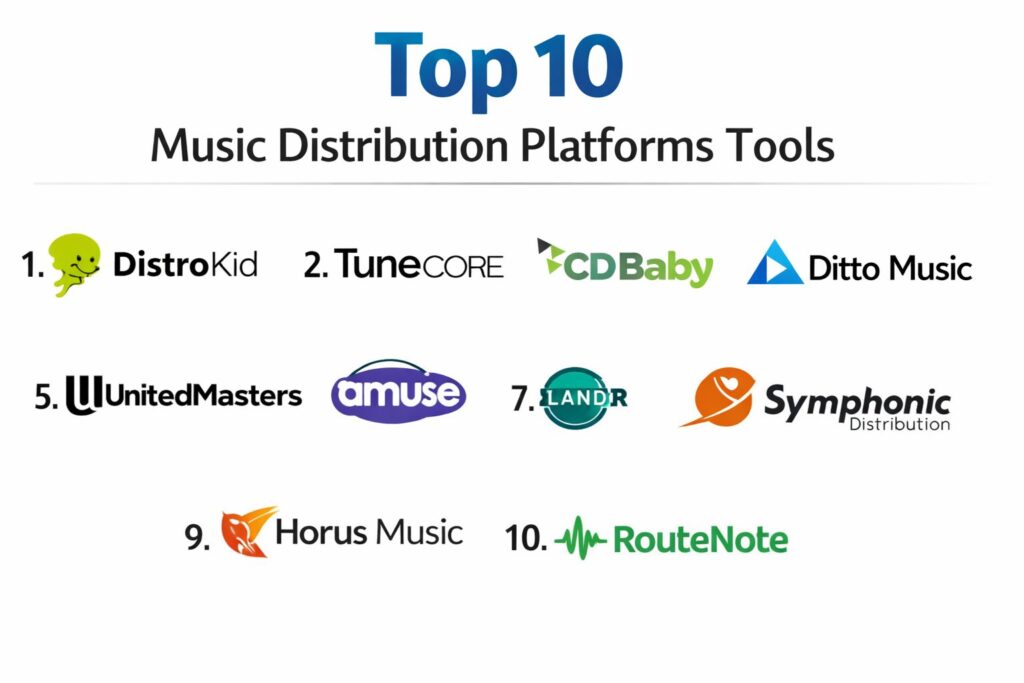
Introduction
Music distribution platforms act as the critical gateway between independent creators and the global streaming ecosystem, facilitating the delivery of audio assets to services like Spotify, Apple Music, and Amazon Music. These digital aggregators manage the complex technical requirements of ingestion, ensuring that metadata, high-fidelity audio files, and cover art meet the stringent standards of various Digital Service Providers (DSPs). Beyond simple delivery, these platforms function as financial hubs, collecting royalties from worldwide streams and sales to centralize them for artist payouts. In the modern music industry, where physical sales have largely been supplanted by digital consumption, a distributor is no longer an optional service but a fundamental partner for any artist seeking a professional career.
The selection of a distribution partner is a strategic business decision that directly impacts an artist’s long-term revenue and brand reach. Modern platforms have expanded their offerings to include sophisticated marketing tools, such as automated pre-save links, integrated social media advertising, and advanced data analytics that track listener demographics in real-time. For labels and independent artists alike, the choice often hinges on the pricing model—whether it is an annual subscription for unlimited uploads or a pay-per-release structure that preserves catalog longevity without recurring fees. As the industry moves toward more transparent reporting and faster payout cycles, understanding the nuances of rights management, YouTube Content ID, and sync licensing opportunities provided by these top ten tools is essential for maintaining a sustainable creative business.
Best for: Independent musicians, record labels, DIY producers, and songwriters who require a reliable pipeline to move their music from the studio to global digital storefronts while retaining varying levels of ownership and control.
Not ideal for: Artists seeking a major label recording contract with massive upfront advances, or creators who only intend to share music on social media or personal websites without professional monetization or tracking.
Key Trends in Music Distribution Platforms
The most significant trend is the shift toward real-time royalty processing, where some platforms now offer daily payouts or advances based on streaming data. Artificial intelligence is also being integrated to provide predictive analytics, helping artists identify which regions or playlists are most likely to drive growth for their specific genre. There is a growing emphasis on direct-to-fan engagement tools, with distributors offering built-in landing pages and SMS marketing integration to bypass the volatility of social media algorithms.
Another major shift is the inclusion of administrative publishing services within the distribution dashboard, allowing artists to collect mechanical and performance royalties that were previously difficult to access. Furthermore, as the short-form video market dominates discovery, seamless integration with TikTok and Instagram’s commercial music libraries has become a standard requirement. Finally, we are seeing a rise in “artist service” bundles, where distribution is packaged with AI-driven mastering, graphic design tools, and even professional legal support for contract reviews.
How We Selected These Tools
The selection of these ten platforms was based on a rigorous evaluation of their market reliability, payout transparency, and the breadth of their distribution networks. We prioritized services that have established direct relationships with major DSPs, ensuring faster delivery times and more accurate data reporting. Security was a top consideration, specifically focusing on how these platforms handle artist identity verification and the protection of financial data during the payout process.
We also analyzed the versatility of their pricing models to ensure that both prolific creators and occasional releasers have viable options. The quality of customer support was a deciding factor, as the ability to resolve metadata issues or copyright disputes quickly is vital for maintaining a professional release schedule. Finally, we looked for unique value-added features—such as physical distribution, sync licensing departments, and automated royalty splits—that provide a competitive edge in a crowded digital marketplace.
1. DistroKid
DistroKid is widely considered the fastest and most cost-effective distributor for prolific artists who release music frequently. Its simple, high-speed interface allows users to upload unlimited songs for a flat annual fee, making it the preferred choice for the modern “single-a-month” release strategy. The platform is known for its “Lean” approach, focusing on getting music live quickly while providing essential tools for social media integration.
Key Features
The platform offers a unique feature that automatically splits earnings between collaborators, which is ideal for bands and producers. It provides instant Spotify for Artists verification and a “HyperFollow” tool that generates promotional landing pages automatically. Users can also opt for a “Leave a Legacy” feature to ensure their music stays online even if they stop paying the subscription. It also includes an automated system for syncing lyrics with major streaming services.
Pros
The unlimited upload model offers exceptional value for active creators. Delivery speed to major stores is among the fastest in the industry, often occurring within 24 to 48 hours.
Cons
Many essential features, such as YouTube Content ID and store-specific release dates, require additional “add-on” fees. Customer support is primarily handled through an automated ticketing system.
Platforms and Deployment
Web-based dashboard with a mobile application for managing releases and tracking earnings on the go.
Security and Compliance
Utilizes industry-standard encryption for financial transactions and provides multi-factor authentication for account security.
Integrations and Ecosystem
Deeply integrated with Spotify, Apple Music, and TikTok, providing specialized tools for each. It supports a wide range of third-party promotional plugins and marketing services.
Support and Community
Extensive online knowledge base and a large, active user community that provides peer-to-peer troubleshooting and advice.
2. TuneCore
TuneCore is one of the longest-standing distributors in the industry, offering a robust platform that combines global distribution with comprehensive publishing administration. It is favored by artists who want detailed sales reporting and a high level of professional credibility. TuneCore provides a tiered pricing model that ranges from a free social-media-only tier to professional plans with advanced features.
Key Features
The platform includes a dedicated publishing administration department that helps songwriters collect global royalties from radio, TV, and live performances. It offers advanced analytics that show exactly where and how fans are discovering music. Users can access a “Social” tool to manage multiple platforms from a single dashboard. It also provides revenue advances for artists with a consistent streaming history, giving them capital to reinvest in their next project.
Pros
The publishing administration service is a major advantage for serious songwriters. The reporting interface is professional and highly detailed, making it suitable for business-minded artists.
Cons
The recurring annual fees for individual releases on older plans can become expensive over time. Some users find the interface to be more complex than newer, more streamlined competitors.
Platforms and Deployment
Available through a comprehensive web portal that functions across all modern desktop and mobile browsers.
Security and Compliance
Adheres to strict financial reporting standards and provides secure, verified payout methods including bank transfers and digital wallets.
Integrations and Ecosystem
Directly partnered with over 150 digital stores globally. It features a robust integration with PreSonus for artists who use Studio One for production.
Support and Community
Offers tiered customer support with faster response times for higher-level subscribers, backed by a wealth of educational masterclass content.
3. CD Baby
CD Baby stands out as the only major distributor on this list that provides both digital distribution and physical sales for CDs and vinyl. It operates on a pay-per-release model rather than a subscription, making it the best choice for artists who want to pay once and never worry about recurring fees to keep their music online.
Key Features
The platform provides a comprehensive sync licensing program that pitches music for use in films, TV shows, and commercials. It is the industry leader for physical distribution, managing the logistics of selling discs and records to brick-and-mortar stores worldwide. Every release includes free YouTube Content ID and a suite of promotional tools like HearNow. It also offers a “Pro” tier that handles global publishing royalty collection for the songwriter.
Pros
The one-time payment structure is ideal for long-term catalog stability. It provides a unique bridge between the digital and physical music worlds that most other distributors lack.
Cons
The platform takes a 9% commission on digital sales, which can add up for high-earning artists. The upfront cost per release is higher than the starting cost of subscription-based models.
Platforms and Deployment
Web-based platform with integrated tools for managing both digital assets and physical inventory shipments.
Security and Compliance
Highly secure platform with a long-standing reputation for financial integrity and transparent royalty accounting.
Integrations and Ecosystem
Integrates with professional marketing services like Show.co. It has a massive global network of physical retailers and digital streaming partners.
Support and Community
Known for providing high-quality human support via email and phone, along with a legendary blog and podcast dedicated to independent artist success.
4. Ditto Music
Ditto Music is a UK-based distributor that has built a strong reputation for serving independent labels and artists with a focus on playlisting and PR. It offers unlimited distribution for a flat fee and provides specialized services for those looking to start their own record label.
Key Features
The platform features a “Record Label in a Box” service that provides everything needed to start a professional music business, including legal contracts and business registration. It offers a dedicated department for playlist pitching and press campaigns to help releases gain traction. The dashboard includes a powerful royalty split tool and detailed analytics. It also supports distribution to Beatport and specialized electronic music stores.
Pros
The pricing is very competitive for both solo artists and those managing multiple artists. It provides a more hands-on approach to career growth through its label and PR services.
Cons
Response times from the customer support team can vary during peak periods. Some of the more advanced marketing and PR features require significant additional investment.
Platforms and Deployment
Web-based interface optimized for both desktop and mobile use, featuring a modern and clean design.
Security and Compliance
Provides secure payouts and manages artist data in compliance with international data protection regulations.
Integrations and Ecosystem
Strong connections with the global electronic music scene and major streaming platforms. It offers a wide range of API-based tools for label management.
Support and Community
Maintains a global presence with local offices in several countries, providing a more localized approach to artist support and community building.
5. UnitedMasters
UnitedMasters positions itself as a modern alternative to traditional labels, focusing heavily on brand partnerships and cultural impact. It is designed for artists who want more than just distribution, offering opportunities to get music featured by major global brands like the NBA, NFL, and ESPN.
Key Features
The “Select” plan gives artists access to exclusive brand deals and sync opportunities that are not available on other platforms. It features a mobile-first design, allowing artists to manage their entire career from a smartphone. The platform includes an AI-powered release coach that provides personalized advice based on streaming data. It also offers a free tier that allows beginners to start distributing music in exchange for a revenue split.
Pros
The brand partnership opportunities are unique and highly valuable for building a cultural presence. The mobile app is widely considered the best in the distribution space for ease of use.
Cons
The free tier takes a 10% commission, which may not be ideal as an artist grows. The focus is heavily geared toward hip-hop and urban genres, though all artists are welcome.
Platforms and Deployment
Highly optimized for iOS and Android, with a supporting web interface for deep data analysis.
Security and Compliance
Employs enterprise-grade security for its financial infrastructure and brand partnership contracts.
Integrations and Ecosystem
Directly connected to major brand marketing pipelines. It integrates seamlessly with social media platforms for rapid content sharing and promotion.
Support and Community
Focuses on building an “inner circle” community through exclusive events and conferences where independent artists can network with industry leaders.
6. Amuse
Amuse is a digital-first distributor known for its “label-as-a-service” model. It uses data gathered from its distribution side to identify rising talent and offer them label deals with 50/50 profit splits. It is highly popular among the new generation of DIY artists who value speed and a mobile-centric workflow.
Key Features
The platform offers a completely free distribution tier for artists who only need basic delivery to major stores. The paid tiers provide faster release times, royalty advances, and the ability to upload to social media libraries. It features a very clean analytics dashboard that highlights trending tracks. The label side of the business provides professional marketing, branding, and funding for artists who show significant growth.
Pros
The free tier is genuinely free with no hidden fees, making it perfect for new artists. The potential to be “scouted” by their label adds a unique layer of career opportunity.
Cons
The free tier has a slower release cycle, often taking several weeks. The list of supported stores is slightly smaller than some of the larger, long-established competitors.
Platforms and Deployment
Primarily a mobile-based application, though it has expanded its web functionality for professional users.
Security and Compliance
Uses secure, modern payout systems and maintains strict privacy standards for artist data and intellectual property.
Integrations and Ecosystem
Strongly integrated with the most popular streaming and social platforms. It focuses on a streamlined, “no-friction” ecosystem for independent creators.
Support and Community
Support is primarily digital, with a focus on speed for paid users. It maintains an active social presence that highlights success stories from its user base.
7. LANDR
Originally known for its AI mastering technology, LANDR has evolved into an all-in-one creative platform. It integrates distribution directly into a workspace that includes mastering, sample packs, and collaboration tools, making it a “one-stop-shop” for producers.
Key Features
The platform offers unlimited AI-driven mastering as part of its higher-tier distribution plans. It includes a massive library of royalty-free samples and professional plugins to help during the production phase. The distribution service allows for releases to stay live forever even if a subscription is canceled. It also features a collaboration tool that allows artists to share and comment on tracks during the mixing process.
Pros
The integration of production tools and distribution creates a very efficient workflow. The value for producers who already use AI mastering is significant.
Cons
The pricing structure can be confusing due to the variety of bundled services. For those who only want simple distribution, the platform may feel over-engineered.
Platforms and Deployment
Available as a web platform and a desktop application that integrates with various digital audio workstations.
Security and Compliance
Maintains high standards for copyright protection and secure financial processing, with transparent royalty reporting.
Integrations and Ecosystem
Part of a broad ecosystem that includes mastering, production, and distribution. It is a preferred partner for several major streaming services.
Support and Community
Provides excellent educational resources on music production and industry trends, backed by a responsive professional support team.
8. Symphonic Distribution
Symphonic is a highly regarded distributor that focuses on providing label-style services to a selective group of artists and independent labels. It is known for its high-touch customer service and its expertise in niche markets like electronic and Latin music.
Key Features
The platform provides hands-on marketing support and editorial playlist pitching for its partner artists. It offers advanced rights management services, including YouTube Content ID and SoundCloud monetization. The dashboard includes detailed financial reporting with automatic split payments for collaborators. It also features a specialized department for music video distribution and physical merchandise manufacturing.
Pros
The level of personalized support and marketing guidance is much higher than that of automated distributors. It is a powerful partner for established artists and growing labels.
Cons
The platform is selective and does not accept every artist who applies. The commission structure is generally higher than DIY-focused platforms due to the increased service level.
Platforms and Deployment
Robust web-based enterprise platform designed for managing large catalogs and complex royalty structures.
Security and Compliance
Adheres to the highest industry standards for security and financial compliance, suitable for managing large-scale commercial catalogs.
Integrations and Ecosystem
Deeply integrated with both global and regional streaming platforms. It has a vast network of marketing and promotional partners.
Support and Community
Offers dedicated account managers for many users and maintains a high level of direct human interaction for problem-solving.
9. Horus Music
Horus Music is a global distributor known for its transparency and its focus on helping artists reach international markets, particularly in Asia and the Middle East. It provides a simple, reliable service with no hidden fees and a strong emphasis on artist rights.
Key Features
The platform offers a 100% royalty retention model for its paid plans. It provides specialized distribution to regional stores that are often overlooked by Western-centric distributors. Users can access professional music video distribution and chart registration services. It also features a unique “My Client Center” for labels to manage their roster and financial reporting with ease.
Pros
The platform is exceptionally transparent regarding its fees and payout structures. Its global reach is excellent for artists targeting specific international territories.
Cons
The interface is functional but lacks some of the flashy marketing tools found on more modern platforms. Brand awareness is lower than some of the major industry giants.
Platforms and Deployment
Web-based platform designed for simplicity and efficiency in the upload and management process.
Security and Compliance
Strong focus on copyright verification and secure financial payouts through established international banking partners.
Integrations and Ecosystem
Supports a wide array of global streaming platforms and specialized music stores. It bridges the gap between local talent and global audiences.
Support and Community
Known for providing direct human support and clear communication, maintaining a professional and approachable community.
10. RouteNote
RouteNote is an accessible distributor that provides a bridge between free distribution and professional label services. It is popular among budget-conscious artists because it offers a free tier with a 15% commission and a premium tier where artists keep 100%.
Key Features
The platform provides distribution to over 90% of the digital music market, including niche and regional stores. It features a simple system for managing royalty splits and multiple artist profiles. Every user gets access to YouTube Content ID and social media monetization tools. The premium tier allows for a simple “pay-per-track” upgrade to keep more of the earnings as a song becomes successful.
Pros
The flexibility to switch between free and premium models is a significant advantage for growing artists. It covers a very wide range of stores and platforms globally.
Cons
The user interface can feel somewhat dated compared to its more modern competitors. The review process for new releases can sometimes be slower than the industry leaders.
Platforms and Deployment
Standard web-based interface that handles the end-to-end process from upload to payout.
Security and Compliance
Maintains standard professional security protocols for data protection and secure royalty distributions.
Integrations and Ecosystem
Wide-reaching distribution network that includes all major global and many regional players. It provides a solid foundation for any digital release strategy.
Support and Community
Offers a helpful knowledge base and community forums, with direct support available for resolving technical and financial issues.
Comparison Table
| Tool Name | Best For | Platform(s) Supported | Deployment | Standout Feature | Public Rating |
|---|---|---|---|---|---|
| DistroKid | Prolific independent artists releasing music frequently | Web, Mobile App | Cloud | Unlimited uploads with collaborator split payments | 4.8/5 |
| TuneCore | Artists needing distribution plus publishing administration | Web | Cloud | Publishing administration and detailed reporting | 4.7/5 |
| CD Baby | Artists wanting one-time payment and physical distribution | Web | Cloud | Digital + physical distribution with sync licensing | 4.6/5 |
| Ditto Music | Independent labels and artists wanting PR and playlist support | Web | Cloud | Record Label in a Box and playlist pitching services | 4.4/5 |
| UnitedMasters | Artists seeking brand partnerships and mobile-first management | Web, iOS, Android | Cloud | Brand deal access and strong mobile experience | 4.5/5 |
| Amuse | New DIY artists looking for a free entry point | Mobile App, Web | Cloud | Free distribution with label scouting potential | 4.4/5 |
| LANDR | Producers wanting production tools plus distribution | Web, Desktop App | Cloud | Built-in AI mastering and creative workflow tools | 4.6/5 |
| Symphonic Distribution | Established artists and indie labels needing hands-on support | Web | Cloud | Personalized marketing and label-style services | 4.7/5 |
| Horus Music | Artists targeting international and regional markets | Web | Cloud | Strong reach into Asia and Middle East stores | 4.3/5 |
| RouteNote | Budget-conscious artists needing flexible free or premium plans | Web | Cloud | Easy switch between revenue-share and 100% royalty model | 4.4/5 |
Evaluation & Scoring of Music Distribution Platforms
The scoring below is a comparative model intended to help shortlisting. Each criterion is scored from 1–10, then a weighted total from 0–10 is calculated using the weights listed. These are analyst estimates based on typical fit and common workflow requirements, not public ratings.
Weights:
- Core features – 25%
- Ease of use – 15%
- Integrations & ecosystem – 15%
- Security & compliance – 10%
- Performance & reliability – 10%
- Support & community – 10%
- Price / value – 15%
| Tool Name | Core (25%) | Ease (15%) | Integrations (15%) | Security (10%) | Performance (10%) | Support (10%) | Value (15%) | Weighted Total |
|---|---|---|---|---|---|---|---|---|
| DistroKid | 9 | 10 | 9 | 8 | 10 | 7 | 10 | 9.15 |
| TuneCore | 9 | 7 | 9 | 9 | 8 | 8 | 8 | 8.35 |
| CD Baby | 8 | 8 | 8 | 9 | 8 | 9 | 8 | 8.15 |
| Ditto Music | 8 | 8 | 8 | 8 | 8 | 7 | 9 | 8.05 |
| UnitedMasters | 8 | 9 | 8 | 8 | 8 | 8 | 8 | 8.10 |
| Amuse | 7 | 9 | 7 | 8 | 7 | 7 | 10 | 7.95 |
| LANDR | 8 | 8 | 8 | 8 | 8 | 8 | 8 | 8.00 |
| Symphonic Distribution | 9 | 7 | 9 | 9 | 8 | 10 | 7 | 8.40 |
| Horus Music | 8 | 7 | 8 | 8 | 7 | 8 | 9 | 7.95 |
| RouteNote | 8 | 8 | 8 | 8 | 7 | 7 | 9 | 8.00 |
How to interpret the scores:
- Use the weighted total to shortlist candidates, then validate with a pilot.
- A lower score can mean specialization, not weakness.
- Security and compliance scores reflect controllability and governance fit, because certifications are often not publicly stated.
- Actual outcomes vary with assembly size, team skills, templates, and process maturity.
Which Music Distribution Platform Tool Is Right for You?
Solo / Freelancer
For the individual artist, the focus should be on a tool that provides the most automation and speed. A subscription that allows for unlimited releases is usually the most financially sensible choice for those who are building their audience through high-volume content.
SMB
Small teams and bands need tools that simplify the administrative side of music. Features like automated royalty splits and clear financial reporting are vital for maintaining harmony within the group and ensuring everyone is paid accurately.
Mid-Market
Mid-market organizations, such as growing independent labels, require more robust catalog management. These users should look for platforms that offer label services, sub-account management, and a high level of technical reliability for large numbers of monthly releases.
Enterprise
Enterprise-level players, including major independent labels, need deep data integration and high-touch support. At this level, the ability to negotiate custom commission rates and access direct marketing support from the distributor is paramount.
Budget vs Premium
Artists on a strict budget can start with free-tier services that use a revenue-split model. However, as earnings increase, migrating to a premium subscription or a one-time payment model often becomes more profitable in the long run.
Feature Depth vs Ease of Use
If you are technically savvy and want to manage every aspect of your publishing and marketing, a high-depth tool is best. If you simply want to get your music on Spotify with a single click, prioritize a platform with a highly intuitive, mobile-centric interface.
Integrations & Scalability
Consider where you want your career to be in several years. A platform that integrates with professional mastering, merchandise manufacturing, and brand partnership pipelines will provide a smoother path as your brand scales.
Security & Compliance Needs
Financial and identity security are non-negotiable. Ensure your chosen partner uses secure payout methods and has a clear policy on copyright protection and anti-fraud measures to safeguard your intellectual property.
Frequently Asked Questions (FAQs)
1. Does using a distributor mean I lose ownership of my music?
No, professional distributors allow you to retain 100% of your master rights. You are essentially hiring them for a service, not signing away your ownership, though the specific revenue percentage you keep varies by platform.
2. How long does it take for music to appear on Spotify?
Delivery times vary, but many top-tier distributors can get your music onto major platforms within 48 to 72 hours. However, it is always recommended to upload your music at least three to four weeks in advance for a proper marketing lead time.
3. What is YouTube Content ID and do I need it?
YouTube Content ID is a system that identifies whenever your music is used in any video across the platform. It allows you to automatically claim the ad revenue from those videos, which is a significant source of income for many artists.
4. Can I move my music from one distributor to another?
Yes, you can move your catalog, but it requires careful coordination. You must ensure you use the same ISRC and UPC codes for the new upload to preserve your streaming counts before requesting a takedown from your old distributor.
5. Do I need a separate distributor for my music videos?
While some audio distributors offer video delivery as an add-on, many artists use specialized video distributors to get their content on Vevo or Tidal’s video channels. This ensures the highest visual quality and proper Vevo channel management.
6. What are ISRC and UPC codes?
An ISRC is a unique code assigned to each individual track, acting like a digital fingerprint. A UPC is for the entire release (single or album). These codes are essential for tracking sales, streams, and royalty payments accurately.
7. Should I choose a subscription or pay-per-release model?
If you release more than three times a year, a subscription usually saves you money. If you release music infrequently or want your catalog to stay online forever without recurring costs, a one-time pay-per-release model is safer.
8. Is it better to distribute to every store or just the big ones?
Modern distributors make it easy to reach over 150 platforms globally. While the majority of your revenue will likely come from the top three or four DSPs, having a presence on regional stores in Asia or Europe can lead to unexpected discovery.
9. How do I get my music on the official Spotify playlists?
Most distributors provide an “editorial pitching” tool or a link to Spotify for Artists. You must pitch your track directly to the Spotify editors at least two to three weeks before the release date to be considered for their curated playlists.
10. Can a distributor help me with legal contracts?
A few high-end or label-focused distributors offer legal templates or advice as part of their business packages. However, for serious contract reviews, you should always consult an independent entertainment lawyer.
Conclusion
The selection of a music distribution platform is a defining moment for any independent artist or label. It represents the point where creative output transforms into a professional digital asset. In the current landscape, the “best” tool is the one that aligns most closely with your release frequency and long-term career goals. Whether you prioritize the rapid, low-cost delivery of DistroKid, the physical-to-digital bridge of CD Baby, or the brand-focused ecosystem of UnitedMasters, the goal remains the same: ensuring your music is accessible, monetized, and protected. As the industry continues to shift toward real-time data and automated marketing, your distribution partner will serve as the engine of your creative business. Success in the modern era requires not just great music, but a robust technical foundation to ensure that music finds its audience and generates the revenue you deserve.