Introduction
The rapid proliferation of connected devices has fundamentally altered the enterprise attack surface, moving security from a perimeter-based challenge to a decentralized, device-level necessity. IoT security platforms are no longer just “add-ons” to traditional network security; they are critical infrastructure components that provide visibility into unmanaged, agentless devices that were previously invisible to IT teams. As we move further into a hyper-connected era, the distinction between digital and physical security has blurred, with vulnerabilities in IoT sensors or industrial controllers potentially leading to real-world operational shutdowns or safety hazards. For the modern organization, an IoT security platform serves as the ultimate source of truth for every connected “thing” within the environment.
Effective IoT security requires a transition from reactive patching to proactive, identity-based defense. These platforms utilize advanced behavioral analytics and machine learning to establish a baseline of “normal” behavior for thousands of distinct device types—from smart HVAC systems to robotic arms on a factory floor. When a device deviates from its profile, such as a smart camera attempting to access a financial database, these systems can automatically trigger isolation protocols. As global regulations like the EU Cyber Resilience Act begin to enforce stricter standards on connected products, the implementation of a robust security platform has become a legal and operational mandate for ensuring business continuity and protecting sensitive data.
Best for: CISOs, security architects, and operations managers who need to secure diverse ecosystems of unmanaged devices across corporate, industrial, or healthcare environments.
Not ideal for: Organizations with zero external connectivity or those looking for standard antivirus software for traditional laptops and servers without any peripheral IoT hardware.
Key Trends in IoT Security Platforms
The most significant trend is the rise of “Cyber-Physical System” (CPS) protection, which treats IoT, OT (Operational Technology), and IT as a single, unified security domain. We are seeing a shift away from traditional signature-based detection toward AI-driven behavioral profiling that can identify zero-day threats by analyzing subtle shifts in network telemetry. Microsegmentation is also becoming a standard feature, allowing security teams to create “virtual fences” around critical assets without needing to re-architect physical network hardware. This “Zero Trust for IoT” approach ensures that even if one device is compromised, the “blast radius” is contained, preventing lateral movement within the network.
Another major shift is the integration of “Software Bills of Materials” (SBOMs) into security platforms, giving organizations deep visibility into the underlying software components and libraries within their IoT devices. This allows for rapid response when a vulnerability is discovered in a common open-source library. Additionally, the convergence of 5G and edge computing is pushing security closer to the device, with many platforms now offering “edge-resident” security agents that can make sub-second decisions without waiting for cloud instructions. Finally, regulatory compliance is now a major driver, with platforms offering automated reporting modules to prove adherence to emerging global cybersecurity frameworks and labeling acts.
How We Selected These Tools
Our selection criteria focused on the “Visibility-to-Action” ratio: how effectively a platform can discover a device and then automatically enforce a security policy. We prioritized platforms that are “agentless,” meaning they can identify and monitor devices without requiring software to be installed on the IoT hardware itself—a critical requirement for legacy or closed systems. We evaluated the depth of the “Device Knowledge Base,” favoring platforms that maintain millions of pre-defined device profiles to ensure high accuracy in classification and risk scoring.
Scalability was another key factor; we looked for solutions that could handle tens of thousands of simultaneous connections across global sites without performance degradation. We scrutinized the quality of “Behavioral Baselines,” assessing how quickly a platform can learn a device’s routine and how accurately it can distinguish between a malicious attack and a routine firmware update. Security certifications, integration with existing SIEM/SOAR (Security Information and Event Management) workflows, and the ability to operate in “air-gapped” or offline environments were also heavily weighted. Lastly, we considered the total cost of ownership, including the ease of deployment and the level of expert support provided for complex industrial or medical use cases.
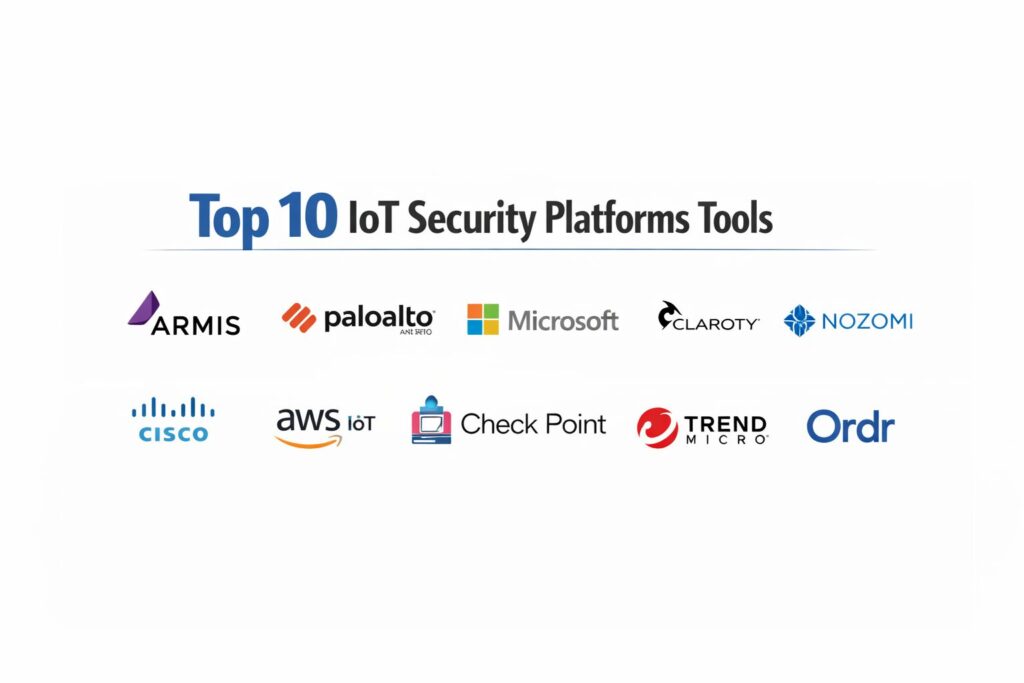
1. Armis Centrix
Armis Centrix is a leading agentless device security platform that provides 100% visibility into every connected asset, whether it is managed or unmanaged. It is designed for enterprises that need to bridge the gap between IT, IoT, and OT security through a single, unified dashboard.
Key Features
The platform features the “Armis Asset Intelligence Engine,” a massive database of over 3 billion device profiles used to identify and classify assets instantly. It includes a “Collective Intelligence” module that tracks the behavior of similar devices globally to identify anomalies. The system offers “Risk Posture Management,” which provides a real-time security score for every device based on its vulnerabilities and behavior. It features seamless “Network Segmentation” capabilities that work with existing infrastructure to isolate high-risk assets. Additionally, it provides specialized modules for medical devices (IoMT) and industrial control systems (ICS).
Pros
It offers the most extensive device knowledge base in the industry, ensuring near-perfect asset identification. The platform is entirely passive, meaning it will never disrupt sensitive equipment during the discovery process.
Cons
The enterprise-level pricing can be a barrier for smaller organizations. The sheer volume of data and alerts can be overwhelming without a dedicated security team to manage them.
Platforms and Deployment
Cloud-native SaaS with support for on-premises collectors in air-gapped environments.
Security and Compliance
SOC 2 Type II, HIPAA, and GDPR compliant, with advanced data anonymization features.
Integrations and Ecosystem
Extensive integrations with CrowdStrike, ServiceNow, Palo Alto Networks, and various SIEM tools.
Support and Community
Offers “Armis Academy” for technical training and high-touch “Customer Success” programs for large-scale deployments.
2. Palo Alto Networks IoT Security
Palo Alto Networks offers a powerful, ML-powered IoT security solution that is natively integrated into its Next-Generation Firewalls (NGFW). It is the ideal choice for organizations already standardized on Palo Alto infrastructure.
Key Features
The platform features “App-ID” for IoT, which identifies specific device types and the applications they are running. It includes “ML-Powered Visibility” that automatically discovers and categorizes devices without manual signatures. The system offers “Automated Policy Recommendations” based on the identified risks and expected behaviors of each device. It features “IPS for IoT,” providing specialized intrusion prevention for common IoT vulnerabilities. It also provides a “Unified Management” interface where IT and IoT security policies are managed side-by-side.
Pros
Eliminates the need for a separate security silo by integrating directly into the existing firewall. It provides “one-click” enforcement, allowing users to apply security policies as soon as a device is discovered.
Cons
To get the full value, you must be a user of Palo Alto firewalls or their Prisma SASE platform. The configuration can be complex for teams not familiar with advanced networking.
Platforms and Deployment
Integrated into NGFW (hardware or virtual) and delivered via the cloud.
Security and Compliance
Adheres to strict enterprise standards including ISO 27001 and FedRAMP.
Integrations and Ecosystem
Deeply integrated with the Cortex XDR and XSOAR ecosystems for automated response.
Support and Community
Supported by a global network of partners and the extensive “Live Community” technical forum.
3. Microsoft Defender for IoT
Microsoft Defender for IoT provides comprehensive security for both consumer and industrial IoT environments, with a strong focus on protecting operational technology (OT) and critical infrastructure.
Key Features
The platform features “Agentless Monitoring” using passive network analysis to discover and map every device in the network. It includes “Threat Intelligence” specifically curated for industrial protocols like Modbus and DNP3. The system offers “Vulnerability Management” that identifies unpatched firmware and insecure configurations. It features “Risk Assessment” reports that prioritize the most critical threats to your production environment. It also provides a “Unified SOC” experience within Microsoft Sentinel, allowing analysts to track an attack from an IoT device to a cloud server.
Pros
It offers exceptional value for organizations already using the Microsoft 365 or Azure security stacks. The platform provides deep, specialized visibility into industrial and manufacturing protocols.
Cons
The integration with on-premises hardware can sometimes require significant configuration effort. Some advanced features are only available in the cloud-connected version.
Platforms and Deployment
Available as a cloud-based service or on-premises sensor for air-gapped sites.
Security and Compliance
Fully compliant with global standards and integrated with the Microsoft Trust Center.
Integrations and Ecosystem
Native integration with Microsoft Sentinel, Defender for Endpoint, and Azure IoT Hub.
Support and Community
Backed by Microsoft’s global support network and the massive “Microsoft Tech Community.”
4. Claroty (xDome & CTD)
Claroty is a specialized platform focused on “Cyber-Physical Systems” (CPS) protection, providing deep security for industrial, healthcare, and enterprise IoT environments.
Key Features
The platform features “xDome,” a cloud-based solution for scalable IoT/OT visibility and management. It includes “Continuous Threat Detection” (CTD) for real-time monitoring of industrial control systems. The system offers “Secure Remote Access,” allowing third-party vendors to maintain equipment without compromising the broader network. It features “Asset Risk Scoring” that considers both the vulnerability of the device and its importance to the business. It also provides specialized “Healthcare Portals” for managing the unique risks of connected medical hardware.
Pros
Provides the deepest understanding of industrial and clinical protocols available on the market. The secure remote access feature is a major differentiator for manufacturing and healthcare.
Cons
The focus on “high-end” industrial and medical use cases makes it less suitable for general office IoT. The setup process for complex multi-site environments requires specialized expertise.
Platforms and Deployment
Flexible deployment including cloud SaaS, on-premises, and hybrid models.
Security and Compliance
ISO 27001, SOC 2, and specialized medical device security certifications.
Integrations and Ecosystem
Integrates with major IT management platforms like ServiceNow and top-tier firewall vendors.
Support and Community
Provides expert-led “Implementation Services” and a dedicated research team (Team82) for threat intelligence.
5. Nozomi Networks (Vantage & Guardian)
Nozomi Networks is a leader in OT and IoT security, known for its ability to provide real-time visibility and threat detection for the world’s most complex critical infrastructure.
Key Features
The platform features “Vantage,” a cloud-native console that aggregates data from thousands of sites globally. It includes “Guardian” sensors for deep packet inspection and asset discovery on the local network. The system offers “Threat Intelligence” that is updated in real-time to identify the latest malware targeting IoT devices. It features “Smart Polling” to safely gather additional details from devices without causing downtime. It also provides “Time Machine” functionality to review network activity before, during, and after a security incident.
Pros
Exceptionally scalable, making it the preferred choice for global utilities and oil and gas companies. Its AI-driven anomaly detection is highly refined, minimizing false positives.
Cons
The platform is built for experts and can be complex for general IT staff to navigate. The cost reflects its positioning as a premium critical infrastructure tool.
Platforms and Deployment
Available as cloud SaaS, physical appliances, virtual appliances, and edge sensors.
Security and Compliance
Complies with major industrial standards like IEC 62443 and NERC CIP.
Integrations and Ecosystem
Strong partnerships with Cisco, IBM Security, and various industrial automation vendors.
Support and Community
Offers a comprehensive “Nozomi Academy” and 24/7 global support for critical operations.
6. Cisco IoT Threat Defense
Cisco provides a holistic IoT security architecture that leverages its vast networking footprint to identify and secure devices directly at the access layer.
Key Features
The platform features “Cisco Cyber Vision,” which is embedded into Cisco switches and routers for deep asset visibility. It includes “TrustSec” for automated, software-defined segmentation across the entire enterprise. The system offers “Stealthwatch” for behavioral analytics and encrypted traffic analysis. It features “Duo” for multi-factor authentication for any user or device accessing the network. It also provides “Talos” threat intelligence, one of the world’s largest commercial threat intelligence teams, to block emerging IoT exploits.
Pros
Leverages your existing network as a “sensor and enforcer,” reducing the need for additional hardware. It provides a highly unified security posture from the edge to the data center.
Cons
The “full stack” is best achieved within an all-Cisco environment, which can lead to vendor lock-in. Licensing can be complex as it spans across multiple Cisco security products.
Platforms and Deployment
Deployment is primarily network-based (switches/routers) with cloud management.
Security and Compliance
Extensive certifications across governmental, industrial, and financial sectors.
Integrations and Ecosystem
Native integration with the entire Cisco Secure portfolio and third-party tools via open APIs.
Support and Community
Supported by the global Cisco Technical Assistance Center (TAC) and a massive user base.
7. AWS IoT Device Defender
AWS IoT Device Defender is a fully managed security service that allows you to secure your fleet of IoT devices connected to the Amazon Web Services cloud.
Key Features
The platform features “Continuous Auditing” to ensure your device configurations adhere to security best practices. It includes “Real-time Monitoring” of device behavior, such as data throughput and connection frequency. The system offers “ML Detect,” which uses machine learning to identify deviations from normal device activity automatically. It features “Alerting” via Amazon SNS to notify security teams of any potential compromises. It also provides “Mitigation Actions” like revoking certificates or moving devices to a restricted group when a threat is detected.
Pros
Provides a seamless security experience for devices already managed within the AWS IoT Core ecosystem. The “pay-as-you-go” pricing model makes it accessible for projects of any size.
Cons
It is strictly focused on devices connected to AWS, making it less suitable for “brownfield” or non-cloud industrial sites. It requires active device management within AWS to work effectively.
Platforms and Deployment
Fully managed cloud service within the AWS ecosystem.
Security and Compliance
Benefits from the full range of AWS security certifications including SOC, PCI, and HIPAA.
Integrations and Ecosystem
Deeply integrated with AWS IoT Core, Lambda, and Amazon CloudWatch.
Support and Community
Offers tiered AWS support plans and extensive documentation and developer forums.
8. Check Point Quantum IoT Protect
Check Point Quantum IoT Protect focuses on providing “autonomous” security for IoT devices, specifically targeting the prevention of on-device exploits and network-level attacks.
Key Features
The platform features “Auto-Segmentation,” which automatically discovers devices and applies zero-trust policies. It includes “On-Device Runtime Protection” (Nano Agent) to prevent memory corruption and shell injection attacks. The system offers “IoT Virtual Patching,” shielding unpatched devices from known vulnerabilities at the network layer. It features “Brand-Specific Threat Intelligence” for thousands of IoT manufacturers. It also provides a “Unified Security Architecture” managed through the Check Point Infinity Portal.
Pros
The “Virtual Patching” feature is invaluable for securing legacy devices that can no longer be updated. Its ability to run security agents directly on some IoT devices provides deep protection.
Cons
The setup of “Nano Agents” requires access to device firmware, which isn’t possible for all hardware. The platform is best utilized as part of a broader Check Point security estate.
Platforms and Deployment
Cloud-managed service with enforcement via Check Point gateways or on-device agents.
Security and Compliance
Strong focus on “Security by Design” and compliance with international privacy laws.
Integrations and Ecosystem
Integrates with the Check Point Infinity platform and various third-party asset management tools.
Support and Community
Provides extensive technical support and a “UserCheck” portal for incident management.
9. Trend Micro IoT Security (TMIS)
Trend Micro offers a layered approach to IoT security, combining network-level protection with specialized security for the “endpoints” and the cloud backend.
Key Features
The platform features “Virtual Patching” through its intrusion prevention system to block exploits targeting known vulnerabilities. It includes “Trend Micro Vision One” for cross-layer detection and response (XDR) across IoT and IT. The system offers “Vulnerability Research” from the Zero Day Initiative (ZDI), the world’s largest bug bounty program. It features specialized “Industrial Firewalls” for harsh manufacturing environments. It also provides “Mobile Network Security” for IoT devices connected via 4G or 5G cellular networks.
Pros
Benefits from the massive threat intelligence data gathered by the Zero Day Initiative. It offers excellent protection for “mobile IoT” such as connected vehicles and fleet trackers.
Cons
The product portfolio can be fragmented, requiring multiple tools for a complete solution. The user interface can feel dated compared to newer “born-in-the-cloud” competitors.
Platforms and Deployment
Available as hardware appliances, software agents, and cloud-based services.
Security and Compliance
Adheres to global standards and provides specific compliance mapping for the IoT space.
Integrations and Ecosystem
Strong integrations with major cloud providers and industrial automation leaders.
Support and Community
Backed by Trend Micro’s global research labs and a large network of certified engineers.
10. Ordr (AI Lifecycle Management)
Ordr is an “AI-powered” platform focused on the entire lifecycle of connected devices, from discovery and security to utilization and procurement.
Key Features
The platform features “Whole-Entity Mapping,” which visualizes how every device communicates with the rest of the network. It includes “Flow Genome,” a proprietary technology that identifies the exact communication patterns of millions of devices. The system offers “Automated Policy Generation” for firewalls and NAC (Network Access Control) systems. It features “Utilization Analytics,” showing how often expensive medical or industrial equipment is actually being used. It also provides “Zero Trust Segmentation” that can be deployed in “monitor mode” before being fully enforced.
Pros
The utilization data provides a “business value” beyond just security, helping organizations optimize their hardware investments. The platform is exceptionally easy to deploy in “read-only” mode for initial audits.
Cons
It may lack some of the deep “industrial-specific” protocol analysis found in tools like Nozomi or Claroty. The focus on medical and high-end enterprise makes it expensive for simpler use cases.
Platforms and Deployment
Cloud-SaaS management with on-premises sensors.
Security and Compliance
SOC 2 Type II compliant with a strong focus on healthcare (HIPAA) and financial security.
Integrations and Ecosystem
Deep integrations with ServiceNow, Splunk, Cisco, and various NAC vendors like Forescout.
Support and Community
Provides dedicated “Customer Success” managers and a rich library of device-specific security playbooks.
Comparison Table
| Tool Name | Best For | Platform(s) Supported | Deployment | Standout Feature | Public Rating |
| 1. Armis | Unified Visibility | Cloud, On-Premise | Agentless SaaS | 3B+ Device Profiles | 4.8/5 |
| 2. Palo Alto | Existing NGFW Users | Hardware, Cloud | Firewall-Native | One-Click Enforcement | 4.7/5 |
| 3. Microsoft | Microsoft Ecosystem | Cloud, On-Premise | Hybrid / SaaS | Unified Sentinel SOC | 4.6/5 |
| 4. Claroty | Industrial & Clinical | Cloud, Hybrid | Flexible SaaS | Secure Remote Access | 4.8/5 |
| 5. Nozomi | Critical Infra | Cloud, Edge, App | Multi-Layered | Real-Time Anomaly AI | 4.9/5 |
| 6. Cisco | Network-Centric | Network-Based | Edge-Resident | Talos Threat Intel | 4.5/5 |
| 7. AWS IoT | Cloud-Native Fleet | Cloud-Based | Managed SaaS | ML-Based Detect | 4.7/5 |
| 8. Check Point | Virtual Patching | Gateway, Agent | Cloud-Managed | Nano Agent Protection | 4.4/5 |
| 9. Trend Micro | Mobile / Cellular IoT | Hardware, SaaS | Multi-Layered | Zero Day Initiative | 4.5/5 |
| 10. Ordr | Healthcare / ROI | Cloud, Sensor | AI-Driven | Utilization Analytics | 4.7/5 |
Evaluation & Scoring of IoT Security Platforms
The scoring below is a comparative model intended to help shortlisting. Each criterion is scored from 1–10, then a weighted total from 0–10 is calculated using the weights listed. These are analyst estimates based on typical fit and common workflow requirements, not public ratings.
Weights:
- Core features – 25%
- Ease of use – 15%
- Integrations & ecosystem – 15%
- Security & compliance – 10%
- Performance & reliability – 10%
- Support & community – 10%
- Price / value – 15%
| Tool Name | Visibility (25%) | Detection (20%) | Integration (15%) | Security (10%) | Performance (10%) | Support (10%) | Value (10%) | Weighted Total |
| 1. Armis | 10 | 9 | 9 | 9 | 9 | 9 | 7 | 9.00 |
| 2. Palo Alto | 8 | 9 | 10 | 10 | 10 | 8 | 8 | 8.85 |
| 3. Microsoft | 8 | 8 | 10 | 9 | 9 | 9 | 9 | 8.70 |
| 4. Claroty | 9 | 10 | 8 | 9 | 8 | 9 | 7 | 8.70 |
| 5. Nozomi | 10 | 10 | 8 | 9 | 8 | 9 | 6 | 8.75 |
| 6. Cisco | 9 | 8 | 10 | 9 | 9 | 8 | 7 | 8.65 |
| 7. AWS IoT | 7 | 8 | 9 | 9 | 10 | 9 | 9 | 8.30 |
| 8. Check Point | 7 | 9 | 8 | 10 | 8 | 8 | 8 | 8.15 |
| 9. Trend Micro | 7 | 8 | 8 | 9 | 8 | 8 | 8 | 7.90 |
| 10. Ordr | 9 | 8 | 9 | 8 | 9 | 9 | 8 | 8.65 |
How to interpret the scores:
- Use the weighted total to shortlist candidates, then validate with a pilot.
- A lower score can mean specialization, not weakness.
- Security and compliance scores reflect controllability and governance fit, because certifications are often not publicly stated.
- Actual outcomes vary with assembly size, team skills, templates, and process maturity.
Which IoT Security Platform Tool Is Right for You?
Solo / Freelancer
For startups and small founders, the focus should be on “cloud-first” security. If you are building a product, you need a platform that integrates directly with your cloud provider (like AWS or Azure) to monitor your dev-kit and fleet without needing to manage physical security appliances. Look for “pay-as-you-go” models that allow you to scale costs as your device count grows.
SMB
Small organizations with a growing number of smart office devices (cameras, printers, thermostats) should prioritize ease of use and automated “set-and-forget” features. A platform that can be managed by a general IT person and provides simple “risk scores” is more valuable than a deep industrial tool that requires specialized training.
Mid-Market
If you are running a factory with a mix of new and old equipment, your priority is “Virtual Patching” and “OT Visibility.” You need a tool that can understand legacy industrial protocols and shield old machines that can’t be patched from modern network threats. Look for a hybrid solution that offers both cloud management and local network sensors.
Enterprise
Healthcare organizations must prioritize clinical safety and HIPAA compliance. You need a platform that understands medical-specific protocols (like DICOM and HL7) and can identify specific medical devices by manufacturer and model. The ability to track “Utilization Analytics” is a major bonus, as it helps justify the cost of the security platform by providing ROI on equipment usage.
Budget vs Premium
Large enterprises and utilities require “Zero Trust” architectures and global scalability. Your platform must handle high-velocity data from multiple sites and provide a “unified view” for your Security Operations Center (SOC). Integration with your existing SIEM/SOAR tools is non-negotiable, as IoT security must be an automated part of your broader incident response workflow.
Feature Depth vs Ease of Use
If you have a large, internal security team, a self-service platform with deep data-querying capabilities is ideal. However, if your IT team is already stretched thin, consider a “Managed” or “Co-managed” service where the platform vendor or a third-party partner monitors the alerts and handles the heavy lifting of device profiling for you.
Integrations & Scalability
In industrial environments, “do no harm” is the first rule. You must select a platform that uses “passive” monitoring to ensure it never accidentally reboots a robotic arm or disrupts a sensor reading. Performance should be evaluated based on how much “compute overhead” the system adds to your network and how quickly it can identify a threat in real-time.
Security & Compliance Needs
With the arrival of the EU Cyber Resilience Act and other global standards, compliance is a major deciding factor. Choose a platform that offers “Compliance Mapping” to automatically show how your current IoT security posture aligns with these regulations, saving your team hundreds of hours of manual audit preparation.
Frequently Asked Questions (FAQs)
1. What is “agentless” IoT security?
Agentless security means the platform can identify and monitor a device without needing to install any software or “agent” on the device itself. This is critical for IoT because most devices are “closed” systems that do not allow users to install third-party software.
2. How do these platforms find devices they’ve never seen before?
They use “Behavioral Profiling.” Even if a device is new, the platform analyzes its communication patterns (e.g., what ports it uses, how often it sends data) and compares them to millions of other devices to make a highly accurate “best guess” about what it is.
3. What is the difference between IT, IoT, and OT security?
IT (Information Technology) focuses on data and servers. IoT (Internet of Things) focuses on general connected devices like smart cameras. OT (Operational Technology) focuses on hardware that controls physical processes, like valves or power grid controllers. Modern platforms often secure all three.
4. Can an IoT security platform stop a hardware-based “supply chain” attack?
Yes, by using “Software Bills of Materials” (SBOMs). The platform can look inside the device’s firmware and identify if it contains a vulnerable or malicious software library that was introduced during the manufacturing process.
5. Will an IoT security scanner slow down my network?
Leading platforms use “Passive Monitoring,” which simply “listens” to the traffic already flowing through the network without adding any extra load. This ensures that even sensitive industrial or medical networks remain fast and reliable.
6. What is “Virtual Patching”?
Virtual Patching is a security technique where a platform identifies a vulnerability in a device and blocks any attempts to exploit it at the network layer. This “shields” the device even if the manufacturer hasn’t released a firmware update to fix the actual hole.
7. Do I need a specialized firewall for IoT security?
Not necessarily, but many modern IoT security platforms are designed to work with your firewall. The platform finds the device and identifies the threat, and then it tells the firewall to block that specific device’s connection.
8. Is it safe to use these platforms in a hospital?
Yes, provided you choose a platform with “Medical Device Awareness.” These systems are designed to be “non-intrusive,” meaning they will never perform a scan that could disrupt a patient monitor or a life-support system.
9. How does “Zero Trust” apply to a smart lightbulb?
Zero Trust means the lightbulb is given the minimum access it needs to function. For example, it might be allowed to talk to the lighting controller but is “blocked by default” from trying to talk to any other device on the network.
10. How much do these platforms usually cost?
Pricing is typically based on the number of devices or the volume of network traffic. While enterprise tools can cost tens of thousands per year, many cloud-based providers offer “starter” tiers that are much more affordable for smaller projects.
Conclusion
Implementing an IoT security platform is no longer a luxury for the security-conscious; it is a fundamental requirement for the modern, resilient enterprise. These platforms provide the essential visibility and automated enforcement needed to manage the unique risks posed by billions of unmanaged devices. By moving toward an identity-based, zero-trust approach, organizations can embrace the benefits of IoT innovation without sacrificing their security posture. The ideal platform is one that integrates seamlessly into your existing workflows, providing not just data, but actionable intelligence that protects both your digital assets and your physical operations.