Introduction
Digital banking platforms are the foundational software ecosystems that allow financial institutions to deliver retail, corporate, and private banking services through web and mobile interfaces. In the current landscape, these platforms have shifted from being simple “online wrappers” for traditional banks to becoming hyper-intelligent, cloud-native engines capable of processing millions of transactions in real-time. This technology enables banks to automate complex workflows like loan origination, identity verification (KYC), and cross-border settlements while providing a seamless, “always-on” user experience.
As traditional banking boundaries dissolve, the most successful platforms are those that embrace “composable banking”—the ability to plug in third-party fintech services via APIs without rewriting the core codebase. These platforms are now the primary battleground for customer retention, leveraging advanced data analytics to offer predictive financial advice. Whether you are a legacy bank modernizing its infrastructure or a fintech startup launching a neobank, selecting the right platform is critical for ensuring operational resilience and regulatory compliance in a globalized economy.
Best for: Commercial banks, credit unions, fintech startups, and neobanks looking to offer comprehensive digital-first financial services.
Not ideal for: Simple accounting-only tools, standalone payment gateways without ledger capabilities, or businesses that do not require full regulatory compliance modules.
Key Trends in Digital Banking Platforms
- Hyper-Personalization via AI: Platforms now use machine learning to analyze spending patterns in real-time, offering “just-in-time” financial products like travel insurance or specific savings goals.
- Open Banking & API Orchestration: The industry has standardized on Open Banking protocols (like PSD3), allowing users to aggregate all their financial data from multiple institutions into a single dashboard.
- Invisible Security: Zero-trust security models and behavioral biometrics (tracking how a user types or swipes) have replaced intrusive password prompts for most routine transactions.
- Embedded Finance Integration: Digital banking is moving beyond the bank app and into third-party ecosystems, allowing users to take out loans or manage balances directly inside retail or travel apps.
- Cloud-Native Resilience: Major platforms have migrated to multi-cloud environments, ensuring that banking services remain available even during massive regional server outages.
- Agentic AI Support: Customer support has evolved from basic chatbots to AI agents that can actually execute tasks, such as disputing a transaction or moving funds between accounts.
- Sustainable Banking Metrics: Platforms now include carbon footprint tracking and ESG (Environmental, Social, and Governance) scores for investments directly within the user interface.
How We Selected These Tools (Methodology)
The methodology for selecting the top 10 digital banking platforms involved a rigorous evaluation of their “future-readiness” and technical stability. We focused on platforms that demonstrate a “Cloud-First” architecture, as legacy on-premise solutions are rapidly losing viability in a high-speed market. Each platform was assessed on its ability to handle multi-jurisdictional compliance, specifically looking for built-in support for global regulations like GDPR, SOC 2, and anti-money laundering (AML) frameworks.
Scalability was another key factor; we prioritized software that can support both small-scale “greenfield” projects and massive enterprise migrations involving millions of accounts. We also analyzed the “API density” of each tool—meaning how easily it can integrate with external payment rails, card issuers, and credit bureaus. Finally, we reviewed the developer experience, valuing platforms that offer robust documentation, sandboxes, and low-code tools to speed up the time-to-market for new financial products.
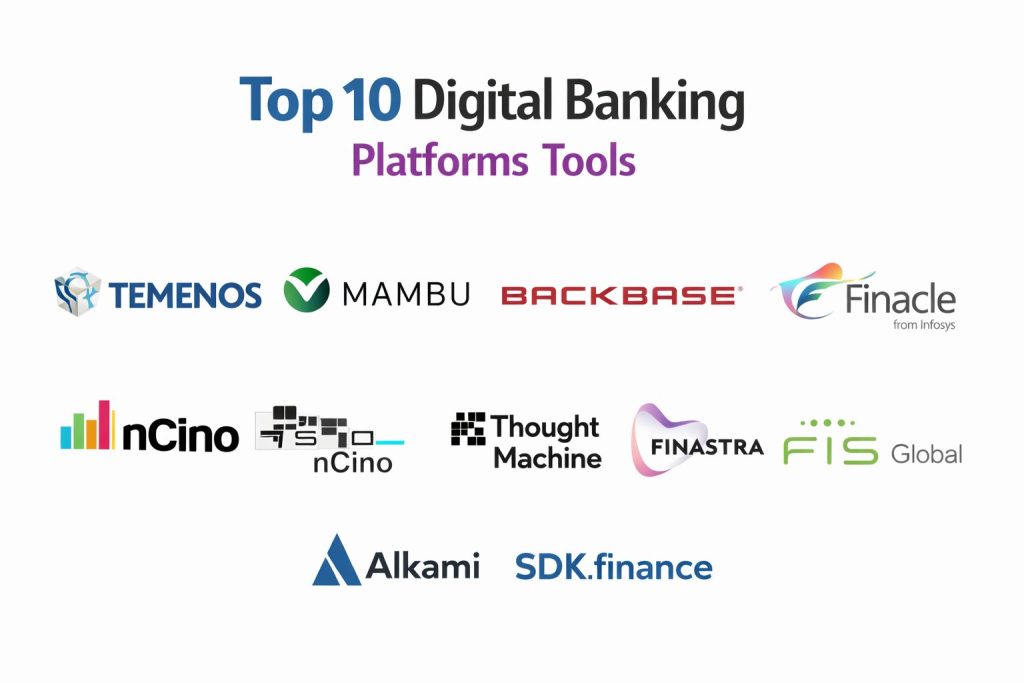
Top 10 Digital Banking Platforms
1. Temenos
Temenos is a dominant global leader in core and digital banking software, powering more than 3,000 financial institutions. It offers a comprehensive, cloud-native suite that handles everything from front-office customer engagement to back-office transaction processing and regulatory reporting.
Key Features
- Temenos Banking Cloud: A modular SaaS platform that allows banks to assemble and deploy specific banking services quickly.
- Explainable AI (XAI): Integrated AI that provides transparent reasoning for credit scoring and fraud detection, ensuring regulatory clarity.
- Universal Scene Description: Support for massive datasets, allowing for real-time analytics across global branches.
- Infinity Engagement: A specialized front-end layer focused on providing a consistent user experience across mobile, web, and wearables.
- Composable Architecture: Allows banks to upgrade individual modules (like payments or lending) without affecting the entire system.
- Global Compliance Engine: Pre-configured with regulatory requirements for over 150 different countries.
Pros
- Unmatched global footprint with proven reliability for the world’s largest Tier-1 banks.
- Extensive marketplace of pre-integrated fintech partners and third-party developers.
Cons
- Implementation can be exceptionally complex and expensive for smaller institutions.
- The vast array of features can lead to a steep learning curve for internal IT teams.
Platforms / Deployment
- Windows / Linux / macOS (Developer Tools)
- Cloud-Native (SaaS / Private Cloud)
Security & Compliance
- Features: End-to-end encryption, multi-factor biometric authentication, and automated audit trails.
- Compliance: ISO 27001, SOC 2, GDPR, and localized banking licenses globally.
Integrations & Ecosystem
Temenos offers an open API framework that connects with thousands of fintechs. It integrates deeply with Microsoft Azure and AWS for scalable infrastructure management.
Support & Community
The company provides enterprise-level support with dedicated technical account managers. The community is large, consisting of specialized consultants and global system integrators.
2. Mambu
Mambu is the leading “SaaS-only” cloud banking platform, famous for its “composable” approach to finance. It focuses on providing a lightweight, high-speed core that allows banks to pick and choose the best third-party tools for every other function.
Key Features
- Pure SaaS Core: A multi-tenant cloud engine that ensures every customer is always on the latest version of the software.
- Process Orchestrator: A low-code tool for building and automating complex financial workflows visually.
- Deposit & Lending Engines: Highly flexible modules for creating custom savings accounts and loan products in minutes.
- Real-Time Ledger: An event-driven architecture that ensures balances are updated instantly across all channels.
- API-First Design: Every feature in Mambu is accessible via a robust API, making it a favorite for developer-led fintechs.
- Marketplace Integration: One-click connections to leaders in KYC (like Onfido) and payments (like Adyen).
Pros
- Extremely fast time-to-market, with some neobanks launching in as little as three months.
- Minimal operational overhead since Mambu handles all maintenance, security, and updates.
Cons
- Requires strong technical expertise to manage the “orchestration” of many different third-party services.
- The purely modular approach can become expensive if a bank requires many external integrations.
Platforms / Deployment
- Web-based (Browser)
- Cloud (AWS / Google Cloud / Azure)
Security & Compliance
- Features: Standardized encryption, RBAC (Role-Based Access Control), and continuous vulnerability scanning.
- Compliance: SOC 1 & 2, PCI DSS, GDPR.
Integrations & Ecosystem
Mambu’s ecosystem is built on a “best-of-breed” philosophy, encouraging banks to use external specialists for cards, AML, and CRM while Mambu handles the ledger.
Support & Community
Mambu offers 24/7 technical support and a detailed knowledge base. The community is focused on the “Challenger Bank” sector and modern fintech innovation.
3. Backbase
Backbase is an “Engagement Banking Platform” that focuses heavily on the user-facing side of the financial experience. It is designed to sit on top of legacy core systems, providing a modern, digital-first interface for both customers and bank employees.
Key Features
- Customer 360: A unified view of the customer’s entire relationship with the bank, including accounts, loans, and support history.
- Digital Sales Manager: Tools specifically designed to convert visitors into customers through frictionless onboarding and cross-selling.
- Model Bank: A set of pre-built templates and journeys for retail, business, and wealth management to speed up deployment.
- Employee Engagement: A specialized portal that gives bank staff the same modern tools as customers for managing accounts.
- Widget-Based UI: Allows developers to drag and drop functional blocks to create custom mobile and web applications.
- Omnichannel Synchronization: Ensures that a customer can start an application on a phone and finish it on a desktop without losing data.
Pros
- Widely considered to have the best user interface and user experience design in the enterprise banking sector.
- Excellent at modernizing old “monolithic” banks without needing to replace the underlying core system.
Cons
- Highly focused on the “front-end,” meaning it still requires a separate core ledger system to function.
- Can be more expensive than other front-end-only solutions due to its comprehensive enterprise features.
Platforms / Deployment
- iOS / Android / Web
- Hybrid Cloud / On-Premise
Security & Compliance
- Features: Advanced identity management, secure session handling, and threat detection.
- Compliance: GDPR, PSD2, and FIPS 140-2.
Integrations & Ecosystem
Backbase is designed to integrate with any core banking system (like SAP or Oracle). It also supports a wide range of marketing and CRM tools like Salesforce.
Support & Community
Backbase provides professional services for implementation and a structured training academy for developers and designers.
4. Finacle (by Infosys)
Finacle is a comprehensive digital banking suite used by banks in over 100 countries to serve over a billion accounts. It is known for its extreme scalability and its ability to handle high volumes of complex corporate and retail transactions.
Key Features
- Blockchain-Ready: Includes native support for distributed ledger technology for trade finance and cross-border payments.
- Finacle Digital Engagement Suite: A sophisticated layer for providing personalized, AI-driven customer journeys.
- Liquidity Management: Advanced tools for corporate clients to manage cash across different currencies and entities.
- DevOps Toolkit: Provides a robust set of tools for banks to build, test, and deploy their own custom features on top of the core.
- Smart Cards & Payments: Integrated support for all modern payment rails including instant payments and digital wallets.
- Open APIs: Over 500 standardized APIs to facilitate participation in the broader financial ecosystem.
Pros
- Unrivaled scalability, making it the choice for national-level banks with massive transaction loads.
- Very strong features for corporate and commercial banking, beyond just retail services.
Cons
- The sheer scale of the system can make it feel rigid compared to smaller, “agile” fintech platforms.
- Upgrades can be a significant undertaking due to the deep integration of its various modules.
Platforms / Deployment
- Windows / Linux
- On-Premise / Cloud (Private/Public)
Security & Compliance
- Features: Multi-layered security architecture, real-time fraud monitoring, and hardware security module (HSM) support.
- Compliance: ISO 27001, PCI DSS, and multi-country regulatory modules.
Integrations & Ecosystem
Finacle has a massive ecosystem of system integrators and consultancy partners. It works seamlessly with other Infosys products and major enterprise software.
Support & Community
Infosys provides 24/7 global support and a dedicated research and development arm focused on the future of banking.
5. nCino
nCino is unique in that it is built entirely on the Salesforce platform, creating a “Bank Operating System” that combines customer relationship management (CRM) with core banking operations. It is a leader in digitalizing the commercial lending and account opening process.
Key Features
- Commercial Lending: A streamlined, paperless workflow for managing complex business loans from application to funding.
- Onboarding & Deposit Account Opening: An automated system that uses AI to verify identities and open accounts in minutes.
- Portfolio Analytics: Real-time dashboards that allow bank executives to monitor risk and performance across their entire lending book.
- Document Management: A built-in system for securely storing and managing all customer-related legal documents.
- Collateral Management: Tools for tracking and valuing the assets used to secure loans.
- Salesforce Integration: Access to the world’s most powerful CRM tools directly within the banking interface.
Pros
- Dramatically reduces the time it takes to process business loans, increasing bank profitability.
- If a bank already uses Salesforce, the implementation and user training are significantly simplified.
Cons
- Dependent on the Salesforce ecosystem, which may not align with every bank’s IT strategy.
- Not a “full core” system for all retail functions; usually works alongside a traditional ledger.
Platforms / Deployment
- Web-based
- Cloud (Salesforce Infrastructure)
Security & Compliance
- Features: Salesforce Shield for advanced encryption and event monitoring; granular permission sets.
- Compliance: SOC 2 Type II, HIPAA, and GDPR.
Integrations & Ecosystem
nCino leverages the massive Salesforce AppExchange, allowing banks to add thousands of different business applications to their platform.
Support & Community
nCino offers a dedicated “nCino University” for training and a highly active professional community of bankers and developers.
6. Thought Machine
Thought Machine is a modern “cloud-native” core banking provider that uses a unique “Smart Contracts” approach to define financial products. This allows banks to create almost any type of account or loan using simple Python code.
Key Features
- Vault Core: A modern, highly scalable ledger built using a microservices architecture.
- Smart Contracts: Allows for the programmatic definition of interest rates, fees, and product behavior without touching the core system.
- Real-Time Streaming: Provides a live data feed of every single transaction for immediate analytics and fraud detection.
- Universal Product Engine: A single engine that can handle retail, corporate, and private banking products simultaneously.
- Zero Downtime: Designed to be updated and maintained without ever taking the system offline.
- Cloud Agnostic: Can be deployed on AWS, Google Cloud, or Azure with identical performance.
Pros
- Offers the highest level of flexibility for creating innovative, non-standard financial products.
- Clean, modern codebase that is significantly easier to maintain than legacy banking software.
Cons
- Requires internal developers who are proficient in Python and microservices architecture.
- A newer player in the market, meaning fewer legacy integrations compared to Temenos or Finacle.
Platforms / Deployment
- Linux (Backend) / Web
- Cloud-Native (Public or Private)
Security & Compliance
- Features: Advanced cryptographic signing for transactions and a “Security by Design” architecture.
- Compliance: SOC 2, ISO 27001, and alignment with global banking standards.
Integrations & Ecosystem
Thought Machine is built to be “pluggable,” integrating easily with any modern API-based fintech for cards, KYC, or payments.
Support & Community
The company provides high-touch support for its enterprise clients and a developer portal with comprehensive API documentation.
7. Finastra
Finastra is one of the world’s largest fintech companies, offering a wide range of solutions across retail banking, transaction banking, and lending. Its platform, FusionFabric.cloud, is an open developer platform that encourages co-innovation.
Key Features
- Fusion Essence: A modern, cloud-based retail banking core designed for rapid digital transformation.
- FusionFabric.cloud: An open platform that allows third-party developers to build apps directly on top of Finastra’s core systems.
- Corporate Channels: Specialized portals for business clients to manage trade finance, cash, and supply chain finance.
- Treasury & Capital Markets: Advanced tools for managing market risk, liquidity, and regulatory reporting for investment banking.
- Mortgagebot: A market-leading tool for digitalizing the mortgage application and approval process.
- Open Banking APIs: Robust support for sharing data and services with the broader fintech ecosystem.
Pros
- Offers one of the most complete end-to-end portfolios in the industry, from retail to complex treasury operations.
- The FusionFabric platform provides an “App Store” model for banks to quickly trial new technologies.
Cons
- Because it is a collection of different acquired products, the integration between modules can sometimes feel fragmented.
- The move toward a unified cloud environment is ongoing for some of their older legacy modules.
Platforms / Deployment
- Windows / Linux
- On-Premise / Cloud / Hybrid
Security & Compliance
- Features: Comprehensive threat intelligence, secure coding practices, and regular third-party audits.
- Compliance: GDPR, PCI DSS, and SOC 1/2/3.
Integrations & Ecosystem
Finastra’s open platform is its biggest strength, featuring hundreds of ready-to-use apps from a wide range of fintech partners.
Support & Community
Finastra offers global 24/7 support and a massive annual conference (Finastra Universe) that brings together the banking community.
8. FIS Global (Modern Banking Platform)
FIS Global is a giant in the financial technology space. Their “Modern Banking Platform” is a high-performance, cloud-native core that focuses on providing a flexible, component-based architecture for large-scale digital banks.
Key Features
- Component-Based Architecture: Banks can select specific “business components” (like Interest or Tax) rather than buying a whole monolith.
- API-First Integration: Designed to sit at the center of a complex ecosystem of internal and external services.
- High-Volume Processing: Capable of handling the extreme transaction peaks seen during major shopping events or global crises.
- Real-Time Data Fabric: Provides a single, clean source of truth for all bank data, accessible by AI and analytics tools.
- Global Core: Supports multiple currencies, languages, and regulatory environments from a single installation.
- Integrated Payments: Deeply connected to FIS’s global payment networks, providing instant settlement capabilities.
Pros
- Backed by one of the most stable and well-resourced financial technology companies in the world.
- Exceptional at handling the rigorous security and reliability requirements of large national banks.
Cons
- Can be very expensive, making it less accessible for small fintech startups or local credit unions.
- The sales and implementation process is traditional and can be slower than more agile SaaS competitors.
Platforms / Deployment
- Linux
- Cloud-Native (Managed SaaS)
Security & Compliance
- Features: Bank-grade data centers, advanced cybersecurity monitoring, and hardware-level encryption.
- Compliance: SOC 2, ISO 27001, PCI DSS, and global banking certifications.
Integrations & Ecosystem
FIS integrates with almost every existing financial system in the world. They also offer their own massive suite of complementary products for wealth and insurance.
Support & Community
FIS provides enterprise-grade support with global coverage. They have one of the largest professional services divisions in the technology world.
9. Alkami
Alkami is a specialized digital banking platform focused primarily on US-based credit unions and community banks. It provides a “neobank-style” user experience that helps smaller institutions compete with the industry giants.
Key Features
- User-Centric Design: A highly polished mobile and web interface that prioritizes ease of use and visual appeal.
- Data Analytics & Marketing: Tools that allow community banks to identify which customers might need specific loans or products.
- Fraud Prevention: Integrated real-time monitoring specifically tailored to the types of threats community banks face.
- Extensible Platform: Allows banks to add their own custom features or integrate third-party fintech apps through a SDK.
- Business Banking: A dedicated suite of tools for small business owners to manage payroll, taxes, and cash flow.
- Seamless Onboarding: A digital-first process for opening new accounts and applying for loans without visiting a branch.
Pros
- Perfectly tailored to the specific regulatory and operational needs of the US regional banking market.
- Very high customer satisfaction rates due to the platform’s focus on the end-user experience.
Cons
- Only available for the US market, which excludes international financial institutions.
- Not a “full core” system; it acts as the digital engagement layer on top of a separate core provider.
Platforms / Deployment
- iOS / Android / Web
- Cloud (SaaS)
Security & Compliance
- Features: 2FA, biometric login, and regular security audits.
- Compliance: FFIEC guidelines, SOC 2, and US-specific banking regulations.
Integrations & Ecosystem
Alkami has a robust partner program, integrating with most major US core providers and fintechs like Plaid.
Support & Community
Alkami is known for its strong partnership model, working closely with clients to ensure successful implementation and ongoing growth.
10. SDK.finance
SDK.finance is a highly flexible, white-label digital banking platform designed for developers and fintech entrepreneurs. It provides the “source code” and core components needed to build a custom digital wallet or neobank from scratch.
Key Features
- White-Label Solution: Provides a fully brandable mobile app and web interface that a company can call its own.
- Core Ledger: A robust backend that manages accounts, balances, and multi-currency transactions.
- API-First Architecture: Designed to be the foundation of a custom-built financial product with over 400 API endpoints.
- Digital Wallet Support: Specialized tools for creating e-wallets that support both fiat and digital assets.
- KYC/AML Integration: Easy-to-use modules for connecting to third-party identity verification services.
- Back-Office Admin: A comprehensive dashboard for bank staff to monitor transactions and manage user accounts.
Pros
- The most cost-effective and flexible option for a startup that wants to own its own technology stack.
- Provides the source code (in specific versions), giving the bank ultimate control over its intellectual property.
Cons
- Requires a significant internal development team to build and maintain the final product.
- The bank is responsible for managing its own regulatory compliance using the tools provided.
Platforms / Deployment
- Web / Mobile (Source code provided)
- Cloud / On-Premise
Security & Compliance
- Features: Standard encryption, audit logs, and secure API gateways.
- Compliance: The software is designed to be compliant, but the user must obtain their own local banking licenses.
Integrations & Ecosystem
SDK.finance is designed to be a “blank canvas,” allowing for integration with any payment processor, card issuer, or compliance provider the user chooses.
Support & Community
The company offers technical consulting and integration support to help teams get their platform up and running quickly.
Comparison Table (Top 10)
| Tool Name | Best For | Platform(s) Supported | Deployment | Standout Feature | Public Rating |
| Temenos | Global Enterprise | Win, Mac, Lin | Cloud/SaaS | Explainable AI | 4.5/5 |
| Mambu | Neobanks/Fintechs | Web | Pure SaaS | Composable Core | 4.6/5 |
| Backbase | UX Modernization | iOS, Android, Web | Hybrid | Engagement Layer | 4.3/5 |
| Finacle | High-Volume Banks | Win, Lin | On-Prem/Cloud | Blockchain Ready | 4.7/5 |
| nCino | Commercial Lending | Web | Cloud (SFDC) | Salesforce Native | 4.4/5 |
| Thought Machine | Custom Innovation | Linux, Web | Cloud-Native | Smart Contracts | 4.8/5 |
| Finastra | Open Ecosystem | Win, Lin | Hybrid | FusionFabric.cloud | 4.2/5 |
| FIS Global | Tier-1 Reliability | Linux | Managed SaaS | Component-Based | 4.1/5 |
| Alkami | US Credit Unions | iOS, Android, Web | Cloud (SaaS) | User Engagement | 4.8/5 |
| SDK.finance | Fintech Startups | Web, Mobile | Cloud/On-Prem | Source Code Access | 4.0/5 |
Evaluation & Scoring of Digital Banking Platforms
The scoring below is a comparative model intended to help shortlisting. Each criterion is scored from 1–10, then a weighted total from 0–10 is calculated using the weights listed. These are analyst estimates based on typical fit and common workflow requirements, not public ratings.
Weights:
- Price / value – 15%
- Core features – 25%
- Ease of use – 15%
- Integrations & ecosystem – 15%
- Security & compliance – 10%
- Performance & reliability – 10%
- Support & community – 10%
| Tool Name | Core (25%) | Ease (15%) | Integrations (15%) | Security (10%) | Performance (10%) | Support (10%) | Value (15%) | Weighted Total |
| Temenos | 10 | 4 | 9 | 10 | 9 | 9 | 6 | 8.20 |
| Mambu | 9 | 7 | 10 | 9 | 9 | 8 | 8 | 8.60 |
| Backbase | 7 | 9 | 8 | 9 | 8 | 8 | 7 | 7.75 |
| Finacle | 10 | 4 | 8 | 10 | 10 | 9 | 6 | 8.15 |
| nCino | 8 | 8 | 9 | 9 | 8 | 8 | 7 | 8.10 |
| Thought Machine | 9 | 5 | 9 | 10 | 10 | 7 | 8 | 8.20 |
| Finastra | 9 | 5 | 10 | 9 | 8 | 8 | 7 | 8.00 |
| FIS Global | 10 | 3 | 8 | 10 | 10 | 9 | 5 | 7.75 |
| Alkami | 7 | 10 | 8 | 9 | 8 | 9 | 8 | 8.25 |
| SDK.finance | 6 | 6 | 8 | 7 | 8 | 7 | 10 | 7.15 |
How to interpret the scores:
- Use the weighted total to shortlist candidates, then validate with a pilot.
- A lower score can mean specialization, not weakness.
- Security and compliance scores reflect controllability and governance fit, because certifications are often not publicly stated.
- Actual outcomes vary with assembly size, team skills, templates, and process maturity.
Which Digital Banking Platform Is Right for You?
Solo / Fintech Entrepreneur
If you are building a new niche financial product from scratch, SDK.finance is the best starting point. It gives you the “building blocks” and flexibility to create a custom solution without the multimillion-dollar price tag of enterprise software.
Small to Mid-Sized Bank (SMB)
Regional banks and credit unions (especially in the US) should look at Alkami. It provides the most polished user experience and deep focus on customer engagement, which is vital for competing against larger national banks.
Mid-Market / Rapidly Scaling Neobank
For neobanks that want to launch fast but have the flexibility to scale globally, Mambu or Thought Machine are the clear winners. These platforms allow you to avoid legacy technical debt and build a truly modern, API-first financial institution.
Enterprise / Global Tier-1 Bank
For a global bank with millions of customers and complex regulatory needs across multiple continents, Temenos or Finacle remain the most secure and reliable choices. They have the deep “industrial-strength” features that large-scale banking requires.
Budget vs Premium
SDK.finance and Mambu (for smaller tiers) offer the best entry-level value. If budget is not an issue and reliability is the only goal, the premium offerings from FIS Global and Temenos provide the highest levels of professional stability.
Feature Depth vs Ease of Use
If you need extreme depth in corporate banking and trade finance, Finacle is the choice. If you want a platform that is easy for your marketing and customer service teams to use and optimize, Backbase or nCino are much more effective.
Integrations & Scalability
If your strategy relies on being part of a larger ecosystem of fintech apps, Finastra with its FusionFabric.cloud is the most forward-thinking choice. It effectively turns your bank into a platform for other developers to build on.
Security & Compliance Needs
For institutions in highly regulated or sensitive markets, Temenos and FIS Global offer the most comprehensive and “battle-tested” security modules, often including hardware-level encryption and full sovereign-cloud deployments.
Frequently Asked Questions (FAQs)
What is the difference between a “Core” and a “Digital” banking platform?
The “Core” is the backend ledger that manages the actual money, interest, and accounts. The “Digital” platform is the engagement layer (the app or website) that the customer actually interacts with. Many modern platforms now combine both.
How long does it take to implement a new banking platform?
A modern SaaS platform like Mambu can be launched in 3 to 6 months for a simple neobank. However, a full enterprise migration for a large traditional bank can take anywhere from 12 to 24 months.
Are these platforms secure against AI-driven cyberattacks?
Yes, most platforms in 2026 have integrated “AI versus AI” defenses. They use machine learning to detect deepfake attempts, unusual transaction patterns, and automated “brute-force” attacks in real-time.
Do I need to be a developer to manage these platforms?
For day-to-day operations, no. Most platforms like Alkami and Backbase offer “low-code” or “no-code” tools for bank staff. However, initial setup and custom integrations will always require a technical team.
Can these platforms support cryptocurrency?
Yes, many modern platforms like Thought Machine and SDK.finance are “multi-asset,” meaning they can manage both traditional fiat currency and digital assets like Bitcoin or stablecoins in the same ledger.
What is “Composable Banking”?
It is a philosophy where you don’t buy one giant “all-in-one” software package. Instead, you use a lightweight core (like Mambu) and “compose” your bank by plugging in the best available tools for payments, cards, and KYC.
Is cloud banking safe for customer data?
Modern banking clouds use advanced encryption where even the cloud provider cannot see the data. For many institutions, the security of a major provider like AWS or Microsoft Azure is far superior to an old-fashioned on-premise server room.
How do these platforms handle regulatory changes?
Leading providers like Temenos and Finacle have dedicated teams that update their software automatically as new laws are passed, ensuring that the bank remains compliant without manual intervention.
Can a digital banking platform help with sustainability?
Yes, many now include “Green Finance” modules that automatically calculate the carbon footprint of a user’s purchases or offer “Green Bonds” and ESG-compliant investment portfolios directly in the app.
What happens if the platform provider goes out of business?
For enterprise contracts, banks usually have “Source Code Escrow” agreements. This ensures that if the provider fails, the bank gets access to the software’s code so they can continue to run their operations independently.
Conclusion
The selection of a digital banking platform is the most consequential technology decision a financial institution will make. The market has bifurcated into two clear paths: the “Industrial Strength” giants like Temenos and Finacle that offer unrivaled depth, and the “Agile Challengers” like Mambu and Thought Machine that offer unprecedented speed and flexibility. The right choice depends on whether your organization prioritizes the stability of a massive, proven system or the ability to rapidly innovate and launch new products in weeks.
Ultimately, the most successful banks will be those that view their software not just as a tool for transactions, but as an engine for customer engagement. By choosing a platform that is API-first and cloud-native, you ensure that your institution can adapt to whatever financial technology shift comes next.