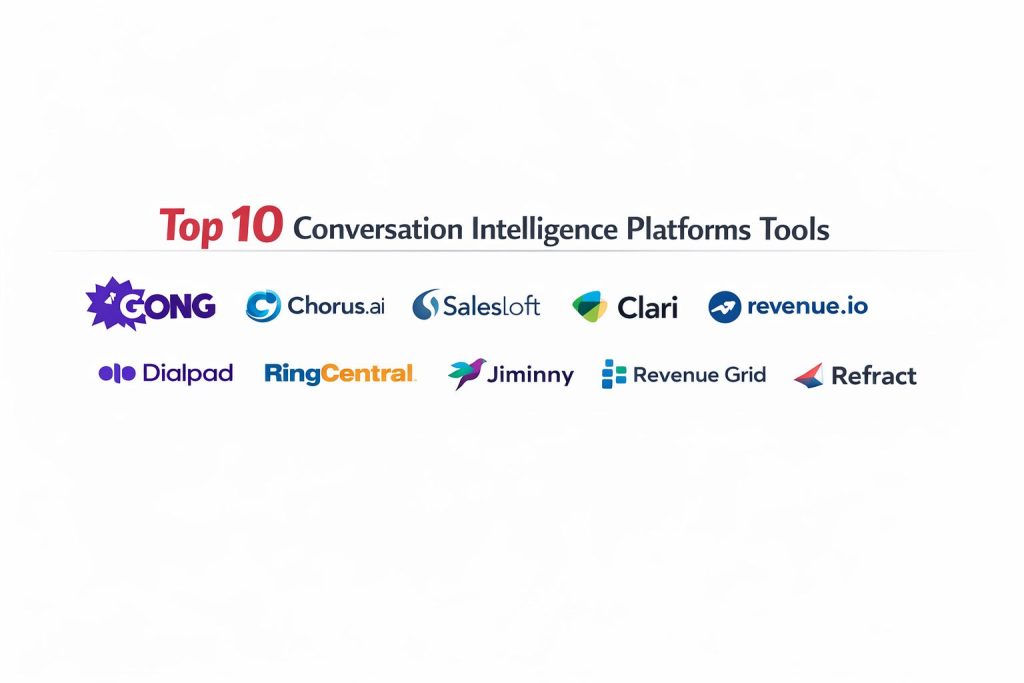
Introduction
Conversation intelligence platforms represent the sophisticated evolution of speech analytics, utilizing advanced machine learning to transform every customer interaction into structured, actionable data. These systems go far beyond simple call recording; they act as a central nervous system for revenue and support teams by dissecting tone, intent, and sentiment across voice, video, and text channels. By automatically transcribing meetings and identifying key behavioral patterns, these tools eliminate the subjectivity of manual reporting, providing leadership with a ground-truth view of market trends and representative performance. In a professional landscape where data-driven coaching is paramount, conversation intelligence has become an essential utility for organizations aiming to standardize excellence and accelerate deal velocity.
The strategic necessity of these platforms lies in their ability to bridge the gap between high-level strategy and tactical execution. Organizations leverage this technology to identify why specific deals stall, which competitor mentions are increasing, and how top-performing representatives navigate complex objections. Modern solutions now offer real-time guidance, prompting agents with relevant information during live calls to improve outcomes instantly. When selecting a platform, enterprise buyers must evaluate the accuracy of natural language processing, the robustness of automated quality assurance workflows, and the depth of integration with existing customer relationship management systems. Furthermore, global compliance standards and the ability to redact sensitive information automatically are critical factors for long-term operational security.
Best for: Revenue operations leaders, sales managers, customer success teams, and large-scale contact centers that require deep visibility into buyer sentiment and automated coaching workflows.
Not ideal for: Small teams looking for basic audio recording without any analytical layer, or businesses that do not conduct a significant volume of digital customer interactions.
Key Trends in Conversation Intelligence Platforms
The shift toward generative AI has revolutionized how meeting summaries and action items are produced, offering human-level nuance and context that was previously impossible. Real-time agent assistance is becoming a standard feature, moving the technology from a post-call analysis tool to a proactive live-coaching partner. There is also an increasing focus on multi-modal intelligence, where platforms analyze non-verbal cues in video and correlate them with verbal transcripts to provide a more holistic view of engagement.
Consolidation is another major trend, as conversation intelligence is being integrated into broader revenue orchestration and sales engagement suites. This allows for a unified data flow where conversation insights directly trigger automated follow-up sequences or update forecast projections. Additionally, privacy-first engineering is at the forefront, with advanced tools offering automated PII redaction and granular consent management to satisfy rigorous international data protection regulations.
How We Selected These Tools
Our selection process involved a rigorous assessment of market maturity, technical innovation, and enterprise reliability. We prioritized platforms that demonstrate high accuracy in speech-to-text transcription across diverse accents and languages, as this forms the foundation of all subsequent analysis. Market adoption rates were heavily weighted, as tools with extensive user bases typically offer more refined AI models and better-documented integration paths.
We also scrutinized the depth of the “intelligence” layer—specifically how effectively a platform translates raw data into specific coaching cues and revenue signals. Security and compliance were non-negotiable criteria, ensuring that every tool on this list meets the standards required for handling sensitive customer data. Finally, we evaluated the user experience for both managers and frontline representatives, looking for intuitive interfaces that drive high daily adoption and provide a clear return on investment through time saved and performance gained.
1. Gong
Gong is widely considered the pioneer of the conversation intelligence category, offering an extensive “Revenue AI” ecosystem. It captures and analyzes every customer interaction—calls, emails, and meetings—to provide a comprehensive view of deal health and team performance. Its strength lies in its ability to identify the “golden signals” that correlate with won deals, allowing managers to replicate the behaviors of their top performers across the entire organization.
Key Features
The platform features an advanced behavioral transformation engine that tracks talk-to-listen ratios and question rates. It provides automated deal-risk alerts based on buyer sentiment and the frequency of stakeholder engagement. Its generative AI capabilities produce high-quality call summaries and recommended next steps directly within the workflow. The software also includes a robust forecasting module that uses conversation data to predict revenue with high precision. Furthermore, its proprietary AI models are trained on billions of professional interactions, ensuring high accuracy in identifying competitor mentions and budget discussions.
Pros
It offers the most mature AI models in the industry and provides unparalleled visibility into the entire sales pipeline. The platform is highly scalable and integrates seamlessly with major enterprise software stacks.
Cons
The pricing structure is at the high end of the market and includes significant annual platform fees. The sheer volume of data can be overwhelming for smaller teams that do not have dedicated revenue operations staff.
Platforms and Deployment
Web-based platform with mobile applications for iOS and Android. It integrates directly with major video conferencing and telephony providers.
Security and Compliance
SOC 2 Type II, GDPR, and HIPAA compliant. It features automated PII redaction and sophisticated role-based access controls.
Integrations and Ecosystem
Deep native integrations with Salesforce, HubSpot, Slack, and various sales engagement tools. It serves as a central data hub for the entire go-to-market team.
Support and Community
Provides dedicated account management for enterprise clients and has an extensive library of “Gong Labs” research based on anonymized data trends.
2. Chorus by ZoomInfo
Chorus, now part of the ZoomInfo ecosystem, excels at providing high-context insights that are deeply integrated with lead and account data. It is designed to help teams understand the “why” behind their wins and losses by tracking specific topics and keywords across all customer-facing conversations. By leveraging ZoomInfo’s vast data lake, it provides unique context about the people and companies being discussed.
Key Features
The platform utilizes a patented machine learning system to identify key moments in meetings, such as pricing objections or feature requests. It offers a “Deal Hub” that centralizes all transcripts and recordings related to a specific opportunity. Its automated coaching scorecards allow managers to provide consistent feedback across the team. The software also features high-fidelity transcription in multiple languages and a collaborative “Playlist” feature for sharing best-practice recordings. Additionally, it integrates buyer intent data to help teams prioritize their most promising conversations.
Pros
The integration with ZoomInfo data provides a layer of prospect intelligence that other tools cannot match. It is generally more affordable than its primary competitors for existing ZoomInfo customers.
Cons
Some users find the interface less intuitive than other premium options. The advanced features are most effective when fully embedded within the ZoomInfo suite.
Platforms and Deployment
Cloud-based SaaS with direct integration into Zoom, Microsoft Teams, and Google Meet.
Security and Compliance
Maintains rigorous security standards including ISO 27001 and GDPR compliance. Offers robust data encryption and privacy controls.
Integrations and Ecosystem
Seamlessly connects with Salesforce, Microsoft Dynamics, and the broader ZoomInfo GTM platform.
Support and Community
Offers comprehensive onboarding and a dedicated success team, backed by ZoomInfo’s global support infrastructure.
3. Salesloft
Salesloft provides a unified platform where conversation intelligence is an integrated part of the broader sales engagement workflow. Rather than being a standalone tool, its “Conversations” feature allows sellers to move from executing cadences to analyzing their calls without switching applications. This ensures that conversation data directly informs the next steps in a representative’s daily task list.
Key Features
It includes “Rhythm,” an AI-powered signal-to-action engine that prioritizes a seller’s day based on conversation outcomes. The platform offers real-time transcription and a dedicated coaching dashboard for managers to track rep progress over time. It features automated call tagging and a library for storing “Best of” call recordings for onboarding. The software also provides insights into sentiment and engagement trends across multiple communication channels. Its visual “Deals” view correlates conversation frequency with pipeline movement to identify stalled opportunities.
Pros
The primary benefit is the consolidation of execution and intelligence into a single interface. It is highly effective for high-velocity sales teams that live inside their engagement platform.
Cons
The conversation intelligence features are most valuable when used as part of the full Salesloft suite. It may lack some of the deepest simulation capabilities found in specialized analytics-only tools.
Platforms and Deployment
Web-based SaaS with a strong mobile experience. Deployment is typically quick for teams already using Salesloft.
Security and Compliance
Enterprise-grade security with SOC 2 compliance and international data privacy protections.
Integrations and Ecosystem
Native bi-directional sync with Salesforce and HubSpot. It also integrates with a wide variety of dialers and meeting platforms.
Support and Community
Features a highly rated support team and “Salesloft University” for ongoing user education.
4. Clari
Clari focuses on “Revenue Leak Detection” by using conversation intelligence to ensure that every deal in the forecast is backed by actual engagement. It treats conversations as critical data points that validate the health of the pipeline. Following its acquisition of Wingman, Clari has integrated real-time coaching directly into its revenue platform to help reps close gaps as they appear.
Key Features
The platform provides real-time battle cards and prompts during live calls to assist reps with objection handling. It features an automated “Deal Inspection” view that highlights where stakeholder activity is missing. Its AI summarizes every meeting and updates the CRM automatically, reducing administrative burden. The software offers sophisticated “Win/Loss” analysis by comparing the language used in successful deals versus those that were lost. It also includes executive-level dashboards that track how strategic initiatives are being messaged on the frontline.
Pros
It is the best tool for aligning conversation data with financial forecasting and revenue governance. The real-time coaching features provide immediate value during active calls.
Cons
The focus is heavily on revenue and forecasting, which may be more than what a pure customer success or support team needs. It requires a disciplined CRM environment to provide the best results.
Platforms and Deployment
Cloud-native platform with deep integrations into the revenue tech stack.
Security and Compliance
Adheres to the highest enterprise security standards, including SOC 2 Type II and GDPR.
Integrations and Ecosystem
Deeply integrated with Salesforce, Slack, and various data warehouses. It acts as the “governance layer” for revenue teams.
Support and Community
Offers expert-led workshops and a community focused on revenue operations and forecasting excellence.
5. Revenue.io
Revenue.io is a Salesforce-native platform that specializes in real-time conversation guidance and high-volume sales execution. It is designed for teams that require instant feedback and automated workflows within their CRM. The platform uses AI to analyze live conversations and provide representatives with the exact information they need to advance a deal in the moment.
Key Features
The “Moments” feature provides real-time alerts and coaching cues based on what is being said during a live call. It includes an intelligent dialer that prioritizes leads based on engagement data and conversation history. The platform offers automated QA and call scoring to ensure compliance and quality across large teams. It features advanced speech analytics that detect intent and sentiment in real-time. The software also provides a unified view of all customer interactions directly inside the Salesforce interface, eliminating the need for data syncing.
Pros
Being Salesforce-native ensures maximum data integrity and ease of use for teams already committed to the Salesforce ecosystem. The real-time guidance is a significant differentiator for training new reps.
Cons
The platform’s value is significantly lower for organizations that do not use Salesforce as their primary CRM. Its interface is highly specialized for high-volume outbound and inbound environments.
Platforms and Deployment
Directly embedded within Salesforce; also available as a standalone web interface and mobile app.
Security and Compliance
Leverages Salesforce’s security infrastructure along with its own SOC 2 and HIPAA compliance measures.
Integrations and Ecosystem
Perfectly aligned with Salesforce and integrated with various marketing automation and sales tools.
Support and Community
Provides high-touch professional services and a dedicated success model for enterprise deployments.
6. Dialpad
Dialpad is a communications-first platform that has built conversation intelligence directly into its core telephony and meeting infrastructure. It uses “Dialpad Ai” to provide real-time transcription and analysis across every call, making intelligence an accessible part of every conversation without needing a third-party plugin.
Key Features
The platform offers real-time transcription with extremely low latency, providing a live “feed” of the conversation. It features AI-powered “Easy Notes” that summarize calls and capture action items automatically. The software includes “Real-Time Assist” cards that pop up to help agents with difficult questions or competitor mentions. It provides managers with live dashboards showing the sentiment of all active calls in the center. Additionally, it offers automated post-call summaries and deep integration with productivity suites like Google Workspace and Microsoft 365.
Pros
Because the intelligence is native to the phone system, there is no need for external “recording bots” to join meetings. It offers a very streamlined user experience and competitive pricing.
Cons
While its transcription is excellent, its revenue-specific insights and forecasting features may not be as deep as those in Gong or Clari. It is primarily a communication tool with added intelligence layers.
Platforms and Deployment
Universal deployment across Windows, macOS, iOS, Android, and web browsers.
Security and Compliance
SOC 2 Type II, HIPAA, and GDPR compliant. Features robust encryption for all voice and data traffic.
Integrations and Ecosystem
Strong integrations with Salesforce, Zendesk, HubSpot, and Slack.
Support and Community
Offers 24/7 global support and a comprehensive knowledge base for self-service learning.
7. RingCentral
RingCentral has expanded its leading unified communications platform to include “RingSense,” a dedicated conversation intelligence layer. It is designed to provide businesses with a way to extract value from the millions of minutes of conversation already happening on their phone and video systems. It focuses on turning raw communication into searchable, actionable intelligence for sales and support leaders.
Key Features
The platform provides automated call scoring and summaries across all voice and video interactions. It features “Topic Tracking” to identify trends in customer feedback or common objections. The software includes a coaching dashboard that helps managers identify which reps need help with specific parts of the conversation. It offers a “Conversational Insights” API that allows developers to pull data into their own applications. Additionally, it provides sentiment analysis and keywords that help teams understand the emotional tone of their customer relationships.
Pros
It is an ideal choice for organizations already using RingCentral for their global communications, as it adds intelligence to an existing workflow. It scales effortlessly for very large global enterprises.
Cons
The intelligence features are newer than some specialized competitors and may have fewer niche “revenue-only” features. Its primary focus remains on the communication infrastructure.
Platforms and Deployment
Global cloud deployment with native apps for all major desktop and mobile platforms.
Security and Compliance
Meets the highest global standards, including HIPAA, FINRA, and GDPR compliance, with a strong focus on data residency.
Integrations and Ecosystem
Features one of the largest app marketplaces in the industry, with hundreds of pre-built integrations.
Support and Community
Enterprise-grade support with a global reach and dedicated professional services teams.
8. Jiminny
Jiminny is a highly specialized conversation intelligence platform that focuses on “Team Coaching” and replicating the behaviors of high-performers. It is designed to be a lightweight but powerful addition to a sales team’s toolkit, providing the essential insights needed to improve performance without unnecessary complexity.
Key Features
The platform features “Sidekick,” a tool that provides real-time reminders and tips during meetings. It offers a “Coaching Library” where teams can save and categorize great calls for training. Its automated transcription supports over 20 languages and provides deep sentiment analysis. The software includes a “Visibility” dashboard that tracks how much time reps spend talking versus listening. It also features automated CRM syncing and the ability to “tag” colleagues in specific moments of a recording for feedback.
Pros
The platform is exceptionally user-friendly and focuses heavily on the human element of coaching. It is often cited for its high adoption rates among sales representatives.
Cons
It may lack some of the advanced enterprise “revenue intelligence” modules like complex forecasting found in larger suites. It is best suited for teams focused on skills development.
Platforms and Deployment
Web-based platform that integrates with Zoom, Teams, and major dialer systems.
Security and Compliance
SOC 2 Type II and GDPR compliant. Offers secure data storage and encryption.
Integrations and Ecosystem
Integrates with Salesforce, HubSpot, and Pipedrive, as well as Slack for team collaboration.
Support and Community
Known for its proactive customer success team and a community-driven approach to sales coaching.
9. Revenue Grid
Revenue Grid offers a “Salesforce-Native” approach to conversation intelligence, focusing on data integrity and automated activity capture. It is designed for organizations that want their conversation data to live directly within their CRM environment to ensure a single source of truth for all customer interactions.
Key Features
The platform features “Revenue Signals” which alerts reps to deal risks or missing steps based on conversation outcomes. It provides automated activity capture that logs every call, email, and meeting into Salesforce without manual entry. Its conversation intelligence module offers transcription, sentiment analysis, and keyword tracking. The software includes a “Guided Selling” feature that suggests the best next action for a rep based on previous conversation data. It also offers sophisticated pipeline visibility that correlates conversation volume with deal progress.
Pros
The native Salesforce architecture eliminates sync issues and ensures that data is always up-to-date. It is highly effective for improving CRM adoption and data accuracy.
Cons
Like other native tools, its value is tied to the organization’s commitment to Salesforce. The interface is more functional and data-heavy, which may appeal less to purely creative teams.
Platforms and Deployment
Directly embedded in Salesforce; also supports Outlook and Gmail environments.
Security and Compliance
Highly secure, leveraging Salesforce’s enterprise-grade security protocols along with its own certifications.
Integrations and Ecosystem
Primarily focused on the Salesforce and Microsoft 365 ecosystems.
Support and Community
Provides technical support focused on CRM optimization and data-driven sales strategies.
10. Refract
Refract, now under the Allegro umbrella, is a conversation intelligence tool dedicated to identifying “coachable moments.” It is designed to help managers cut through hours of recordings to find the specific interactions that will move the needle for their team. It focuses on the bridge between raw audio and improved rep performance through targeted feedback.
Key Features
The platform uses AI to automatically flag key moments like objections, competitor mentions, and successful closing techniques. It provides a structured “Feedback Loop” where managers can leave time-stamped comments on recordings. Its “Performance Dashboard” tracks improvements in rep behavior over time. The software features automated transcription and a “Best Practice” library for onboarding new hires. It also offers “Self-Correction” tools that allow reps to review their own calls and identify areas for improvement before a manager ever sees them.
Pros
It is one of the best tools for organizations that prioritize consistent, high-quality management feedback. Its focused feature set makes it very easy to implement and use daily.
Cons
As a specialized coaching tool, it may not offer the broader revenue forecasting or pipeline management features found in more expensive “intelligence” suites.
Platforms and Deployment
Web-based SaaS with easy integration into existing phone and video systems.
Security and Compliance
Maintains standard professional security protocols and is fully GDPR compliant.
Integrations and Ecosystem
Integrates with major CRMs and communication platforms like Zoom and Salesforce.
Support and Community
Offers a wealth of resources on sales coaching methodology and team development.
Comparison Table
| Tool Name | Best For | Platform(s) Supported | Deployment | Standout Feature | Public Rating |
| 1. Gong | Enterprise Revenue AI | Web, iOS, Android | Cloud | Revenue AI OS | 4.8/5 |
| 2. Chorus.ai | ZoomInfo Users | Web, iOS, Android | Cloud | Deal Hub Context | 4.5/5 |
| 3. Salesloft | Integrated Execution | Web, iOS, Android | Cloud | Rhythm Signal Engine | 4.6/5 |
| 4. Clari | Revenue Governance | Web, iOS, Android | Cloud | Win/Loss Analysis | 4.7/5 |
| 5. Revenue.io | Salesforce Native | Salesforce, Web | Native | Real-Time Guidance | 4.8/5 |
| 6. Dialpad | Comm-First Teams | Win, Mac, iOS, Android | Native | Unified AI/Voice | 4.4/5 |
| 7. RingCentral | UCaaS Intelligence | Win, Mac, iOS, Android | Cloud | RingSense Analytics | 4.3/5 |
| 8. Jiminny | Team Coaching | Web, iOS, Android | Cloud | Sidekick Live Reminders | 4.6/5 |
| 9. Revenue Grid | CRM Data Integrity | Salesforce, Web | Native | Automated Capture | 4.4/5 |
| 10. Refract | Coachable Moments | Web | Cloud | Feedback Loop | 4.2/5 |
Evaluation & Scoring of Conversation Intelligence Platforms
The scoring below is a comparative model intended to help shortlisting. Each criterion is scored from 1–10, then a weighted total from 0–10 is calculated using the weights listed. These are analyst estimates based on typical fit and common workflow requirements, not public ratings.
Weights:
- Core features – 25%
- Ease of use – 15%
- Integrations & ecosystem – 15%
- Security & compliance – 10%
- Performance & reliability – 10%
- Support & community – 10%
- Price / value – 15%
| Tool Name | AI Accuracy (25%) | Ease (15%) | Integrations (15%) | Security (10%) | Insights (10%) | Support (10%) | Value (15%) | Weighted Total |
| 1. Gong | 10 | 7 | 10 | 10 | 10 | 9 | 6 | 8.80 |
| 2. Chorus.ai | 9 | 8 | 9 | 9 | 9 | 8 | 8 | 8.70 |
| 3. Salesloft | 8 | 9 | 10 | 9 | 8 | 9 | 7 | 8.35 |
| 4. Clari | 9 | 8 | 10 | 10 | 9 | 8 | 7 | 8.60 |
| 5. Revenue.io | 9 | 7 | 9 | 9 | 10 | 9 | 7 | 8.55 |
| 6. Dialpad | 9 | 10 | 8 | 9 | 7 | 8 | 9 | 8.60 |
| 7. RingCentral | 8 | 9 | 9 | 10 | 7 | 10 | 8 | 8.45 |
| 8. Jiminny | 8 | 10 | 8 | 8 | 8 | 9 | 9 | 8.55 |
| 9. Revenue Grid | 7 | 7 | 9 | 10 | 8 | 8 | 8 | 7.90 |
| 10. Refract | 7 | 9 | 8 | 8 | 8 | 8 | 8 | 7.95 |
How to interpret the scores:
- Use the weighted total to shortlist candidates, then validate with a pilot.
- A lower score can mean specialization, not weakness.
- Security and compliance scores reflect controllability and governance fit, because certifications are often not publicly stated.
- Actual outcomes vary with assembly size, team skills, templates, and process maturity.
Which Conversation Intelligence Platform Tool Is Right for You?
Solo / Freelancer
Individual consultants should focus on lightweight tools that offer automated transcription and summarization to save time on note-taking. At this level, the priority is administrative efficiency rather than complex team-wide coaching or forecasting.
SMB
Small businesses often find the most success with platforms that are easy to set up and offer immediate value without a heavy technical implementation. Choosing a tool with a high degree of automation for meeting summaries allows small teams to remain agile and focused on customer relationships.
Mid-Market
For mid-market companies, the ability to scale coaching and standardize sales processes becomes critical. Tools that offer robust coaching scorecards and “best practice” libraries help managers develop a growing team and maintain quality across all interactions.
Enterprise
Large organizations require platforms that offer deep security, global scalability, and sophisticated data analytics. Enterprise-grade solutions should integrate across the entire revenue stack and provide executive-level insights that inform broad strategic decisions.
Budget vs Premium
Budget-conscious teams should look for “communication-first” platforms where intelligence is an added feature of their phone system. Premium tools are an investment in deep behavioral change and revenue optimization, offering a level of technical insight that justifies their higher cost for high-stakes environments.
Feature Depth vs Ease of Use
Teams must decide if they need the absolute deepest analytical capabilities—which often come with a steeper learning curve—or a more intuitive tool that representatives will use every day without friction. High adoption is often more valuable than niche features that go unused.
Integrations & Scalability
A platform’s value is multiplied by how well it connects with your CRM and communication tools. For long-term growth, prioritize software that can handle increasing volumes of data and offers an API for custom workflows as your organization matures.
Security & Compliance Needs
In regulated industries like finance or healthcare, compliance is the primary selection factor. Ensure the platform you choose offers automated redaction of sensitive data and meets all regional legal requirements for call recording and storage.
Frequently Asked Questions (FAQs)
1. Is it legal to record all customer calls?
Yes, but legality depends on local regulations regarding consent. Most platforms include automated disclosure features to ensure you are compliant with “one-party” or “two-party” consent laws in different regions.
2. How accurate is the AI transcription for technical jargon?
Modern platforms allow you to upload a “dictionary” of custom terms, product names, and technical jargon to improve accuracy. The latest generative models are also much better at understanding context than previous generations.
3. Do these tools only work for sales teams?
No, while they are popular in sales, they are increasingly used by customer success, support, and marketing teams to understand customer friction points and refine product messaging based on direct feedback.
4. How long does it take to see an ROI from these tools?
Many teams see immediate time-savings from automated note-taking. However, the true revenue impact from improved coaching and deal-risk detection usually becomes measurable after three to six months of consistent use.
5. Can these platforms analyze video calls and screen shares?
Yes, most top-tier platforms analyze both audio and video, with some even offering “engagement metrics” based on how participants interact with screen-shared content or their visual body language.
6. Will these tools slow down my computer or phone?
Most platforms operate as “recording bots” that join meetings in the cloud or integrate at the server level with your phone system, meaning they have zero impact on your local device’s performance.
7. Can the AI identify different speakers accurately?
Yes, advanced platforms use “diarization” to distinguish between different voices, allowing you to filter the transcript to see exactly what the customer said versus what the representative said.
8. Is my data used to train the software’s general AI model?
Most enterprise providers have strict policies against using customer data to train their public models. Always check the data privacy agreement to ensure your proprietary information remains private.
9. Do I need a specific phone system to use these tools?
Many platforms are “agnostic” and can work with almost any modern VoIP or video conferencing tool, though some offer deeper features if you use their native communication infrastructure.
10. Can these tools help with employee onboarding?
Absolutely. One of the most common use cases is creating “libraries” of top-tier calls so new hires can listen to real-world examples of how to handle objections and pitch products effectively.
Conclusion
Implementing a conversation intelligence platform is a transformative step that shifts an organization from guessing to knowing. By capturing the raw reality of every customer interaction, businesses can finally align their internal strategies with the actual needs and voices of their market. The selection of the right tool—whether it is a Salesforce-native engine, a communications-first utility, or a high-end revenue AI suite—depends on your organizational maturity and your specific performance goals. In a professional world where every word matters, having a digital record that acts as both a mirror and a coach is no longer a luxury, but a fundamental requirement for competitive success. As these tools continue to evolve into proactive AI assistants, those who embrace them will find themselves far better equipped to navigate the complexities of modern buyer relationships and drive sustainable growth.