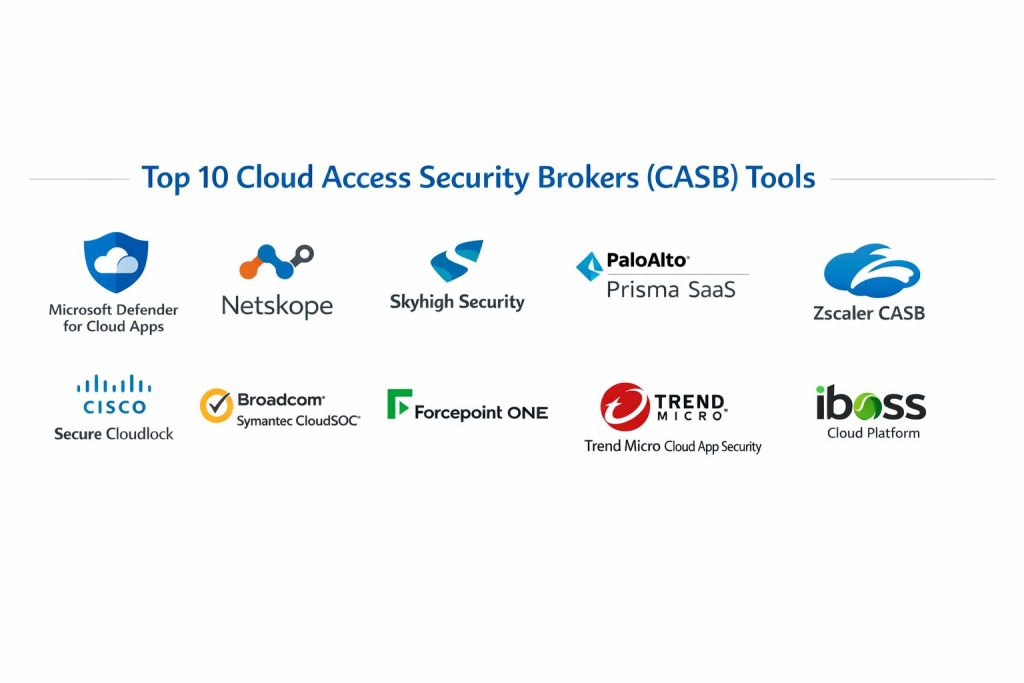
Introduction
A Cloud Access Security Broker (CASB) sits between your users and cloud services to help you see what is being used, control risky behavior, and protect sensitive data. In plain terms, it helps you reduce “shadow cloud” risk, stop data leaks, and enforce consistent policies across many SaaS apps. This matters because teams use dozens of cloud tools every day, data moves fast, and security teams must manage access and data protection without blocking business.
Common real-world use cases include preventing sensitive data from being shared publicly, detecting risky third-party apps connected to core SaaS, controlling uploads and downloads based on user role, monitoring unusual sign-in behavior, and enforcing governance across multiple cloud services. When evaluating a CASB, focus on visibility and discovery, policy controls, data loss prevention strength, integration depth with identity and endpoint tools, accuracy of alerts, deployment fit, admin usability, reporting, scalability, and how well it supports your top cloud apps.
Best for: security teams, IT admins, compliance teams, and cloud platform owners in organizations using multiple SaaS apps and storing sensitive data in cloud services.
Not ideal for: very small teams using only a couple of low-risk cloud tools, or environments where a single suite already covers cloud controls and no additional visibility is needed.
Key Trends
- Convergence of CASB into broader security service edge platforms, so cloud controls live with web and private access controls
- Stronger focus on SaaS posture management to reduce misconfigurations and risky settings inside cloud apps
- Better integration with identity signals to make access decisions based on user risk and device context
- More automation for policy tuning and alert noise reduction, especially for repeated false positives
- Higher expectations for data classification and content inspection to reduce data leakage across SaaS
- Wider adoption of API-based controls for visibility and governance across sanctioned cloud apps
- Increasing need to monitor third-party app connections and OAuth risks
- Improved reporting for audits, with better mapping to governance requirements (varies by tool)
- More emphasis on protecting collaboration tools where sensitive files are shared quickly
- Expansion of controls for unmanaged devices and remote work patterns without harming user experience
How We Selected These Tools (Methodology)
- Chosen based on broad adoption and credibility in cloud security and SaaS protection
- Prioritized tools that cover discovery, access control, data protection, and governance patterns
- Included options that fit different environments, from Microsoft-centric to mixed-vendor stacks
- Considered ecosystem strength, including common integrations and extensibility
- Evaluated how well each option supports both visibility and prevention controls
- Looked at operational usability: policy management, investigation workflow, and reporting depth
- Considered deployment flexibility to match different network and identity architectures
- Scored tools comparatively to help shortlist, not to declare a universal winner
Top 10 Tools
1) Microsoft Defender for Cloud Apps
A CASB aligned with Microsoft identity and security tooling, designed for visibility, control, and data protection across cloud apps. It is often a strong fit when Microsoft identity and endpoint controls are central.
Key Features
- Discovery of cloud app usage and shadow cloud visibility (data source dependent)
- Policy controls for risky behavior and sensitive data movement
- Data protection workflows that align with Microsoft security ecosystem
- Alerts for suspicious activity and abnormal access patterns
- Governance controls for connected apps and OAuth usage (coverage varies)
Pros
- Strong fit in Microsoft-centric environments
- Unified workflow for teams already using Microsoft security tooling
Cons
- Best value often depends on broader Microsoft licensing strategy
- Deepest benefits usually require tight integration setup
Platforms / Deployment
- Web
- Cloud
Security & Compliance
- SSO/SAML, MFA, encryption, audit logs, RBAC: Not publicly stated
- SOC 2, ISO 27001, GDPR, HIPAA: Not publicly stated
Integrations & Ecosystem
Works best when integrated with identity, endpoint, and cloud app controls for consistent policy enforcement.
- Identity platform integration: Varies / N/A
- Endpoint signal integration: Varies / N/A
- SIEM/SOAR integration patterns: Varies / N/A
- API-based SaaS connectors: Varies / N/A
Support & Community
Strong documentation and large community due to broad adoption. Support tiers vary by plan and agreement.
2) Netskope
A widely used cloud security platform with strong CASB capabilities, often selected for broad SaaS coverage, policy depth, and alignment with modern secure access approaches.
Key Features
- Strong visibility into cloud app usage and user activity (deployment dependent)
- Data protection policies across SaaS with flexible control options
- API-based governance for sanctioned cloud apps (coverage varies)
- Risk and posture insights for cloud apps and configurations (varies)
- Scalable policy framework for large user groups and complex rules
Pros
- Strong fit for mixed SaaS environments with many apps
- Good balance of visibility, control, and scale
Cons
- Policy design can be complex without governance discipline
- Full value often depends on broader platform adoption
Platforms / Deployment
- Web
- Cloud / Hybrid (varies by architecture)
Security & Compliance
- SSO/SAML, MFA, encryption, audit logs, RBAC: Not publicly stated
- SOC 2, ISO 27001, GDPR, HIPAA: Not publicly stated
Integrations & Ecosystem
Often integrates with identity, endpoints, and incident response workflows to reduce blind spots.
- Identity provider integrations: Varies / N/A
- Endpoint and device posture signals: Varies / N/A
- SIEM and ticketing workflows: Varies / N/A
- SaaS APIs and connectors: Varies / N/A
Support & Community
Strong enterprise support presence and a mature ecosystem. Documentation and onboarding quality varies by plan.
3) Skyhigh Security
A cloud security vendor known for CASB-style SaaS protection, focusing on controlling cloud usage and reducing data risk across common enterprise apps.
Key Features
- Cloud app discovery and usage reporting (data source dependent)
- Data protection policies for sensitive information in cloud apps
- Governance controls for sanctioned SaaS via connectors (coverage varies)
- Risk controls for access patterns and suspicious activity alerts
- Reporting designed for security operations and governance workflows
Pros
- Designed for enterprise governance and cloud control use cases
- Useful for teams focused on SaaS data risk reduction
Cons
- Fit depends on how your organization routes traffic and collects signals
- Some advanced capabilities may require careful configuration
Platforms / Deployment
- Web
- Cloud / Hybrid (varies by setup)
Security & Compliance
- SSO/SAML, MFA, encryption, audit logs, RBAC: Not publicly stated
- SOC 2, ISO 27001, GDPR, HIPAA: Not publicly stated
Integrations & Ecosystem
Commonly paired with identity and enterprise security monitoring for investigation and enforcement.
- Identity integrations: Varies / N/A
- SaaS connectors and APIs: Varies / N/A
- SIEM workflows: Varies / N/A
- Policy export and automation hooks: Varies / N/A
Support & Community
Enterprise-focused support model and documentation. Community size varies compared to larger platform vendors.
4) Palo Alto Networks Prisma SaaS
A CASB-style approach that emphasizes visibility and control for SaaS usage, often chosen by organizations aligning with Palo Alto Networks security ecosystems.
Key Features
- Discovery and visibility into cloud apps and usage patterns (deployment dependent)
- Data protection policy enforcement for sensitive content (coverage varies)
- SaaS governance via connectors and inspection patterns
- Risk insights for cloud app behaviors and user activity
- Integration patterns with broader security operations workflows
Pros
- Good fit for organizations standardizing on Palo Alto Networks security tooling
- Useful for teams wanting cloud governance aligned to network security strategy
Cons
- Best results depend on architecture and integration setup
- Depth for specific SaaS apps can vary by connector coverage
Platforms / Deployment
- Web
- Cloud / Hybrid (varies)
Security & Compliance
- SSO/SAML, MFA, encryption, audit logs, RBAC: Not publicly stated
- SOC 2, ISO 27001, GDPR, HIPAA: Not publicly stated
Integrations & Ecosystem
Typically integrated with identity and security operations workflows for consistent response.
- SIEM and case management: Varies / N/A
- Identity integrations: Varies / N/A
- SaaS connectors: Varies / N/A
- Automation options: Varies / N/A
Support & Community
Strong enterprise presence, with support and documentation quality dependent on plan.
5) Zscaler CASB
CASB capabilities that commonly align with secure web and cloud access patterns, often chosen by teams looking for consistent cloud controls in a broader access security approach.
Key Features
- Visibility into SaaS usage and risky cloud behaviors (data source dependent)
- Policy controls for data movement and access behaviors
- SaaS governance via APIs for supported apps (coverage varies)
- Integration with user and device context signals (varies)
- Reporting for security operations and cloud risk tracking
Pros
- Strong fit for organizations modernizing cloud access controls
- Helpful for consistent policy enforcement across users and locations
Cons
- Effectiveness depends on routing and integration approach
- App coverage and control depth can vary by SaaS connector
Platforms / Deployment
- Web
- Cloud / Hybrid (varies)
Security & Compliance
- SSO/SAML, MFA, encryption, audit logs, RBAC: Not publicly stated
- SOC 2, ISO 27001, GDPR, HIPAA: Not publicly stated
Integrations & Ecosystem
Often integrated with identity and monitoring tools to strengthen investigations and enforcement.
- Identity provider integrations: Varies / N/A
- Endpoint posture signals: Varies / N/A
- SIEM workflows: Varies / N/A
- SaaS API connectors: Varies / N/A
Support & Community
Large enterprise user base and available training resources. Support tiers vary by plan.
6) Cisco Secure Cloudlock
A CASB focused on API-based visibility and governance for cloud apps, often selected by teams that want SaaS control without relying only on traffic inspection.
Key Features
- API-based governance for supported SaaS apps (coverage varies)
- Discovery of risky behavior and unusual sharing patterns
- Data protection rules for sensitive content in cloud apps
- Controls for third-party app connections and OAuth risks (coverage varies)
- Investigation workflows designed for SaaS incidents
Pros
- Strong fit for API-based SaaS governance use cases
- Useful for controlling collaboration and sharing risks
Cons
- Coverage depends on which SaaS apps and APIs are supported
- Some prevention controls can be more limited without broader architecture
Platforms / Deployment
- Web
- Cloud
Security & Compliance
- SSO/SAML, MFA, encryption, audit logs, RBAC: Not publicly stated
- SOC 2, ISO 27001, GDPR, HIPAA: Not publicly stated
Integrations & Ecosystem
Commonly paired with identity and security monitoring to reduce blind spots.
- SaaS API connectors: Varies / N/A
- SIEM and alert workflows: Varies / N/A
- Identity integrations: Varies / N/A
- Ticketing and response automation: Varies / N/A
Support & Community
Enterprise support options and documentation are available; community size varies by region and customer base.
7) Broadcom Symantec CloudSOC
A CASB platform designed for cloud visibility, data protection, and policy enforcement across SaaS apps, typically used by organizations with established Symantec security footprints.
Key Features
- Cloud app discovery and risk categorization (data source dependent)
- Data loss prevention policies for SaaS and cloud storage (coverage varies)
- Governance controls for sanctioned cloud apps via connectors
- User activity monitoring and anomaly signals (varies)
- Reporting suited for compliance-oriented teams
Pros
- Useful for organizations that need strong governance and reporting
- Can align with broader Symantec data protection approaches
Cons
- Operational complexity can increase in large rule sets
- Some integrations may require planning and specialist help
Platforms / Deployment
- Web
- Cloud / Hybrid (varies)
Security & Compliance
- SSO/SAML, MFA, encryption, audit logs, RBAC: Not publicly stated
- SOC 2, ISO 27001, GDPR, HIPAA: Not publicly stated
Integrations & Ecosystem
Often used with enterprise security monitoring and data protection workflows.
- DLP alignment with enterprise policies: Varies / N/A
- SaaS connectors: Varies / N/A
- SIEM integrations: Varies / N/A
- Automation and alerts: Varies / N/A
Support & Community
Support is typically enterprise-focused; documentation availability varies by customer program.
8) Forcepoint ONE
A cloud security approach that includes CASB-style controls, often selected by teams that want unified policy and data protection across cloud access patterns.
Key Features
- Cloud visibility and usage monitoring (deployment dependent)
- Data protection controls for sensitive information in cloud apps
- Policy enforcement aligned with user and role context
- SaaS governance and risk controls (coverage varies)
- Reporting and investigation workflows for cloud incidents
Pros
- Helpful for unified policy approaches across users and apps
- Can reduce policy fragmentation across security layers
Cons
- Coverage and control depth can vary by SaaS app
- Results depend on careful policy design and deployment setup
Platforms / Deployment
- Web
- Cloud / Hybrid (varies)
Security & Compliance
- SSO/SAML, MFA, encryption, audit logs, RBAC: Not publicly stated
- SOC 2, ISO 27001, GDPR, HIPAA: Not publicly stated
Integrations & Ecosystem
Often integrated with identity tools and monitoring platforms to improve response speed.
- Identity provider integrations: Varies / N/A
- SaaS connectors: Varies / N/A
- SIEM workflows: Varies / N/A
- Data classification alignment: Varies / N/A
Support & Community
Support options depend on agreement; training resources are available but depth varies.
9) Trend Micro Cloud App Security
A cloud app protection option with CASB-like capabilities, often used by teams that want practical controls for common SaaS risks and data exposure.
Key Features
- Monitoring for risky cloud app behavior and suspicious actions
- Data protection policies for sensitive information in cloud apps (coverage varies)
- Controls focused on common collaboration and storage apps
- Alerts designed for investigation and quick response
- Administration designed for operational teams (varies)
Pros
- Practical option for teams prioritizing fast rollout
- Useful for common SaaS protection patterns
Cons
- Depth for complex enterprise policy models can vary
- Connector coverage varies by SaaS app and environment
Platforms / Deployment
- Web
- Cloud
Security & Compliance
- SSO/SAML, MFA, encryption, audit logs, RBAC: Not publicly stated
- SOC 2, ISO 27001, GDPR, HIPAA: Not publicly stated
Integrations & Ecosystem
Often paired with endpoint and monitoring workflows for better incident handling.
- Identity integrations: Varies / N/A
- SaaS connectors: Varies / N/A
- SIEM and alert routing: Varies / N/A
- Policy and reporting exports: Varies / N/A
Support & Community
Documentation and support are typically clear; community depth varies by customer base.
10) iboss Cloud Platform
A cloud-delivered security platform that can provide CASB-like cloud controls, often chosen by teams that want unified cloud access management with visibility into user activity.
Key Features
- Cloud app visibility and usage controls (architecture dependent)
- Policy controls for risky behavior and data movement (varies)
- Reporting designed for operational monitoring and governance
- Integration patterns with identity signals (varies)
- Scalable cloud delivery for distributed teams (varies)
Pros
- Useful for organizations with distributed users and cloud-first access
- Can simplify policy enforcement across locations
Cons
- CASB depth can vary depending on required SaaS-specific controls
- Best results depend on chosen deployment architecture
Platforms / Deployment
- Web
- Cloud
Security & Compliance
- SSO/SAML, MFA, encryption, audit logs, RBAC: Not publicly stated
- SOC 2, ISO 27001, GDPR, HIPAA: Not publicly stated
Integrations & Ecosystem
Typically integrated with identity and monitoring tools to strengthen governance.
- Identity provider integrations: Varies / N/A
- SaaS connectors: Varies / N/A
- SIEM workflows: Varies / N/A
- Automation options: Varies / N/A
Support & Community
Support availability depends on plan; community footprint varies compared to larger CASB specialists.
Comparison Table
| Tool Name | Best For | Platform(s) Supported | Deployment | Standout Capability | Public Rating |
|---|---|---|---|---|---|
| Microsoft Defender for Cloud Apps | Microsoft-centric cloud governance | Web | Cloud | Tight alignment with Microsoft security ecosystem | N/A |
| Netskope | Broad SaaS coverage and policy depth | Web | Cloud / Hybrid (varies) | Strong SaaS visibility and control patterns | N/A |
| Skyhigh Security | Enterprise SaaS control and data risk reduction | Web | Cloud / Hybrid (varies) | Governance-focused cloud protection | N/A |
| Palo Alto Networks Prisma SaaS | Cloud governance aligned to Palo Alto ecosystems | Web | Cloud / Hybrid (varies) | SaaS controls aligned with security operations workflows | N/A |
| Zscaler CASB | Consistent cloud access controls at scale | Web | Cloud / Hybrid (varies) | Cloud policy enforcement aligned to access security | N/A |
| Cisco Secure Cloudlock | API-based SaaS governance | Web | Cloud | SaaS API governance and risk controls | N/A |
| Broadcom Symantec CloudSOC | Governance and reporting for SaaS data protection | Web | Cloud / Hybrid (varies) | DLP-style SaaS protection and reporting | N/A |
| Forcepoint ONE | Unified policy approach across cloud usage | Web | Cloud / Hybrid (varies) | Consolidated cloud control strategy | N/A |
| Trend Micro Cloud App Security | Practical SaaS protection for common risks | Web | Cloud | Fast operational SaaS protection patterns | N/A |
| iboss Cloud Platform | Cloud-delivered visibility and controls | Web | Cloud | Distributed-user cloud access governance | N/A |
Evaluation & Scoring
Weights: Core features 25%, Ease of use 15%, Integrations and ecosystem 15%, Security and compliance 10%, Performance and reliability 10%, Support and community 10%, Price and value 15%.
| Tool Name | Core (25%) | Ease (15%) | Integrations (15%) | Security (10%) | Performance (10%) | Support (10%) | Value (15%) | Weighted Total (0–10) |
|---|---|---|---|---|---|---|---|---|
| Microsoft Defender for Cloud Apps | 9.0 | 8.5 | 9.0 | 7.5 | 8.5 | 8.5 | 9.0 | 8.67 |
| Netskope | 9.5 | 8.0 | 9.5 | 8.0 | 8.5 | 8.0 | 7.5 | 8.57 |
| Skyhigh Security | 8.5 | 7.5 | 8.5 | 7.5 | 8.0 | 7.5 | 7.0 | 7.88 |
| Palo Alto Networks Prisma SaaS | 8.5 | 7.5 | 8.5 | 7.5 | 8.0 | 7.5 | 7.0 | 7.88 |
| Zscaler CASB | 8.0 | 7.5 | 8.5 | 7.0 | 8.5 | 7.5 | 7.0 | 7.75 |
| Cisco Secure Cloudlock | 8.0 | 7.5 | 8.0 | 7.0 | 7.5 | 7.5 | 7.5 | 7.65 |
| Broadcom Symantec CloudSOC | 8.5 | 7.0 | 8.0 | 7.5 | 7.5 | 7.0 | 6.5 | 7.55 |
| Forcepoint ONE | 8.0 | 7.5 | 8.0 | 7.0 | 7.5 | 7.0 | 7.0 | 7.53 |
| Trend Micro Cloud App Security | 7.5 | 7.5 | 7.5 | 7.0 | 7.5 | 7.0 | 7.5 | 7.40 |
| iboss Cloud Platform | 7.5 | 7.0 | 7.5 | 7.0 | 7.5 | 7.0 | 7.0 | 7.25 |
How to interpret these scores:
- These numbers compare tools inside this list only, so treat them as a shortlist guide.
- A higher total suggests broader strength across more situations, not automatic best fit.
- If your environment is Microsoft-heavy, integration strength can outweigh small differences in other areas.
- If SaaS sprawl is high, discovery quality and governance depth usually matter more than minor usability gains.
- Always validate with a pilot using your top cloud apps and real data protection policies.
Which Tool Is Right for You?
Solo / Freelancer
Most solo users do not need a full CASB unless they handle regulated client data across many SaaS apps. If you do, prioritize simplicity and clear reporting, then choose a tool that matches your identity setup and the SaaS apps you actually use.
SMB
SMBs should focus on visibility, easy policy setup, and coverage for the few SaaS apps that matter most. Tools that align with your existing identity and endpoint stack can reduce complexity and speed up rollout.
Mid-Market
Mid-market teams usually need a balance: discovery plus API governance, along with strong data protection policies. Prioritize tools with strong integrations into your monitoring and response workflow, so investigations are fast and consistent.
Enterprise
Enterprises should prioritize scale, consistency, and governance. Look for strong policy frameworks, mature integrations, and reliable reporting for audits. Avoid tools that cannot cover your top SaaS apps with enough depth.
Budget vs Premium
Budget decisions should be based on measurable risk reduction. If you already pay for a broader security ecosystem, a CASB inside that ecosystem may deliver better total value than adding a separate vendor.
Feature Depth vs Ease of Use
If your team is small, ease of use can matter more because it reduces operational overhead. If your risk profile is high, feature depth for data protection and governance will usually be more important.
Integrations and Scalability
Pick a tool that integrates with your identity provider, monitoring stack, and incident workflow. Also test connector coverage for your top SaaS apps because gaps here create blind spots.
Security and Compliance Needs
If compliance requirements are strict, focus on governance, audit readiness, and enforceable data protection policies. Where certifications are not publicly stated, treat them as unknown and validate through procurement checks.
Frequently Asked Questions
1) What problem does a CASB solve first?
It provides visibility into cloud usage and helps control risky behavior and data movement across SaaS. For many teams, the first win is reducing shadow cloud risk and stopping accidental data exposure.
2) How does a CASB get visibility into cloud apps?
Common approaches include API connectors to SaaS platforms and network or access-path signals. The quality of visibility depends on your architecture and the SaaS apps being monitored.
3) Do I need a CASB if I already have an identity provider?
Identity tools control sign-in and access, but they may not fully cover SaaS activity, sharing behavior, and data movement. A CASB focuses on cloud app governance and data protection controls.
4) What should I test during a pilot?
Test your top SaaS apps, confirm connector coverage, validate policy accuracy, check alert noise, and ensure reporting meets your audit needs. Also verify how quickly your team can investigate an incident.
5) What is the most common mistake during deployment?
Teams often enable too many policies at once, creating alert overload. Start with visibility, tune risk thresholds, then gradually enforce controls where you have confidence.
6) Can a CASB prevent data leaks in collaboration apps?
Many can help reduce risk with data protection policies and governance controls, but effectiveness depends on connector coverage and your policy design. Validate with real sharing scenarios during testing.
7) How do CASB tools handle third-party app connections?
Many provide governance for connected apps and OAuth risks, but coverage varies by SaaS platform and connector support. Always verify how your core apps are handled.
8) Will a CASB slow down users?
API-based governance typically does not affect user performance the same way inline controls can. Performance impact depends on your chosen deployment architecture and where enforcement occurs.
9) How do I reduce false positives and alert noise?
Start with a small set of high-confidence policies, tune thresholds, and align alerts to real incident workflows. Clear data classification and consistent policy naming also reduce confusion.
10) What is a safe shortlist approach?
Pick two or three tools that match your identity stack and your top SaaS apps. Run a focused pilot, measure detection quality, policy accuracy, and investigation time, then decide.
Conclusion
A CASB is most valuable when it turns cloud sprawl into governed, visible, and controlled usage without slowing the business. The right choice depends on your cloud app mix, your identity approach, and how strict your data protection requirements are. Microsoft Defender for Cloud Apps can be compelling when Microsoft identity and security tooling are central. Netskope, Zscaler CASB, and similar platforms can fit well when you want broad SaaS coverage and consistent access controls at scale. API-focused options like Cisco Secure Cloudlock can be effective for SaaS governance where connector coverage matches your needs. The safest next step is to shortlist two or three options, run a pilot on your top SaaS apps, validate policies with real scenarios, and confirm reporting meets audit expectations.