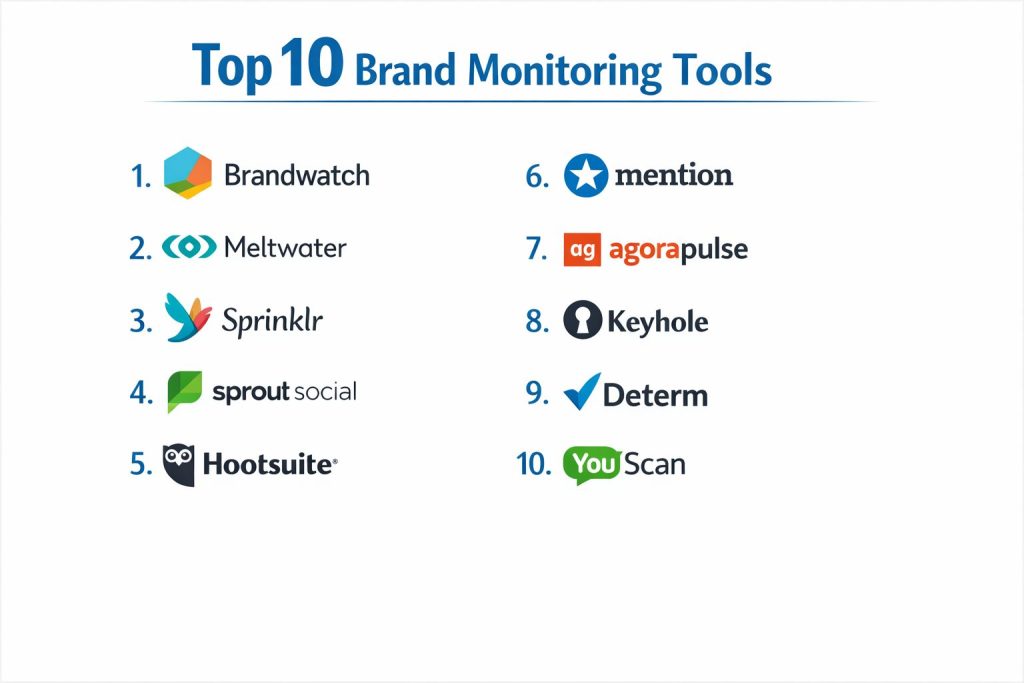
Introduction
Brand monitoring is the strategic process of tracking and analyzing every mention of a company, its products, or its key executives across the digital landscape. In a professional environment, this involves more than just checking social media; it encompasses the continuous surveillance of news sites, blogs, forums, and even dark web sources to protect corporate reputation. These tools act as an early warning system, identifying sentiment shifts and potential crises before they escalate. By utilizing advanced crawlers and natural language processing, organizations can gain a deep understanding of their market position and customer perception in real time.
The necessity of brand monitoring tools stems from the sheer volume of data generated online every second. For an enterprise, manually tracking conversations is impossible, making automated intelligence a core requirement for marketing and public relations departments. These platforms provide the empirical data needed to justify communication strategies, measure the impact of advertising campaigns, and identify influential voices within a specific industry. Beyond reputation management, these tools offer a competitive advantage by revealing the strengths and weaknesses of rival brands. When selecting a platform, professionals must evaluate the breadth of source coverage, the accuracy of automated sentiment analysis, and the robustness of the alerting systems to ensure they never miss a critical conversation.
Best for: Corporate communications teams, digital marketing agencies, public relations specialists, and enterprise-level brand managers who need to safeguard their online presence and track competitive intelligence at scale.
Not ideal for: Personal hobbyists or small local businesses with very low search volume. If the primary goal is simply to manage a single social media page without deep data analysis, a basic community management tool may be more appropriate.
Key Trends in Brand Monitoring Tools
The integration of Large Language Models has fundamentally changed how these tools interpret human language, allowing for a much more nuanced understanding of sarcasm, slang, and cultural context. There is a significant move toward predictive analytics, where software can now forecast the potential reach of a negative mention based on historical data and network mapping. Visual listening has also become a standard requirement, with tools now using computer vision to identify brand logos in images and videos even when the brand name isn’t explicitly mentioned in the text.
Real-time crisis alerting has become more sophisticated, moving beyond simple keyword triggers to include “velocity alerts” that notify teams when the volume of a conversation spikes unexpectedly. Privacy compliance is a major focus, with modern tools ensuring that data collection adheres to global regulations like GDPR while still providing actionable insights. Finally, the unification of brand monitoring with broader customer experience platforms is a growing trend, allowing companies to turn a social mention directly into a support ticket or a sales lead within a single, integrated workflow.
How We Selected These Tools
The selection of these platforms was based on a rigorous evaluation of their data processing capabilities and industry reputation. We prioritized tools that offer high-fidelity data from a diverse range of sources, including traditional media, social networks, and specialized forums. Global reach was a primary consideration, ensuring that the selected software can accurately monitor and translate conversations in multiple languages and across different geographic regions. We also examined the stability of the platforms, favoring those with proven uptime and fast data refresh rates.
Integration depth was another critical factor, as professional brand monitoring must exist within a larger tech stack. We looked for software that offers robust APIs and native connections to common CRM and business intelligence systems. The quality of the reporting engine was also scrutinized, with a focus on tools that can distill complex data into clear, executive-level visualizations. Finally, we assessed the level of professional support and training provided, as the most powerful tools often require expert guidance to configure for maximum effectiveness.
1. Brandwatch
Brandwatch is an enterprise-grade social intelligence platform that offers one of the most comprehensive data archives in the industry. It is designed for deep research and high-level strategy, providing users with the ability to create incredibly complex queries to filter through billions of online conversations.
Key Features
The platform features a proprietary query language that allows for surgical precision in data filtering. It includes an AI-powered analyst that automatically surfaces trends and anomalies in the data. The image recognition technology can identify logos and scenes across millions of daily images. Users can build highly customized dashboards that integrate social data with their own internal business metrics. It also offers a specialized tool for identifying and vetting influencers based on their actual impact within specific audience segments.
Pros
The depth of data and historical archive is unmatched, making it the gold standard for long-term trend analysis. The visualization capabilities are highly flexible, allowing for tailored reporting for different stakeholders.
Cons
The platform has a very steep learning curve and usually requires a dedicated specialist to operate effectively. It is also one of the most expensive options on the market.
Platforms and Deployment
Web-based platform with a dedicated mobile app for monitoring on the go.
Security and Compliance
It is fully GDPR compliant and offers enterprise-level security features including SSO and advanced permission management.
Integrations and Ecosystem
It integrates with a wide variety of marketing and BI tools and offers a robust API for custom data exports.
Support and Community
Offers premium enterprise support, including dedicated account managers and a wealth of educational resources.
2. Meltwater
Meltwater is a global leader in media intelligence, specializing in the intersection of traditional news and social media monitoring. It provides a massive database of influencers and journalists, making it a primary tool for PR professionals who need to manage their brand’s narrative across all media types.
Key Features
The software monitors over 300,000 news sources globally in addition to all major social platforms. It features a built-in media relations suite that helps teams identify and pitch the right journalists. The AI-driven sentiment analysis provides real-time feedback on how a brand’s message is being received. It includes automated reporting tools that can be scheduled to deliver insights directly to an executive’s inbox. The platform also offers a dedicated “war room” view for tracking live crises or high-stakes product launches.
Pros
The combination of traditional news monitoring and social listening in a single interface is exceptionally powerful for PR teams. The influencer database is one of the most accurate and frequently updated in the world.
Cons
The interface can feel disjointed due to the many different modules and acquisitions integrated into the platform. Pricing is opaque and often requires a lengthy sales process.
Platforms and Deployment
Cloud-based SaaS accessible via web browsers and mobile devices.
Security and Compliance
Maintains high security standards with regular third-party audits and compliance with international data privacy laws.
Integrations and Ecosystem
Offers native integrations with major CRM systems and social management platforms, as well as an open API.
Support and Community
Provides 24/7 global support and a dedicated success team for enterprise clients.
3. Sprinklr
Sprinklr is a massive “Unified Customer Experience Management” platform that treats brand monitoring as one part of a larger ecosystem. It is designed for the world’s largest organizations that need to manage every single digital touchpoint with their customers in a unified environment.
Key Features
The platform uses advanced AI to route brand mentions to the correct department, whether it’s marketing, support, or sales. It features a global “listening” engine that covers dozens of social channels and millions of websites. The governance tools allow for strict control over brand voice across thousands of users and regions. It includes a powerful real-time alerting system that can trigger automated workflows based on sentiment or keyword volume. The software also offers a deep competitive benchmarking suite to track market share in real time.
Pros
It is the most comprehensive tool available, potentially replacing a dozen smaller software packages. The AI capabilities for automating customer interactions are world-leading.
Cons
The sheer size of the platform makes it incredibly complex and time-consuming to implement. It requires a significant investment in both money and personnel to see a return on investment.
Platforms and Deployment
Enterprise cloud platform with support for global deployments and localized data residency.
Security and Compliance
Features some of the most robust security protocols in the industry, including advanced encryption and role-based access at a granular level.
Integrations and Ecosystem
Designed to be the central hub of an enterprise, it integrates with almost every major business software through pre-built connectors or a deep API.
Support and Community
Provides high-touch enterprise support and professional services for implementation and strategy.
4. Sprout Social
Sprout Social is known for its elegant design and focus on usability, making it a favorite for mid-market companies that need powerful monitoring without the complexity of an enterprise suite. It combines listening, publishing, and engagement in a way that feels natural and streamlined.
Key Features
The “Smart Inbox” consolidates all brand mentions and messages into a single, filterable stream. It features a dedicated social listening module that provides clear visualizations of brand sentiment and industry trends. The platform includes a robust set of reporting templates that are ready for executive presentation. It offers a collaborative environment where teams can assign tasks and manage internal approvals. The software also features automated “bot” builders for handling common customer inquiries on social channels.
Pros
The user interface is widely considered the best in the industry, leading to high adoption rates among creative teams. The reports are visually stunning and require very little customization.
Cons
The listening features are often priced as a separate add-on, which can significantly increase the total cost. Some advanced researchers may find the data filtering options limited compared to Brandwatch.
Platforms and Deployment
Web-based platform with a highly rated mobile application for iOS and Android.
Security and Compliance
Adheres to industry-standard security practices and provides clear documentation on data handling and privacy compliance.
Integrations and Ecosystem
Integrates deeply with helpdesks like Zendesk and CRM tools like Salesforce to bridge the gap between marketing and service.
Support and Community
Offers excellent customer support and a popular online community for sharing social media best practices.
5. Hootsuite (with Talkwalker)
Hootsuite is one of the oldest names in social media management, and through its acquisition of Talkwalker, it now offers some of the most advanced brand monitoring capabilities in the world. It is a versatile choice for organizations that want to manage their entire social presence from a single dashboard.
Key Features
The Talkwalker integration brings industry-leading AI that can analyze sentiment in over 100 languages. It features visual recognition technology that tracks brand logos across social media and broadcast TV. The platform provides real-time “heartbeat” monitors for brand health and competitive comparisons. Users can manage hundreds of social accounts and schedule content across all major networks. It also includes an advanced “impact” tool that calculates the actual ROI of social media efforts by connecting them to website conversions.
Pros
The combination of Hootsuite’s management tools and Talkwalker’s intelligence creates a very powerful end-to-end solution. The platform is highly scalable, from small teams to global enterprises.
Cons
The pricing structure has become increasingly complex as more features are added. Navigating between the management and listening modules can sometimes feel like using two different programs.
Platforms and Deployment
SaaS platform accessible via web and mobile, with options for secure enterprise deployment.
Security and Compliance
Offers robust security features including secure logins, permissions, and compliance with major international data standards.
Integrations and Ecosystem
Boasts a massive app directory with hundreds of third-party integrations, making it one of the most flexible tools available.
Support and Community
Provides extensive training through its “Academy” and offers tiered support levels for different business sizes.
6. Mention
Mention is a streamlined monitoring tool that focuses on speed and simplicity. It is designed for brands that need to know exactly when and where they are being talked about without getting bogged down in overly complex data science.
Key Features
The platform offers real-time web and social alerts that are delivered directly to your computer or mobile device. It features a “Pulse” alert system that notifies users when a keyword starts trending. The software includes basic social media management tools for responding to mentions immediately. Users can create “Boolean” alerts to filter out noise and focus on high-priority conversations. It also provides a competitive analysis tool that tracks the “share of voice” between a brand and its rivals.
Pros
It is incredibly fast to set up and provides immediate value with its clean alerting system. The price point is very accessible for SMBs and growing agencies.
Cons
It lacks the deep data analysis and historical research capabilities found in enterprise tools. The reporting features are basic compared to competitors like Sprout Social.
Platforms and Deployment
Available as a web application, mobile app, and a desktop notification tool.
Security and Compliance
Provides standard secure access controls and is compliant with general data protection regulations.
Integrations and Ecosystem
Integrates well with common communication tools like Slack and Zapier for workflow automation.
Support and Community
Offers responsive customer support via email and a comprehensive help center with tutorials.
7. Agorapulse
Agorapulse is a user-friendly management and monitoring suite that is particularly popular with agencies. It focuses on helping teams stay organized and responsive, with a heavy emphasis on “inbox zero” for brand mentions.
Key Features
The platform features a unified inbox that automatically captures and organizes brand mentions. It includes a basic monitoring tool that tracks keywords and hashtags across major social platforms. The reporting engine produces clean, automated reports that focus on engagement and audience growth. It offers a “fan and follower” CRM that helps teams identify their most loyal advocates. The software also includes a built-in “social media manager” mobile app for handling tasks away from the desk.
Pros
The tool is very easy to learn, which is perfect for agencies that need to onboard new staff quickly. The support team is consistently rated as one of the best in the industry.
Cons
The monitoring capabilities are primarily focused on social media, with less coverage of traditional news or deep web sources. It is not designed for heavy-duty research or big data analysis.
Platforms and Deployment
Web-based platform with robust mobile apps for team members.
Security and Compliance
Maintains high standards for data security and is compliant with all relevant social platform terms of service.
Integrations and Ecosystem
Connects with major social platforms and offers integrations with tools like Canva and Google Analytics.
Support and Community
Renowned for fast and helpful customer support, alongside an active community of social media professionals.
8. Keyhole
Keyhole is a specialized monitoring tool that focuses on hashtag tracking and influencer impact. It is the preferred choice for event managers and campaign-focused marketers who need real-time data on specific movements or product launches.
Key Features
The platform provides a real-time dashboard for tracking hashtag reach, impressions, and sentiment. It features a unique “influencer look-up” tool that identifies the most effective voices within a specific conversation. The software includes predictive technology that estimates how a hashtag will perform over the next 24 hours. It offers automated reporting that can be customized to match a brand’s visual identity. The tool also features a “profile analytics” module that tracks the growth and performance of specific social accounts over time.
Pros
It is the best tool for event-based monitoring and real-time campaign tracking. The visual dashboards are very engaging and perfect for display at live events.
Cons
The scope is narrower than full-service media intelligence platforms. It is less effective for general brand monitoring that doesn’t involve specific keywords or hashtags.
Platforms and Deployment
Cloud-based web application with shareable real-time dashboards.
Security and Compliance
Adheres to standard secure data practices and ensures all data is collected via official platform APIs.
Integrations and Ecosystem
Offers integrations with common marketing tools and provides custom API access for enterprise users.
Support and Community
Provides dedicated support for campaign setup and a knowledge base focused on social media measurement.
9. Determ
Determ is a powerful, real-time media monitoring tool that excels at finding mentions across the entire internet, including niche websites and comments. It is designed for businesses that need to catch every single mention of their name, no matter where it occurs.
Key Features
The platform monitors over 100 million sources in real time, including social media, blogs, forums, and websites. It features an AI assistant that can summarize thousands of mentions into a single, digestible report. The sentiment analysis is highly accurate and supports over 100 languages. It includes a mobile app that sends instant notifications the moment a brand is mentioned. The software also provides a competitive intelligence module that allows for side-by-side comparisons of multiple brands.
Pros
The source coverage is exceptionally broad, often finding mentions that other tools miss. The automated AI summaries save a massive amount of time for busy communications professionals.
Cons
The interface can sometimes feel a bit technical for users who only want a simple social media overview. Pricing is higher than many entry-level tools.
Platforms and Deployment
Web-based application with a dedicated mobile app for real-time alerts.
Security and Compliance
Uses enterprise-grade encryption and follows strict data privacy guidelines for all monitored data.
Integrations and Ecosystem
Offers a flexible API and integrates with common project management and communication tools.
Support and Community
Known for providing highly personalized support and clear onboarding documentation.
10. YouScan
YouScan is a specialized visual listening platform that uses industry-leading image recognition to monitor how brands appear in photos and videos. It is essential for consumer brands where the visual context of a mention is just as important as the text.
Key Features
The software can identify brand logos, objects, scenes, and even the emotional state of people in images. It features an AI-powered “Insight Copilot” that allows users to ask questions about their data in natural language. The platform provides detailed visual reports that show exactly where and how a brand’s products are being used in the real world. It includes a robust text monitoring engine to supplement its visual capabilities. The tool also offers an automated crisis detection system that flags potentially damaging visual content.
Pros
The image recognition capabilities are some of the most advanced in the world, providing insights that text-only tools cannot. It is incredibly useful for understanding real-world consumer behavior.
Cons
The platform is highly specialized and may be more than what a non-consumer brand needs. The cost reflects the advanced technology involved in processing millions of images.
Platforms and Deployment
Cloud-based platform with a focus on high-performance data visualization.
Security and Compliance
Maintains strict security protocols and ensures all image data is processed in compliance with privacy laws.
Integrations and Ecosystem
Integrates with major CRM and helpdesk platforms to ensure visual insights can be acted upon by the whole company.
Support and Community
Provides expert support and training specifically focused on the growing field of visual social intelligence.
Comparison Table
| Tool Name | Best For | Platform(s) Supported | Deployment | Standout Feature | Public Rating |
| 1. Brandwatch | Deep Research | Web, Mobile | SaaS | Advanced Boolean Logic | 4.6/5 |
| 2. Meltwater | PR & Media Rel. | Web, Mobile | SaaS | Media Contact Database | 4.4/5 |
| 3. Sprinklr | Global Enterprise | Web, Mobile | SaaS | Unified CX Ecosystem | 4.2/5 |
| 4. Sprout Social | Mid-Market Teams | Web, Mobile | SaaS | Smart Inbox UI | 4.7/5 |
| 5. Hootsuite | All-in-one Mgmt | Web, Mobile | SaaS | Talkwalker Integration | 4.3/5 |
| 6. Mention | SMB Alerts | Web, Mobile | SaaS | Real-time Desktop App | 4.1/5 |
| 7. Agorapulse | Agency Workflow | Web, Mobile | SaaS | Team Collaboration | 4.5/5 |
| 8. Keyhole | Campaign Tracking | Web | SaaS | Real-time Hashtag Hub | 4.0/5 |
| 9. Determ | Web Wide Listening | Web, Mobile | SaaS | AI Summaries | 4.6/5 |
| 10. YouScan | Visual Listening | Web | SaaS | Logo & Scene Detection | 4.8/5 |
Evaluation & Scoring of Brand Monitoring Tools
The scoring below is a comparative model intended to help shortlisting. Each criterion is scored from 1–10, then a weighted total from 0–10 is calculated using the weights listed. These are analyst estimates based on typical fit and common workflow requirements, not public ratings.
Weights:
- Core features – 25%
- Ease of use – 15%
- Integrations & ecosystem – 15%
- Security & compliance – 10%
- Performance & reliability – 10%
- Support & community – 10%
- Price / value – 15%
| Tool Name | Core (25%) | Ease (15%) | Integrations (15%) | Security (10%) | Performance (10%) | Support (10%) | Value (15%) | Weighted Total |
| 1. Brandwatch | 10 | 4 | 9 | 9 | 9 | 9 | 6 | 8.20 |
| 2. Meltwater | 9 | 6 | 8 | 9 | 8 | 9 | 7 | 8.00 |
| 3. Sprinklr | 10 | 3 | 10 | 10 | 10 | 8 | 5 | 7.95 |
| 4. Sprout Social | 8 | 10 | 9 | 9 | 8 | 10 | 8 | 8.65 |
| 5. Hootsuite | 8 | 8 | 10 | 9 | 8 | 9 | 8 | 8.50 |
| 6. Mention | 7 | 9 | 7 | 8 | 9 | 8 | 9 | 7.90 |
| 7. Agorapulse | 7 | 10 | 8 | 8 | 8 | 10 | 9 | 8.35 |
| 8. Keyhole | 8 | 8 | 7 | 8 | 9 | 8 | 8 | 7.95 |
| 9. Determ | 9 | 7 | 8 | 9 | 10 | 9 | 8 | 8.50 |
| 10. YouScan | 10 | 7 | 8 | 9 | 9 | 9 | 7 | 8.55 |
How to interpret the scores:
- Use the weighted total to shortlist candidates, then validate with a pilot.
- A lower score can mean specialization, not weakness.
- Security and compliance scores reflect controllability and governance fit, because certifications are often not publicly stated.
- Actual outcomes vary with assembly size, team skills, templates, and process maturity
Which Brand Monitoring Tool Is Right for You?
Solo / Freelancer
For individual consultants or specialists, the focus should be on tools that provide high-value alerts with minimal setup time. A tool that allows you to manage multiple clients efficiently without requiring a massive budget is usually the ideal starting point.
SMB
Small businesses need a platform that balances cost with a broad range of features. Look for tools that combine monitoring with basic social media management, as this reduces the number of separate subscriptions your team needs to manage.
Mid-Market
Mid-market companies should prioritize ease of use and reporting quality. At this stage, you likely have a small team managing social media, so a tool that allows them to produce professional reports for stakeholders quickly is a significant advantage.
Enterprise
For large organizations, data security and global reach are non-negotiable. You need a platform that can manage thousands of users and provides the deep technical research capabilities required to protect a global reputation across multiple languages.
Budget vs Premium
Budget tools are great for simple alerting and basic engagement, but they often lack the deep data filtering and historical archives of premium suites. Premium tools offer the peace of mind that comes with near-total data coverage and advanced AI analysis.
Feature Depth vs Ease of Use
Some platforms offer endless technical complexity for professional data scientists, while others focus on a beautiful, intuitive interface for creative marketers. The right choice depends on whether your team is more focused on deep research or daily engagement.
Integrations & Scalability
Your brand monitoring tool should not exist in a vacuum. Choose a platform that can grow with your company and integrates easily with your existing CRM and customer support software to create a unified view of your audience.
Security & Compliance Needs
In industries like finance or healthcare, security is the top priority. Ensure the tool you choose offers advanced features like single sign-on, audit logs, and clear evidence of compliance with international data privacy regulations.
Frequently Asked Questions (FAQs)
1. How often do these tools refresh their data?
Most professional tools provide near real-time monitoring, with mentions appearing in the dashboard within seconds or minutes of being posted. However, the exact speed can vary depending on the platform’s access level to specific social networks.
2. Can these tools track private groups or accounts?
Due to privacy laws and platform terms of service, these tools generally cannot track private Facebook groups or private Instagram profiles. They focus on public data that is accessible to anyone on the internet.
3. What is “Boolean Search” in brand monitoring?
Boolean search uses operators like AND, OR, and NOT to create complex keyword filters. This allows users to be very specific, such as tracking mentions of “Apple” but excluding anything related to “fruit” or “juice.”
4. Do these tools monitor the dark web?
Some enterprise-level brand monitoring tools do have the capability to scan specific parts of the dark web and encrypted forums to look for leaked data or brand-related threats, though this is usually a specialized feature.
5. How accurate is AI sentiment analysis?
Modern AI has become very good at identifying sentiment, but it is not perfect. Sarcasm and complex irony can still be difficult for algorithms to catch, which is why most tools allow users to manually correct the sentiment of a mention.
6. Can I respond to customers directly from these tools?
Many of the tools on this list include “engagement” features that allow you to reply to tweets, comments, and messages directly from the monitoring dashboard, streamlining your response time.
7. Is there a limit to how many keywords I can track?
The number of keywords usually depends on your subscription tier. Some tools offer unlimited keywords for a higher price, while entry-level plans may limit you to a small handful of high-priority terms.
8. What is “Share of Voice”?
Share of Voice is a metric that compares the volume of conversation about your brand against the volume of conversation about your competitors. It helps you understand how much of the “market conversation” you actually own.
9. Can I monitor podcasts and video content?
Yes, some advanced tools now use speech-to-text technology to monitor mentions within podcasts and video platforms like YouTube, providing a much broader view of the media landscape.
10. Do these tools require a long-term contract?
While many enterprise platforms require annual or multi-year contracts, many mid-market and SMB tools offer monthly subscriptions that provide more flexibility for smaller teams.
Conclusion
Effective brand monitoring is no longer a luxury but a fundamental requirement for maintaining digital integrity in a hyper-connected world. The tools highlighted in this guide represent the pinnacle of media intelligence, offering various paths to understanding the vast and often chaotic online conversation. Whether your priority is deep scientific research, rapid-response alerting, or visual brand protection, the key to success is selecting a platform that aligns with your organizational maturity and technical resources. By consistently monitoring your digital footprint, you move from a reactive posture to a proactive strategy, ensuring your brand remains resilient against crises while capitalizing on every opportunity for growth.