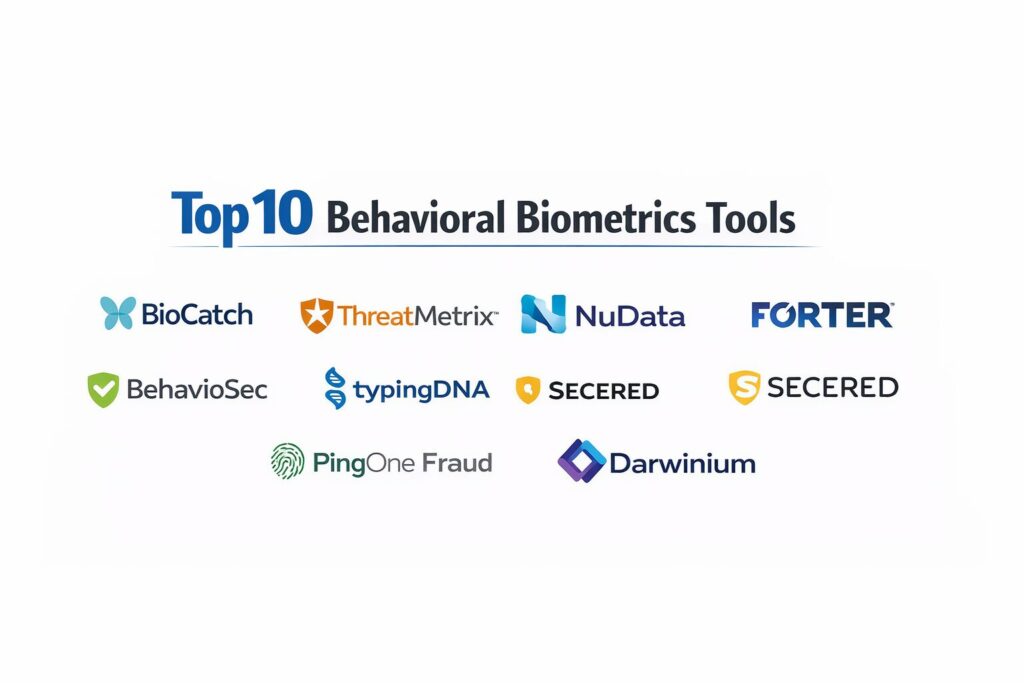
Introduction
Behavioral biometrics represents a transformative shift in the cybersecurity landscape, moving beyond what a user “knows” or “has” to how a user “acts.” Unlike traditional physiological biometrics such as fingerprints or facial recognition, behavioral biometrics focuses on the unique patterns of human-device interaction. This includes keystroke dynamics, mouse movement patterns, touchscreen pressure, and even the specific gait or angle at which a mobile device is held. By creating a continuous, non-intrusive authentication layer, these tools provide a higher level of security that is nearly impossible for bots or malicious actors to replicate, as human behavior is inherently variable and deeply individualized.
In the current global environment, where sophisticated synthetic identity fraud and automated bot attacks are rampant, behavioral biometrics serves as a critical defense mechanism. These platforms operate in the background, providing passive authentication without introducing friction into the user experience. This is particularly vital for high-stakes industries such as digital banking, e-commerce, and healthcare, where the balance between robust security and a seamless customer journey is a primary competitive differentiator. When selecting a behavioral biometrics platform, organizations must evaluate the precision of the underlying machine learning models, the transparency of the risk scoring, and the ability of the system to adapt to “legitimate” changes in user behavior over time.
Best for: Fraud prevention teams, Chief Information Security Officers (CISOs), and digital product owners in banking, fintech, and large-scale e-commerce who need to eliminate account takeover fraud and bot attacks.
Not ideal for: Small physical retail shops without a digital presence, or internal office environments where simple physical access control or standard Multi-Factor Authentication (MFA) is sufficient for the risk profile.
Key Trends in Behavioral Biometrics Tools
The integration of advanced deep learning has enabled behavioral biometrics to move from simple pattern matching to “predictive intent” analysis. Modern systems can now differentiate between a human user who is genuinely confused by a UI and a fraudster who is following a scripted sequence of actions. We are also seeing a significant move toward “Continuous Authentication,” where the system monitors behavior throughout the entire digital session rather than just at the login gate. This ensures that if a device is handed off or a session is hijacked, the shift in behavior triggers an immediate security challenge.
Data privacy and ethical AI are becoming central pillars of the technology, with many vendors adopting “Privacy by Design” principles. This involves encrypting behavioral templates so that the raw data—such as specific keystrokes—cannot be reconstructed into sensitive information. There is also a growing trend toward cross-institutional intelligence, where anonymized behavioral “signals” are shared across a network to identify known bot patterns or fraudulent clusters. Furthermore, the rise of mobile-first banking has led to a surge in specialized mobile biometrics that analyze gyroscopic and accelerometer data to create a unique “hand-held” profile for every user.
How We Selected These Tools
Our selection process involved a comprehensive analysis of the technical maturity and market adoption of various behavioral intelligence platforms. We prioritized tools that demonstrate a high degree of accuracy in distinguishing between automated scripts and human actors, particularly in the context of advanced “social engineering” attacks. A primary criterion was the “invisibility” of the solution, evaluating how well the tool integrates into a digital environment without requiring the user to perform any specific actions.
Scalability and real-time performance were critical factors; we selected platforms capable of processing millions of events per second with sub-millisecond latency. We scrutinized the depth of the “Behavioral Intelligence” engines, favoring those that offer clear, explainable risk scores that can be easily ingested by existing fraud orchestration layers. Security certifications and compliance with global data protection regulations like GDPR and CCPA were non-negotiable requirements. Finally, we assessed the total value proposition, including the ease of deployment and the strength of the professional services provided to help organizations fine-tune their behavioral models.
1. BioCatch
BioCatch is widely considered the pioneer in the behavioral biometrics space, focusing on “Behavioral Insights” to stop fraud and identity theft. It is the preferred choice for major global banks that require sophisticated protection against account takeover and social engineering.
Key Features
The platform features “Mule Account Detection,” which identifies behavioral patterns associated with money laundering and mule activity. It includes a robust “Social Engineering” module that detects if a user is being coached through a transaction by a fraudster. The system analyzes over 2,000 behavioral parameters, including mouse displacement and typing rhythm. It features an “invisible” integration that works across web and mobile platforms without adding latency. Additionally, it provides a centralized dashboard for fraud investigators to visualize behavioral anomalies in real-time.
Pros
It has the largest behavioral dataset in the industry, providing a high degree of predictive accuracy. The platform is exceptionally good at identifying “genuine user stress” which often indicates a social engineering attack.
Cons
The complexity and enterprise-level pricing make it less accessible for smaller organizations. Implementation typically requires significant alignment with existing fraud stacks.
Platforms and Deployment
Cloud-native SaaS that integrates via SDKs or APIs for Web, iOS, and Android.
Security and Compliance
Maintains top-tier security standards including SOC 2 Type II and is fully compliant with global banking privacy regulations.
Integrations and Ecosystem
Integrates with major fraud orchestration platforms and identity verification systems through a flexible API layer.
Support and Community
Offers dedicated expert analysts and a professional “Threat Intelligence” service for enterprise clients.
2. LexisNexis ThreatMetrix
ThreatMetrix is a global leader in digital identity and fraud prevention, combining behavioral biometrics with a massive global intelligence network. It is designed for enterprise-scale organizations that need to verify identities in real-time across billions of transactions.
Key Features
The platform features the “Digital Identity Network,” which anonymizes and shares intelligence from billions of global transactions. It includes a robust “Behavioral Biometrics” module that analyzes keystroke dynamics and device handling. The system offers an “Advanced Policy Engine” that allows teams to create custom rules based on behavioral risk scores. It features “Bot Detection” that identifies automated scripts by their lack of human-like behavioral variance. It also provides deep device fingerprinting to correlate behavioral data with specific hardware profiles.
Pros
The scale of the global network provides unmatched context for identifying cross-platform fraud. It offers a very high degree of customization for risk-weighting different behavioral signals.
Cons
The sheer volume of data and features can be overwhelming for smaller fraud teams. Pricing is enterprise-focused and scales with transaction volume.
Platforms and Deployment
Cloud-based SaaS.
Security and Compliance
Adheres to strict global standards including ISO 27001 and GDPR, ensuring high levels of data sovereignty.
Integrations and Ecosystem
Deeply integrated within the LexisNexis Risk Solutions ecosystem and compatible with most third-party security stacks.
Support and Community
Provides extensive documentation and high-touch account management for global enterprise users.
3. NuData Security (A Mastercard Company)
NuData Security uses behavioral intelligence to help organizations distinguish between authentic users and malicious actors. Now part of the Mastercard ecosystem, it provides a powerful, multi-layered approach to digital trust.
Key Features
The platform features “NuDetect,” which analyzes behavioral signals to identify bots and account takeover attempts in real-time. It includes a “Continuous Monitoring” engine that tracks behavior from login through to checkout. The system offers “Device Intelligence” that identifies the reputation of the hardware being used. It features a “Passive Biometrics” layer that looks at how users interact with forms and navigation menus. Additionally, it provides “Actionable Insights” that allow businesses to automate the “challenge” or “block” response based on risk.
Pros
Being part of Mastercard provides a global perspective on transaction security and fraud trends. The platform is highly effective at reducing false positives, ensuring that genuine users are not blocked.
Cons
Integration into highly custom or legacy architectures can sometimes be complex. The reporting interface is powerful but requires training to use effectively.
Platforms and Deployment
Cloud-based SaaS accessible via API and mobile SDKs.
Security and Compliance
Maintains PCI DSS compliance and adheres to Mastercard’s rigorous global data security standards.
Integrations and Ecosystem
Seamlessly integrates with other Mastercard security products and major e-commerce platforms.
Support and Community
Offers a professional services team to help with implementation and model tuning.
4. Forter
Forter is a specialized “Trust Platform” for e-commerce that uses behavioral biometrics to automate the decision-making process for online transactions. It is designed to maximize approval rates while eliminating fraud.
Key Features
The platform features a “fully automated” decisioning engine that provides an “Approve/Decline” response in milliseconds. It includes “Behavioral Tracking” that identifies the subtle differences between a casual shopper and a professional fraudster. The system offers “Account Protection” to stop takeover attempts at the point of login. It features a “Global Merchant Network” that shares behavioral signals to identify known fraud patterns. It also provides a “Policy Management” tool that allows brands to fine-tune their risk appetite.
Pros
The automation significantly reduces the need for manual review teams, lowering operational costs. It is specifically optimized for high-velocity e-commerce environments.
Cons
The “black box” nature of the automated decisions can sometimes make it difficult for investigators to understand the “why” behind a specific decline. It is less suited for non-transactional environments.
Platforms and Deployment
Web-based SaaS.
Security and Compliance
Fully compliant with GDPR and PCI DSS, with a strong focus on maintaining consumer data privacy.
Integrations and Ecosystem
Features native integrations with major e-commerce platforms like Shopify, Magento, and Salesforce Commerce Cloud.
Support and Community
Provides a dedicated success manager and 24/7 technical support for its clients.
5. OneSpan (formerly VASCO)
OneSpan is a leader in digital identity and anti-fraud solutions, providing a behavioral biometrics layer that is deeply integrated into its broader mobile security and electronic signature suite.
Key Features
The platform features “Risk Analytics,” which uses machine learning to analyze behavioral data and device risk. It includes a “Mobile Security Suite” that specifically tracks how users hold and interact with their smartphones. The system offers “Intelligent Adaptive Authentication,” which only triggers a step-up challenge if behavioral patterns deviate significantly. It features “Orchestration” tools that allow security teams to manage various authentication methods. It also provides “Secure Channel” technology for sensitive mobile transactions.
Pros
It is an excellent choice for organizations that already use OneSpan for hardware tokens or mobile security. The adaptive nature of the authentication reduces friction for low-risk users.
Cons
The behavioral component is strongest when used as part of the broader OneSpan ecosystem rather than a standalone tool. The interface is more focused on “security” than “UX.”
Platforms and Deployment
Hybrid deployment options (Cloud and On-Premises) with a focus on mobile SDKs.
Security and Compliance
Meets rigorous financial industry standards including FIPS 140-2 and is compliant with PSD2 regulations.
Integrations and Ecosystem
Strong integrations with core banking systems and enterprise identity management platforms.
Support and Community
Offers professional consulting services for banking compliance and digital transformation.
6. BehavioSec (by LexisNexis)
BehavioSec is a pioneer in “Continuous Authentication” using behavioral biometrics. It focuses on creating a unique “digital DNA” for users based on their interactions, providing a persistent layer of security.
Key Features
The platform features “High-Fidelity Behavioral Templates” that adapt to a user’s changing habits over time. It includes “Keystroke Dynamics” and “Mouse Movement Analysis” that work in real-time. The system offers a “Bot Detection” module that differentiates between human-like behavior and mechanical patterns. It features “Privacy by Design” which ensures that no actual user text or private information is stored. It also provides a “Risk Score API” that can be easily consumed by any third-party application.
Pros
The technology is highly lightweight and does not impact the performance of the end-user application. It provides very high accuracy for identifying remote access trojan (RAT) activity.
Cons
Since being acquired, it is primarily available through the broader LexisNexis portfolio. The standalone development roadmap may be less visible to independent buyers.
Platforms and Deployment
Web and Mobile (iOS/Android) via SDK and API.
Security and Compliance
Adheres to strict data protection standards and is a standard for many regulated financial institutions.
Integrations and Ecosystem
Integrates natively with major Identity and Access Management (IAM) providers like Ping Identity and Okta.
Support and Community
Provides detailed technical documentation and support through the LexisNexis global service network.
7. TypingDNA
TypingDNA is a specialized behavioral biometrics tool that focuses almost exclusively on keystroke dynamics. It is designed to provide an easy-to-integrate layer of 2FA or continuous authentication based on how people type.
Key Features
The platform features a “Typing Biometrics API” that can be integrated into any web or mobile application in minutes. It includes “Silent Authentication” which verifies users in the background as they type their username or messages. The system offers “Account Recovery” as a secure alternative to SMS-based resets. It features “Proctoring Support” for online education platforms to ensure the right student is taking an exam. It also provides a free “Authenticator” app that showcases the technology’s effectiveness.
Pros
It is one of the easiest behavioral biometrics tools to deploy and test. The pricing model is very accessible for smaller developers and startups.
Cons
It is limited primarily to typing behavior and does not analyze mouse movements or device handling in the same depth as competitors. It is a niche solution rather than a full fraud stack.
Platforms and Deployment
Cloud-based API that works across any platform where text is entered.
Security and Compliance
Fully GDPR compliant and uses non-identifiable behavioral hashes to protect user privacy.
Integrations and Ecosystem
Integrates with popular IAM tools like Auth0 and is easily implemented via standard REST APIs.
Support and Community
Provides an excellent developer portal with clear code examples and active community forums.
8. SECERED (formerly Unbotify)
SECERED is a behavioral biometrics tool that focuses specifically on stopping automated bot attacks by analyzing the “humanity” of user interactions. It is a critical tool for organizations facing high-volume scraping or account creation fraud.
Key Features
The platform features “Human-Bot Discrimination” which looks for the lack of sensor noise and anatomical constraints in bot behavior. It includes “Real-time Detection” that identifies bots during the very first interaction. The system offers “Cross-Platform Protection” for both web and mobile apps. It features “Unsupervised Machine Learning” that can detect new bot patterns without prior training. It also provides detailed “Attack Reports” that show the specific tactics being used by malicious actors.
Pros
It is exceptionally powerful at stopping the most advanced “human-mimicking” bots. The tool provides a high degree of transparency in its risk scoring.
Cons
The focus is primarily on bot detection rather than long-term user “identity” verification. It requires a high level of technical expertise to optimize for complex environments.
Platforms and Deployment
Cloud-based SaaS.
Security and Compliance
Maintains high standards for data privacy and is designed to operate without collecting PII.
Integrations and Ecosystem
Integrates with web application firewalls (WAF) and other perimeter security tools.
Support and Community
Provides high-touch technical support for enterprise-scale bot mitigation projects.
9. Ping Identity (PingOne Fraud)
Ping Identity is a giant in the IAM space, and its behavioral biometrics capabilities are integrated into its “PingOne Fraud” service. It provides a holistic approach to securing the user journey from login to logout.
Key Features
The platform features “Behavioral Risk Scoring” that is integrated directly into the authentication flow. It includes “Device Profiling” that identifies compromised or high-risk hardware. The system offers “Session Monitoring” that looks for behavioral shifts that indicate session hijacking. It features “Bot Detection” that identifies automated scripts at the gateway. It also provides a “Visual Policy Editor” that allows admins to drag-and-drop security responses based on behavioral risk.
Pros
It is an ideal choice for enterprises already using Ping Identity for their single sign-on (SSO) or IAM needs. The integration between identity and behavioral fraud detection is seamless.
Cons
Organizations not using the Ping ecosystem may find it less efficient as a standalone tool. The cost is geared toward large enterprise environments.
Platforms and Deployment
Cloud-based SaaS.
Security and Compliance
Meets the highest global enterprise standards including SOC 2, ISO 27001, and GDPR.
Integrations and Ecosystem
Perfectly integrated with the PingOne Cloud Platform and compatible with other major IAM tools.
Support and Community
Offers a massive global support network and a professional community of identity experts.
10. Darwinium
Darwinium is a modern “Customer Protection Platform” that combines behavioral biometrics with deep edge-computing capabilities. It is designed to unify fraud and security logic across the entire digital ecosystem.
Key Features
The platform features “Edge-Based Processing” which allows behavioral analysis to happen as close to the user as possible. It includes “Cross-Journey Visibility” that tracks behavior from the moment a user hits the website. The system offers “Behavioral Fingerprinting” that identifies both bots and known human fraudsters. It features “Flexible Response Orchestration” that allows for custom security challenges based on real-time risk. It also provides “Advanced Encryption” to ensure that behavioral data is never exposed.
Pros
The edge-computing approach significantly reduces the data that needs to be sent to the cloud, improving privacy and speed. It offers a very modern and unified user interface for fraud teams.
Cons
As a newer player in the market, the long-term dataset may not be as extensive as older competitors. It requires a forward-thinking approach to security architecture.
Platforms and Deployment
Cloud-native with a focus on edge deployment.
Security and Compliance
Compliant with major global privacy regulations and focuses on data minimization.
Integrations and Ecosystem
Built to be highly extensible with a modern API-first architecture.
Support and Community
Provides high-quality technical onboarding and a dedicated success team for early adopters.
Comparison Table
| Tool Name | Best For | Platform(s) Supported | Deployment | Standout Feature | Public Rating |
| 1. BioCatch | Banking / High-Value | Web, iOS, Android | Cloud SaaS | Social Engineering Detection | 4.8/5 |
| 2. ThreatMetrix | Enterprise Identity | Web, iOS, Android | Cloud SaaS | Global Identity Network | 4.7/5 |
| 3. NuData | Account Protection | Web, iOS, Android | Cloud SaaS | Continuous Session Monitoring | 4.6/5 |
| 4. Forter | E-commerce Trust | Web-Based | Cloud SaaS | Fully Automated Decisions | 4.7/5 |
| 5. OneSpan | Mobile Banking | iOS, Android, Web | Hybrid | Mobile Gyro/Accel Analysis | 4.5/5 |
| 6. BehavioSec | Continuous Auth | Web, iOS, Android | Cloud SaaS | Behavioral Digital DNA | 4.6/5 |
| 7. TypingDNA | Keystroke / Startups | Web, iOS, Android | Cloud API | Keystroke Biometrics API | 4.8/5 |
| 8. SECERED | Bot Mitigation | Web, iOS, Android | Cloud SaaS | Human-Bot Discrimination | 4.5/5 |
| 9. PingOne Fraud | Enterprise IAM | Web, iOS, Android | Cloud SaaS | Visual Policy Editor | 4.7/5 |
| 10. Darwinium | Edge Protection | Web-Based | Cloud/Edge | Edge-Based Processing | 4.6/5 |
Evaluation & Scoring of Behavioral Biometrics Tools
The scoring below is a comparative model intended to help shortlisting. Each criterion is scored from 1–10, then a weighted total from 0–10 is calculated using the weights listed. These are analyst estimates based on typical fit and common workflow requirements, not public ratings.
Weights:
- Core features – 25%
- Ease of use – 15%
- Integrations & ecosystem – 15%
- Security & compliance – 10%
- Performance & reliability – 10%
- Support & community – 10%
- Price / value – 15%
| Tool Name | Core (25%) | Ease (15%) | Integrations (15%) | Security (10%) | Performance (10%) | Support (10%) | Value (15%) | Weighted Total |
| 1. BioCatch | 10 | 5 | 8 | 10 | 9 | 10 | 7 | 8.50 |
| 2. ThreatMetrix | 9 | 6 | 10 | 9 | 9 | 9 | 8 | 8.50 |
| 3. NuData | 9 | 7 | 8 | 9 | 9 | 8 | 8 | 8.30 |
| 4. Forter | 8 | 9 | 9 | 8 | 10 | 8 | 9 | 8.60 |
| 5. OneSpan | 8 | 6 | 8 | 9 | 8 | 8 | 7 | 7.65 |
| 6. BehavioSec | 9 | 7 | 8 | 9 | 9 | 8 | 8 | 8.30 |
| 7. TypingDNA | 7 | 10 | 9 | 8 | 10 | 9 | 10 | 8.85 |
| 8. SECERED | 8 | 7 | 7 | 8 | 9 | 8 | 8 | 7.75 |
| 9. PingOne Fraud | 9 | 7 | 10 | 9 | 9 | 9 | 8 | 8.65 |
| 10. Darwinium | 8 | 8 | 8 | 9 | 9 | 9 | 8 | 8.30 |
How to interpret the scores:
- Use the weighted total to shortlist candidates, then validate with a pilot.
- A lower score can mean specialization, not weakness.
- Security and compliance scores reflect controllability and governance fit, because certifications are often not publicly stated.
- Actual outcomes vary with assembly size, team skills, templates, and process maturity.
Which Behavioral Biometrics Tool Is Right for You?
Solo / Freelancer
For smaller developers or early-stage startups, the primary concern is a low barrier to entry and ease of implementation. You need a solution that can be integrated with a few lines of code to provide an extra layer of security for user accounts. A specialized API-based tool that focuses on a single behavioral signal like typing is often the most cost-effective and fastest way to increase your security posture.
SMB
Organizations with a smaller digital footprint should prioritize tools that offer broad protection against automated bot attacks and account creation fraud. Your goal is to ensure that your donation pages and member portals are protected from basic scraping and credential stuffing without needing a dedicated security team to manage the software daily.
Mid-Market
Mid-sized companies, especially in the fintech and e-commerce space, should look for a balance between automated decision-making and detailed behavioral insights. You need a platform that can handle growing transaction volumes while providing enough data for your fraud investigators to identify emerging trends and social engineering tactics.
Enterprise
For large-scale global organizations, behavioral biometrics is a legal and strategic requirement. You need a platform that integrates into a massive global identity network and offers the highest levels of data privacy and security compliance. The ability to perform continuous authentication across multiple jurisdictions while maintaining a zero-friction user experience is the top priority for enterprise leaders.
Budget vs Premium
Budget-conscious teams should leverage specialized APIs that offer “pay-as-you-go” pricing for specific behavioral signals. While these lack the broader fraud-network context, they provide professional-level protection for specific use cases like account recovery. Premium platforms, however, offer full-service threat intelligence and massive datasets that can identify sophisticated “low and slow” attacks that simpler tools might miss.
Feature Depth vs Ease of Use
If you have a dedicated fraud and data science team, a platform that provides raw behavioral signals and customizable risk engines is highly valuable. For teams that want to set and forget their security, an automated platform that provides a simple “Approve/Decline” response is much more efficient, even if it offers less visibility into the underlying logic.
Integrations & Scalability
Your chosen tool must be able to scale with your traffic peaks and integrate seamlessly with your existing IAM and WAF layers. As your digital ecosystem expands, the ability of the behavioral biometrics tool to provide a unified risk score across all touchpoints—from the web to mobile and even IoT—is a vital consideration for long-term technical health.
Security & Compliance Needs
In highly regulated sectors like banking and healthcare, the way behavioral data is handled is just as important as the security it provides. Ensure that the vendor uses advanced hashing and encryption to ensure that behavioral patterns cannot be linked back to specific private user data. The ability to meet local data residency requirements is also a critical factor for organizations operating in multiple regions.
Frequently Asked Questions (FAQs)
1. Is behavioral biometrics considered PII?
While behavioral patterns are unique to an individual, most modern platforms hash and encrypt this data so it cannot be used to reconstruct actual private information. However, it is still generally treated as sensitive data under regulations like GDPR, requiring proper consent and disclosure.
2. Can a fraudster mimic my behavioral patterns?
It is extremely difficult for a human to mimic the precise, subconscious patterns of another person’s typing rhythm or mouse movements over a sustained period. Automated bots also struggle to replicate the “natural noise” and anatomical constraints present in human-device interaction.
3. Does the software record what I am typing?
Professional behavioral biometrics tools do not record the actual characters or “content” of what is being typed. Instead, they measure the timing between keystrokes (how long a key is held and the time between keys) to create a mathematical profile.
4. How long does it take the system to “learn” a user’s behavior?
Most systems can begin building a reliable profile within one or two sessions. As the user continues to interact with the device, the profile becomes increasingly refined and accurate, allowing for more precise continuous authentication.
5. What happens if a user’s behavior changes, such as through injury?
Modern behavioral biometrics platforms are designed to be “adaptive.” They recognize gradual changes in behavior over time. If a sudden, drastic change occurs (like an injury), the system may trigger a standard multi-factor authentication challenge to verify the identity before updating the profile.
6. Can behavioral biometrics replace passwords?
While it provides a powerful layer of security, it is most commonly used as part of a “MFA” strategy or for continuous authentication. It can significantly reduce the frequency of password prompts by providing high confidence that the legitimate user is still in control of the session.
7. Does it work on both mobile and desktop?
Yes, though the signals are different. On a desktop, the focus is on keystrokes and mouse movements. On a mobile device, the system also analyzes touchscreen pressure, swipe patterns, and the way the phone is tilted using the accelerometer and gyroscope.
8. Is behavioral biometrics affected by different keyboards or devices?
The system can recognize that a user is on a new device. While the “raw” behavior might change slightly, the underlying patterns—such as the relative speed between certain letters—often remain consistent enough to maintain a high confidence score.
9. How does it stop “social engineering” attacks?
Fraudsters often coach victims over the phone, leading to hesitant or unusual navigation patterns. Behavioral biometrics can detect these “stressed” or “coached” patterns, allowing the bank to stop a transaction even if the user has entered their own valid password.
10. Do users need to “enroll” in behavioral biometrics?
One of the primary benefits is that it is “passive” and “invisible.” Users do not need to perform any specific enrollment actions like taking a photo or scanning a finger; the system simply learns as they interact with the application naturally.
Conclusion
Behavioral biometrics has emerged as the most resilient and user-friendly frontier in digital identity and fraud prevention. By focusing on the subconscious nuances of human interaction, these tools provide a layer of security that is uniquely difficult to circumvent while simultaneously removing the “authentication friction” that plagues traditional security methods. As automated attacks and social engineering continue to grow in complexity, the ability to verify a user’s identity based on their inherent “digital DNA” will be the cornerstone of a secure and trustworthy digital economy. The ideal implementation is one that respects user privacy while providing the persistent, invisible protection required to navigate the modern threat landscape.