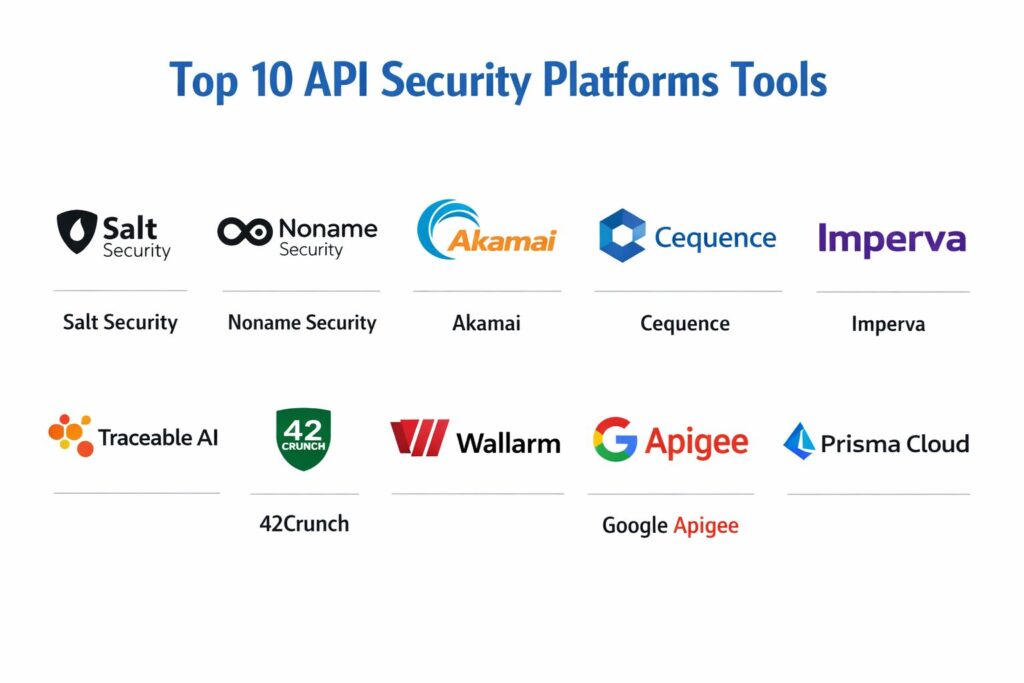
Introduction
API security platforms have emerged as a specialized and non-negotiable layer of the modern defense-in-depth architecture. As organizations transition from monolithic applications to microservices and serverless environments, the Application Programming Interface (API) has become the primary conduit for data exchange. This shift has fundamentally expanded the attack surface, making traditional web application firewalls and basic gateway authentication insufficient. Modern API security platforms are designed to provide deep visibility into the “shadow” and “zombie” APIs that often bypass standard governance, while simultaneously protecting against sophisticated logic-based attacks that exploit the unique business logic of each endpoint.
The strategic implementation of these platforms is essential for maintaining data integrity and regulatory compliance in an era of rapid digital transformation. Unlike general security tools, these platforms utilize behavioral analysis and machine learning to distinguish between legitimate high-volume traffic and malicious probing. They address the critical gaps in the development lifecycle by enabling “shift-left” security testing during the build phase and “shield-right” protection during runtime. When evaluating an API security partner, decision-makers must prioritize the platform’s ability to perform automated discovery, its support for various architectural styles like REST, GraphQL, and gRPC, and its capacity to integrate seamlessly into existing CI/CD pipelines and security operations centers.
Best for: Security operations teams, DevSecOps engineers, and enterprise organizations managing extensive microservices architectures or sensitive customer data exchanges via third-party integrations.
Not ideal for: Small organizations with static, single-page applications or businesses that do not expose internal data or services through public or private interfaces.
Key Trends in API Security Platforms
The most significant trend in the landscape is the move toward autonomous discovery, where platforms use passive traffic monitoring to automatically map every active endpoint, identifying undocumented interfaces that pose a hidden risk. There is also an increased focus on API-specific business logic protection, moving beyond simple signature-based detection to understand the intended sequence of calls and identifying when an attacker is attempting to manipulate those workflows. Compliance automation has become a core feature, with tools now providing real-time mapping of data exposure against frameworks like GDPR and PCI DSS.
We are also seeing the integration of generative AI to help security teams write remediation code and security policies more effectively. The industry is pivoting toward “graph-based” security models that visualize the relationships between APIs, users, and data entities to identify complex attack paths. Furthermore, there is a growing emphasis on protecting the entire API supply chain, which involves verifying the security posture of third-party APIs that an organization consumes. Finally, the convergence of API security with broader cloud-native application protection platforms (CNAPP) is simplifying the toolstack for enterprise security architects.
How We Selected These Tools
The selection of these platforms was driven by an analysis of their technical maturity and their ability to solve the “visibility-to-protection” gap. We prioritized platforms that offer a combination of passive and active discovery, ensuring that no API remains hidden from the security team. Market leadership and proven efficacy in high-traffic enterprise environments were key considerations, as API security requires tools that can process massive amounts of telemetry without introducing latency. We also examined the depth of their threat research, specifically their ability to mitigate the OWASP API Security Top 10 risks.
Technical interoperability was a primary filter; we sought out tools that can ingest data from multiple sources, including API gateways, load balancers, and service meshes. Security posture management capabilities—specifically the ability to perform automated “red-teaming” or fuzzing of APIs—were also weighted heavily. Finally, we looked for platforms that provide actionable remediation guidance for developers, ensuring that security findings lead to actual code improvements rather than just more alerts in a dashboard.
1. Salt Security
Salt Security is a pioneer in the space, focusing on using big data and artificial intelligence to secure the entire API lifecycle. The platform is designed to collect traffic from across the environment to build a baseline of “normal” behavior, which it then uses to identify subtle anomalies that indicate an attack in progress. It is particularly well-regarded for its ability to stop slow-and-low attacks that target unique business logic.
Key Features
The platform features an automated discovery engine that identifies all internal, external, and third-party APIs. It uses a patented AI-driven engine to detect attackers during the reconnaissance phase, long before they can execute a breach. The system provides detailed “attacker timelines” to help incident responders understand the scope of an event. It offers continuous posture hardening by identifying vulnerabilities in API definitions before they are deployed. Additionally, it provides specific remediation insights that are sent directly to Jira or other developer tools to close security gaps.
Pros
Exceptional at detecting sophisticated logic-based attacks that bypass traditional security rules. The platform requires no manual configuration of signatures or policies, as it learns behavior automatically.
Cons
The platform’s comprehensive nature can lead to a higher price point compared to point solutions. Initial baseline learning requires a period of high-quality traffic to be most effective.
Platforms and Deployment
Cloud-native SaaS with support for hybrid and on-premises traffic collection.
Security and Compliance
SOC 2 Type II compliant and designed to help organizations meet GDPR and HIPAA requirements through data masking and discovery.
Integrations and Ecosystem
Integrates with all major API gateways like Apigee and Kong, as well as SIEM tools like Splunk and cloud providers like AWS and Azure.
Support and Community
Offers dedicated technical account managers and a robust knowledge base focused on the evolving API threat landscape.
2. Noname Security
Noname Security provides a holistic platform that covers API security posture management, runtime protection, and active testing. It is known for its “easy-to-deploy” nature, as it can connect to the environment without requiring agents or causing any network disruption. This makes it a favorite for large enterprises with complex, fragmented infrastructure.
Key Features
The platform provides a comprehensive inventory of every API, including those not managed by a gateway. It includes a powerful posture management module that scans for misconfigurations and missing authentication. The runtime protection engine identifies anomalies and can automatically trigger blocking actions through existing infrastructure. It also features an active testing module that allows developers to run security tests against APIs in pre-production. The dashboard provides a “security score” to help teams prioritize their hardening efforts.
Pros
The agentless deployment model ensures zero impact on application performance. It provides one of the most comprehensive views of the entire API estate, including legacy and shadow interfaces.
Cons
Some of the advanced automated blocking features require careful tuning to avoid false positives in highly dynamic environments. The breadth of features can be overwhelming for smaller security teams.
Platforms and Deployment
SaaS, on-premises, or hybrid deployment models are supported.
Security and Compliance
Maintains rigorous security certifications and provides automated compliance reporting for major industry frameworks.
Integrations and Ecosystem
Broad support for various traffic sources, including F5, NGINX, and major cloud service providers.
Support and Community
Provides 24/7 global support and an extensive library of API security best practices and webinars.
3. Akamai (formerly Neosec)
Following the acquisition of Neosec, Akamai has integrated advanced API security into its global delivery network. This platform treats API security as a data analytics problem, utilizing a massive data lake to analyze API behavior over long periods. It is ideal for organizations that already utilize Akamai’s edge services and want a unified security posture.
Key Features
The system performs automated discovery of all API endpoints and sensitive data flows. It uses behavioral analytics to identify account takeover attempts and data scraping via APIs. The platform provides a unique “shadow API” detection capability that compares discovered traffic against documented specifications. It includes pre-built integration with Akamai’s web application protector to provide a single pane of glass for all web and API threats. The analytics engine can reconstruct historical sessions to investigate past incidents.
Pros
Leverages Akamai’s massive global visibility to identify emerging threats before they reach the customer’s network. Seamlessly integrates with existing CDN and WAF deployments.
Cons
Organizations not already in the Akamai ecosystem may find the integration more complex. The focus is heavily on runtime analytics, with less emphasis on pre-production testing.
Platforms and Deployment
Cloud-based service integrated with the Akamai Intelligent Edge Platform.
Security and Compliance
Backed by Akamai’s extensive global compliance infrastructure, including SOC 2 and PCI DSS.
Integrations and Ecosystem
Native integration with Akamai’s security suite and support for external log ingestion from third-party gateways.
Support and Community
High-level enterprise support with 24/7 global coverage and access to Akamai’s threat research team.
4. Cequence Security
Cequence Security focuses on a “unified API protection” approach that combines discovery, compliance, and protection. It is particularly strong in identifying and mitigating automated “bot” attacks that target APIs for credential stuffing, inventory hoarding, and gift card fraud.
Key Features
The “API Spyglass” module provides an automated, continuous inventory of all public-facing and internal APIs. It features a sophisticated bot defense engine that uses machine learning to identify automated traffic without relying on JavaScript or cookies. The platform performs real-time risk assessment of API traffic to identify sensitive data leakage. It allows for the creation of granular security policies that can be enforced at the edge or within the data center. The system also supports automated “fuzzing” to find vulnerabilities in live APIs.
Pros
Unrivaled capabilities in stopping sophisticated, large-scale bot attacks targeting APIs. Provides a very clear visualization of the “risk surface” across the entire API catalog.
Cons
The specialized focus on bots may require being paired with other tools for deep “shift-left” static analysis. Deployment in highly complex on-premise environments can require significant planning.
Platforms and Deployment
Available as a SaaS, self-hosted, or service-provider-managed solution.
Security and Compliance
Complies with major global privacy and security standards, providing specific reporting for audit readiness.
Integrations and Ecosystem
Strong integrations with Akamai, AWS, and specialized bot-mitigation ecosystems.
Support and Community
Offers proactive threat hunting services and a dedicated customer success team for enterprise clients.
5. Imperva (a Thales company)
Imperva provides a mature API security solution as part of its broader Web Application and API Protection (WAAP) stack. It is designed to provide a simplified workflow for discovering APIs and automatically generating security policies to protect them. This makes it an excellent choice for teams looking for a consolidated security vendor.
Key Features
The platform automatically discovers and catalogs APIs, identifying those that are exposing sensitive PII data. It enables security teams to upload Swagger or OpenAPI specifications to enforce “positive security” models. The system includes integrated DDoS protection specifically tuned for API traffic. It uses machine learning to identify anomalous behavior and data exfiltration attempts. The dashboard provides a unified view of both traditional web application attacks and API-specific threats.
Pros
Offers a truly unified platform for WAF, DDoS, and API security, reducing the number of dashboards for the security team. Strong global scrubbing center network for mitigating large-scale attacks.
Cons
The API discovery features, while robust, are sometimes seen as less “predictive” than specialized AI-first startups. Customizing policies for highly non-standard APIs can be time-consuming.
Platforms and Deployment
Cloud, on-premises, and hybrid deployment options are available.
Security and Compliance
Maintains a wide array of certifications including SOC 2, PCI, and ISO standards.
Integrations and Ecosystem
Strong integration within the Imperva product family and support for major SIEM and SOAR platforms.
Support and Community
Extensive global support infrastructure with a focus on enterprise-level service level agreements.
6. Traceable AI
Traceable AI is built on a distributed tracing architecture, making it highly effective in complex microservices and Kubernetes environments. It provides end-to-end visibility by tracking every API call from the user all the way through the internal service mesh, allowing it to identify “broken object-level authorization” (BOLA) and other complex logic flaws.
Key Features
The platform creates a detailed map of all service-to-service communication, not just north-south traffic. It includes a robust “API Sentiment” analysis to identify malicious intent based on the sequence of calls. The system provides integrated testing for developers to identify vulnerabilities in the code before it is committed. It offers deep protection against the OWASP API Top 10 by analyzing the context of every user and their data access. The platform also features automated data loss prevention (DLP) for API payloads.
Pros
The distributed tracing approach provides context that other platforms miss, especially in cloud-native environments. It bridges the gap between application performance monitoring and security.
Cons
Deployment typically requires the use of agents or sidecars, which may be a concern for some operations teams. The sheer volume of data collected requires a well-configured backend.
Platforms and Deployment
Cloud-native SaaS with agents for Kubernetes, service meshes like Istio, and app servers.
Security and Compliance
Provides automated mapping for privacy compliance and is SOC 2 Type II certified.
Integrations and Ecosystem
Native support for Istio, Linkerd, and modern CI/CD tools like Jenkins and GitLab.
Support and Community
Active in the open-source community and provides high-quality technical documentation for DevSecOps teams.
7. 42Crunch
42Crunch takes a “security-as-code” approach, focusing on the entire API lifecycle with a strong emphasis on developer-centric tools. It is designed to ensure that APIs are “secure by design” by enforcing strict contract adherence through every stage of development and production.
Key Features
The platform features an automated API audit tool that scores OpenAPI specifications for security flaws. It includes a “micro-firewall” that can be deployed as a sidecar to enforce security policies at the individual service level. The system provides a specialized IDE plugin that gives developers real-time security feedback as they write API definitions. It enables automated security testing within the CI/CD pipeline. The centralized management console provides a global view of API compliance and threat activity.
Pros
The focus on “shift-left” security helps catch vulnerabilities earlier, reducing the cost of remediation. The micro-firewall is extremely lightweight and scales easily with microservices.
Cons
It is heavily reliant on the presence of OpenAPI/Swagger definitions; if your APIs are not well-documented, the value is diminished. Less focus on behavioral “anomaly” detection compared to Salt or Noname.
Platforms and Deployment
SaaS management with distributed micro-firewalls for any cloud or on-premise environment.
Security and Compliance
Enables strict governance and compliance by ensuring every API meets a predefined security “contract.”
Integrations and Ecosystem
Deep integrations with VS Code, GitHub, Bitbucket, and most major CI/CD platforms.
Support and Community
Strong developer community and excellent training resources via their “APIsecurity.io” community portal.
8. Wallarm
Wallarm provides an integrated WAAP platform that is highly optimized for modern, fast-moving development teams. It uses a unique “Native Node” architecture that can be deployed within NGINX or Envoy, providing high-performance protection without requiring separate appliance-style infrastructure.
Key Features
The platform offers automated API discovery and sensitive data detection across all environments. It features a unique “vulnerability verification” engine that automatically tests blocked attacks to see if they would have been successful. The system provides robust protection against SQL injection, XSS, and API-specific attacks like BOLA. It enables security teams to run “fuzzing” tests against their APIs to discover undocumented vulnerabilities. The dashboard provides a clear correlation between attack attempts and actual application risks.
Pros
Extremely fast and lightweight deployment that fits perfectly into modern DevOps workflows. The automated vulnerability verification significantly reduces the noise for security analysts.
Cons
The focus is largely on the web and API layer; it may not provide as much internal service-mesh visibility as Traceable. The interface can be technical, catering more to engineers than high-level managers.
Platforms and Deployment
Cloud, hybrid, and on-premises deployment via native modules for common web servers.
Security and Compliance
Provides the necessary controls and reporting to support GDPR, SOC 2, and PCI compliance.
Integrations and Ecosystem
Seamless integration with NGINX, Envoy, Kubernetes, and popular alerting tools like Slack and PagerDuty.
Support and Community
Offers a high level of technical support and is very active in the community regarding modern web security threats.
9. Google Cloud Apigee (Advanced API Security)
Apigee, a leader in the API gateway market, has significantly expanded its built-in security capabilities. The “Advanced API Security” module provides a managed layer of protection that is integrated directly into the gateway, making it the logical choice for organizations already utilizing Google’s API management tools.
Key Features
The platform includes automated API configuration checks to ensure that all proxies meet security best practices. It uses machine learning to identify malicious bot patterns and credential stuffing attempts. The system provides “security reports” that highlight APIs with weak authentication or high-risk configurations. It enables automated detection of anomalous traffic patterns that deviate from historical norms. It also integrates with Google Cloud’s broader security ecosystem, including Cloud Armor and Chronicle.
Pros
Zero-effort integration for existing Apigee users. The platform benefits from Google’s massive global threat intelligence and infrastructure scale.
Cons
It is primarily a “gateway-centric” solution; it may not discover APIs that are not routed through Apigee. It is more limited for organizations with a heavy multi-cloud or non-Google footprint.
Platforms and Deployment
Cloud-based management integrated with Google Cloud Platform.
Security and Compliance
Inherits Google Cloud’s massive array of global certifications and compliance frameworks.
Integrations and Ecosystem
Deeply integrated with the Google Cloud security stack and supports standard logging and monitoring exports.
Support and Community
Comprehensive enterprise support and a vast global network of certified partners and consultants.
10. Palo Alto Networks (Prisma Cloud API Security)
Palo Alto Networks has integrated API security into its Prisma Cloud platform, which is a leading CNAPP solution. This allows organizations to manage API security as part of their broader cloud-native security posture, linking API risks to underlying container or cloud infrastructure vulnerabilities.
Key Features
The platform provides automated discovery of APIs across multiple clouds and on-premises environments. It performs deep inspection of API traffic to identify sensitive data leakage and anomalous behavior. The system includes integrated security testing for APIs in the dev pipeline. It provides a unique “risk-based” view that correlates API threats with the status of the underlying host or container. The centralized dashboard offers a unified view of code-to-cloud security.
Pros
Ideal for organizations looking for a “single vendor” strategy for all cloud security needs. Excellent visualization of the entire cloud-native application stack.
Cons
As a part of a much larger platform, it can be complex to configure for those only interested in API security. It may require a larger initial investment than a standalone API security tool.
Platforms and Deployment
Cloud-native platform with support for AWS, Azure, GCP, and private cloud.
Security and Compliance
Backed by one of the most comprehensive security compliance portfolios in the industry.
Integrations and Ecosystem
Part of the broader Prisma Cloud ecosystem, integrating with major IDEs, CI/CD tools, and SIEMs.
Support and Community
Top-tier enterprise support and access to the Unit 42 threat intelligence team.
Comparison Table
| Tool Name | Best For | Platform(s) Supported | Deployment | Standout Feature | Public Rating |
| 1. Salt Security | Logic Attack Defense | Cloud, Hybrid | SaaS | Big Data AI Engine | 4.8/5 |
| 2. Noname Security | Full Estate Visibility | Cloud, On-prem | Agentless | Agentless Discovery | 4.7/5 |
| 3. Akamai | Global Edge Defense | Cloud | Edge-based | Global Data Lake | 4.6/5 |
| 4. Cequence | Bot & Fraud Defense | Cloud, Hybrid | SaaS/Self-hosted | Unified Bot Defense | 4.5/5 |
| 5. Imperva | Unified WAAP Stack | Cloud, On-prem | Hybrid | Consolidated Security | 4.4/5 |
| 6. Traceable AI | Microservices/K8s | Cloud-native | Distributed | Distributed Tracing | 4.7/5 |
| 7. 42Crunch | Developer-First Sec | Cloud, Any | SaaS + Sidecar | Security-as-Code | 4.6/5 |
| 8. Wallarm | DevOps Performance | Cloud, Hybrid | Native Module | Vulnerability Verify | 4.5/5 |
| 9. Google Apigee | Google Cloud Users | GCP | Gateway-based | GCP Integrated | 4.3/5 |
| 10. Prisma Cloud | CNAPP Consolidation | Multi-cloud | SaaS | Code-to-Cloud Risk | 4.4/5 |
Evaluation & Scoring of API Security Platforms
The scoring below is a comparative model intended to help shortlisting. Each criterion is scored from 1–10, then a weighted total from 0–10 is calculated using the weights listed. These are analyst estimates based on typical fit and common workflow requirements, not public ratings.
Weights:
- Core features – 25%
- Ease of use – 15%
- Integrations & ecosystem – 15%
- Security & compliance – 10%
- Performance & reliability – 10%
- Support & community – 10%
- Price / value – 15%
| Tool Name | Core (25%) | Ease (15%) | Integrations (15%) | Security (10%) | Performance (10%) | Support (10%) | Value (15%) | Weighted Total |
| 1. Salt Security | 10 | 8 | 9 | 10 | 9 | 9 | 8 | 9.05 |
| 2. Noname Security | 10 | 9 | 9 | 9 | 9 | 9 | 8 | 9.00 |
| 3. Akamai | 9 | 7 | 8 | 10 | 10 | 9 | 8 | 8.65 |
| 4. Cequence | 9 | 8 | 8 | 9 | 9 | 8 | 8 | 8.45 |
| 5. Imperva | 8 | 8 | 9 | 9 | 9 | 8 | 9 | 8.45 |
| 6. Traceable AI | 10 | 7 | 10 | 9 | 8 | 9 | 8 | 8.75 |
| 7. 42Crunch | 8 | 9 | 10 | 9 | 10 | 8 | 9 | 8.90 |
| 8. Wallarm | 9 | 9 | 8 | 8 | 10 | 8 | 8 | 8.60 |
| 9. Google Apigee | 7 | 9 | 8 | 9 | 9 | 9 | 8 | 8.10 |
| 10. Prisma Cloud | 9 | 6 | 9 | 10 | 8 | 9 | 7 | 8.15 |
How to interpret the scores:
- Use the weighted total to shortlist candidates, then validate with a pilot.
- A lower score can mean specialization, not weakness.
- Security and compliance scores reflect controllability and governance fit, because certifications are often not publicly stated.
- Actual outcomes vary with assembly size, team skills, templates, and process maturity.
Which API Security Platform Tool Is Right for You?
Solo / Freelancer
Individual developers should focus on tools like 42Crunch, which offer free or low-cost tiers for auditing OpenAPI specifications. This ensures that the APIs you build are secure from the start without requiring expensive enterprise infrastructure.
SMB
Small businesses are best served by platforms like Wallarm or Noname Security, which provide a high degree of automation and ease of deployment. These tools allow a small team to achieve significant security coverage without needing a dedicated staff of API security experts.
Mid-Market
Organizations in this tier often benefit from the unified protection offered by Imperva or Cequence. These vendors provide a solid balance of traditional web protection and advanced API security, simplifying the vendor management process.
Enterprise
Large enterprises with thousands of APIs across fragmented environments should look toward Salt Security or Noname Security for their superior discovery and behavioral AI. For those heavily invested in microservices, Traceable AI provides the deep internal visibility required for modern architectures.
Budget vs Premium
Budget-conscious teams should look for “Security-as-Code” tools that integrate into the CI/CD pipeline to prevent issues before they reach production. Premium platforms like Salt and Noname carry higher costs but provide the necessary runtime protection and automated discovery for complex environments.
Feature Depth vs Ease of Use
If depth is the priority, Traceable AI and Salt Security offer the most sophisticated technical insights. If ease of use and rapid time-to-value are more important, Noname’s agentless approach and Wallarm’s native modules are the preferred choices.
Integrations & Scalability
Scale is a major factor in API security. Platforms like Akamai and Google Apigee are designed to handle global-scale traffic, while 42Crunch and Traceable AI are built to scale horizontally with your containerized microservices.
Security & Compliance Needs
For highly regulated industries like finance or healthcare, Prisma Cloud and Imperva offer the most robust compliance reporting frameworks. Salt Security’s focus on sensitive data discovery also makes it a strong contender for those managing high volumes of PII.
Frequently Asked Questions (FAQs)
1. Why is a standard WAF not enough for API security?
Standard WAFs look for known “bad” signatures in web traffic, but APIs are often attacked through legitimate-looking traffic that manipulates business logic. API-specific platforms analyze behavior over time to catch these subtle flaws.
2. What is a “Shadow API” and why is it dangerous?
A shadow API is an undocumented interface that exists in the environment without the security team’s knowledge. These are dangerous because they are not monitored, often lack authentication, and can be used to bypass all security controls.
3. How do these platforms impact application performance?
Modern platforms use agentless monitoring or lightweight modules that introduce negligible latency. Some utilize asynchronous data collection, meaning the security analysis happens out-of-band and does not slow down the user’s request.
4. What does “BOLA” stand for and why is it a top risk?
Broken Object-Level Authorization (BOLA) occurs when an API endpoint allows a user to access data that doesn’t belong to them by simply changing an ID in the request. It is the most common and damaging vulnerability in modern APIs.
5. Can these tools help with developer productivity?
Yes, by integrating into the CI/CD pipeline and providing specific remediation code, these tools help developers fix security issues faster and learn secure coding practices, reducing the back-and-forth between security and dev teams.
6. Do I need an API Gateway if I have an API Security Platform?
Yes, they serve different purposes. A gateway handles traffic management, rate limiting, and basic authentication. A security platform provides the deep inspection, threat detection, and discovery that gateways lack.
7. How long does the “learning phase” typically take?
Most AI-driven platforms need between 2 and 7 days of representative traffic to build an accurate baseline. After this period, they can begin to identify anomalous behavior with a high degree of confidence.
8. Can these platforms secure GraphQL and gRPC?
Yes, top-tier platforms have specific decoders for GraphQL and gRPC. They can analyze the complex nested queries of GraphQL to prevent “depth” attacks that could crash a server.
9. Is “Active Testing” the same as a penetration test?
Active testing is an automated, continuous version of a penetration test. While a human tester is still valuable for finding complex creative flaws, active testing ensures that every code change is checked for common vulnerabilities instantly.
10. How do these platforms handle encrypted traffic?
They typically integrate at the load balancer or gateway level where traffic is decrypted, or they use agents that can see the traffic within the application server itself, ensuring full visibility into the payload.
Conclusion
The transition to an API-centric world has fundamentally changed the security mandate for the modern enterprise. As we move deeper into 2026, the ability to protect the intricate business logic of these interfaces is what will distinguish resilient organizations from those vulnerable to large-scale data breaches. Selecting an API security platform is not merely a technical purchase; it is a strategic investment in the visibility and governance of your most critical data pathways. The “best” platform is one that aligns with your specific architectural maturity—whether that is a developer-centric approach for high-growth startups or a robust, AI-driven runtime engine for global enterprises. By prioritizing automated discovery and behavioral analytics, security leaders can move from a reactive posture to a proactive defense that enables innovation without compromising safety.