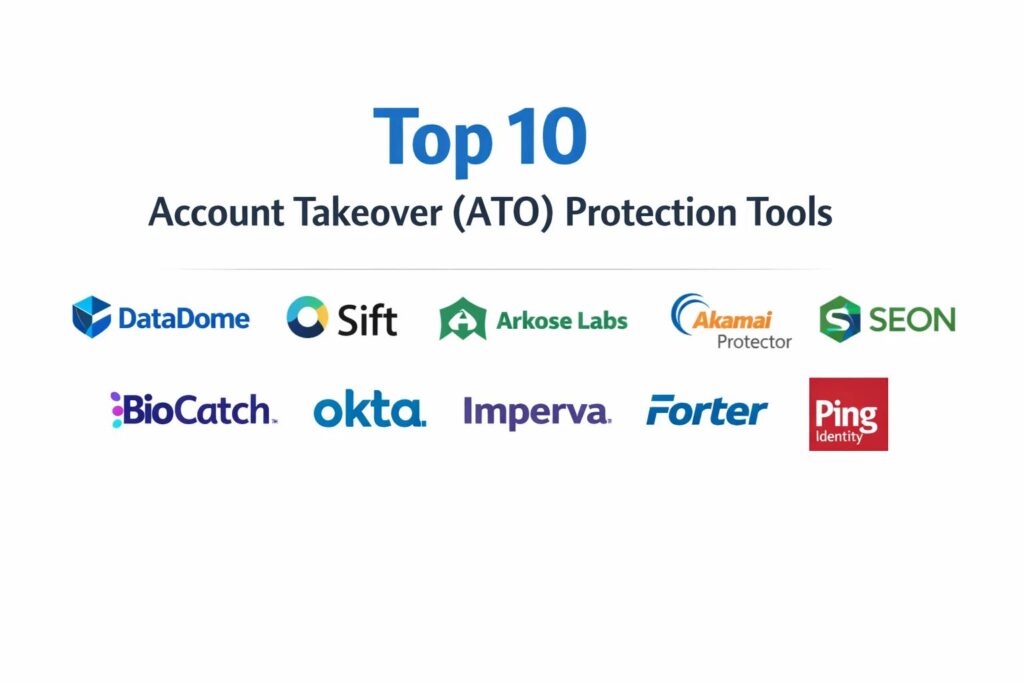
Introduction
Account Takeover (ATO) has evolved from simple credential theft into a sophisticated, multi-stage attack vector that poses a systemic risk to digital trust and organizational security. In a modern technical landscape, ATO occurs when an unauthorized third party gains access to a legitimate user’s account, typically through automated credential stuffing, high-frequency brute-force attacks, or social engineering lures. These attacks are no longer the work of lone actors but are orchestrated by industrialized fraud rings utilizing “residential proxies” and “headless browsers” to bypass traditional IP-based filtering. For security professionals and SREs, defending against ATO requires a shift from static perimeter defense to a dynamic, risk-based posture that monitors the entire user lifecycle.
The primary challenge in ATO protection is the “friction vs. security” paradox. Over-zealous security controls, such as constant CAPTCHAs or aggressive MFA prompts, can degrade the user experience and drive legitimate customers away. Conversely, insufficient protection leads to catastrophic data breaches, financial loss, and severe regulatory penalties. Modern ATO protection tools solve this by utilizing behavioral biometrics and machine learning to silently analyze session telemetry—such as typing cadence, mouse movement, and device fingerprints—to identify anomalies without interrupting the user. By integrating these tools into the authentication pipeline, organizations can achieve “friction-right” security that transparently protects accounts while maintaining high conversion rates for trusted users.
Best for: Security Operation Centers (SOC), Fraud Prevention teams, and DevOps engineers managing high-traffic web applications, financial platforms, and e-commerce sites.
Not ideal for: Small, static websites with low user interaction or organizations that do not handle sensitive personal, financial, or proprietary user data.
Key Trends in Account Takeover (ATO) Protection Tools
The most significant trend is the rise of “Behavioral AI,” which moves beyond looking at what a user enters to how they interact with the interface. Traditional bot detection is being replaced by sophisticated models that can identify “human fraud farms”—centers where real humans are paid to bypass automated security checks. Tools are now integrating “dark web intelligence” directly into the login flow, automatically flagging credentials that have appeared in recent data breaches before the attacker even attempts to use them.
Another major shift is the adoption of passwordless and FIDO2-based authentication as a primary defense. By moving toward passkeys and hardware-backed biometrics, organizations are eliminating the “stolen password” vector entirely. Furthermore, we are seeing the emergence of “Identity Orchestration,” where ATO tools don’t just block a login but trigger complex workflows, such as notifying the legitimate user via a secondary channel, placing a temporary hold on financial transactions, or silently redirecting the attacker to a “honeypot” environment to gather threat intelligence.
How We Selected These Tools
Our selection process focused on tools that offer a blend of “edge-level” bot mitigation and “application-level” behavioral analysis. We prioritized platforms that provide high-fidelity detection with documented low false-positive rates, which is critical for maintaining user trust. Market mindshare was a key factor; the tools included are those that have demonstrated resilience against the latest “Generation 4” and “Generation 5” bots that mimic human behavior. We also evaluated the ease of integration, favoring tools that offer robust APIs, SDKs, and native support for major cloud providers and CDN edges.
Technical criteria included the ability to perform real-time risk scoring, support for adaptive MFA, and the presence of a global threat intelligence network. We looked for solutions that provide transparent reporting and explainable AI, allowing security teams to understand why a session was flagged as risky. Finally, we considered the scalability of these platforms, ensuring they can handle the massive traffic spikes typical of flash sales or large-scale promotional events without introducing significant latency to the authentication process.
1. DataDome
DataDome is a specialized bot and online fraud protection platform that excels at stopping high-velocity credential stuffing attacks. It operates at the edge, analyzing every request in real-time to distinguish between legitimate users, good bots (like search engines), and malicious automated scripts. It is highly regarded for its low latency and its ability to handle massive traffic volumes without impacting site performance.
Key Features
The platform utilizes a multi-layered AI engine that combines behavioral analysis with technical fingerprinting. It provides a unique “real-time dashboard” that visualizes attack patterns as they happen, allowing for instant response tuning. DataDome features an integrated, user-friendly CAPTCHA that is only shown to high-risk traffic, minimizing friction for human users. It offers a “Collective Intelligence” network where a threat detected on one customer’s site is immediately blocked across all others. The system also includes specialized protection for mobile APIs, ensuring that app-based logins are as secure as web-based ones.
Pros
Extremely accurate bot detection that stops automated ATO attempts before they reach the login server. Very easy to deploy across various architectures including CDNs, WAFs, and server-side integrations.
Cons
It is a premium solution with pricing that may be prohibitive for smaller startups. It focuses primarily on bot-driven attacks and may require pairing with identity tools for human-led fraud.
Platforms and Deployment
SaaS-based with edge deployment (Cloudflare, AWS, Fastly) and server-side modules (NGINX, Apache).
Security and Compliance
GDPR compliant and SOC 2 Type II certified. Uses encrypted data transfer for all telemetry signals.
Integrations and Ecosystem
Seamlessly integrates with all major CDNs, load balancers, and e-commerce platforms like Shopify and Magento.
Support and Community
Offers 24/7 technical support and a comprehensive knowledge base with detailed threat research reports.
2. Sift
Sift is a comprehensive “Digital Trust & Safety” platform that uses massive-scale machine learning to protect the entire user journey. While it handles various types of fraud, its Account Protection module is specifically tuned to detect subtle behavioral changes that indicate an account has been taken over by a new, unauthorized user.
Key Features
Sift’s platform is built on a global “Trust Network” that analyzes over one trillion events per month. It features “Account Behavior Monitoring” which creates a baseline for every individual user to detect anomalous login locations, devices, or navigation patterns. The platform includes a “Workflows” engine that allows security teams to automate responses, such as requiring MFA only when a risk score exceeds a certain threshold. It provides a “Content Integrity” module to stop compromised accounts from posting spam or phishing links. The system also includes detailed “Console” views for manual investigators to review high-risk cases.
Pros
The global data network provides superior detection of “cross-platform” attackers who target multiple industries. Highly customizable risk scoring and automated workflow capabilities.
Cons
Requires a significant volume of historical data to reach maximum predictive accuracy. The broad feature set can result in a steeper learning curve for new users.
Platforms and Deployment
Cloud-native API-based platform with SDKs for web and mobile.
Security and Compliance
Maintains ISO 27001 certification and adheres to strict global data privacy standards.
Integrations and Ecosystem
Extensive API documentation and pre-built connectors for major e-commerce and fintech stacks.
Support and Community
Provides dedicated account management for enterprise customers and an active “Sift Academy” for user training.
3. Arkose Labs
Arkose Labs focuses on “bankrupting the business of fraud” by making attacks too costly for the adversary. They are famous for their “Arkose Match” challenges, which are designed to be easy for humans but computationally expensive and difficult for AI and bot-driven solvers to bypass.
Key Features
The platform features an “Adaptive Intelligence” engine that classifies traffic based on intent and risk. It uses “Dynamic Challenges” that evolve in real-time to defeat the latest automated solving techniques. Arkose Labs offers a unique “Security Warranty,” providing financial protection against successful credential stuffing attacks for its customers. The platform provides deep “Session Insights,” giving visibility into the specific tools and techniques attackers are using. It also includes “Managed Services,” where their own SOC monitors and tunes the protection for the customer 24/7.
Pros
Highly effective at deterring persistent, motivated attackers by destroying their return on investment. The visual challenges are accessible and localized in dozens of languages.
Cons
The use of challenges, even if adaptive, adds a layer of friction that some brands may want to avoid. The platform is primarily positioned for large enterprise customers.
Platforms and Deployment
Cloud-based SaaS with easy API-driven integration at the login or signup points.
Security and Compliance
SOC 2 compliant and supports data residency requirements for global organizations.
Integrations and Ecosystem
Integrates with major IAM providers like Okta and Ping Identity to enhance the authentication flow.
Support and Community
Known for high-touch support and a dedicated threat research unit that publishes regular industry insights.
4. Akamai Account Protector
Akamai, a global leader in CDN services, offers Account Protector as a specialized module within its security suite. It leverages Akamai’s visibility into nearly one-third of all internet traffic to identify and block ATO attempts at the very edge of the network.
Key Features
The tool uses “User Profiling” to build a behavioral model for legitimate account owners across different devices and locations. It features a “Bot Score” that identifies automated scripts and a “User Risk Score” that identifies suspicious human activity. Akamai’s “Directory Integration” allows it to protect both consumer-facing apps and employee workforce logins. It includes “Advanced Telemetry” that captures over 100 signals, including device posture and network reputation. The system also provides “Automated Mitigation” at the edge, stopping attacks before they ever reach the customer’s origin server.
Pros
Unrivaled global visibility allows for the detection of massive “Low and Slow” attacks that other tools might miss. Minimal impact on application performance due to its edge-based architecture.
Cons
Requires being part of the Akamai ecosystem, which can be complex and expensive for smaller organizations. The management interface can be overwhelming for non-security specialists.
Platforms and Deployment
Cloud-based, integrated directly into the Akamai Intelligent Edge Platform.
Security and Compliance
Enterprise-grade security with full compliance across all major global regulatory frameworks (PCI, GDPR, HIPAA).
Integrations and Ecosystem
Works seamlessly with Akamai’s WAF and API security products for a unified defense-in-depth strategy.
Support and Community
Offers 24/7/365 global support and access to the world-renowned Akamai SIRT (Security Incident Response Team).
5. SEON
SEON is a modern, developer-friendly fraud prevention tool that focuses on “Digital Footprinting.” It is particularly effective for ATO protection because it can verify the legitimacy of an email address or phone number by checking its association with over 50 social media and digital platforms.
Key Features
The platform features a “Data Enrichment” engine that provides a wealth of information about a user based only on their email, IP, or phone number. It includes a “Machine Learning Editor” that allows teams to see and modify the logic behind the risk scores (white-box AI). SEON offers a “Chrome Extension” for manual investigators to quickly check the risk of an individual account. It provides real-time “Device Fingerprinting” to detect emulators and multiple accounts sharing a single device. The system also includes customizable “Rule Sets” that can be tailored to specific business risks.
Pros
Excellent for identifying synthetic identities and “recycled” accounts used in takeover schemes. The pricing model is transparent and scales well from SMBs to enterprises.
Cons
While strong on identity signals, its bot mitigation is not as specialized as pure-play vendors like DataDome. Requires careful tuning of rules to avoid over-blocking.
Platforms and Deployment
Cloud-native with a lightweight API and JavaScript snippets for easy integration.
Security and Compliance
Strictly adheres to GDPR and provides data hashing to ensure PII is never stored in plain text.
Integrations and Ecosystem
Offers a wide range of pre-built integrations for e-commerce, iGaming, and payment platforms.
Support and Community
Provides extensive documentation, a responsive support team, and regular webinars on fraud trends.
6. BioCatch
BioCatch is the pioneer of “Behavioral Biometrics,” focusing exclusively on how a user physically interacts with their device. It is widely used by global banks to stop sophisticated ATO and social engineering scams where an attacker might be coaching a victim through a transaction.
Key Features
The platform analyzes “Cognitive Traits,” such as how a user holds their phone, their typing rhythm, and even their “muscle memory” when navigating a known app. It can detect “Remote Access Tools” (RATs) being used by attackers to control a victim’s session. BioCatch features “Continuous Authentication,” meaning it monitors the entire session, not just the login. It provides a “Mule Detection” module to identify accounts that have been taken over to move illicit funds. The system also includes “Invisible Challenges,” like subtly moving a button to see if the user responds with human-like or bot-like reactions.
Pros
Provides the highest level of protection against human-led ATO and sophisticated social engineering. It is completely invisible to the user, creating zero friction.
Cons
The technology is highly specialized for the financial sector and may be overkill for general e-commerce. It requires significant integration work to capture deep behavioral telemetry.
Platforms and Deployment
Cloud-based API with deep SDK integrations for iOS, Android, and web.
Security and Compliance
Meets the highest banking-grade security standards and is fully compliant with PSD2 and other financial regulations.
Integrations and Ecosystem
Deeply integrated with core banking systems and fraud orchestration hubs.
Support and Community
Provides expert-led threat analysis and dedicated support for large financial institutions.
7. Okta (Workforce & Customer Identity)
Okta is a leader in Identity and Access Management (IAM), and its “ThreatInsight” and “Adaptive MFA” features provide a robust first line of defense against account takeover for both employees and customers.
Key Features
The platform features “ThreatInsight,” which uses data from across Okta’s thousands of customers to proactively block IPs known for credential stuffing. Its “Adaptive MFA” uses risk signals—such as new device, unusual location, or “impossible travel”—to step up authentication requirements. Okta supports “Passwordless” authentication through FastPass and FIDO2 keys. It provides “Sign-on Policy” controls that allow admins to set granular rules based on the user’s risk level. The system also includes “Identity Threat Protection” with Okta AI to detect and remediate threats in real-time across the entire identity stack.
Pros
Centralizing identity in Okta makes it easy to enforce consistent ATO protection across all corporate and customer applications. Highly reliable with a massive integration ecosystem.
Cons
It is a detection and enforcement layer; it lacks the deep dark web monitoring or bot-specialized mitigation of other tools. Advanced security features often require higher-tier licensing.
Platforms and Deployment
Cloud-SaaS with agents for on-premise directory synchronization.
Security and Compliance
FedRAMP High, SOC 2, and HIPAA compliant. Offers robust auditing and logging for all identity events.
Integrations and Ecosystem
Boasts the industry’s largest integration catalog (7,000+ apps) via the Okta Integration Network (OIN).
Support and Community
Massive user community, extensive documentation, and tiered support plans for every business size.
8. Imperva Account Takeover Protection
Imperva, a Thales company, provides a specialized ATO protection module that combines its industry-leading WAF capabilities with advanced bot defense and credential intelligence.
Key Features
The platform uses “Leaked Credential Detection” to check login attempts against a massive database of compromised usernames and passwords. It features “Advanced Bot Protection” that uses machine learning to identify and mitigate “Gen 4” bots. Imperva provides “Account Takeover Analytics” which groups suspicious activities into incidents for easier investigation. It includes “Granular Mitigation” options, allowing users to block, challenge, or rate-limit traffic. The system also offers “API Security” to protect the hidden endpoints that attackers often target during mobile app takeovers.
Pros
Excellent for organizations that already use Imperva’s WAF, providing a single pane of glass for web security. Strong focus on protecting both the web front-end and the backend APIs.
Cons
The user interface can be complex for teams not familiar with advanced WAF configurations. Deployment can be more technical compared to lightweight API-only solutions.
Platforms and Deployment
Available as a SaaS, on-premise, or hybrid solution.
Security and Compliance
Highly compliant with PCI-DSS, HIPAA, and GDPR. Backed by the security expertise of Thales.
Integrations and Ecosystem
Integrates deeply with SIEM and SOAR platforms for automated incident response.
Support and Community
Offers 24/7 global support and a dedicated research team (Imperva Threat Research).
9. Forter
Forter is an “Identity Trust” platform that focuses on the e-commerce lifecycle. Its ATO protection is unique because it connects the login event to the subsequent transaction, providing a holistic view of the risk associated with an account.
Key Features
The platform features a “Global Merchant Network” that shares trust signals across thousands of retailers. It provides “Instant Risk Decisions” (Approve/Decline) for logins and sensitive account changes. Forter uses “Identity Linking” to see if a seemingly new account is actually connected to a known fraudster. It includes “Automated Abuse Prevention” for things like promotion and policy abuse. The system also provides “SLA-backed” protection, where Forter can assume the financial liability for fraud losses in certain scenarios.
Pros
Highly effective at preventing “high-value” ATO where the goal is to drain gift card balances or make fraudulent purchases. Zero-friction for trusted users, as most decisions are invisible.
Cons
Best suited for e-commerce and retail; may not be as relevant for B2B or SaaS applications. Pricing is typically tied to transaction or account volume.
Platforms and Deployment
Cloud-native API integration.
Security and Compliance
PCI Level 1 compliant and adheres to all major data privacy regulations.
Integrations and Ecosystem
Native integrations with Shopify, Salesforce Commerce Cloud, and Adobe Commerce.
Support and Community
Provides dedicated fraud analysts and detailed performance reporting for enterprise clients.
10. Ping Identity (PingOne Protect)
Ping Identity provides enterprise-grade identity security, and its “PingOne Protect” service offers sophisticated, AI-driven risk scoring to prevent account takeover in complex, multi-cloud environments.
Key Features
The platform features “Risk-Based Authentication” that ingests signals from the device, network, and user behavior. It uses “AI-Powered Anomaly Detection” to identify patterns that deviate from established norms. PingOne Protect provides a “Risk Dashboard” that offers visibility into threat trends across the entire organization. It supports “Orchestration” via PingOne DaVinci, allowing for the creation of complex “if-then” security journeys. The system also includes “Credential Intelligence” to identify and block the use of stolen passwords in real-time.
Pros
Extremely flexible and powerful for large enterprises with complex, hybrid-IT environments. The “DaVinci” orchestration tool allows for unparalleled customization of the user journey.
Cons
The platform is complex and requires a high level of expertise to configure and manage effectively. Primarily targeted at the enterprise market.
Platforms and Deployment
Cloud, on-premise, and hybrid deployment models.
Security and Compliance
ISO 27001, SOC 2, and GDPR compliant. Supports high-security requirements for government and finance.
Integrations and Ecosystem
Strong integration with all major enterprise software and specialized security tools.
Support and Community
Provides global enterprise support, a large partner network, and extensive training certifications.
Comparison Table
| Tool Name | Best For | Platform(s) Supported | Deployment | Standout Feature | Public Rating |
| 1. DataDome | High-Traffic Bot Defense | Web, iOS, Android | Edge/SaaS | Real-time Bot AI | 4.8/5 |
| 2. Sift | Consumer Trust/Safety | Web, Mobile | Cloud API | Global Trust Network | 4.7/5 |
| 3. Arkose Labs | Deterring Motivated Attackers | Web, Mobile | Cloud | Security Warranty | 4.6/5 |
| 4. Akamai Protector | Edge-based Enterprise Security | Web, API | CDN Edge | Global Traffic Visibility | 4.7/5 |
| 5. SEON | Identity/Social Footprinting | Web, Mobile | Cloud API | Social Media Lookup | 4.6/5 |
| 6. BioCatch | Invisible Behavioral Biometrics | Web, Mobile | SDK/Cloud | Physical Interaction AI | 4.8/5 |
| 7. Okta | Workforce/Customer IAM | Web, SaaS | Cloud | ThreatInsight Network | 4.5/5 |
| 8. Imperva | WAF-Integrated Protection | Web, API | Hybrid | Credential Intelligence | 4.5/5 |
| 9. Forter | E-commerce Fraud/ATO | Web, Mobile | Cloud API | SLA-backed Protection | 4.7/5 |
| 10. Ping Identity | Complex Enterprise Hybrid | Web, Multi-cloud | Hybrid | DaVinci Orchestration | 4.6/5 |
Evaluation & Scoring of Account Takeover (ATO) Protection Tools
The scoring below is a comparative model intended to help shortlisting. Each criterion is scored from 1–10, then a weighted total from 0–10 is calculated using the weights listed. These are analyst estimates based on typical fit and common workflow requirements, not public ratings.
Weights:
- Core features – 25%
- Ease of use – 15%
- Integrations & ecosystem – 15%
- Security & compliance – 10%
- Performance & reliability – 10%
- Support & community – 10%
- Price / value – 15%
| Tool Name | Core (25%) | Ease (15%) | Integrations (15%) | Security (10%) | Performance (10%) | Support (10%) | Value (15%) | Weighted Total |
| 1. DataDome | 10 | 9 | 10 | 9 | 10 | 9 | 8 | 9.35 |
| 2. Sift | 9 | 8 | 9 | 9 | 9 | 9 | 9 | 8.85 |
| 3. Arkose Labs | 9 | 7 | 8 | 10 | 8 | 9 | 8 | 8.45 |
| 4. Akamai Protector | 10 | 6 | 9 | 10 | 10 | 10 | 7 | 8.85 |
| 5. SEON | 8 | 10 | 9 | 8 | 9 | 9 | 10 | 8.95 |
| 6. BioCatch | 10 | 6 | 7 | 10 | 9 | 9 | 7 | 8.35 |
| 7. Okta | 8 | 9 | 10 | 9 | 9 | 10 | 8 | 8.95 |
| 8. Imperva | 9 | 7 | 8 | 9 | 9 | 9 | 8 | 8.45 |
| 9. Forter | 9 | 8 | 9 | 9 | 9 | 9 | 8 | 8.70 |
| 10. Ping Identity | 9 | 6 | 9 | 10 | 8 | 9 | 7 | 8.20 |
How to interpret the scores:
- Use the weighted total to shortlist candidates, then validate with a pilot.
- A lower score can mean specialization, not weakness.
- Security and compliance scores reflect controllability and governance fit, because certifications are often not publicly stated.
- Actual outcomes vary with assembly size, team skills, templates, and process maturity.
Which Account Takeover (ATO) Protection Tool Is Right for You?
Solo / Freelancer
Individual developers or small site owners should look at SEON or the basic tiers of Cloudflare. These offer powerful, entry-level protection that is easy to set up and provides immediate visibility into the “digital footprint” of users without needing a massive security team.
SMB
Small to medium businesses benefit most from Sift or DataDome. These platforms offer a “set it and forget it” approach to bot mitigation while providing the flexibility to scale as user traffic increases, ensuring that the business stays protected during growth periods.
Mid-Market
For companies with established user bases, Okta or Imperva provide a balanced approach. By integrating ATO protection into your existing identity or WAF stack, you reduce management overhead while gaining advanced features like adaptive MFA and leaked credential detection.
Enterprise
Large-scale organizations with complex requirements should prioritize Akamai Account Protector or Ping Identity. These tools offer the depth of configuration, global scale, and orchestration capabilities needed to protect thousands of varied applications and millions of users across different regions.
High-Security / Finance
Financial institutions and high-value targets should consider BioCatch. Its focus on behavioral biometrics provides a layer of defense that is nearly impossible for even human attackers to spoof, making it the gold standard for preventing unauthorized fund transfers and account access.
E-commerce
Forter is the specialized choice for retailers. By linking identity risk to the transaction itself, it helps merchants not only block ATO but also reduce false positives, ensuring that loyal customers can shop without friction while fraudsters are stopped at the door.
Developer-First
If you have a strong engineering team and want “white-box” AI where you can see and edit the rules, SEON is the best fit. Its transparent logic and robust API make it a favorite for teams that want to build custom fraud prevention workflows.
Bot-Heavy Environments
If your primary threat is automated credential stuffing and scraping, DataDome is the clear winner. Its specialized focus on bot detection ensures that your login endpoints remain clean of automated noise, preserving system resources and security.
Frequently Asked Questions (FAQs)
1. Is MFA enough to stop account takeover?
While MFA is a critical layer of defense, it is not a silver bullet. Modern attackers use “MFA fatigue” attacks, AitM (Adversary-in-the-Middle) phishing, and session hijacking to bypass traditional two-factor methods. ATO tools provide the behavioral context to catch these advanced threats.
2. How do these tools distinguish between a bot and a human?
They use hundreds of signals, including network latency, browser fingerprinting, and behavioral biometrics (like mouse movement). Bots often exhibit “perfect” or predictable patterns, whereas human behavior is nuanced and slightly “messy.”
3. Will an ATO tool slow down my website’s login process?
Modern edge-based tools like DataDome and Akamai add negligible latency (often under 10-20ms). API-based tools may add slightly more, but this is usually offset by the reduction in system load from blocking automated bot traffic.
4. What is credential stuffing?
Credential stuffing is an automated attack where hackers take lists of usernames and passwords leaked from one data breach and “stuff” them into other popular websites, hoping that users have reused the same credentials.
5. Do these tools store my users’ passwords?
No. These tools typically analyze the event of the login and the metadata around it (IP, device, behavior). If they check for leaked credentials, they use hashed versions of the data to ensure actual passwords are never exposed.
6. Can ATO protection work on mobile apps?
Yes. Most leading tools provide mobile SDKs (iOS and Android) that capture device-specific telemetry and protect API endpoints from automated attacks that bypass the web front-end.
7. How do I measure the ROI of an ATO protection tool?
ROI is measured by the reduction in successful account compromises, fewer customer support tickets related to hacked accounts, lower manual review costs, and the prevention of financial losses from fraudulent transactions.
8. Do these tools help with regulatory compliance?
Yes. Regulations like GDPR, CCPA, and PSD2 require organizations to take “appropriate technical measures” to protect user data. ATO protection is a key component of meeting these security and privacy standards.
9. What happens if a legitimate user is blocked?
Most tools use a “graduated response.” Instead of a hard block, they might present a CAPTCHA or trigger an MFA prompt. This allows the user to prove they are legitimate while still deterring automated attacks.
10. How long does it take to implement an ATO solution?
Edge-based deployments can often be active in a few hours. Deep API or SDK integrations for behavioral biometrics may take a few weeks of development and “learning time” to baseline your specific traffic patterns.
Conclusion
As we navigate the increasingly hostile digital environment, account takeover protection has transitioned from a specialized luxury to a fundamental requirement of the modern tech stack. The tools highlighted here represent the pinnacle of adaptive, AI-driven defense, moving beyond simple password checks to a holistic understanding of digital identity and intent. For the DevOps and security professional, the objective is to build a resilient infrastructure that can distinguish between a loyal customer and a malicious script in milliseconds. By selecting a partner that aligns with your technical architecture and user experience goals, you not only safeguard your organization’s assets but also protect the most valuable commodity in the digital economy: user trust. The future of security is invisible, intelligent, and proactive.