Introduction
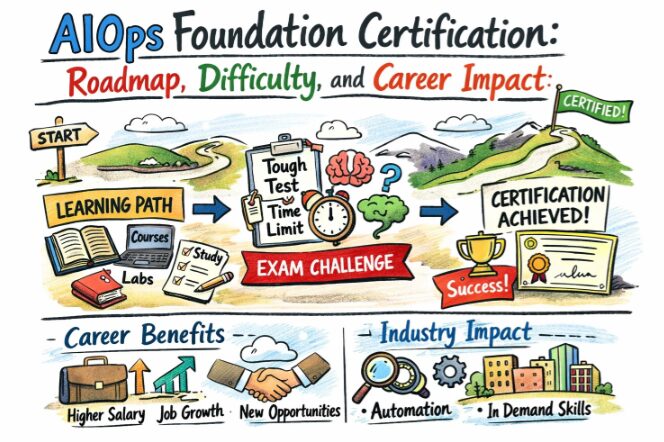
In the current landscape of platform engineering and site reliability, the sheer volume of data generated by modern applications has surpassed human capacity for manual analysis. This is where the AIOps Foundation Certification becomes a critical asset for any professional looking to bridge the gap between traditional operations and automated intelligence. This guide is designed for software engineers, SREs, and IT managers who recognize that the future of infrastructure lies in algorithmic decision-making. By choosing a structured learning path through AIOps School, professionals can move beyond the noise of standard monitoring tools and start building resilient, self-healing systems. This comprehensive breakdown will help you understand how this certification fits into your career and whether it is the right move for your professional growth.
What is the AIOps Foundation Certification?
The AIOps Foundation Certification is a formal recognition of an engineer’s ability to apply artificial intelligence and machine learning principles to IT operations. It represents a shift from reactive troubleshooting to proactive, data-driven system management. Rather than focusing purely on theoretical models, this certification emphasizes real-world applications in production environments. It addresses how to handle high-cardinality data, logs, and metrics using automated patterns. The goal is to align modern engineering workflows with enterprise-grade practices, ensuring that teams can maintain uptime even as their infrastructure scales to thousands of microservices.
Who Should Pursue AIOps Foundation Certification?
This certification is ideal for a wide range of technical professionals who are responsible for maintaining system health and performance. Site Reliability Engineers (SREs) and DevOps professionals will find it particularly useful as it provides the tools to automate repetitive tasks and reduce “alert fatigue.” Cloud architects and platform engineers can use these skills to build more intelligent infrastructure as code. Even for those in security and data engineering roles, understanding the operational side of AI is becoming a necessity. In markets like India and globally, there is a massive push for engineers who can manage complex distributed systems without needing to hire a massive army of manual operators.
Why AIOps Foundation Certification is Valuable in the Current Era
The demand for AIOps skills is driven by the fact that enterprise adoption of cloud-native technologies is accelerating. As companies move to multi-cloud and hybrid environments, the complexity grows exponentially. This certification ensures that a professional stays relevant regardless of which specific monitoring tool a company uses, because it teaches the underlying logic of data correlation and anomaly detection. It is a high-return investment in your career because it moves you away from “firefighting” and into a strategic role where you are designing intelligent systems. This longevity is what distinguishes a senior engineer from a junior one in the current job market.
AIOps Foundation Certification Overview
The program is delivered via the official AIOps Foundation Certification portal and is hosted on AIOps School. The certification approach is grounded in practical assessment, ensuring that candidates don’t just memorize definitions but understand how to apply concepts to live systems. It is owned and structured by industry leaders who have seen the evolution of operations from physical servers to serverless functions. The assessment typically involves demonstrating competency in data ingestion, pattern recognition, and automated remediation. This structure ensures that when an employer sees this certification on a resume, they know the candidate is ready to contribute to a production environment immediately.
AIOps Foundation Certification Tracks & Levels
The certification is structured to support long-term career progression, starting from the foundation and moving toward mastery. The foundation level focuses on core concepts, terminology, and the fundamental architecture of AIOps platforms. Once an engineer masters the basics, they can move into professional levels that involve deeper integration with DevOps and SRE practices. Advanced levels are available for those who want to specialize in the algorithmic side of operations or lead large-scale digital transformation projects. This tiered approach allows professionals to pace their learning and gain recognition at every stage of their technical journey.
Complete AIOps Foundation Certification Table
| Track | Level | Who it’s for | Prerequisites | Skills Covered | Recommended Order |
| Operations Intelligence | Foundation | Junior Engineers & Admins | Basic Linux/Cloud knowledge | Log Analysis, Monitoring, Metrics | 1st |
| Algorithmic SRE | Professional | SREs & DevOps Engineers | 2-3 years of Ops experience | Anomaly Detection, Event Correlation | 2nd |
| Automation Leadership | Advanced | Architects & Managers | 5+ years of experience | Strategic AI implementation, ROI | 3rd |
Detailed Guide for Each AIOps Foundation Certification
AIOps Foundation Certification – Foundation Level
What it is
This certification validates a professional’s understanding of the basic pillars of AIOps and how machine learning can be applied to standard IT operations. It serves as the entry point for anyone looking to modernize their operational skill set.
Who should take it
It is suitable for junior DevOps engineers, system administrators, and technical managers who need to understand the language and logic of automated operations. No deep data science background is required to start.
Skills you’ll gain
- Understanding the difference between traditional monitoring and AIOps.
- Mastery of data ingestion and telemetry gathering.
- Basic knowledge of event noise reduction and correlation techniques.
- Familiarity with the AIOps lifecycle in a production environment.
Real-world projects you should be able to do
- Setting up a basic centralized logging system that uses pattern recognition.
- Configuring automated alerts based on dynamic thresholds instead of static limits.
- Building a dashboard that correlates application performance with infrastructure health.
Preparation plan
- 7-14 days: Review core terminology and the basic architecture of AIOps platforms provided in the study materials.
- 30 days: Engage with hands-on labs focused on log aggregation and basic metric visualization.
- 60 days: Complete a full practice project that involves reducing alert noise in a simulated environment.
Common mistakes
- Focusing too much on the math of machine learning rather than the operational outcomes.
- Neglecting the importance of high-quality data ingestion before applying AI models.
- Over-complicating the initial automation steps before understanding the manual process.
Best next certification after this
- Same-track option: AIOps Professional Certification.
- Cross-track option: SRE Professional Certification.
- Leadership option: Engineering Management for Automated Systems.
Choose Your Learning Path
DevOps Path
The DevOps path focuses on integrating AI into the CI/CD pipeline to improve software delivery velocity and reliability. Engineers on this path learn how to use automated testing and deployment data to predict potential failures before they reach production. The goal is to create a seamless loop where operational insights inform development teams in real-time. This path is perfect for those who want to be at the intersection of code and infrastructure.
DevSecOps Path
In this track, the focus is on applying AIOps to security operations, often referred to as AI-driven security. Professionals learn how to detect anomalous behavior that might indicate a security breach before traditional signature-based tools catch it. It involves automating the response to common threats and ensuring that security checks are built into the automated delivery process. This is a critical path for engineers in highly regulated industries.
SRE Path
The Site Reliability Engineering path is arguably the most natural fit for AIOps. Here, the focus is on maintaining Service Level Objectives (SLOs) through automated error budget tracking and incident response. Engineers learn how to build “self-healing” systems that can automatically scale or restart services based on predictive analytics. This path prioritizes system availability and the reduction of manual toil through intelligent automation.
AIOps Path
This is the specialized track for those who want to become domain experts in algorithmic operations. It focuses deeply on the selection of models, the tuning of anomaly detection algorithms, and the integration of diverse data sources. Professionals on this path often act as internal consultants for other engineering teams, helping them implement AI-driven strategies. It is a deep dive into the technical mechanics of the AIOps platform itself.
MLOps Path
The MLOps path is for those who are responsible for the lifecycle of machine learning models themselves. It involves taking AIOps principles and applying them to the deployment, monitoring, and retraining of ML models in production. This path bridges the gap between data scientists and operations engineers, ensuring that AI models remain accurate and performant over time. It is essential for organizations that rely on AI as a core product feature.
DataOps Path
DataOps focuses on the automated, policy-based management of data flows within an organization. Engineers learn how to use AIOps to monitor data pipelines, detect data drift, and ensure high data quality for downstream analytics. This path is vital for maintaining the “fuel” that powers AIOps and MLOps initiatives. It ensures that the data being used for operational decisions is reliable, timely, and secure.
FinOps Path
The FinOps path uses AIOps to manage and optimize cloud spending in real-time. Instead of waiting for a monthly bill, engineers use automated tools to detect cost anomalies and predict future spending patterns. It involves automating the rightsizing of resources and identifying wasted cloud spend across complex environments. This path is highly valued by management teams looking to maintain fiscal discipline in the cloud.
Role → Recommended AIOps Foundation Certification Certifications
| Role | Recommended Certifications |
| DevOps Engineer | AIOps Foundation, DevOps Professional |
| SRE | AIOps Foundation, SRE Practitioner |
| Platform Engineer | AIOps Foundation, Cloud Architecture |
| Cloud Engineer | AIOps Foundation, Multi-Cloud Ops |
| Security Engineer | AIOps Foundation, DevSecOps Specialist |
| Data Engineer | AIOps Foundation, DataOps Specialist |
| FinOps Practitioner | AIOps Foundation, Cloud Cost Management |
| Engineering Manager | AIOps Foundation, Digital Transformation |
Next Certifications to Take After AIOps Foundation Certification
Same Track Progression
Once the foundation is established, the next logical step is to dive into professional-level certifications that focus on implementation and architecture. This involves moving from understanding concepts to designing the actual systems that ingest and process operational data. Deep specialization in specific AIOps platforms or algorithmic tuning is the hallmark of this stage. It ensures you are seen as a subject matter expert who can own the entire operational strategy of an organization.
Cross-Track Expansion
Broadening your skills into related areas like SRE or DevSecOps can make you a more versatile engineer. For example, combining AIOps with SRE allows you to apply intelligent automation specifically to reliability goals. Alternatively, moving into the security space with AIOps knowledge makes you a formidable asset in modern threat detection. Skill broadening is about understanding how AI-driven operations interact with other parts of the technical ecosystem to create a more resilient whole.
Leadership & Management Track
For those looking to move into management, the focus shifts from “how to build” to “how to lead.” This involves understanding the ROI of AIOps, managing the cultural shift required for automation, and leading teams through digital transformations. Leadership tracks help you communicate the value of these technical investments to stakeholders and executives. It is the path for those who want to shape the technical direction of a company rather than working on individual configurations.
Training & Certification Support Providers for AIOps Foundation Certification
DevOpsSchool
DevOpsSchool is a leading provider of technical training that focuses on the end-to-end software delivery lifecycle. They offer extensive resources for those looking to master DevOps and AIOps through hands-on labs and expert-led sessions. Their curriculum is designed to be practical, ensuring that students can apply what they learn to real-world production environments immediately. With a focus on industry standards and current toolsets, DevOpsSchool helps engineers stay ahead in a rapidly changing market. They have a strong reputation for producing high-quality content that caters to both beginners and seasoned professionals. Their approach is centered on career growth and technical excellence in the field of modern operations.
Cotocus
Cotocus provides specialized consulting and training services aimed at helping organizations and individuals adopt modern engineering practices. They focus heavily on cloud-native technologies and the automation of infrastructure. Their training programs are known for being intensive and deeply technical, providing learners with a thorough understanding of the underlying principles of AIOps and SRE. Cotocus emphasizes the importance of a culture of automation and provides the tools necessary to implement it effectively. By focusing on real-world scenarios and production-grade challenges, they prepare their students for the complexities of modern enterprise environments. Their expertise is highly sought after by companies undergoing digital transformation.
Scmgalaxy
Scmgalaxy is a massive community-driven platform that offers a wealth of information on software configuration management, DevOps, and AIOps. It serves as a hub for engineers to share knowledge, tutorials, and best practices. The platform provides structured learning paths and certifications that are well-respected in the industry. Scmgalaxy is particularly known for its extensive library of technical articles and guides that cover a wide range of tools and methodologies. They focus on the practical side of engineering, providing clear instructions on how to solve common operational problems. For many engineers, Scmgalaxy is the go-to resource for staying updated on the latest trends in the automation space.
BestDevOps
BestDevOps is dedicated to providing high-quality training and certification programs that help professionals master the art of automated operations. They offer a variety of courses that cover everything from basic DevOps principles to advanced AIOps strategies. Their training is delivered by experienced practitioners who bring years of industry knowledge to the classroom. BestDevOps focuses on providing a comprehensive learning experience that includes both theory and practical application. They are committed to helping their students achieve their career goals through rigorous training and industry-recognized certifications. Their programs are designed to be accessible yet challenging, ensuring that graduates are well-prepared for the demands of the job market.
devsecopsschool.com
DevSecOpsSchool is a specialized training provider that focuses on the integration of security into the DevOps and AIOps lifecycle. They recognize that security cannot be an afterthought and must be built into the automation process from the start. Their courses cover a range of topics, including automated security testing, threat modeling, and AI-driven security operations. DevSecOpsSchool provides the skills necessary to build secure and resilient systems in a cloud-native world. Their training is essential for engineers who want to specialize in the intersection of security and operations. By focusing on “security as code,” they help organizations protect their assets without slowing down the delivery process.
sreschool.com
SRESchool is dedicated to the discipline of Site Reliability Engineering, providing deep dives into how to maintain system availability and performance at scale. Their curriculum is heavily influenced by the practices developed at major technology companies and focuses on the reduction of manual toil through automation. They offer specialized training in AIOps as a core component of modern SRE work. SRESchool emphasizes the use of service level objectives and error budgets to drive operational decisions. Their courses are designed for engineers who want to master the art of building and maintaining reliable systems in complex, distributed environments. They provide a clear path from traditional administration to advanced SRE roles.
aiopsschool.com
AIOpsSchool is the primary destination for professionals looking to specialize in artificial intelligence for IT operations. They offer a focused curriculum that covers the entire spectrum of AIOps, from data collection to automated remediation. Their training is designed to be highly practical, with a strong emphasis on real-world use cases and hands-on experience. AIOpsSchool helps engineers understand how to leverage machine learning to solve complex operational challenges. They are a key player in defining the standards and best practices for the AIOps industry. Their certifications are a mark of expertise for anyone looking to lead in the field of automated intelligence and proactive system management.
dataopsschool.com
DataOpsSchool focuses on the critical intersection of data engineering and operations. They provide training on how to build and manage automated data pipelines that are reliable, scalable, and secure. Their curriculum includes the use of AIOps to monitor and optimize data flows, ensuring high data quality for business intelligence and machine learning. DataOpsSchool emphasizes the importance of collaboration between data scientists, engineers, and operations teams. Their courses are essential for anyone responsible for the data infrastructure that powers modern enterprises. By focusing on “data as a product,” they help organizations treat their data with the same rigors as their software code.
finopsschool.com
FinOpsSchool is the leading provider of training for the emerging field of cloud financial management. They teach engineers and finance professionals how to work together to optimize cloud spending using AIOps and automated tools. Their curriculum covers the principles of visibility, optimization, and operation in the cloud. FinOpsSchool provides the skills needed to track cloud costs in real-time and make data-driven decisions about resource allocation. Their training is vital for organizations looking to maximize the value of their cloud investments while maintaining control over their budget. By focusing on cultural change and technical automation, they help companies build sustainable cloud financial practices.
Frequently Asked Questions (General)
- How difficult is the AIOps Foundation Certification?
The foundation level is designed to be accessible to anyone with a basic understanding of IT operations. It focuses on concepts rather than complex mathematics, making it manageable for most engineers. - How much time does it take to prepare for the exam?
Most professionals find that 30 to 60 days of consistent study is sufficient. This includes reviewing theoretical materials and engaging in hands-on practice. - Are there any prerequisites for the foundation level?
There are no formal prerequisites, but a basic understanding of Linux, cloud computing, and monitoring concepts is highly recommended to get the most out of the course. - What is the ROI of getting an AIOps certification?
The return on investment is high, as it positions you for senior roles in SRE and DevOps. It can lead to significant salary increases and better job security in a tech-driven market. - Is this certification recognized globally?
Yes, AIOps certifications from recognized providers like AIOps School are valued by major enterprises and tech companies across the globe, including in India. - Do I need to be a data scientist to learn AIOps?
No, you do not need a data science background. AIOps is about using AI tools to improve operations, not necessarily building the underlying AI models from scratch. - How does AIOps differ from standard DevOps?
DevOps is a cultural and procedural shift for faster delivery, while AIOps is a technical shift that uses AI to handle the operational complexity that DevOps can create. - Should I take SRE or AIOps certification first?
If you are already in an operations role, starting with AIOps Foundation provides a modern lens through which to view SRE practices, though both are complementary. - How often do I need to renew the certification?
Most certifications are valid for two to three years. Given the speed of change in the field, staying updated with newer levels is encouraged. - Does this certification help in moving to a management role?
Yes, it demonstrates that you understand the strategic value of automation, which is a key requirement for modern engineering leadership. - Can I prepare for this certification while working full-time?
Yes, the learning paths are designed to be self-paced, allowing working professionals to study during their off-hours. - Is there a practical component to the exam?
Most modern certifications include scenario-based questions or hands-on labs to ensure you can apply the knowledge in a production-like setting.
FAQs on AIOps Foundation Certification
- What specific tools are covered in the AIOps Foundation Certification?
While it focuses on principles, you will learn the logic behind tools used for log aggregation, metric collection, and event correlation found in the modern ecosystem. - How does this certification address alert fatigue?
It teaches you how to use machine learning algorithms to filter out noise and group related events into single actionable incidents, reducing the burden on engineers. - Does the course cover the use of AI in root cause analysis?
Yes, a core part of the foundation is understanding how AI can trace dependencies across a distributed system to identify the primary cause of a failure. - Will I learn about predictive scaling in this program?
Predictive scaling is covered as a key outcome of AIOps, teaching you how to anticipate traffic spikes and adjust resources before performance is affected. - How is data quality addressed in the AIOps lifecycle?
The certification emphasizes that AIOps is only as good as the data it receives, covering the basics of data normalization and deduplication. - What is the role of human-in-the-loop in AIOps?
The foundation level teaches that AI is meant to augment, not replace, human decision-making, particularly in complex or high-risk remediation scenarios. - Does the certification cover ethical considerations of AI in ops?
Yes, it touches upon the importance of transparency and explainability in automated decisions to ensure that engineers can trust the AI’s output. - Is cloud-native architecture a major focus of the certification?
Absolutely, as AIOps is most valuable in the complex, dynamic environments typical of Kubernetes and microservices architectures.
Final Thoughts: Is AIOps Foundation Certification Worth It?
From a mentoring perspective, the answer is a definitive yes. We have reached a point in the industry where manual operations simply cannot scale with the speed of business. If you continue to rely on static thresholds and manual log diving, you will eventually become a bottleneck for your organization. The AIOps Foundation Certification isn’t just a badge on your resume; it is a fundamental shift in how you think about system reliability and your own role as an engineer. It moves you from being a “operator” to being an “architect of intelligence.” If you want to remain relevant and move into high-impact roles, mastering the intersection of AI and operations is no longer optional—it is a requirement. Start with the foundation, get your hands dirty with the data, and build the future of automated engineering.