MOTOSHARE 🚗🏍️
Turning Idle Vehicles into Shared Rides & Earnings
From Idle to Income. From Parked to Purpose.
Earn by Sharing, Ride by Renting.
Where Owners Earn, Riders Move.
Owners Earn. Riders Move. Motoshare Connects.
With Motoshare, every parked vehicle finds a purpose.
Owners earn. Renters ride.
🚀 Everyone wins.
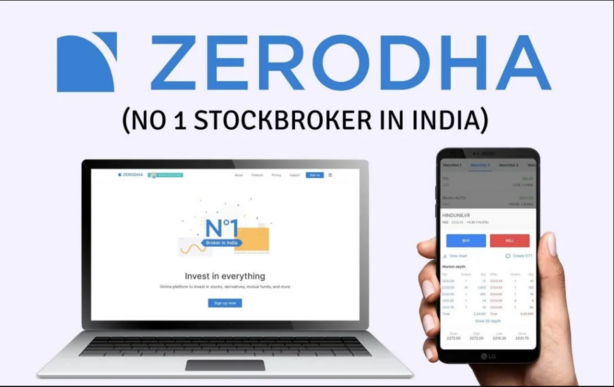
India’s financial landscape has undergone a dramatic transformation in the last decade — and at the heart of this change is Zerodha, the country’s leading discount brokerage platform. Known for its tech-driven model, low-cost trading, and transparent practices, Zerodha has not only democratized investing for millions of Indians but has also inspired a new wave of fintech innovation across the subcontinent.
But what really sets Zerodha apart from traditional brokerages? How did it grow from a small startup to the largest stockbroker in India by active clients — without spending a rupee on advertising? Let’s dive deep.
#WhatIsZerodha
1. What is Zerodha?
Zerodha is India’s largest discount brokerage firm, transforming how individuals participate in financial markets by offering low-cost, high-speed, and technology-driven access to trading and investment tools.
Founded in 2010 by Nithin and Nikhil Kamath, Zerodha pioneered the flat-fee model in Indian brokerage by charging ₹0 brokerage on equity delivery trades and ₹20 (or 0.03%) per executed order for intraday, F&O, and commodities—regardless of trade size. This model attracted millions of investors and positioned Zerodha as a fintech leader in democratizing investing.
As of 2024:
- Zerodha has over 12 million clients
- Handles over 15% of total Indian retail trading volume
- Operates with no external funding—making it India’s largest bootstrapped unicorn
- Hosts multiple in-house and partner platforms: Kite, Coin, Console, Varsity, Streak, and Sensibull
Zerodha isn’t just a broker—it’s a full-stack financial ecosystem for retail investors, traders, and fintech developers.
#ZerodhaUseCases
2. Major Use Cases of Zerodha
Zerodha caters to a spectrum of financial market participants, from college students exploring SIPs to professional options traders. Below are the key domains it empowers:
📈 2.1. Stock Market Trading
Zerodha provides seamless, low-cost trading on:
- NSE (National Stock Exchange)
- BSE (Bombay Stock Exchange)
Users can:
- Execute equity delivery (CNC) trades at ₹0
- Use market, limit, SL, SL-M, GTT, and AMO orders
- Leverage advanced order types like Basket Orders, Brackets, and Cover Orders
🔁 2.2. Intraday and Derivatives Trading
For active traders:
- Trade in Futures & Options (Equity & Commodities)
- Use Margins and MIS (Margin Intraday Square-off) for short-term strategies
- Integrate with platforms like Streak and Sensibull for automated analysis and strategy deployment
💹 2.3. Direct Mutual Fund Investment (via Coin)
Coin by Zerodha offers:
- Access to direct mutual fund plans (with no commissions or hidden charges)
- SIP automation
- Family account view
- Integration with your Zerodha Demat account for unified visibility
📚 2.4. Learning and Financial Literacy (Varsity)
Zerodha’s Varsity platform is India’s most respected open financial education resource:
- Beginner to advanced market modules
- Technical, fundamental, and macroeconomic insights
- Available in English and regional languages
- Integrated quizzes and certification
🧾 2.5. Portfolio Analytics and Tax Reporting (Console)
Through Console, users can:
- Track holdings, P&L, and capital gains
- View ledger and statement reports
- Download Tax P&L, Tradebook, and Contract Notes
- Access corporate actions and historical trades
🔄 2.6. Algo-Trading and Fintech APIs
Using Kite Connect API, developers can:
- Build real-time trading bots
- Fetch live market data via WebSockets
- Place/manage orders programmatically
- Integrate Zerodha data into third-party apps
#ZerodhaArchitecture
3. How Zerodha Works – Technical Architecture & Ecosystem
Zerodha’s platform is underpinned by a modular, cloud-scalable architecture, designed for speed, security, and high concurrency. Here’s an overview:
🧱 3.1. Architecture Components
🔹 A. Kite Web & App (Frontend)
- Built using React.js, Svelte, and TypeScript
- Lightweight, high-performance single-page app (SPA)
- Responsive, supports TradingView & ChartIQ charting libraries
- Mobile apps available for Android and iOS
🔹 B. Order Management System (OMS)
- Handles millions of trades daily
- Connects via FIX protocol to exchanges (NSE, BSE, MCX)
- Performs order matching, status updates, and position calculations
🔹 C. Risk Management System (RMS)
- Applies Zerodha’s risk policies:
- Margin validation
- Order limits and checks
- Circuit filters
- Leverage exposure management
- Ensures compliance with SEBI and exchange guidelines
🔹 D. Kite Connect API Layer
- Exposes RESTful endpoints:
GET /quotesPOST /ordersGET /portfolio/positions
- Real-time feed via WebSocket Streaming API
- Used for personal bots or third-party fintech apps
🔹 E. Reporting Engine (Console)
- Consolidates user trade data into reports
- Tax computation modules (STCG, LTCG, intraday)
- CSV, PDF, and Excel downloads
🔹 F. Mutual Fund System (Coin)
- Separate mutual fund order management
- Direct integration with AMCs via BSE StarMF
🔹 G. Data & Security Layer
- Uses 2FA, biometric login, and token-based API auth
- All user data encrypted at rest
- Backup and failover handled via cloud-based replication
#ZerodhaWorkflow
4. Basic Workflow: How Zerodha Works Internally
Let’s walk through how a stock trade flows through Zerodha’s architecture:
🔁 Example: Equity Trade Lifecycle
| Step | Component | Action |
|---|---|---|
| 1 | Kite UI | User logs in and places a BUY order |
| 2 | OMS | Order validated for price, quantity, margins |
| 3 | RMS | Checks for exposure, leverage, and circuit filters |
| 4 | OMS | Sends the validated order to NSE/BSE via FIX |
| 5 | Exchange | Executes trade, sends confirmation |
| 6 | Zerodha OMS | Updates tradebook, holdings |
| 7 | Console | Logs contract note, P&L, and tax records |
| 8 | Email/SMS | Trade confirmation sent to user |
A similar flow occurs in Coin (for mutual funds), but routed through BSE StarMF instead of NSE.
#GettingStartedWithZerodha
5. Step-by-Step Guide to Start with Zerodha
Here’s how a new investor or trader can get started:
✅ Step 1: Open a Zerodha Account
- Visit https://zerodha.com
- Click “Sign up”
- Enter phone number → OTP verification
- Fill in:
- PAN card
- Aadhaar
- Bank proof
- Signature
- Income proof (for F&O activation)
- Complete eKYC and IPV (In-Person Verification)
- eSign using Aadhaar via Digio
- Wait for account activation (24–48 hours)
✅ Step 2: Log into Kite Platform
- Visit: https://kite.zerodha.com
- Enter Client ID, Password, and OTP
- Dashboard loads with watchlist and funds section
✅ Step 3: Add Funds
- Go to Funds
- Choose Add Funds
- Use UPI, Net Banking, or IMPS
- Funds reflect instantly or within 2 hours
✅ Step 4: Place Your First Order
- Search stock symbol: e.g.,
TCS,HDFCBANK - Click BUY
- Choose:
- Quantity
- Order type: Market / Limit / SL / SL-M
- Product: CNC (Delivery) or MIS (Intraday)
- Confirm order
- Track in Orders tab
✅ Step 5: Explore Console and Coin
- Access P&L reports, trade history, tax summaries
- Visit https://console.zerodha.com
- For mutual fund investments, go to https://coin.zerodha.com
✅ Step 6: Learn with Varsity
Visit https://zerodha.com/varsity
Choose modules like:
- Technical Analysis
- Options Trading
- Risk Management
- IPO Investing
All courses are free, downloadable, and quiz-based.
Hello