MOTOSHARE 🚗🏍️
Turning Idle Vehicles into Shared Rides & Earnings
From Idle to Income. From Parked to Purpose.
Earn by Sharing, Ride by Renting.
Where Owners Earn, Riders Move.
Owners Earn. Riders Move. Motoshare Connects.
With Motoshare, every parked vehicle finds a purpose.
Owners earn. Renters ride.
🚀 Everyone wins.
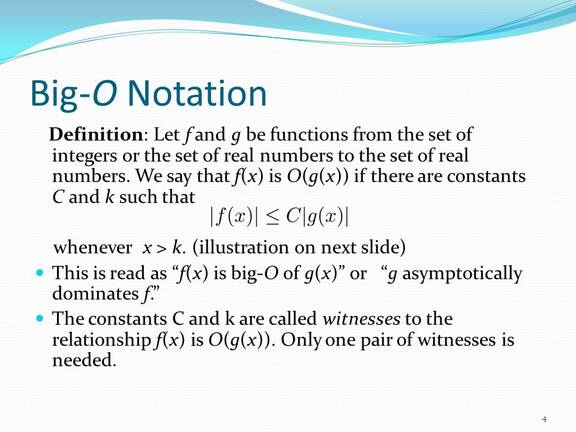
The big O notation is very essential for the evaluation of algorithms. We want to have a solid understanding of this notation and how to use this in the future. we are going to talk about the massive O notation in the course of this phase.
Our algorithm for finding the books and placing them has n number of objects. For the first book search, it’s going to evaluate n number of books for the worst case situation. If we are saying time complexity is T, then for the primary e book the time complexity may be:
T(1) = nAs we are eliminating the founded book from the listing, the scale of the list is now n-1. For the second e-book seek, it’s going to evaluate n-1 wide variety of books for the worst case scenario. Then for the second one ebook, the time complexity could be n-1. Combining the each time complexities, for first two books it’ll be:
T(2) = n + (n - 1)If we hold like this, after the n-1 steps the ultimate book seek will most effective have 1 e-book left to evaluate. So, the overall complexity will look like:
T(n) = n + (n - 1) + (n - 2) + . . . . . . . . . . . + 3 + 2 + 1 Now if we take a look at the previous series, would not it appearance acquainted? it’s also known as the sum of n numbers equation as proven:

So we can write:
T(n) = n(n + 1)/2 Or:
T(n) = n2/2 + n/2 For asymptotic evaluation, we ignore low order phrases and steady multipliers. on account that we have n2, we will effortlessly ignore the n right here. additionally, the half of constant multiplier also can be not noted. Now we will express the time complexity with the big O notation as the order of n squared:
T(n) = O(n2) throughout the book, we can be using this huge O notation to explain complexity of the algorithms or operations. right here are some commonplace huge O notations: