MOTOSHARE 🚗🏍️
Turning Idle Vehicles into Shared Rides & Earnings
From Idle to Income. From Parked to Purpose.
Earn by Sharing, Ride by Renting.
Where Owners Earn, Riders Move.
Owners Earn. Riders Move. Motoshare Connects.
With Motoshare, every parked vehicle finds a purpose.
Owners earn. Renters ride.
🚀 Everyone wins.
Introduction
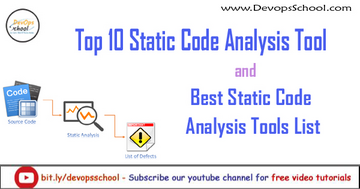
In 2025, software security, quality, and performance are more critical than ever before. Static Code Analysis Tools have emerged as essential assets for development teams, helping identify vulnerabilities, code smells, and compliance issues before the code even runs. These tools scan source code or binaries without executing them, allowing developers to detect bugs early in the software development lifecycle (SDLC), improve code maintainability, and adhere to industry standards.
Whether you’re a startup working in an agile environment or an enterprise maintaining massive codebases, using the right Static Code Analysis Tool can reduce technical debt, enhance collaboration between dev and security teams, and accelerate delivery.
In this blog, we’ll explore the Top 10 Static Code Analysis Tools in 2025, their features, advantages, limitations, and how they stack up against each other.
Top 10 Static Code Analysis Tools Tools (for 2025)
1. SonarQube ![SonarQube Logo]
Short Description:
SonarQube is a popular open-source and commercial tool that continuously inspects code quality and security in over 25 programming languages. It is widely used in CI/CD pipelines.
Key Features:
- Multi-language support (Java, JavaScript, Python, C#, etc.)
- Detects bugs, code smells, and security vulnerabilities
- Integrates with Jenkins, GitHub, Bitbucket, Azure DevOps
- Custom rule sets and quality gates
- Provides security reports (OWASP, CWE, SANS Top 25)
- Developer-focused UI with PR decoration
- Real-time code quality feedback
Pros:
- Excellent integration with DevOps pipelines
- Strong community and frequent updates
Cons:
- Steeper learning curve for beginners
- Enterprise features are paid
2. Checkmarx SAST ![Checkmarx Logo]
Short Description:
Checkmarx SAST is an enterprise-grade security-focused Static Application Security Testing (SAST) tool known for identifying security vulnerabilities early in the SDLC.
Key Features:
- Focus on secure coding practices
- Supports 30+ programming and scripting languages
- Customizable policies and scan configurations
- Seamless CI/CD integrations
- Detailed remediation guidance
- GitOps-native deployment options
Pros:
- Top-notch security scanning capabilities
- Trusted by large enterprises
Cons:
- Expensive for small businesses
- May require onboarding for developers
3. Fortify Static Code Analyzer (Micro Focus) ![Fortify Logo]
Short Description:
Fortify offers deep static code analysis for identifying software vulnerabilities and ensuring compliance with regulatory standards.
Key Features:
- Supports 27+ languages
- Industry-standard compliance (OWASP, PCI-DSS, HIPAA)
- Cloud and on-premise deployment
- IDE plugins for Eclipse, IntelliJ
- DevOps integration (Jenkins, Bamboo)
- Threat modeling capabilities
Pros:
- Enterprise-level reporting
- Covers compliance needs effectively
Cons:
- Complex setup
- Slower scans on large projects
4. Codacy ![Codacy Logo]
Short Description:
Codacy automates code reviews by scanning pull requests and commits for code quality and security issues.
Key Features:
- GitHub/GitLab/Bitbucket integration
- Supports 40+ languages
- Code duplication and complexity detection
- Custom quality metrics and dashboards
- Integrates with Slack and Jira
- Automated PR feedback
Pros:
- Developer-friendly dashboard
- Offers a free plan for small teams
Cons:
- Lacks deep security scans
- Performance varies with project size
5. DeepSource ![DeepSource Logo]
Short Description:
DeepSource focuses on automating static code analysis and transforming code health with autofixes and collaborative code suggestions.
Key Features:
- Python, Go, Ruby, Java, JavaScript support
- Autofix suggestions with one-click implementation
- AI-powered issue prioritization
- Workflow integrations with GitHub Actions, Slack, Jira
- Code coverage tracking
Pros:
- Lightweight and fast
- Smart recommendations with autofix
Cons:
- Fewer supported languages
- Less suited for legacy enterprise apps
6. Coverity (by Synopsys) ![Coverity Logo]
Short Description:
Coverity provides accurate, deep, and scalable static analysis for large codebases and complex environments.
Key Features:
- Scalable to millions of lines of code
- Supports 20+ languages including C/C++, Java
- Integration with IDEs and CI/CD tools
- Detects concurrency defects and data flow vulnerabilities
- OWASP/CWE alignment
Pros:
- Highly accurate with low false positives
- Handles enterprise-scale projects efficiently
Cons:
- Premium pricing
- Can be complex to configure initially
7. ESLint ![ESLint Logo]
Short Description:
ESLint is a widely adopted open-source JavaScript and TypeScript linting tool used to enforce consistent code style and detect problematic patterns.
Key Features:
- Highly configurable with rule customization
- Integration with VS Code, GitHub, CI tools
- Large plugin ecosystem
- Fast linting and error fixing
- Community-driven rule sets
Pros:
- Open-source and free
- Great for frontend and Node.js projects
Cons:
- Limited to JavaScript/TypeScript
- Needs configuration for optimal performance
8. PVS-Studio ![PVS-Studio Logo]
Short Description:
PVS-Studio is a static code analyzer for C, C++, C#, and Java that helps detect bugs, potential vulnerabilities, and compliance issues.
Key Features:
- Windows/Linux/macOS support
- MISRA, CWE, CERT, OWASP compliance
- IDE plugins for Visual Studio, IntelliJ, Rider
- Nightly analysis reports
- Machine-readable output for automation
Pros:
- Thorough diagnostics
- Focus on performance and security
Cons:
- Not free
- UI could be more modern
9. Infer (by Meta) ![Infer Logo]
Short Description:
Infer is an open-source static analyzer developed by Meta (Facebook) to find null pointer exceptions, resource leaks, and race conditions.
Key Features:
- Designed for Android, Java, Objective-C, and C++
- Detects critical runtime crashes
- Fast integration in CI/CD pipelines
- Supports annotation-based analysis
- Incremental analysis for fast feedback
Pros:
- Free and open-source
- Great for mobile app developers
Cons:
- Narrow language support
- Requires command-line usage
10. Semgrep ![Semgrep Logo]
Short Description:
Semgrep is a fast, lightweight static analysis tool that enables custom rule definitions to detect security and logic bugs in code.
Key Features:
- Customizable rule engine
- Supports many languages (Python, Java, Go, JS)
- OWASP/SAST policies built-in
- Cloud dashboard for tracking issues
- Fast scans and CI-friendly
Pros:
- DevSecOps-ready with modern workflows
- Custom rule-writing support
Cons:
- Rules can be complex to define
- UI still evolving
Comparison Table: Static Code Analysis Tools in 2025
| Tool Name | Best For | Platform(s) Supported | Standout Feature | Pricing | Rating (G2/Capterra) |
|---|---|---|---|---|---|
| SonarQube | All-round code quality | Windows, Linux, macOS | Quality Gates & Multi-language | Free / Starts at $150 | 4.6/5 |
| Checkmarx | Enterprise AppSec | Cloud, On-Premise | Enterprise-grade SAST | Custom pricing | 4.5/5 |
| Fortify | Compliance & Regulation | Cloud, On-Premise | Deep regulatory compliance | Custom pricing | 4.3/5 |
| Codacy | Code reviews for teams | Cloud | Automated PR reviews | Free / Paid plans | 4.4/5 |
| DeepSource | Startups & mid-size teams | Cloud | Autofix and AI prioritization | Free / Paid | 4.5/5 |
| Coverity | Large enterprise projects | On-Premise | Low false positives | Custom | 4.6/5 |
| ESLint | JavaScript/TypeScript projects | All major platforms | Extensive plugin ecosystem | Free | 4.7/5 |
| PVS-Studio | C/C++ codebases | Windows, Linux, macOS | MISRA/CWE compliance | Starts at $999 | 4.4/5 |
| Infer | Mobile/Android developers | Linux, macOS | Null pointer detection | Free | 4.2/5 |
| Semgrep | DevSecOps teams | All major platforms | Custom rules engine | Free / Paid tiers | 4.5/5 |
Which Static Code Analysis Tools Tool is Right for You?
Startups and Small Teams
- ✅ Choose DeepSource, Codacy, or Semgrep for cost-effective, CI-integrated solutions.
- ✅ ESLint is a must-have for frontend-focused teams.
Mid-Sized Companies
- ✅ SonarQube (Developer Edition) offers great flexibility.
- ✅ PVS-Studio is perfect if your team writes performance-critical code in C/C++.
Large Enterprises
- ✅ Checkmarx, Fortify, and Coverity provide the scale, security compliance, and governance needed for regulated industries like finance or healthcare.
Security-Focused Teams
- ✅ Semgrep and Checkmarx offer strong SAST rulesets and integrations with GitOps workflows.
- ✅ Infer can catch runtime exceptions before they occur—ideal for mobile app developers.
Conclusion
In 2025, static code analysis has evolved into a key component of proactive software development, helping teams write clean, secure, and efficient code from day one. Whether you’re looking to catch bugs early, maintain regulatory compliance, or improve your development velocity, there’s a tool tailored to your needs.
Investing in the right Static Code Analysis Tools tool today will pay off in reduced bugs, fewer security incidents, and faster development cycles. Most of these tools offer free tiers or trials—so explore, experiment, and improve your code health in 2025.
FAQs
1. What is a static code analysis tool?
Static code analysis tools analyze source code without executing it to find bugs, vulnerabilities, and code quality issues early in the development lifecycle.
2. What’s the difference between SAST and static code analysis?
SAST (Static Application Security Testing) is a security-focused subset of static code analysis that scans for vulnerabilities.
3. Are static code analysis tools worth it for small teams?
Yes, many tools offer free plans and significantly reduce debugging time and security risks.
4. Can static code analysis replace manual code reviews?
No, but it complements them by automating repetitive checks and identifying issues early.
5. What languages are supported by most tools?
Most modern tools support popular languages like Java, JavaScript, Python, C/C++, C#, and Go.