MOTOSHARE 🚗🏍️
Turning Idle Vehicles into Shared Rides & Earnings
From Idle to Income. From Parked to Purpose.
Earn by Sharing, Ride by Renting.
Where Owners Earn, Riders Move.
Owners Earn. Riders Move. Motoshare Connects.
With Motoshare, every parked vehicle finds a purpose.
Owners earn. Renters ride.
🚀 Everyone wins.
Introduction
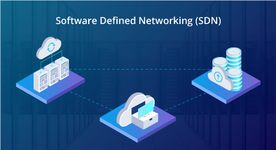
In 2025, Software Defined Networking (SDN) continues to revolutionize the way modern networks are managed, scaled, and optimized. By decoupling the control plane from the data plane, SDN offers unparalleled agility, programmability, and automation. Whether it’s enhancing network visibility, optimizing traffic flow, or managing hybrid and multi-cloud environments, SDN tools are vital for enterprises seeking smarter, scalable, and secure networks.
With digital transformation accelerating across industries, IT leaders and network admins are turning to SDN tools to meet rising bandwidth demands, implement zero-trust security, and reduce operational overhead. But with many solutions available, choosing the right SDN platform depends on your organizational needs—be it vendor neutrality, open-source extensibility, cloud compatibility, or performance tuning.
In this blog, we list the Top 10 SDN tools in 2025, complete with key features, pros, cons, and a comparison guide to help you select the best solution for your business.
🏆 Top 10 SDN (Software Defined Networking) Tools in 2025
1. Cisco DNA Center
Short Description:
Cisco DNA Center is Cisco’s flagship SDN platform offering policy-driven automation and assurance across campus, branch, and edge networks.
Key Features:
- Intent-based networking
- AI-powered analytics and automation
- Centralized network provisioning
- Role-based access control
- Real-time telemetry and assurance
- Seamless integration with IoT and cloud
- Software image management
Pros:
- Enterprise-grade security and scalability
- Deep integration with Cisco hardware
Cons:
- High learning curve for new users
- Premium pricing
2. VMware NSX
Short Description:
VMware NSX provides a complete L2–L7 network virtualization platform ideal for data centers and cloud-native apps.
Key Features:
- Micro-segmentation for security
- Full-stack networking for VMs and containers
- Native integration with vSphere and Tanzu
- Distributed firewall capabilities
- Support for multi-cloud environments
- REST APIs and automation tools
Pros:
- Deep visibility and control
- Excellent support for hybrid environments
Cons:
- Complex deployment for small teams
- Best suited for VMware-centric infrastructure
3. OpenDaylight
Short Description:
An open-source SDN controller under the Linux Foundation, ideal for developers and enterprises looking for extensibility.
Key Features:
- Modular, plugin-based architecture
- Southbound and northbound APIs (OpenFlow, NETCONF, REST)
- Multi-vendor device support
- Path computation element (PCE)
- Rich analytics and policy enforcement
- Active developer community
Pros:
- Open-source and customizable
- Broad protocol support
Cons:
- Requires in-house expertise to deploy
- Less out-of-the-box UI features
4. Juniper Contrail Networking
Short Description:
A cloud-native SDN solution for service providers and enterprises, optimized for containerized and virtual workloads.
Key Features:
- Scalable overlay networking
- Integration with Kubernetes and OpenStack
- Service chaining and traffic steering
- Built-in analytics and monitoring
- RESTful API support
- Virtual router support (vRouter)
Pros:
- Strong in telco-grade deployments
- Kubernetes-ready
Cons:
- More complex for non-cloud-native use cases
- Requires deep Juniper knowledge
5. Big Switch Networks (Now part of Arista)
Short Description:
Big Switch’s Cloud-First SDN platform delivers centralized visibility and control of on-prem and cloud networks.
Key Features:
- Fabric orchestration with Big Cloud Fabric
- Network-wide telemetry and packet capture
- Cloud-scale monitoring
- Open networking support
- Seamless integration with AWS and Azure
- REST APIs
Pros:
- Intuitive UI with real-time views
- Good multi-cloud support
Cons:
- Limited support for legacy networks
- Acquired by Arista—product direction evolving
6. Pica8 PICOS
Short Description:
A Linux-based open networking OS that brings SDN and traditional networking under a single umbrella.
Key Features:
- White-box hardware support
- OpenFlow and OVS compatibility
- GUI-based automation tools
- ACLs, QoS, and LACP support
- RESTful and CLI interfaces
- Zero-touch provisioning
Pros:
- Cost-effective for enterprises
- Supports mixed deployments
Cons:
- Community support not as strong
- May require third-party integrations
7. Cumulus Linux (NVIDIA)
Short Description:
A network OS designed for Linux-savvy teams seeking open, scalable, and programmable network infrastructure.
Key Features:
- Full Linux toolchain for network automation
- Broad support for NVIDIA Mellanox hardware
- EVPN/VXLAN for data center fabrics
- Native integration with Ansible and Puppet
- NetQ telemetry for visibility
- Container-ready
Pros:
- Linux-native experience
- Vendor-neutral and hardware-agnostic
Cons:
- Steep Linux learning curve
- Dependent on NVIDIA ecosystem
8. ONOS (Open Network Operating System)
Short Description:
An open-source SDN operating system designed for service providers and large-scale WAN environments.
Key Features:
- Cluster-based high availability
- Southbound OpenFlow, NETCONF, gRPC support
- Distributed core for scalability
- Traffic engineering and segment routing
- REST API and CLI
Pros:
- Strong for telco and WAN SDN
- Built-in clustering and fault tolerance
Cons:
- Not ideal for small enterprise environments
- Limited vendor documentation
9. Pluribus Netvisor ONE
Short Description:
An SDN operating system with distributed fabric intelligence and adaptive networking for data centers.
Key Features:
- Leaf-spine fabric orchestration
- Telemetry and visibility at wire-speed
- Active-active multi-site clustering
- Zero Trust segmentation
- Open networking and white-box support
Pros:
- Easy to manage distributed fabrics
- High-performance telemetry
Cons:
- Not suited for campus/branch SDN
- Focused on data center deployments
10. Nuage Networks VNS (Nokia)
Short Description:
A cloud-native SDN solution with strong automation, ideal for carrier and enterprise hybrid networks.
Key Features:
- Virtualized Network Services (VNS)
- Overlay VPN support
- Policy-based automation
- Service chaining and multi-tenancy
- NFV orchestration
- APIs for DevOps integration
Pros:
- Telco-grade scalability
- Flexible architecture
Cons:
- More complex setup
- Higher cost for small businesses
🧾 SDN Tools Comparison Table
| Tool Name | Best For | Platform(s) Supported | Standout Feature | Pricing | Rating (G2/Capterra) |
|---|---|---|---|---|---|
| Cisco DNA Center | Large Enterprises | On-prem, Hybrid | Intent-based automation | Custom | 4.5/5 |
| VMware NSX | Hybrid Cloud Infrastructure | Multi-cloud | Micro-segmentation | Custom | 4.6/5 |
| OpenDaylight | Open-Source Enthusiasts | Linux, Cloud | Modular open-source architecture | Free | 4.3/5 |
| Juniper Contrail | Telcos, Kubernetes workloads | Cloud-native, On-prem | Kubernetes-native integration | Custom | 4.4/5 |
| Big Switch (Arista) | Cloud-Centric Enterprises | AWS, Azure, Hybrid | Unified cloud visibility | Custom | 4.5/5 |
| Pica8 PICOS | White-box Deployments | On-prem | Linux-based network OS | Starts at $X | 4.1/5 |
| Cumulus Linux | Linux-Savvy Teams | Linux, NVIDIA | Full Linux OS for networking | Free / Custom | 4.4/5 |
| ONOS | WAN and Service Providers | Open source | Distributed controller core | Free | 4.2/5 |
| Pluribus Netvisor ONE | Data Centers | White-box, Fabric | Fabric-wide telemetry | Custom | 4.5/5 |
| Nuage Networks VNS | Hybrid Cloud and Telcos | Multi-cloud, NFV | Policy-driven automation | Custom | 4.6/5 |
🔍 Which SDN Tool Is Right for You?
💼 By Company Size:
- Startups & SMBs: OpenDaylight, Pica8 PICOS, Cumulus Linux
- Mid-Sized Enterprises: VMware NSX, Cisco DNA Center, Big Switch
- Large Enterprises & Telcos: Juniper Contrail, Nuage VNS, ONOS, Pluribus
🧩 By Industry Use Case:
- Cloud-native & DevOps: Cumulus Linux, Juniper Contrail
- Telcos: ONOS, Nuage VNS, Pluribus
- Data Centers: Pluribus, VMware NSX
- Campus & Branch Networks: Cisco DNA Center, Big Switch
💰 By Budget:
- Open-source/Free: OpenDaylight, ONOS, Cumulus Linux (Community)
- Mid-budget: Pica8, Big Switch
- Premium: Cisco, VMware, Nuage
🧠 Conclusion
In 2025, SDN tools have matured into critical enablers of cloud adoption, security, and agile network operations. Whether you’re managing an enterprise data center, deploying across hybrid cloud, or modernizing campus networks, the tools listed above provide flexible, programmable, and scalable solutions tailored to various business needs.
Explore demos, open-source variants, or trial versions before committing—and align your choice with both your technical expertise and business goals. As network complexity continues to grow, choosing the right SDN tool can make all the difference in your digital strategy.
📌 Frequently Asked Questions (FAQs)
1. What is SDN (Software Defined Networking)?
SDN is a network architecture that separates the control plane from the data plane, enabling centralized, programmable network management.
2. Why is SDN important in 2025?
With the rise of cloud computing, IoT, and edge technologies, SDN provides scalable, automated, and secure networking essential for modern IT.
3. Is SDN suitable for small businesses?
Yes, open-source or cost-effective solutions like OpenDaylight and Pica8 are suitable for small and medium-sized businesses.
4. Can SDN work with existing infrastructure?
Many SDN tools support hybrid deployments, allowing coexistence with traditional networks while enabling future migration.
5. What is the difference between SDN and traditional networking?
Traditional networks rely on hardware-centric control. SDN centralizes control via software, making it more agile, scalable, and programmable.