MOTOSHARE 🚗🏍️
Turning Idle Vehicles into Shared Rides & Earnings
From Idle to Income. From Parked to Purpose.
Earn by Sharing, Ride by Renting.
Where Owners Earn, Riders Move.
Owners Earn. Riders Move. Motoshare Connects.
With Motoshare, every parked vehicle finds a purpose.
Owners earn. Renters ride.
🚀 Everyone wins.
Introduction
In today’s data-driven world, data visualization tools are indispensable for businesses, analysts, and organizations looking to present data in a compelling, accessible, and meaningful way. These tools allow users to transform raw data into visual formats such as charts, graphs, and interactive dashboards, making it easier to understand complex patterns and trends. With the growing volume of data generated every day, effective data visualization has become essential for decision-making, predictive analysis, and business intelligence (BI).
In 2025, as businesses continue to rely on data for strategic decisions, the demand for intuitive and robust data visualization tools is higher than ever. These tools not only help in presenting data visually but also empower users to extract actionable insights from the data. When choosing the best data visualization tool, users should consider factors like ease of use, integration capabilities, customization options, scalability, and pricing.
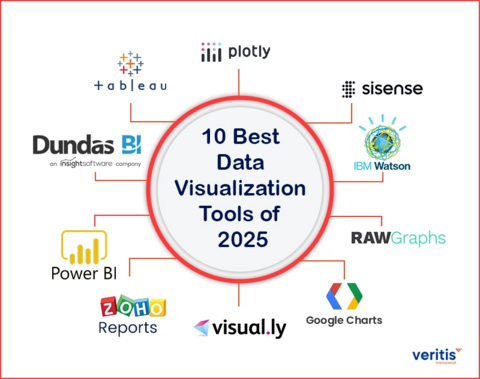
In this blog post, we explore the top 10 data visualization tools in 2025, comparing their features, pros, and cons, to help you make an informed decision for your business needs.
Top 10 Data Visualization Tools in 2025
1. Tableau
Short Description: Tableau is a powerful, flexible data visualization tool that enables users to create interactive, shareable dashboards. It is widely used by businesses of all sizes for its ease of use and powerful analytics capabilities.
Key Features:
- Drag-and-drop functionality
- Real-time collaboration
- Wide range of chart types
- Integration with popular databases (SQL, Google Analytics, etc.)
- Mobile-friendly
- Strong community and support resources
Pros:
- User-friendly interface
- High customizability
- Offers real-time data analytics
- Comprehensive support and resources
Cons:
- Steep learning curve for advanced features
- High pricing for premium versions
2. Power BI (Microsoft)
Short Description: Power BI by Microsoft is one of the most popular data visualization tools in the market. It’s designed for business intelligence and integrates seamlessly with Microsoft Excel and other Office tools.
Key Features:
- Integration with Microsoft products
- Real-time data monitoring
- Customizable dashboards and reports
- AI-powered data insights
- Seamless cloud integration
Pros:
- Cost-effective, especially for organizations already using Microsoft tools
- Excellent for data collaboration
- Great community support
Cons:
- Limited visualizations compared to Tableau
- Requires a learning curve to maximize its capabilities
3. Qlik Sense
Short Description: Qlik Sense is a modern BI tool known for its associative data model that helps users uncover hidden insights from their data. It offers a comprehensive suite for data exploration and visualization.
Key Features:
- Associative data model
- AI-powered insights
- Mobile-optimized
- Self-service data preparation
- Extensive security features
Pros:
- Powerful in-depth analytics
- Highly flexible for advanced users
- Strong data security
Cons:
- Complex interface for beginners
- Steep pricing model
4. Google Data Studio
Short Description: Google Data Studio is a free data visualization tool that integrates seamlessly with other Google services like Google Analytics, Ads, and Sheets. It’s ideal for businesses looking for a cost-effective solution.
Key Features:
- Free to use
- Integration with Google Analytics, Ads, BigQuery
- Customizable reports and dashboards
- Real-time collaboration
- Wide range of connectors
Pros:
- Free to use with no hidden costs
- Easy-to-use interface
- Excellent for Google-centric workflows
Cons:
- Limited advanced analytics
- Basic visualization options compared to premium tools
5. Domo
Short Description: Domo is a cloud-based data visualization platform focused on large-scale enterprise solutions. It offers powerful data analytics and reporting features for businesses of all sizes.
Key Features:
- Cloud-based platform for easy access
- Customizable dashboards
- Robust data connectors
- Real-time data updates
- Data sharing and collaboration features
Pros:
- Scalable for enterprise-level needs
- Fast and flexible
- Offers an all-in-one BI solution
Cons:
- Expensive for small businesses
- Requires some technical expertise to maximize potential
6. Sisense
Short Description: Sisense is a high-performance data visualization and business intelligence tool that allows users to easily integrate, analyze, and visualize data from various sources in one platform.
Key Features:
- Easy integration with third-party tools
- In-depth customization options
- Embedded analytics and reporting
- Predictive analytics capabilities
- Strong data governance
Pros:
- Excellent for large data sets
- Powerful integrations with various data sources
- Good for advanced analytics
Cons:
- Pricing can be prohibitive
- Steep learning curve
7. Looker (Google Cloud)
Short Description: Looker is a powerful BI tool focused on data exploration and analysis, and it’s highly regarded for its ability to integrate with multiple data sources and generate custom dashboards.
Key Features:
- Integration with Google Cloud and other databases
- Customizable reports and dashboards
- Powerful data exploration features
- Scalable to enterprise needs
- In-depth collaboration features
Pros:
- Great for companies using Google Cloud
- Offers in-depth data exploration
- Scalable for large organizations
Cons:
- Pricing can be high for small businesses
- Needs a technical setup to fully leverage its capabilities
8. Zoho Analytics
Short Description: Zoho Analytics is a cloud-based data visualization tool that offers drag-and-drop functionalities to create insightful dashboards and reports from data stored across various platforms.
Key Features:
- Drag-and-drop interface
- Pre-built integrations with Zoho suite and other third-party apps
- AI-powered insights
- Collaboration tools
- Customizable reports
Pros:
- Affordable for small and medium-sized businesses
- Easy to set up and use
- Strong integration with Zoho apps
Cons:
- Limited data connectors compared to other tools
- Lacks some advanced features of other premium tools
9. TIBCO Spotfire
Short Description: TIBCO Spotfire is an enterprise-level data visualization tool designed for advanced analytics and interactive visualizations. It offers integration with a wide range of data sources.
Key Features:
- Predictive analytics and AI integration
- Interactive data visualizations
- Real-time streaming analytics
- Data wrangling capabilities
- Extensive integration options
Pros:
- Great for large datasets and real-time data
- Strong support for machine learning
- High scalability
Cons:
- Expensive for smaller organizations
- Can be difficult for beginners to navigate
10. Chartio
Short Description: Chartio is a powerful yet user-friendly data visualization tool that is ideal for both technical and non-technical users. It simplifies the process of creating charts, graphs, and reports from complex data sources.
Key Features:
- Easy-to-use interface
- Drag-and-drop visualization builder
- Real-time data connection
- Wide range of integrations
- Collaboration and sharing features
Pros:
- User-friendly and intuitive
- Strong integration capabilities
- Cost-effective for small teams
Cons:
- Limited customization compared to other premium tools
- Can be slow with larger datasets
Comparison Table
| Tool Name | Best For | Platform(s) Supported | Standout Feature | Pricing | G2/Capterra/Trustpilot Rating |
|---|---|---|---|---|---|
| Tableau | Businesses needing advanced features | Windows, macOS, Cloud | High customization and AI | Starts at $70/month | 4.5/5 |
| Power BI | Microsoft ecosystem users | Windows, Cloud | Seamless integration with Microsoft | Free / Starts at $9.99/month | 4.6/5 |
| Qlik Sense | Large enterprises | Windows, Cloud | AI-driven analytics | Starts at $30/month | 4.3/5 |
| Google Data Studio | Google-centric businesses | Cloud | Free and Google integration | Free | 4.1/5 |
| Domo | Large-scale enterprises | Cloud | All-in-one BI solution | Custom pricing | 4.4/5 |
| Sisense | Advanced analytics users | Cloud, Windows | Deep analytics and customization | Custom pricing | 4.2/5 |
| Looker | Google Cloud users | Cloud | Data exploration and collaboration | Custom pricing | 4.5/5 |
| Zoho Analytics | Small and medium businesses | Cloud | Easy-to-use, affordable pricing | Starts at $12/user/month | 4.2/5 |
| TIBCO Spotfire | Large enterprises and analysts | Cloud, Windows, Linux | Real-time analytics and ML | Custom pricing | 4.3/5 |
| Chartio | Small teams and startups | Cloud | Simple drag-and-drop interface | Starts at $40/month | 4.0/5 |
Which Data Visualization Tool is Right for You?
Choosing the right data visualization tool depends on several factors like company size, budget, industry needs, and the level of complexity you require. Here’s a quick guide:
- Small businesses: Google Data Studio, Zoho Analytics, and Chartio offer great value at lower costs.
- Large enterprises: Tableau, Power BI, and Qlik Sense offer robust analytics, scalability, and support for complex data sets.
- Businesses with AI and advanced analytics needs: TIBCO Spotfire and Sisense are ideal for users requiring predictive analytics and machine learning integration.
- Google Cloud users: Looker and Google Data Studio provide seamless integration with Google services.
Conclusion
Data visualization tools are essential for transforming raw data into actionable insights that drive business decisions. As we move into 2025, the landscape of these tools continues to evolve with enhanced features like AI, real-time analytics, and cloud-based collaboration. Whether you’re a small business owner or part of a large enterprise, there’s a tool that fits your needs. Be sure to take advantage of free trials and demos to see which platform works best for your data visualization requirements.
FAQs
Q1: What is the most user-friendly data visualization tool?
A1: Google Data Studio and Chartio are known for their user-friendly interfaces, ideal for non-technical users.
Q2: Which tool is best for large-scale enterprises?
A2: Tableau, Qlik Sense, and Power BI are excellent choices for large organizations requiring advanced features and scalability.
Q3: Is there a free data visualization tool?
A3: Yes, Google Data Studio is free to use, and Power BI offers a free version with limited features.
Q4: How do I choose the right data visualization tool for my business?
A4: Consider factors like your business size, integration needs, budget, and whether you need advanced analytics.
Q5: Can I integrate these tools with my existing data sources?
A5: Yes, most of the top data visualization tools offer extensive integrations with popular databases and platforms like Google Analytics, Salesforce, and SQL databases.