MOTOSHARE 🚗🏍️
Turning Idle Vehicles into Shared Rides & Earnings
From Idle to Income. From Parked to Purpose.
Earn by Sharing, Ride by Renting.
Where Owners Earn, Riders Move.
Owners Earn. Riders Move. Motoshare Connects.
With Motoshare, every parked vehicle finds a purpose.
Owners earn. Renters ride.
🚀 Everyone wins.
Introduction
In 2025, Cloud Access Security Brokers (CASB) tools are becoming critical for organizations looking to secure their cloud environments. As companies continue to migrate more data and services to the cloud, the need for strong security and compliance measures grows. CASBs act as gatekeepers, offering visibility, control, and enforcement over user activity in cloud applications, making them a crucial part of any organization’s cybersecurity strategy.
These tools serve as an intermediary between users and cloud service providers, helping companies protect sensitive data, ensure compliance, and maintain security policies across a variety of cloud platforms. The challenge for IT professionals in 2025 is choosing the right CASB tool to meet their organization’s specific needs. With a growing number of options available, the decision can be daunting. Factors such as ease of integration, threat detection capabilities, policy enforcement, and support for multi-cloud environments should be top considerations.
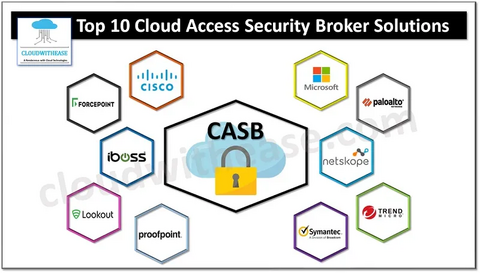
In this blog post, we’ll explore the Top 10 Cloud Access Security Brokers (CASB) tools in 2025, compare their features, highlight their pros and cons, and help you decide which one is best suited for your organization.
Top 10 Cloud Access Security Brokers (CASB) Tools in 2025
1. Microsoft Defender for Cloud Apps
Short Description: Microsoft Defender for Cloud Apps provides rich cloud app security with real-time monitoring, automated compliance enforcement, and robust threat detection. It is designed to secure Microsoft 365 apps, as well as third-party cloud applications.
Key Features:
- Real-time monitoring of cloud app activities
- Integration with Microsoft Sentinel and Azure Security Center
- Compliance with industry standards like GDPR and HIPAA
- Risk assessment and policy enforcement
- Anomaly detection powered by AI
Pros:
- Seamless integration with Microsoft ecosystem
- Strong security with threat intelligence from Microsoft
- Extensive support for Microsoft 365 applications
Cons:
- Limited support for non-Microsoft cloud platforms
- Can be complex to configure for beginners
2. Netskope
Short Description: Netskope is a leader in the CASB space, providing comprehensive protection across both cloud apps and web traffic. It offers deep visibility and control for data security, compliance, and threat protection.
Key Features:
- Real-time data and threat protection
- Cloud app risk assessment
- Granular policy enforcement for data sharing
- Full visibility into both sanctioned and unsanctioned cloud apps
- Threat intelligence integration
Pros:
- Strong multi-cloud support
- Highly granular data policy enforcement
- Advanced analytics and threat detection
Cons:
- Expensive for smaller organizations
- Can be complex to deploy
3. McAfee MVISION Cloud
Short Description: McAfee MVISION Cloud delivers extensive protection for cloud environments with a focus on data loss prevention (DLP), compliance, and advanced threat protection.
Key Features:
- Cloud data loss prevention (DLP)
- Security for SaaS, IaaS, and PaaS environments
- Compliance support for industry regulations
- Behavioral analytics for threat detection
- Secure sharing and collaboration controls
Pros:
- Strong compliance features
- Scalable for organizations of all sizes
- Easy-to-use interface
Cons:
- Occasional false positives in threat detection
- Some features are less intuitive
4. Symantec CloudSOC
Short Description: Symantec CloudSOC by Broadcom is a robust CASB solution that focuses on securing cloud applications with an emphasis on DLP, compliance, and advanced threat protection.
Key Features:
- Real-time monitoring and reporting
- Cloud DLP for sensitive data protection
- Security for cloud apps and IaaS platforms
- User behavior analytics for anomaly detection
- Granular policy enforcement and incident management
Pros:
- Comprehensive protection for multiple cloud platforms
- Strong analytics and threat intelligence
- Robust integration with other Symantec security products
Cons:
- Can be resource-intensive
- Configuration can be challenging for non-experts
5. Zscaler
Short Description: Zscaler is a cloud-native platform offering secure internet access and private application access. Its CASB features provide visibility and control over cloud applications, along with advanced threat protection.
Key Features:
- Cloud app discovery and risk assessment
- Advanced threat protection with AI
- Data loss prevention (DLP) for cloud environments
- Real-time visibility and control over cloud traffic
- Zero-trust network architecture
Pros:
- Strong threat protection with AI and machine learning
- Ideal for zero-trust network environments
- Easy to deploy with cloud-native architecture
Cons:
- Limited support for non-cloud environments
- May require additional integration with on-premises infrastructure
6. Bitglass
Short Description: Bitglass is a cloud-native CASB solution that focuses on securing data in the cloud. It provides real-time visibility and control, as well as advanced data protection and compliance capabilities.
Key Features:
- Real-time DLP and threat protection
- Support for hybrid cloud environments
- Risk assessment and cloud app discovery
- Inline data security for cloud apps
- Strong compliance enforcement (e.g., HIPAA, GDPR)
Pros:
- Comprehensive DLP and encryption support
- Great support for hybrid cloud environments
- Fast implementation and easy integration
Cons:
- Limited integrations with some third-party tools
- Can be expensive for smaller businesses
7. Palo Alto Networks Prisma Cloud
Short Description: Prisma Cloud by Palo Alto Networks is an integrated CASB and cloud-native application protection platform (CNAPP) that provides cloud security across the entire cloud stack.
Key Features:
- Full-stack cloud security (IaaS, PaaS, and SaaS)
- Compliance checks and assessments
- Advanced threat detection using machine learning
- Automated policy enforcement
- DevSecOps integration for secure software development
Pros:
- Comprehensive protection across the entire cloud stack
- Strong support for DevSecOps
- Real-time monitoring and alerting
Cons:
- Complex pricing model
- Might be overkill for smaller organizations
8. Forcepoint
Short Description: Forcepoint CASB focuses on securing cloud applications and protecting sensitive data through its behavior analytics and DLP features.
Key Features:
- Real-time data protection and threat detection
- Behavioral analytics to detect anomalous activity
- Risk assessment for cloud app usage
- Fine-grained access control and policy enforcement
- Multi-cloud support
Pros:
- Strong data protection features
- Good behavior-based threat detection
- Easy integration with other Forcepoint security products
Cons:
- Can be costly for smaller businesses
- Interface could be more user-friendly
9. Cisco Cloudlock
Short Description: Cisco Cloudlock is a cloud-native CASB that helps businesses discover and secure sensitive data in cloud apps. It integrates seamlessly with existing Cisco security products.
Key Features:
- Cloud app discovery and visibility
- Risk management and policy enforcement
- Data encryption and tokenization
- Compliance with industry standards
- Integration with Cisco Umbrella and Cisco Security
Pros:
- Seamless integration with Cisco security stack
- Robust policy enforcement and DLP
- Scalable for organizations of all sizes
Cons:
- Limited advanced threat protection
- Can be challenging for users without Cisco experience
10. CipherCloud
Short Description: CipherCloud is a powerful CASB that offers encryption, tokenization, and data loss prevention for both cloud and hybrid environments.
Key Features:
- Real-time data encryption and tokenization
- DLP for cloud applications
- Compliance with a wide range of regulations (e.g., PCI-DSS, HIPAA)
- Cloud app discovery and policy enforcement
- Seamless integration with major cloud providers
Pros:
- Strong encryption and tokenization capabilities
- Excellent for organizations with stringent compliance needs
- Strong data privacy features
Cons:
- Can be difficult to integrate with non-cloud systems
- Limited third-party app integrations
Comparison Table
| Tool Name | Best For | Platform(s) Supported | Standout Feature | Pricing | Rating (G2/Capterra/Trustpilot) |
|---|---|---|---|---|---|
| Microsoft Defender for Cloud Apps | Microsoft ecosystem users | SaaS, IaaS, PaaS | Seamless integration with Microsoft 365 | Custom | 4.5/5 |
| Netskope | Multi-cloud users | SaaS, IaaS, PaaS | Deep visibility and granular policies | Starts at $X | 4.7/5 |
| McAfee MVISION Cloud | Compliance-focused orgs | SaaS, IaaS, PaaS | DLP and threat protection | Custom | 4.4/5 |
| Symantec CloudSOC | Enterprises | SaaS, IaaS | Comprehensive threat intelligence | Custom | 4.2/5 |
| Zscaler | Zero-trust network users | SaaS, IaaS | Cloud-native architecture | Custom | 4.6/5 |
| Bitglass | Hybrid cloud users | SaaS, IaaS, PaaS | Inline data security and encryption | Starts at $X | 4.3/5 |
| Palo Alto Networks Prisma Cloud | DevSecOps teams | SaaS, IaaS, PaaS | Full-stack cloud security | Custom | 4.7/5 |
| Forcepoint | Enterprises | SaaS, IaaS | Behavior analytics for threat detection | Custom | 4.1/5 |
| Cisco Cloudlock | Cisco ecosystem users | SaaS, IaaS | Integration with Cisco security stack | Custom | 4.4/5 |
| CipherCloud | Compliance-heavy orgs | SaaS, IaaS | Encryption and tokenization capabilities | Custom | 4.3/5 |
Decision-Making Guide
Who Should Choose Which Tool?
- Microsoft Defender for Cloud Apps: Ideal for businesses heavily integrated into the Microsoft ecosystem.
- Netskope: Best for organizations with complex, multi-cloud environments requiring granular data protection.
- McAfee MVISION Cloud: Suitable for companies with a strong focus on data loss prevention and compliance.
- Symantec CloudSOC: A great choice for enterprises seeking comprehensive threat intelligence.
- Zscaler: Perfect for businesses adopting zero-trust network models.
- Bitglass: Recommended for hybrid-cloud users who require robust data encryption and DLP.
- Palo Alto Networks Prisma Cloud: Ideal for DevSecOps teams looking for full-stack security.
- Forcepoint: Suitable for businesses that need behavior analytics to detect anomalies.
- Cisco Cloudlock: A good option for companies already using Cisco products.
- CipherCloud: Best for organizations with strict compliance requirements, such as healthcare and finance.
Conclusion
Cloud Access Security Brokers (CASB) tools are becoming indispensable for organizations that need to secure their cloud infrastructure and maintain compliance. In 2025, these tools are not just about protecting cloud applications; they are also about ensuring data privacy, compliance, and enabling secure access across multi-cloud environments. Choosing the right CASB tool is critical for protecting sensitive data and ensuring your organization’s cloud security strategy aligns with evolving threats and compliance requirements.
Explore demos and free trials for the tools listed above to determine which one best fits your needs. Remember, the right CASB tool can provide your organization with the visibility and control necessary to protect your cloud environment in the ever-evolving cybersecurity landscape.
FAQs
Q1: What is a Cloud Access Security Broker (CASB)?
A CASB is a security policy enforcement point that sits between an organization’s on-premises infrastructure and cloud services to ensure data protection, compliance, and secure cloud access.
Q2: Why do I need a CASB tool?
CASBs help prevent data breaches, ensure compliance, monitor user activity, and secure cloud apps by offering real-time visibility and control.
Q3: Are CASB tools expensive?
The cost of CASB tools varies depending on the provider, size of the organization, and the features required. Many solutions offer custom pricing.
Q4: Can CASBs integrate with existing security tools?
Yes, most CASBs integrate with existing security tools like firewalls, DLP systems, and SIEMs to provide comprehensive protection.
Q5: What is the best CASB for small businesses?
Small businesses may benefit from solutions like Bitglass or Cisco Cloudlock, which offer robust features with scalable pricing.