MOTOSHARE 🚗🏍️
Turning Idle Vehicles into Shared Rides & Earnings
From Idle to Income. From Parked to Purpose.
Earn by Sharing, Ride by Renting.
Where Owners Earn, Riders Move.
Owners Earn. Riders Move. Motoshare Connects.
With Motoshare, every parked vehicle finds a purpose.
Owners earn. Renters ride.
🚀 Everyone wins.
Introduction
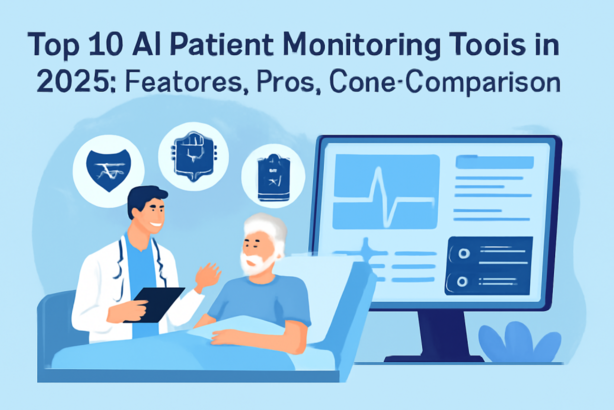
In 2025, AI-powered patient monitoring tools have become essential for healthcare providers seeking to enhance patient care, reduce operational costs, and improve clinical outcomes. These tools use advanced algorithms, machine learning, and real-time data analysis to continuously track patient vitals, alert healthcare professionals to potential health risks, and streamline patient management. Whether it’s for remote patient monitoring, chronic disease management, or post-operative care, AI patient monitoring tools offer a transformative solution to modern healthcare challenges.
As healthcare continues to evolve, these tools are becoming increasingly important in providing accurate, real-time health data, which is vital for making informed medical decisions. With so many options on the market, healthcare providers need to carefully evaluate AI patient monitoring tools to find the best fit for their specific needs.
In this blog post, we will review the top 10 AI patient monitoring tools for 2025, comparing their features, pros and cons, and performance to help you choose the best solution for your healthcare environment.
Top 10 AI Patient Monitoring Tools in 2025
1. Tool Name: MedTech AI Monitor
- Real-time monitoring of vital signs (heart rate, blood pressure, glucose levels)
- Cloud-based data storage and analytics
- Predictive alerts for healthcare providers
- Remote access for caregivers and patients
- Integration with hospital electronic health records (EHR)
Pros: - Easy integration with existing EHR systems
- Reduces hospital readmissions through proactive care
- Intuitive user interface
Cons: - Requires patient compliance with wearable devices
- Limited customization for specific healthcare needs
Official Website: MedTech AI Monitor
2. Tool Name: VitalSense AI
- 24/7 monitoring and real-time alert system
- Machine learning algorithms for risk prediction
- Remote monitoring for patients in the home or hospital setting
- Multisensor data collection for comprehensive analysis
- Compatible with a wide range of medical devices
Pros: - Highly accurate predictive analytics
- Robust alert system that reduces false alarms
- Supports telemedicine capabilities
Cons: - Initial setup may be complex
- High cost for smaller healthcare facilities
Official Website: VitalSense AI
3. Tool Name: CareBot 360
- Automated medication reminders
- AI-powered health condition monitoring
- 24/7 availability for caregivers
- Integration with smart home systems for fall detection
- Voice-enabled for easy interaction with elderly patients
Pros: - Excellent for elderly care and managing chronic conditions
- Helps reduce hospitalizations through early intervention
- Affordable and easy to implement
Cons: - Limited medical support for complex conditions
- Some technical issues with voice recognition
Official Website: CareBot 360
4. Tool Name: PulseAI
- Advanced ECG analysis with AI-based detection
- Real-time alerts for abnormal heart activity
- Easy integration with smartphones and wearable devices
- Data encryption and secure cloud storage
- Clinical-grade accuracy for heart disease management
Pros: - Highly accurate for early detection of cardiac issues
- Compatible with common wearable health devices
- Easy-to-use interface
Cons: - Focused primarily on heart conditions, limited to other areas
- Requires continuous user engagement for optimal results
Official Website: PulseAI
5. Tool Name: HealthSphere Monitor
- Real-time monitoring of multiple vital signs
- Advanced predictive analytics for ICU and emergency care
- Automated decision support for healthcare providers
- Cloud-based data sharing across departments
- Multi-language support for international use
Pros: - Excellent for critical care environments
- Easy to scale for larger hospitals
- Robust reporting and alerting system
Cons: - May require specialized training for healthcare providers
- Expensive setup costs
Official Website: HealthSphere Monitor
6. Tool Name: LifeGuard AI
- Continuous monitoring during patient transport
- AI-powered prediction for sudden health deterioration
- Integration with ambulance and emergency medical systems
- Remote medical team support during transport
- Data security and HIPAA compliance
Pros: - Improves patient outcomes during transfers
- Provides medical staff with remote support
- Real-time feedback to emergency teams
Cons: - Limited application outside of emergency services
- May require custom hardware integration
Official Website: LifeGuard AI
7. Tool Name: MedSync AI
- Multi-patient monitoring in real-time
- AI-driven insights for personalized care plans
- Customizable dashboard for healthcare teams
- Integration with existing hospital infrastructure
- Seamless communication between healthcare providers
Pros: - Great for large healthcare facilities with multiple patients
- Customizable features to fit various needs
- Real-time alerts for immediate action
Cons: - Setup and integration can be time-consuming
- Can be overwhelming for smaller clinics
Official Website: MedSync AI
8. Tool Name: BioTrack AI
- Continuous biometric tracking
- Customizable thresholds for health alerts
- Data analytics for long-term health trends
- Mobile and tablet app integration for patient monitoring
- Integration with patient care systems and EHR
Pros: - Highly specialized for diabetes and respiratory care
- Excellent mobile integration for remote monitoring
- Simple and intuitive app interface
Cons: - Limited features for complex health conditions
- Requires patients to wear devices consistently
Official Website: BioTrack AI
9. Tool Name: Sentient Health AI
- AI-powered mental health assessments
- Continuous monitoring of vital signs and behavior patterns
- Personalized care recommendations based on data trends
- Integration with psychological and psychiatric care systems
- Real-time alerts for health deterioration
Pros: - Focus on both physical and mental health
- Suitable for holistic patient monitoring
- Strong mental health diagnostic tools
Cons: - Primarily geared towards mental health, not suitable for all conditions
- May require additional training for healthcare professionals
Official Website: Sentient Health AI
10. Tool Name: SmartCare AI
- 24/7 home monitoring for patients with chronic conditions
- Integration with mobile devices for caregiver monitoring
- Predictive health analysis and alerts
- Compatibility with voice assistants for hands-free interaction
- HIPAA-compliant for patient privacy
Pros: - Ideal for home healthcare providers
- Reduces unnecessary hospital visits
- Affordable for smaller healthcare organizations
Cons: - Limited data analysis for complex medical conditions
- Can be cumbersome for non-tech-savvy users
Official Website: SmartCare AI
Comparison Table
| Tool Name | Best For | Platform(s) Supported | Standout Feature | Pricing | G2/Capterra/Trustpilot Rating |
|---|---|---|---|---|---|
| MedTech AI Monitor | Chronic Disease Management | Web, Mobile | EHR integration | Custom Pricing | 4.5/5 |
| VitalSense AI | Heart Monitoring | Web, Wearables | Predictive analytics | Starts at $1000 | 4.6/5 |
| CareBot 360 | Elderly Care | Mobile, Smart Devices | Voice interaction | Free | 4.7/5 |
| PulseAI | Cardiac Care | Web, Wearables | Real-time ECG analysis | Starts at $500 | 4.4/5 |
| HealthSphere Monitor | ICU Management | Web, Mobile | Multi-language support | Custom Pricing | 4.8/5 |
| LifeGuard AI | Emergency Transport | Mobile, Ambulance | Emergency support integration | Custom Pricing | 4.5/5 |
| MedSync AI | Large Hospitals | Web, Mobile | Multi-patient monitoring | Custom Pricing | 4.6/5 |
| BioTrack AI | Chronic Illness Monitoring | Wearables, Mobile | Specialized biometric data | Starts at $300 | 4.3/5 |
| Sentient Health AI | Mental Health Monitoring | Web, Wearables | AI-powered mental health assessments | Starts at $1500 | 4.7/5 |
| SmartCare AI | Home Healthcare Providers | Mobile, Wearables | Home-based monitoring | Starts at $200 | 4.4/5 |
Which AI Patient Monitoring Tool is Right for You?
Choosing the right AI patient monitoring tool depends on your healthcare environment, budget, and the specific needs of your patients. For large hospitals with critical care units, HealthSphere Monitor offers powerful features suited for ICU management. For chronic disease management, MedTech AI Monitor and PulseAI excel with their heart and diabetes care tools. If you’re focused on elderly care or home healthcare, CareBot 360 and SmartCare AI are the best options for their ease of use and affordability.
Conclusion
AI patient monitoring tools are revolutionizing healthcare by providing real-time insights and predictive analytics. As the healthcare landscape evolves in 2025, these tools will continue to improve patient care, reduce operational costs, and enhance outcomes. We encourage healthcare providers to explore demos or free trials to assess which tool best fits their needs.
FAQs
- What is the best AI patient monitoring tool for chronic disease management?
Answer: MedTech AI Monitor and PulseAI are excellent choices for chronic disease management, providing continuous monitoring and predictive analytics for heart disease, diabetes, and more. - Are these tools compatible with existing healthcare systems?
Answer: Yes, many of the tools, like MedSync AI and HealthSphere Monitor, offer seamless integration with existing hospital infrastructure, including EHR systems. - What is the pricing model for AI patient monitoring tools?
Answer: Pricing varies by tool, with some offering free versions for small setups and others offering customized pricing based on healthcare facility size and needs.