MOTOSHARE 🚗🏍️
Turning Idle Vehicles into Shared Rides & Earnings
From Idle to Income. From Parked to Purpose.
Earn by Sharing, Ride by Renting.
Where Owners Earn, Riders Move.
Owners Earn. Riders Move. Motoshare Connects.
With Motoshare, every parked vehicle finds a purpose.
Owners earn. Renters ride.
🚀 Everyone wins.
Introduction
In an era driven by cloud computing, real-time communication, and decentralized systems, Network Programming stands at the heart of application connectivity. Whether it’s web applications exchanging data with servers, IoT devices transmitting sensor values, or multiplayer games synchronizing player states in real time—network programming enables these systems to function seamlessly.
This article provides a deep dive into network programming. It covers what it is, real-world use cases, how it fits into modern software architecture, its basic workflow, and a detailed step-by-step guide to get started. By the end, you’ll have a solid conceptual and practical foundation to build network-capable applications.
What is Network Programming?
Network programming is the discipline of developing software that can communicate with other software over a network. This includes the Internet, local area networks (LANs), or any other communication medium that supports digital information exchange.
At its core, network programming abstracts the complexity of establishing and maintaining network connections, enabling developers to focus on data transfer, message formatting, and protocol adherence.
Core Components
- IP Addressing: Uniquely identifies each node in the network.
- Ports: Logical endpoints for communication with specific services.
- Protocols:
- TCP (Transmission Control Protocol): Connection-oriented, reliable.
- UDP (User Datagram Protocol): Connectionless, faster but less reliable.
- HTTP/HTTPS: Application-layer protocols for web communication.
- WebSocket: Bi-directional, full-duplex communication over HTTP.
- Sockets: The programming interface that enables data exchange across a network.
Language Support
Almost all modern programming languages (Python, Java, C/C++, C#, JavaScript, Go, Rust) have native or library support for networking via socket APIs or higher-level abstractions (HTTP libraries, gRPC, etc.).
Major Use Cases of Network Programming
Network programming is integral to various domains. Its applications range from simple HTTP clients to complex distributed systems.
1. Web and API Development
- Web browsers communicate with servers using HTTP requests.
- REST APIs, GraphQL, and gRPC rely on network protocols to expose data and services.
2. Real-Time Applications
- Chat applications, video conferencing (Zoom, Discord), and multiplayer games use WebSockets or UDP for minimal latency and high-speed communication.
3. Cloud & Microservices Architecture
- Cloud-native apps consist of microservices that communicate over networks using lightweight protocols like HTTP, gRPC, or message brokers (Kafka, RabbitMQ).
4. Internet of Things (IoT)
- IoT devices use protocols like MQTT, CoAP, and HTTP to send telemetry data to servers or cloud platforms.
5. Remote File Access & Storage
- Tools like SCP, FTP, and SMB allow file transfer between systems.
- Cloud storage services (AWS S3, Google Cloud Storage) expose APIs for network-based file operations.
6. System and Network Tools
- Tools such as
ping,traceroute,nmap, andWiresharkare built using network programming principles.
7. Security and Monitoring Systems
- Firewalls, proxies, IDS/IPS systems analyze and manipulate packets at various protocol levels, requiring deep knowledge of network programming.
How Network Programming Works Along with Architecture
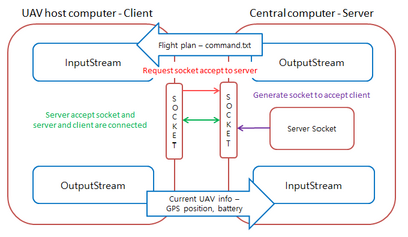
Network programming plays a key role in how software systems are designed and deployed. Here’s how it aligns with modern architectural paradigms.
1. Client-Server Model
This is the most common architecture:
- The client initiates communication.
- The server listens for incoming connections and processes requests.
Examples: Web browsers (clients) and web servers like Apache or Nginx.
2. Peer-to-Peer Architecture
In P2P networks, each node can act as both client and server, making it ideal for decentralized systems like torrents or blockchain nodes.
3. Service-Oriented Architecture (SOA) and Microservices
Microservices communicate over the network using:
- HTTP/REST APIs
- gRPC for RPC-style communication
- Message queues for asynchronous communication
Each microservice often runs in containers (Docker, Kubernetes) and interacts via service discovery and API gateways.
4. Event-Driven and Reactive Systems
Using non-blocking I/O, these systems handle thousands of simultaneous connections (e.g., using Node.js or asyncio in Python) to deliver highly scalable applications.
5. Secure Network Layers
Protocols such as TLS/SSL are used to encrypt data. These are essential in banking, healthcare, and any service requiring confidentiality.
6. Load Balancing and Redundancy
Network programming enables backend scaling by distributing traffic among multiple servers and handling failovers transparently.
Basic Workflow of Network Programming
The basic workflow typically consists of the following steps, which remain consistent across most programming languages:
1. Create a Socket
Create a socket object specifying the address family (IPv4 or IPv6) and transport protocol (TCP or UDP).
import socket
s = socket.socket(socket.AF_INET, socket.SOCK_STREAM)  # TCP
Code language: PHP (php)
2. Bind or Connect
- Server binds the socket to an address and port.
- Client connects to the server.
# Server
s.bind(('127.0.0.1', 9000))
s.listen()

# Client
s.connect(('127.0.0.1', 9000))
Code language: PHP (php)
3. Accept and Handle Connections (Server Side)
conn, addr = s.accept()
print(f"Connected by {addr}")
Code language: PHP (php)
4. Exchange Data
Send and receive data using send() and recv() (TCP), or sendto() and recvfrom() (UDP).
conn.send(b'Hello Client!')
data = conn.recv(1024)
Code language: JavaScript (javascript)
5. Close the Connection
conn.close()
s.close()
Code language: CSS (css)
Step-by-Step Getting Started Guide for Network Programming
Here’s a practical guide to help you write your first network program using Python TCP sockets.
Step 1: Setup Environment
Ensure you have Python installed. No external libraries are needed for basic socket programming.
Step 2: Write a Simple TCP Server
# server.py
import socket

server = socket.socket(socket.AF_INET, socket.SOCK_STREAM)
server.bind(('localhost', 12345))
server.listen(1)

print("Waiting for connection...")
client_socket, address = server.accept()
print(f"Connected to {address}")

client_socket.send(b"Hello from server!")
message = client_socket.recv(1024).decode()
print("Client says:", message)

client_socket.close()
server.close()
Code language: PHP (php)
Step 3: Write a TCP Client
# client.py
import socket

client = socket.socket(socket.AF_INET, socket.SOCK_STREAM)
client.connect(('localhost', 12345))

data = client.recv(1024)
print("Server says:", data.decode())

client.send(b"Thanks, Server!")
client.close()
Code language: PHP (php)
Step 4: Run and Observe
- Open two terminal windows.
- Run
server.pyin one. - Run
client.pyin the other. - You’ll observe successful bidirectional communication.
Step 5: Enhance with Threads (Multi-Client Support)
Servers can be extended using threading or asyncio to handle multiple clients concurrently.
Step 6: Switch to UDP (Optional)
Change SOCK_STREAM to SOCK_DGRAM, and use sendto()/recvfrom() for connectionless communication.
Step 7: Secure Your Connection
Use ssl to wrap your socket for encrypted data transmission:
import ssl

context = ssl.create_default_context(ssl.Purpose.CLIENT_AUTH)
secure_socket = context.wrap_socket(server_socket, server_side=True)
Code language: JavaScript (javascript)