MOTOSHARE 🚗🏍️
Turning Idle Vehicles into Shared Rides & Earnings
From Idle to Income. From Parked to Purpose.
Earn by Sharing, Ride by Renting.
Where Owners Earn, Riders Move.
Owners Earn. Riders Move. Motoshare Connects.
With Motoshare, every parked vehicle finds a purpose.
Owners earn. Renters ride.
🚀 Everyone wins.
Introduction
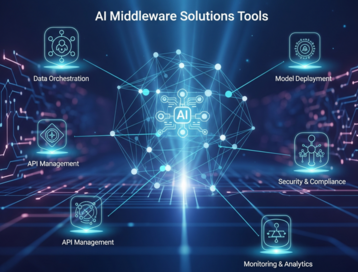
In today’s rapidly evolving digital landscape, businesses are increasingly relying on Artificial Intelligence (AI) to streamline operations, enhance customer experiences, and drive innovation. AI Middleware Solutions tools play a crucial role in this transformation by enabling seamless communication and integration between AI models, applications, and existing systems. These tools act as a bridge, allowing businesses to efficiently process large amounts of data, implement AI algorithms, and manage the complexity of modern architectures.
The growing importance of AI Middleware Solutions is driven by the need for organizations to handle complex workloads, optimize resources, and deploy AI-powered applications with minimal friction. In 2025, AI Middleware Solutions tools are more advanced, offering robust capabilities such as real-time data processing, API integration, and scalable architectures. Choosing the right tool is essential for businesses seeking to unlock the full potential of AI, whether they are in healthcare, finance, or any other industry.
This blog will explore the top 10 AI Middleware Solutions tools in 2025, highlighting their features, pros, cons, and comparison to help decision-makers choose the best solution for their needs.
Top 10 AI Middleware Solutions Tools (for 2025)
1. Tool Name: IBM Watson
- Short Description: IBM Watson provides AI-powered middleware solutions to integrate AI capabilities across various business systems. It supports natural language processing, machine learning, and AI model deployment.
- Key Features:
- Powerful AI model deployment
- Natural language understanding
- Automated machine learning (AutoML)
- Scalable for large enterprises
- Integrated with cloud platforms
- Real-time data processing
- Multilingual capabilities
- Pros:
- Excellent scalability for enterprise-level deployment
- High-quality natural language processing
- Cons:
- Can be complex to set up
- Expensive for small to medium businesses
- Official Website: IBM Watson
2. Tool Name: MuleSoft Anypoint Platform
- Short Description: MuleSoft’s Anypoint Platform is an integration platform that connects apps, data, and devices across cloud and on-premises environments, enabling seamless data flow and AI-powered insights.
- Key Features:
- API management and integration
- Real-time analytics and monitoring
- Robust data security and compliance
- Flexible deployment options (cloud, hybrid, on-premises)
- Scalable architecture for large enterprises
- Extensive connector library
- Low-code/no-code interfaces
- Pros:
- Excellent integration capabilities
- High scalability and flexibility
- Cons:
- Steep learning curve
- Can be resource-intensive
- Official Website: MuleSoft Anypoint Platform
3. Tool Name: Red Hat OpenShift
- Short Description: Red Hat OpenShift is a comprehensive AI middleware solution for containerized applications, helping businesses manage AI workloads across hybrid and multi-cloud environments.
- Key Features:
- Kubernetes-based orchestration
- Containerized AI model deployment
- Multi-cloud support
- DevOps and CI/CD integrations
- Automatic scaling and load balancing
- Monitoring and performance optimization
- Enterprise-grade security features
- Pros:
- Ideal for containerized workloads
- High security and compliance standards
- Cons:
- Requires expertise in Kubernetes
- Can be complex for smaller businesses
- Official Website: Red Hat OpenShift
4. Tool Name: Apache Kafka
- Short Description: Apache Kafka is an open-source platform designed for building real-time streaming data pipelines and applications. It is an essential middleware tool for managing large-scale data flows for AI applications.
- Key Features:
- Real-time data streaming
- High throughput and low latency
- Fault tolerance and scalability
- Data replication and durability
- Support for AI/ML model training data streams
- Multi-language support (Java, Scala, Python, etc.)
- Easy integration with existing systems
- Pros:
- High scalability for big data applications
- Easy to integrate with AI/ML systems
- Cons:
- Requires extensive setup and management
- Steep learning curve for beginners
- Official Website: Apache Kafka
5. Tool Name: Microsoft Azure AI
- Short Description: Microsoft Azure AI provides a suite of AI middleware tools for integrating machine learning models, cognitive services, and AI-powered applications across various industries.
- Key Features:
- Pre-built AI models for vision, speech, and language
- AI model training and deployment
- Scalable cloud infrastructure
- Real-time analytics and data processing
- Integration with Azure cloud services
- Security and compliance features
- Collaborative tools for AI teams
- Pros:
- Comprehensive AI services and tools
- Integration with other Microsoft services
- Cons:
- Can be costly for smaller businesses
- Requires a strong understanding of the Azure ecosystem
- Official Website: Microsoft Azure AI
6. Tool Name: Google Cloud AI
- Short Description: Google Cloud AI offers a suite of tools to help businesses deploy AI middleware solutions across applications. It provides powerful machine learning and deep learning tools.
- Key Features:
- AI model training and deployment
- Pre-trained models for specific industries
- Big data and real-time analytics
- Integrates with other Google Cloud services
- AutoML capabilities for low-code AI solutions
- AI tools for healthcare, retail, and finance industries
- Scalable infrastructure for large enterprises
- Pros:
- Industry-specific AI models
- Advanced AI and machine learning capabilities
- Cons:
- Complex pricing structure
- Learning curve for new users
- Official Website: Google Cloud AI
7. Tool Name: SAP Leonardo
- Short Description: SAP Leonardo is an integrated AI middleware solution that combines machine learning, IoT, and big data processing for enterprises looking to enhance operational efficiency.
- Key Features:
- AI-powered IoT solutions
- Integration with SAP ERP systems
- Machine learning and analytics
- Cloud-native architecture
- Real-time data insights
- Customizable to business needs
- Scalable for large organizations
- Pros:
- Seamless integration with SAP applications
- Comprehensive suite for IoT and AI
- Cons:
- Expensive for small businesses
- Complex for companies without SAP experience
- Official Website: SAP Leonardo
8. Tool Name: Oracle AI Platform
- Short Description: Oracle AI Platform helps businesses create, train, and deploy AI models. It supports a variety of applications and can be seamlessly integrated with Oracle’s cloud services.
- Key Features:
- AutoML and deep learning capabilities
- Data pipeline automation
- Integration with Oracle Cloud Infrastructure
- Real-time data processing
- Scalable and customizable AI solutions
- Pre-trained models for business needs
- Pros:
- Deep integration with Oracle Cloud services
- Comprehensive support for AI/ML
- Cons:
- Best suited for businesses using Oracle services
- Can be difficult to set up for first-time users
- Official Website: Oracle AI Platform
9. Tool Name: AI Builder by Microsoft Power Platform
- Short Description: AI Builder is a low-code platform for building AI models and integrating them into applications without requiring deep technical expertise. Ideal for businesses aiming for rapid deployment of AI solutions.
- Key Features:
- Easy-to-use, drag-and-drop interface
- Pre-built AI models for object detection, form processing, etc.
- Integration with Microsoft PowerApps
- Workflow automation with AI
- Scalable for SMBs and enterprises
- Pros:
- Great for non-technical users
- Fast deployment of AI solutions
- Cons:
- Limited customization options
- Can be expensive for larger enterprises
- Official Website: AI Builder
10. Tool Name: WSO2 AI
- Short Description: WSO2 offers an open-source middleware platform that enables businesses to build AI-powered applications. It supports AI integration and can handle large-scale data processing workloads.
- Key Features:
- Open-source flexibility
- Real-time AI model integration
- Data pipeline automation
- Cloud-native and scalable architecture
- API management and analytics
- Pros:
- Flexible and customizable
- Open-source, reducing costs
- Cons:
- Lacks extensive pre-built solutions
- Requires technical expertise to configure
- Official Website: WSO2
Comparison Table
| Tool Name | Best For | Platform(s) Supported | Standout Feature | Pricing | G2/Capterra/Trustpilot Rating |
|---|---|---|---|---|---|
| IBM Watson | Enterprises & Developers | Cloud, Hybrid, On-prem | AI Model Deployment | Custom | 4.5/5 |
| MuleSoft Anypoint | Large Enterprises | Cloud, Hybrid | API Management | Starts at $99 | 4.6/5 |
| Red Hat OpenShift | Developers & DevOps | Hybrid, On-prem | Kubernetes Integration | Custom | 4.4/5 |
| Apache Kafka | Data Engineers | Cloud, On-prem | Data Streaming | Free | 4.7/5 |
| Microsoft Azure AI | Enterprises & Developers | Cloud | Pre-built AI Models | Custom | 4.8/5 |
| Google Cloud AI | Enterprises & Developers | Cloud | AutoML Capabilities | Custom | 4.6/5 |
| SAP Leonardo | Large Enterprises | Cloud, On-prem | IoT Integration | Custom | 4.3/5 |
| Oracle AI Platform | Enterprises | Cloud | AI/ML Pipeline Automation | Custom | 4.5/5 |
| AI Builder | SMBs & Developers | Cloud | Low-code AI Models | Starts at $10 | 4.2/5 |
| WSO2 | Developers & Enterprises | Cloud, Hybrid, On-prem | Open-source Flexibility | Free | 4.0/5 |
Which AI Middleware Solutions Tool is Right for You?
Choosing the right AI Middleware Solutions tool depends on various factors, such as company size, industry requirements, and technical expertise.
- For Large Enterprises: IBM Watson, MuleSoft Anypoint, and Microsoft Azure AI offer robust, scalable solutions suited for complex integrations and global deployment.
- For Developers: Red Hat OpenShift, Apache Kafka, and WSO2 provide flexibility and control over AI model deployment and integration.
- For Small and Medium Businesses (SMBs): AI Builder and Google Cloud AI are great choices, offering powerful AI capabilities with a low-code interface and strong support for rapid deployment.
Conclusion
As AI middleware solutions continue to evolve, the tools listed above offer diverse features tailored to different business needs. Whether you’re a large enterprise, a developer, or an SMB, there’s a solution to meet your requirements in 2025. Test demos, explore free trials, and choose the tool that best fits your organizational goals.
FAQs
- What is AI Middleware Solutions?
AI Middleware Solutions facilitate seamless integration between AI applications, models, and existing business systems. - How do I choose the best AI Middleware tool?
Consider factors such as company size, integration requirements, scalability, and budget when selecting a tool. - Are there any free AI Middleware Solutions tools?
Tools like Apache Kafka and WSO2 are open-source and free to use, though they may require more technical expertise. - Can AI Middleware Solutions help with real-time data processing?
Yes, many AI Middleware Solutions tools offer real-time data processing capabilities, including IBM Watson and Apache Kafka.