MOTOSHARE 🚗🏍️
Turning Idle Vehicles into Shared Rides & Earnings
From Idle to Income. From Parked to Purpose.
Earn by Sharing, Ride by Renting.
Where Owners Earn, Riders Move.
Owners Earn. Riders Move. Motoshare Connects.
With Motoshare, every parked vehicle finds a purpose.
Owners earn. Renters ride.
🚀 Everyone wins.
Introduction
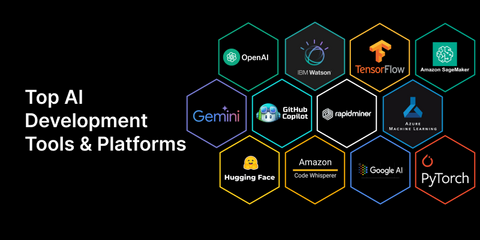
In 2025, the demand for Artificial Intelligence (AI) has reached unprecedented heights, and businesses across industries are looking for robust ways to deploy their AI models into production environments. AI Model Deployment Platforms serve as the bridge between data science teams creating machine learning models and the IT infrastructure that makes these models operational in real-world settings. These platforms allow organizations to deploy, monitor, and scale AI models efficiently and securely, ensuring the models deliver accurate predictions and insights at scale.
Choosing the right AI Model Deployment Platform is critical for enterprises aiming to leverage AI for strategic business growth. In this post, we will explore the top 10 AI model deployment platforms in 2025, highlighting their features, pros, cons, and offering a comparison to help you make an informed decision for your needs.
Top 10 AI Model Deployment Platforms Tools (for 2025)
1. Google AI Platform
Short Description: Google AI Platform offers end-to-end tools for deploying AI models at scale. From data preprocessing to model training and deployment, it integrates seamlessly with Google Cloud services for optimal performance.
Key Features:
- Fully managed environment for deploying machine learning models.
- Support for TensorFlow, PyTorch, and other popular frameworks.
- Auto-scaling infrastructure based on traffic.
- Integrated with BigQuery for real-time data analytics.
- Monitoring and logging via Google Cloud Logging and Monitoring.
Pros:
- Easy integration with other Google Cloud products.
- Scalable and robust infrastructure for production environments.
- Advanced monitoring and logging features for troubleshooting.
Cons:
- Can be complex for beginners without prior Google Cloud experience.
- Pricing can be expensive for small businesses.
Official Website: Google AI Platform
2. Microsoft Azure Machine Learning
Short Description: Azure Machine Learning provides a fully managed platform for building, training, and deploying AI models. It offers advanced model management, monitoring, and deployment tools that integrate with Azure’s cloud services.
Key Features:
- Multi-framework support (TensorFlow, PyTorch, Scikit-learn).
- Automated machine learning (AutoML) capabilities for faster model development.
- Enterprise-grade security and compliance.
- Model monitoring and management tools for model drift detection.
- Integration with Azure DevOps for CI/CD pipelines.
Pros:
- Strong security and governance features, ideal for enterprise use.
- Extensive integration with other Azure services.
- Comprehensive support for both deep learning and traditional ML models.
Cons:
- The learning curve can be steep for new users.
- Expensive for small-scale applications.
Official Website: Microsoft Azure Machine Learning
3. Amazon SageMaker
Short Description: Amazon SageMaker is a fully managed platform that helps users build, train, and deploy AI models. It offers an extensive suite of tools for monitoring and tuning deployed models in production.
Key Features:
- Fully managed model training and deployment.
- Native integration with AWS services like S3, Lambda, and EC2.
- Built-in tools for model monitoring, version control, and debugging.
- Automated data labeling for faster training data preparation.
- Real-time predictions and batch processing.
Pros:
- Extensive integration with AWS ecosystem.
- Scalable infrastructure, ideal for large enterprise applications.
- Robust monitoring and logging for model performance.
Cons:
- Can be costly for smaller businesses.
- The platform can be overwhelming due to its vast feature set.
Official Website: Amazon SageMaker
4. IBM Watson Machine Learning
Short Description: IBM Watson offers a suite of AI tools for deploying machine learning models into production with advanced capabilities for monitoring, scaling, and managing models across different environments.
Key Features:
- AutoML functionality to simplify the model training process.
- Scalable infrastructure for high-volume predictions.
- Built-in explainability tools to ensure model transparency.
- Seamless integration with IBM Cloud and external data sources.
- Support for both containerized and serverless deployments.
Pros:
- Advanced features for model explainability and transparency.
- Easy integration with IBM’s AI tools and cloud infrastructure.
- Flexible deployment options (on-premise or cloud).
Cons:
- Limited support for some open-source tools.
- May be too complex for small businesses.
Official Website: IBM Watson Machine Learning
5. KubeFlow
Short Description: KubeFlow is an open-source Kubernetes-native platform that facilitates the deployment of machine learning models at scale. It’s designed for teams familiar with Kubernetes and cloud-native technologies.
Key Features:
- End-to-end machine learning workflow automation.
- Native integration with Kubernetes for scaling.
- Pipelines for automating model deployment.
- Support for TensorFlow, PyTorch, and other frameworks.
- Deployment to multi-cloud environments.
Pros:
- Open-source and highly customizable.
- Scalable using Kubernetes.
- Well-suited for enterprises already using Kubernetes.
Cons:
- Requires expertise in Kubernetes and cloud-native architecture.
- Not ideal for businesses without a DevOps or cloud-native culture.
Official Website: KubeFlow
6. MLFlow
Short Description: MLFlow is an open-source platform for managing the end-to-end machine learning lifecycle, from experimentation to deployment. It is especially useful for tracking models and parameters.
Key Features:
- Model versioning and tracking.
- Integrated with popular machine learning frameworks.
- Support for managing and serving models in production.
- Open-source, flexible, and customizable.
Pros:
- Lightweight and easy to use for small to medium-sized teams.
- Comprehensive tracking and versioning features.
- Highly adaptable for custom workflows.
Cons:
- Lacks enterprise-level scalability compared to other platforms.
- Doesn’t have a fully managed deployment environment.
Official Website: MLFlow
7. TensorFlow Serving
Short Description: TensorFlow Serving is a high-performance platform specifically for deploying TensorFlow models in production. It’s designed to handle real-time inference workloads.
Key Features:
- Optimized for TensorFlow models.
- High-performance serving with low-latency.
- Extensible for custom model architectures.
- Real-time model updates without downtime.
Pros:
- Excellent for TensorFlow-centric workflows.
- Optimized for low-latency inference.
- Active community and support.
Cons:
- Limited to TensorFlow models, not a multi-framework solution.
- Requires expertise in TensorFlow for optimal use.
Official Website: TensorFlow Serving
8. RapidMiner
Short Description: RapidMiner is a data science platform that helps businesses with end-to-end machine learning model deployment. It offers powerful tools for automating the deployment pipeline.
Key Features:
- Easy-to-use visual interface for building deployment pipelines.
- AutoML capabilities to accelerate model building.
- Integration with cloud and on-premise environments.
- Version control and model monitoring tools.
Pros:
- User-friendly for non-technical teams.
- Strong collaboration and model sharing features.
- Good customer support.
Cons:
- Limited customization for advanced users.
- Not as scalable for enterprise-level models.
Official Website: RapidMiner
9. DataRobot
Short Description: DataRobot provides an automated AI deployment platform, enabling data teams to deploy machine learning models quickly and at scale, with advanced tools for monitoring and governance.
Key Features:
- AutoML for rapid model creation.
- Full deployment pipeline automation.
- Built-in model interpretability and explainability tools.
- Continuous monitoring and performance tracking.
Pros:
- Excellent for organizations looking for a no-code deployment solution.
- Comprehensive tools for model monitoring.
- Scalable and adaptable.
Cons:
- The pricing can be on the higher side for smaller organizations.
- Limited support for some frameworks.
Official Website: DataRobot
10. Pytorch Serve
Short Description: PyTorch Serve is an open-source framework designed to deploy and manage machine learning models created using PyTorch. It supports high-performance model serving and real-time inference.
Key Features:
- Optimized for PyTorch models.
- Supports multi-model serving.
- Real-time inference with low-latency.
- Extensible through custom handlers.
Pros:
- Tailored for PyTorch users.
- High-performance, real-time inference.
- Open-source and flexible.
Cons:
- Limited support for other frameworks.
- May not be as feature-rich as other platforms for enterprise use.
Official Website: Pytorch Serve
Comparison Table
| Tool Name | Best For | Platform(s) Supported | Standout Feature | Pricing | Rating |
|---|---|---|---|---|---|
| Google AI Platform | Enterprise AI teams | Google Cloud | Seamless integration with Google services | Custom | 4.6/5 |
| Microsoft Azure ML | Large enterprises | Azure Cloud | AutoML for rapid deployment | Custom | 4.5/5 |
| Amazon SageMaker | AWS ecosystem users | AWS Cloud | Deep AWS integration | Starts at $0.10/hr | 4.7/5 |
| IBM Watson ML | Businesses seeking explainability | IBM Cloud | Model transparency and explainability | Custom | 4.4/5 |
| KubeFlow | Kubernetes users | Kubernetes, Cloud | Cloud-native, scalable deployment | Free | 4.2/5 |
| MLFlow | Data science teams | Multi-cloud, on-premise | Open-source flexibility | Free | 4.3/5 |
| TensorFlow Serving | TensorFlow users | Multi-cloud, on-premise | Low-latency inference | Free | 4.5/5 |
| RapidMiner | Non-technical teams | Cloud, on-premise | Visual interface for model deployment | Starts at $250/mo | 4.0/5 |
| DataRobot | No-code teams | Cloud, on-premise | AutoML pipeline automation | Custom | 4.6/5 |
| Pytorch Serve | PyTorch users | Cloud, on-premise | Optimized for PyTorch models | Free | 4.3/5 |
Which AI Model Deployment Platform Tool is Right for You?
When selecting an AI Model Deployment Platform, consider your organization’s size, the complexity of the models, industry needs, and the available budget. Here’s a brief guide:
- For Enterprise Teams: Tools like Google AI Platform, Microsoft Azure ML, and Amazon SageMaker offer robust, enterprise-level solutions with full scalability.
- For Cloud-Native or Kubernetes-Based Workflows: KubeFlow is the ideal choice, especially if you are already using Kubernetes.
- For No-Code/Low-Code Teams: If you’re looking for an easy-to-use platform with automated machine learning capabilities, DataRobot or RapidMiner might be the best fit.
Conclusion
The landscape of AI model deployment in 2025 is dynamic, with several advanced platforms offering unique solutions for different business needs. The right tool depends on your specific goals—whether you need enterprise-level security, fast deployment, or a seamless integration with your existing cloud infrastructure.
Test demos or explore free trials to find which platform best aligns with your goals. By choosing the right AI Model Deployment Platform, you can ensure that your AI models are deployed at scale and function as intended in production environments.
FAQs
1. What is AI model deployment?
AI model deployment refers to the process of taking a trained AI model and making it available for use in production environments, such as web services or applications.
2. Which AI model deployment platform is the most cost-effective?
Open-source platforms like MLFlow and KubeFlow are more cost-effective, especially for smaller organizations with existing infrastructure.
3. What factors should I consider when choosing an AI deployment platform?
Consider scalability, integration with existing tools, security features, and ease of use. Your budget and team expertise also play a significant role.
Meta Description: Discover the top AI model deployment platforms in 2025 with detailed features, pros & cons. Compare the best AI tools for deploying machine learning models at scale.