MOTOSHARE 🚗🏍️
Turning Idle Vehicles into Shared Rides & Earnings
From Idle to Income. From Parked to Purpose.
Earn by Sharing, Ride by Renting.
Where Owners Earn, Riders Move.
Owners Earn. Riders Move. Motoshare Connects.
With Motoshare, every parked vehicle finds a purpose.
Owners earn. Renters ride.
🚀 Everyone wins.
Introduction
In the rapidly growing world of data management, Metadata Management Tools play a crucial role in organizing, optimizing, and securing vast amounts of metadata across various systems. As businesses increasingly rely on big data, artificial intelligence, and machine learning, having the right metadata management solution in place is essential. Metadata refers to “data about data,” and proper management of it allows for efficient search, access, and governance of an organization’s data assets.
In 2025, the landscape of metadata management tools is expected to evolve significantly, with new advancements focusing on automation, integration, data quality, and enhanced security. Companies are looking for solutions that not only help in managing metadata efficiently but also ensure compliance with data regulations, enhance data discovery, and foster better collaboration across teams.
When choosing metadata management tools in 2025, users should prioritize features such as integration capabilities, scalability, ease of use, compliance tools, and real-time data processing. Additionally, the ability to handle both structured and unstructured data, along with providing a robust search engine, will be key to enhancing organizational efficiency.
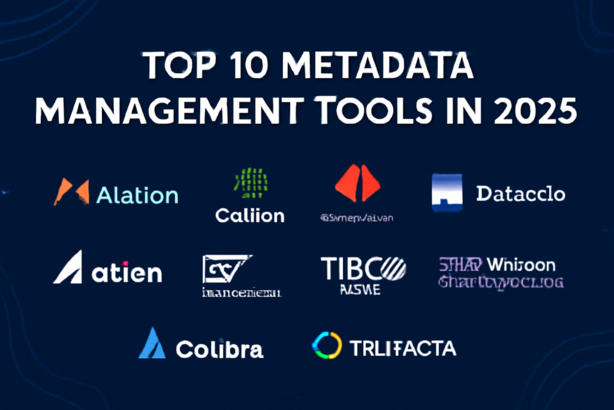
Top 10 Metadata Management Tools in 2025
Here’s a breakdown of the top 10 metadata management tools in 2025. We will cover their features, pros, and cons to help you choose the right one for your needs.
1. Alation
Short Description:
Alation offers a robust metadata management solution with powerful data discovery, governance, and collaboration features. It’s designed for businesses looking to automate data curation, ensuring that metadata is well-organized and easily accessible.
Key Features:
- Intelligent data cataloging
- Advanced search capabilities
- Integration with various data platforms
- AI-driven insights for data governance
- Collaborative data management
- Real-time metadata processing
- Data lineage and impact analysis
Pros:
- Strong community and user support
- Highly customizable
- Seamless integration with popular databases
Cons:
- Can be expensive for smaller companies
- Initial setup can be time-consuming
2. Collibra
Short Description:
Collibra provides comprehensive data governance and metadata management capabilities, helping enterprises maintain data quality, compliance, and transparency. It’s widely used in regulated industries such as finance and healthcare.
Key Features:
- Data governance framework
- Metadata discovery
- Data lineage mapping
- AI-driven metadata analysis
- Customizable workflows
- Built-in compliance tools
- Business glossary for terms standardization
Pros:
- Strong compliance and regulatory support
- Flexible and scalable
- Supports cloud, on-premises, and hybrid environments
Cons:
- Complex user interface for beginners
- Expensive for small-to-medium businesses
3. Informatica
Short Description:
Informatica is a leader in data integration and metadata management. It focuses on providing end-to-end data governance and management solutions for enterprises, offering robust data integration, transformation, and quality features.
Key Features:
- Comprehensive data governance tools
- Automated metadata discovery
- Advanced data lineage capabilities
- Integration with cloud services
- Real-time data monitoring
- Business glossary management
- Scalable and flexible data management
Pros:
- Comprehensive toolset for all stages of data management
- High-performance data integration
- Strong customer support and community
Cons:
- High cost of implementation
- Requires technical expertise to fully utilize
4. Dataedo
Short Description:
Dataedo is a metadata management tool that offers easy-to-use documentation and data cataloging features. It helps businesses document their databases, business processes, and data models with ease.
Key Features:
- Data cataloging
- Data dictionary creation
- ER diagrams generation
- Business-friendly data glossary
- Relational database metadata discovery
- Collaboration features
- Supports multiple database platforms
Pros:
- User-friendly interface
- Excellent reporting and documentation tools
- Affordable for small businesses
Cons:
- Limited functionality for larger organizations
- Lacks advanced AI features
5. Microsoft Purview
Short Description:
Microsoft Purview is a unified data governance solution that helps organizations manage metadata and maintain compliance. It offers strong integration with Microsoft products, making it a great choice for businesses already using the Microsoft ecosystem.
Key Features:
- Comprehensive metadata catalog
- AI-powered data classification
- Data lineage tracking
- Built-in data privacy and compliance features
- Integration with Azure and Microsoft 365
- Automated policy enforcement
- Customizable data governance workflows
Pros:
- Excellent integration with Microsoft tools
- Strong AI capabilities for data discovery
- Scalable and cloud-first
Cons:
- Limited for non-Microsoft ecosystems
- Some users report challenges with interface navigation
6. Atlan
Short Description:
Atlan offers a modern metadata management solution with a focus on collaboration and workflow automation. It integrates easily with data platforms and promotes a shared workspace for teams working with metadata.
Key Features:
- Unified data workspace
- Collaborative metadata management
- Integration with popular data platforms
- Automated metadata discovery
- Metadata versioning and change tracking
- Customizable dashboards
- Built-in data governance and security
Pros:
- User-friendly interface
- Strong collaboration features for teams
- Flexible pricing plans
Cons:
- Limited advanced features compared to competitors
- Can become costly as the team size grows
7. SAP Data Intelligence
Short Description:
SAP Data Intelligence is a comprehensive data management platform that includes metadata management, data integration, and governance features. It is ideal for large enterprises that require powerful data orchestration capabilities.
Key Features:
- Automated metadata extraction
- Advanced data orchestration
- Data quality and governance tools
- Integration with SAP and third-party tools
- Data lineage tracking
- Scalable architecture for large organizations
Pros:
- Excellent integration with SAP ecosystems
- Comprehensive data management features
- High scalability
Cons:
- Complex for smaller businesses to implement
- High cost for non-SAP users
8. TIBCO EBX
Short Description:
TIBCO EBX is an all-in-one master data management platform with integrated metadata management features. It helps businesses govern and manage critical data assets in a centralized environment.
Key Features:
- Master data management with metadata integration
- Data quality monitoring
- Data lineage and impact analysis
- Data stewardship and workflow management
- Built-in compliance and governance features
- Integration with data lakes and cloud services
Pros:
- Comprehensive data governance capabilities
- Scalable architecture
- Excellent support for data stewardship
Cons:
- Requires extensive training
- Expensive for smaller businesses
9. IBM Watson Knowledge Catalog
Short Description:
IBM Watson Knowledge Catalog is a cloud-native solution designed to manage and govern metadata at scale. It leverages AI and machine learning for data discovery and data cataloging.
Key Features:
- AI-powered data discovery
- Automated metadata cataloging
- Data governance and policy enforcement
- Metadata lineage and traceability
- Integration with IBM Cloud and third-party data platforms
- Self-service data access for business users
Pros:
- Powerful AI-based features
- Seamless integration with IBM Cloud services
- Scalable for large enterprises
Cons:
- High cost for small businesses
- Steep learning curve
10. Trifacta
Short Description:
Trifacta is a modern data wrangling and metadata management tool, focused on data preparation and quality assurance. It helps data professionals manage and clean data efficiently.
Key Features:
- Automated data wrangling
- Data cleansing and transformation
- Metadata and lineage tracking
- Real-time collaboration
- Scalable cloud-first platform
- Advanced analytics and reporting
Pros:
- Excellent for data preparation and transformation
- User-friendly interface
- Integrates with popular data platforms
Cons:
- Limited metadata management features compared to others
- Lacks advanced governance tools
Comparison Table
| Tool Name | Best For | Platform(s) Supported | Standout Feature | Pricing | Rating |
|---|---|---|---|---|---|
| Alation | Data professionals | Cloud, On-Prem | AI-driven metadata analysis | Custom | 4.5/5 |
| Collibra | Large enterprises | Cloud, On-Prem | Built-in compliance tools | Custom | 4.4/5 |
| Informatica | Enterprises | Cloud, On-Prem | End-to-end data management | Custom | 4.3/5 |
| Dataedo | Small businesses | Windows, Cloud | Data dictionary creation | Starts at $49 | 4.2/5 |
| Microsoft Purview | Microsoft ecosystem | Cloud | Seamless Microsoft integration | Custom | 4.4/5 |
| Atlan | Data teams | Cloud | Collaborative workspace | Starts at $500 | 4.3/5 |
| SAP Data Intelligence | Large enterprises | Cloud, On-Prem | Data orchestration | Custom | 4.4/5 |
| TIBCO EBX | Data stewards | Cloud, On-Prem | Master data management | Custom | 4.2/5 |
| IBM Watson Knowledge Catalog | Large enterprises | Cloud | AI-powered data discovery | Custom | 4.4/5 |
| Trifacta | Data analysts | Cloud | Data wrangling and preparation | Custom | 4.1/5 |
Which Metadata Management Tool Is Right for You?
When deciding on the best metadata management tool, it’s essential to consider factors such as company size, industry, and budget.
- For Large Enterprises: Solutions like Collibra, Informatica, and SAP Data Intelligence provide robust governance, data lineage, and compliance features that are essential for handling vast amounts of data.
- For Small to Medium Businesses: Dataedo and Trifacta offer more affordable and user-friendly options, focusing on documentation and data preparation.
- For Microsoft-Centric Organizations: Microsoft Purview seamlessly integrates with other Microsoft tools and is ideal for businesses already in the Microsoft ecosystem.
Conclusion
The right Metadata Management Tool can significantly streamline data operations, enhance data discovery, and ensure compliance with regulations. In 2025, businesses will need tools that are scalable, AI-powered, and capable of integrating across various platforms. Whether you are a small business or a large enterprise, these top 10 tools will help you manage and govern your data assets more efficiently.
By selecting the appropriate tool for your needs, you can improve your organization’s data governance, optimize your workflows, and ensure compliance with regulatory standards. Many of these platforms offer free trials, so don’t hesitate to explore and find the best solution for your business.
FAQs
- What is Metadata Management?
- Metadata management is the process of organizing, governing, and tracking data related to other data in an organization. It ensures data can be found, understood, and used effectively.
- Why is Metadata Management Important in 2025?
- As data becomes more complex and widespread, managing metadata ensures data remains accessible, secure, and compliant with regulations.
- How Do I Choose the Right Metadata Management Tool?
- Consider factors such as your company size, industry, budget, and the specific features you need, such as data governance, lineage tracking, and AI-powered discovery.
- What Are the Key Features of a Good Metadata Management Tool?
- A good metadata management tool should offer features like data discovery, governance, lineage tracking, real-time collaboration, and strong integration capabilities.
- Are There Any Free Metadata Management Tools?
- While most metadata management tools are enterprise-focused and require a subscription, some tools like Dataedo offer lower-cost versions or trials that can be used for small businesses.