MOTOSHARE 🚗🏍️
Turning Idle Vehicles into Shared Rides & Earnings
From Idle to Income. From Parked to Purpose.
Earn by Sharing, Ride by Renting.
Where Owners Earn, Riders Move.
Owners Earn. Riders Move. Motoshare Connects.
With Motoshare, every parked vehicle finds a purpose.
Owners earn. Renters ride.
🚀 Everyone wins.
Introduction
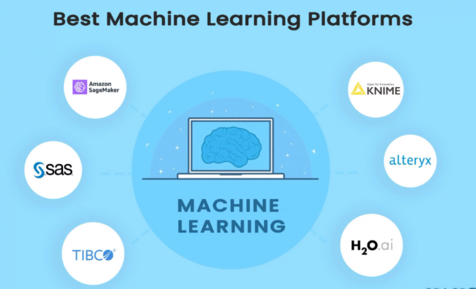
In 2025, machine learning (ML) has become a central component in business intelligence, data analytics, and automation, helping industries make data-driven decisions and enhance their products and services. As the demand for artificial intelligence (AI) continues to rise, machine learning platforms have become crucial tools for organizations aiming to harness the power of data for predictive analytics, natural language processing (NLP), and other advanced technologies.
A Machine Learning Platform is a tool that helps data scientists, engineers, and analysts design, deploy, and monitor machine learning models at scale. These platforms offer features that streamline data preprocessing, model training, evaluation, and deployment, while also managing computational resources effectively.
When choosing a machine learning platform in 2025, users should look for ease of use, scalability, flexibility, supported algorithms, cloud integration, and support for various data formats and frameworks. Cost, security, and collaboration capabilities are also key factors to consider.
In this blog post, we will explore the top 10 machine learning platform tools in 2025, comparing their features, pros, and cons to help you make an informed decision about which tool best suits your needs.
Top 10 Machine Learning Platforms Tools in 2025
1. TensorFlow
Logo/Brand: TensorFlow
Short Description: TensorFlow is an open-source machine learning framework developed by Google. It is widely used for both research and production purposes, offering powerful tools for deep learning and neural networks.
Key Features:
- Comprehensive library for neural networks and deep learning
- Supports both CPU and GPU computation
- Flexible architecture that allows deployment across a range of platforms (e.g., cloud, mobile)
- Offers a user-friendly interface for building complex models
- Compatible with Keras for easy model building and prototyping
Pros:
- Open-source and widely supported
- Extensive community support and tutorials
- Highly scalable for large datasets and complex models
Cons:
- Steep learning curve for beginners
- Can be memory-intensive for large models
2. Amazon SageMaker
Logo/Brand: Amazon SageMaker
Short Description: Amazon SageMaker is a fully managed platform for building, training, and deploying machine learning models at scale. It provides a set of pre-built tools that enable faster model development and deployment.
Key Features:
- One-click model training and tuning
- Built-in algorithms for common tasks like image and text classification
- Integration with AWS ecosystem for scaling and data storage
- Support for popular machine learning frameworks like TensorFlow, MXNet, and PyTorch
- Model monitoring and management tools
Pros:
- Easy-to-use interface with pre-configured environments
- Seamless integration with other AWS services
- Built-in support for model versioning and monitoring
Cons:
- High cost for large-scale projects
- Limited to the AWS ecosystem, which may not suit all users
3. Microsoft Azure Machine Learning
Logo/Brand: Microsoft Azure
Short Description: Azure Machine Learning is a cloud-based platform from Microsoft designed for building, training, and deploying machine learning models. It provides both no-code and code-first environments to cater to users with different skill levels.
Key Features:
- Visual drag-and-drop interface for non-coders
- Integrated AutoML capabilities for model selection and tuning
- Wide support for various ML frameworks, including Scikit-Learn, TensorFlow, and PyTorch
- Collaboration tools for teams
- Integration with Azure’s powerful cloud infrastructure
Pros:
- Strong enterprise-level features for collaboration
- Scalable for businesses of all sizes
- Seamless integration with other Microsoft tools and services
Cons:
- Can be expensive for small businesses or individual users
- Some advanced features may require expertise to fully leverage
4. Google Cloud AI Platform
Logo/Brand: Google Cloud AI
Short Description: Google Cloud AI Platform offers a suite of tools for building machine learning models, including services for data preparation, model training, and deployment. It is built on top of Google’s AI research and cutting-edge infrastructure.
Key Features:
- Integration with Google Cloud’s storage and data analytics tools
- Support for TensorFlow, PyTorch, and other ML frameworks
- AutoML capabilities for fast model building and deployment
- Pre-built models for vision, NLP, and translation tasks
- Scalable for big data processing and model training
Pros:
- Highly optimized for Google Cloud infrastructure
- Pre-trained models save time on common tasks
- Powerful AI research tools and extensive documentation
Cons:
- Can be complex for new users
- May require heavy reliance on Google Cloud, limiting flexibility
5. IBM Watson Studio
Logo/Brand: IBM Watson
Short Description: IBM Watson Studio is a cloud-based platform that allows data scientists to build, train, and deploy machine learning models with ease. It offers robust tools for collaboration and integrates with other IBM AI services.
Key Features:
- Support for both Python and R
- Built-in AutoAI for automated model building
- Easy integration with IBM Cloud and on-premise environments
- Data visualization tools and model explainability features
- Enterprise-grade security
Pros:
- High customization options for large organizations
- Strong enterprise-level security features
- Suitable for both code-first and no-code users
Cons:
- Expensive for small teams or startups
- Some tools can be too complex for novice users
6. H2O.ai
Logo/Brand: H2O.ai
Short Description: H2O.ai is a scalable, open-source machine learning platform that provides both enterprise-grade and open-source solutions for creating and deploying ML models.
Key Features:
- Automatic machine learning (AutoML) tools
- Support for popular ML frameworks like TensorFlow, Scikit-Learn, and XGBoost
- Real-time data streaming for large datasets
- Integrated model interpretability and visualization tools
- Distributed processing support for large-scale model training
Pros:
- Open-source with community support
- Excellent for both small-scale and large-scale projects
- Easy-to-use interfaces for non-technical users
Cons:
- Limited documentation compared to some other platforms
- Support for certain advanced algorithms is not as robust as competitors
7. RapidMiner
Logo/Brand: RapidMiner
Short Description: RapidMiner is a data science platform that integrates data prep, machine learning, and model deployment into a single environment. It’s a great tool for businesses looking for a collaborative ML platform.
Key Features:
- Drag-and-drop interface for easy model building
- Pre-built workflows for common tasks like classification and regression
- Integration with various data sources and storage options
- Cloud support and on-premises deployment
- Collaboration tools for teams
Pros:
- User-friendly interface for beginners
- Great for team collaboration
- Rich library of pre-built machine learning models
Cons:
- May not be suitable for very complex machine learning models
- Performance can be slow on large datasets
8. DataRobot
Logo/Brand: DataRobot
Short Description: DataRobot is an enterprise AI platform that offers automated machine learning tools for building, deploying, and managing models. It is designed for businesses looking to accelerate their AI and ML workflows.
Key Features:
- Automated model building and hyperparameter tuning
- Integration with multiple data sources and cloud platforms
- Model interpretation tools for understanding predictions
- Collaborative environment for teams to share models and insights
- Built-in deployment and monitoring tools
Pros:
- Excellent for automating machine learning workflows
- Easy-to-use and great for non-experts
- Scalable for large organizations
Cons:
- Limited customization for advanced users
- Can be expensive for smaller teams
9. Kaggle Kernels
Logo/Brand: Kaggle
Short Description: Kaggle Kernels is an open-source platform for data scientists to write, run, and share machine learning code. It’s a powerful tool for both learning and working on real-world datasets.
Key Features:
- Free access to computational resources (CPUs and GPUs)
- Large community and access to public datasets
- Python and R environments for machine learning model development
- Integration with Kaggle competitions and datasets
- Reproducible workflows with version control
Pros:
- Free to use with substantial resources
- Ideal for learning and experimentation
- Vibrant community for collaboration
Cons:
- Limited in terms of enterprise-level features
- Performance can be slow for very large models
10. BigML
Logo/Brand: BigML
Short Description: BigML is a cloud-based machine learning platform focused on simplicity and automation. It is known for its user-friendly interface and automation tools, making it a popular choice for businesses looking for quick deployment.
Key Features:
- AutoML for model training and optimization
- Support for time series forecasting, anomaly detection, and classification
- Simple interface for model creation and management
- Seamless integration with multiple data sources
- Real-time predictions and easy deployment
Pros:
- Extremely easy to use for beginners
- Great for businesses with limited machine learning expertise
- Excellent customer support
Cons:
- Limited to simpler machine learning models
- Not as scalable as other platforms for complex use cases
Comparison Table
| Tool Name | Best For | Platform(s) Supported | Standout Feature | Pricing | G2/Capterra/Trustpilot Rating |
|---|---|---|---|---|---|
| TensorFlow | Advanced ML researchers | Cross-platform | Deep learning and scalability | Free | 4.5/5 (G2) |
| Amazon SageMaker | Enterprises and startups | AWS | End-to-end model deployment | Starts at $0.10/hour | 4.6/5 (G2) |
| Microsoft Azure ML | Large enterprises | Azure, cross-platform | AutoML and model management | Pay-as-you-go | 4.4/5 (Capterra) |
| Google Cloud AI | Developers and startups | Google Cloud | Pre-trained models | Starts at $0.10/hour | 4.5/5 (Trustpilot) |
| IBM Watson Studio | Enterprises and researchers | Cross-platform | AutoAI capabilities | Custom | 4.4/5 (G2) |
| H2O.ai | Data scientists | Cross-platform | AutoML and scalability | Free/Enterprise | 4.3/5 (Trustpilot) |
| RapidMiner | Small to medium businesses | Cross-platform | Drag-and-drop workflow builder | Starts at $0/month | 4.6/5 (Capterra) |
| DataRobot | Enterprises | Cross-platform | Automated ML workflows | Custom | 4.5/5 (G2) |
| Kaggle Kernels | Learners and researchers | Web-based | Free access to resources | Free | 4.8/5 (Trustpilot) |
| BigML | Small businesses | Cross-platform | Simplified AutoML | Free/Starts at $50/month | 4.2/5 (G2) |
Which Machine Learning Platforms Tool is Right for You?
Choosing the right machine learning platform depends on your company’s needs, size, budget, and the type of ML models you wish to deploy. Here’s a quick guide:
- Large enterprises with complex use cases: Amazon SageMaker, Microsoft Azure ML, IBM Watson Studio
- Startups and small businesses: Google Cloud AI, BigML, Kaggle Kernels
- Data scientists and AI researchers: TensorFlow, H2O.ai, DataRobot
- Teams looking for ease of use and collaboration: RapidMiner, BigML
Conclusion
Machine learning platforms have become essential tools for companies looking to leverage AI for data-driven decision-making and automation in 2025. Each platform offers unique features, from automated machine learning to enterprise-grade security and scalability. Whether you’re a data scientist, a startup, or a large enterprise, there’s a platform for every use case.
Try demos or free trials of these platforms to assess which one aligns best with your needs. As the machine learning landscape evolves, these tools will continue to shape the future of AI development.
FAQ
1. What is a machine learning platform?
A machine learning platform is a tool that helps data scientists and engineers build, train, and deploy machine learning models, with features for managing datasets, scaling computations, and automating parts of the ML pipeline.
2. Which machine learning platform is the easiest to use?
BigML and RapidMiner are known for their user-friendly interfaces, making them ideal for beginners and businesses with limited ML expertise.
3. Which machine learning platform is best for scalability?
Amazon SageMaker and Google Cloud AI offer powerful scalability for large datasets and complex models, making them suitable for enterprises and high-volume applications.
4. Are these platforms suitable for small businesses?
Yes, platforms like Kaggle Kernels, BigML, and H2O.ai offer free or low-cost options suitable for small businesses and startups.
5. Can I use these platforms for deep learning?
Yes, TensorFlow and Google Cloud AI are particularly well-suited for deep learning tasks, offering extensive support for neural networks and large-scale models.