MOTOSHARE 🚗🏍️
Turning Idle Vehicles into Shared Rides & Earnings
From Idle to Income. From Parked to Purpose.
Earn by Sharing, Ride by Renting.
Where Owners Earn, Riders Move.
Owners Earn. Riders Move. Motoshare Connects.
With Motoshare, every parked vehicle finds a purpose.
Owners earn. Renters ride.
🚀 Everyone wins.
Introduction
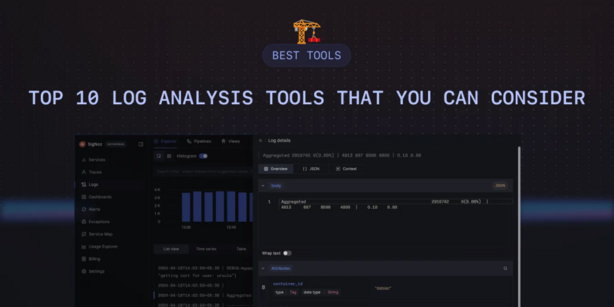
In today’s data-driven world, managing and analyzing system logs has become essential for IT operations, security, and troubleshooting. Log analysis tools help organizations gain valuable insights by analyzing logs from various sources such as servers, applications, security systems, and network devices. With the increasing complexity of systems, having robust log analysis tools has never been more important. In 2025, these tools are expected to become more sophisticated, providing real-time insights, security monitoring, and automated anomaly detection to help businesses streamline their operations and improve performance.
When choosing a log analysis tool, companies need to consider factors like scalability, integration with existing infrastructure, ease of use, cost, and the specific features they need to meet their objectives. This blog post will cover the top 10 log analysis tools in 2025, comparing their features, pros, cons, and helping you decide which one is right for your needs.
Top 10 Log Analysis Tools for 2025
1. Splunk
Short Description
Splunk is a market leader in log analysis tools, offering powerful real-time data analysis capabilities. It provides a comprehensive platform for monitoring, searching, and analyzing machine data generated by applications, servers, and security devices.
Key Features
- Real-time data processing and analysis
- Machine learning-powered anomaly detection
- Advanced search capabilities
- Dashboards and customizable alerts
- Extensive integrations with cloud and on-prem systems
- High scalability for large datasets
Pros & Cons
Pros:
- Robust scalability and flexibility
- Extensive integrations with other tools
- User-friendly interface for data visualization
Cons:
- Can be expensive for small organizations
- Requires significant resources for large deployments
2. Elastic Stack (ELK Stack)
Short Description
The ELK Stack (Elasticsearch, Logstash, and Kibana) is a popular open-source log analysis toolset used for centralizing and analyzing large volumes of log data. It is especially useful for searching, visualizing, and analyzing data in real time.
Key Features
- Powerful search capabilities using Elasticsearch
- Real-time log collection and storage via Logstash
- Interactive dashboards with Kibana
- Scalable architecture for large data sets
- Seamless integration with various log sources
Pros & Cons
Pros:
- Open-source with strong community support
- Highly customizable for different use cases
- Supports a wide range of log formats
Cons:
- Can be complex to set up and maintain
- Requires significant infrastructure for large-scale operations
3. Datadog
Short Description
Datadog is a cloud-based log management tool that provides monitoring, security, and observability. It allows users to analyze logs, metrics, and traces in a unified platform for a comprehensive view of system health.
Key Features
- Unified platform for logs, metrics, and traces
- Real-time log analysis and filtering
- Automatic log parsing for structured and unstructured data
- Machine learning for anomaly detection
- Seamless integrations with cloud services and apps
Pros & Cons
Pros:
- Easy-to-use interface and setup
- Strong integrations with cloud-native services
- Scalable for growing teams
Cons:
- Pricing can be expensive for large volumes of data
- Some features may require additional configuration
4. Graylog
Short Description
Graylog is an open-source log management tool designed to centralize, search, and analyze log data. It offers real-time log analysis, powerful query capabilities, and a flexible dashboard.
Key Features
- Real-time log analysis and search
- Flexible querying and dashboard creation
- Alerting and notifications
- Open-source and customizable
- Integration with various log sources
Pros & Cons
Pros:
- Open-source with community-driven features
- Flexible and easy-to-use query language
- Cost-effective for smaller businesses
Cons:
- Requires manual configuration for scaling
- Lacks advanced machine learning features
5. LogRhythm
Short Description
LogRhythm is a security information and event management (SIEM) solution that provides log analysis, security monitoring, and compliance reporting. It is designed to help detect and respond to security threats.
Key Features
- Real-time log collection and analysis
- Security event correlation and detection
- Compliance reporting for various standards
- Automated incident response and alerting
- Machine learning and behavior analytics
Pros & Cons
Pros:
- Excellent for security-focused organizations
- Helps with regulatory compliance
- Powerful event correlation and detection capabilities
Cons:
- High initial setup cost
- Can be complex to configure for beginners
6. Sumo Logic
Short Description
Sumo Logic offers a cloud-native platform for log analysis and monitoring, providing real-time insights across cloud infrastructures and on-prem environments.
Key Features
- Real-time log monitoring and analysis
- Cloud-native architecture for scalability
- Automated anomaly detection and alerts
- Customizable dashboards and visualizations
- Built-in integrations with cloud services
Pros & Cons
Pros:
- Fast and easy setup
- Scalable for growing environments
- Excellent support for cloud-native architectures
Cons:
- Premium pricing for advanced features
- Lacks on-premise support for some organizations
7. Papertrail
Short Description
Papertrail is a simple and powerful cloud-based log management tool designed for real-time monitoring, searching, and troubleshooting.
Key Features
- Easy setup and integration with log sources
- Real-time log monitoring and alerts
- Searchable log archive with unlimited retention
- Advanced filtering and log analysis
- Simple user interface for quick access to logs
Pros & Cons
Pros:
- Easy-to-use interface
- Fast log collection and retrieval
- Affordable for small to medium businesses
Cons:
- Lacks advanced features like machine learning
- Limited integration options compared to other tools
8. Logz.io
Short Description
Logz.io is a cloud-based log analysis platform that combines the capabilities of the ELK stack with machine learning and security analytics.
Key Features
- Combines ELK stack with machine learning
- Security-focused log analysis and monitoring
- Real-time log analysis and search
- AI-powered insights and anomaly detection
- Integrates with cloud and on-prem systems
Pros & Cons
Pros:
- Excellent for security monitoring
- Easy-to-use platform with AI-driven insights
- Supports hybrid cloud environments
Cons:
- Can be expensive for larger deployments
- Limited customization options compared to open-source solutions
9. New Relic
Short Description
New Relic is a cloud-based observability platform that provides log analysis, application monitoring, and performance analytics for developers, DevOps, and IT operations teams.
Key Features
- Real-time log collection and analysis
- Integration with application performance monitoring
- Dashboards and custom visualizations
- Alerting and anomaly detection
- Strong integrations with cloud-native apps
Pros & Cons
Pros:
- Excellent for performance monitoring and troubleshooting
- Unified platform for logs and metrics
- Easy-to-understand interface and dashboards
Cons:
- Pricing can be steep for large teams
- May require additional configuration for certain use cases
10. Loggly
Short Description
Loggly, now part of SolarWinds, is a cloud-based log management tool designed to provide real-time monitoring, alerts, and analysis of log data.
Key Features
- Real-time log aggregation and analysis
- Customizable dashboards and log search
- Alerts based on log data triggers
- Automatic parsing of log formats
- Seamless integration with other SolarWinds tools
Pros & Cons
Pros:
- Fast log ingestion and retrieval
- Easy-to-use interface with powerful search
- Excellent for small to medium businesses
Cons:
- Lacks some advanced features found in enterprise-grade tools
- Limited support for complex infrastructures
Comparison Table
| Tool Name | Best For | Platform(s) Supported | Standout Feature | Pricing | G2 Rating |
|---|---|---|---|---|---|
| Splunk | Large enterprises | Cloud, On-prem | Advanced machine learning | Starts at $1500/month | 4.5/5 |
| Elastic Stack | Developers, IT ops | Cloud, On-prem | Open-source, highly customizable | Free, Paid | 4.6/5 |
| Datadog | Cloud-first teams | Cloud | Unified monitoring & logs | Starts at $15/month | 4.7/5 |
| Graylog | SMBs and enterprises | Cloud, On-prem | Open-source flexibility | Free, Paid | 4.3/5 |
| LogRhythm | Security teams | Cloud, On-prem | SIEM and security analytics | Custom pricing | 4.4/5 |
| Sumo Logic | Cloud-native teams | Cloud | Cloud-native scalability | Starts at $75/month | 4.4/5 |
| Papertrail | Small businesses | Cloud | Easy setup and simplicity | Starts at $7/month | 4.2/5 |
| Logz.io | Security teams | Cloud | AI-powered insights | Custom pricing | 4.5/5 |
| New Relic | Developers, DevOps | Cloud | Full-stack observability | Starts at $99/month | 4.6/5 |
| Loggly | SMBs and developers | Cloud | Simple interface and search | Starts at $79/month | 4.3/5 |
Which Log Analysis Tool is Right for You?
- Small businesses or startups: Papertrail or Graylog offers a cost-effective and easy-to-use solution without a steep learning curve.
- Enterprises with complex infrastructures: Splunk and Elastic Stack offer powerful scalability and integrations for large data volumes.
- Security teams: LogRhythm, Logz.io, and Sumo Logic stand out for their advanced security analytics and SIEM capabilities.
- Cloud-native teams: Datadog and New Relic excel in cloud-first environments, offering unified monitoring and log analysis.
Conclusion
Choosing the right log analysis tool is essential for gaining insights into system performance, ensuring security, and improving operational efficiency. With the evolution of log analysis tools in 2025, organizations now have access to more powerful, scalable, and intelligent platforms that can handle vast amounts of data while providing real-time monitoring and automated alerts. Explore the tools mentioned here and consider testing them with free trials or demos to find the best fit for your business needs.
FAQs
Q1: What is log analysis?
Log analysis is the process of reviewing and interpreting machine-generated logs from various sources to identify system performance issues, security threats, or errors.
Q2: How can log analysis improve security?
Log analysis helps detect anomalies, unusual activities, and potential threats in real-time, enabling organizations to quickly respond and prevent security breaches.
Q3: Are there any free log analysis tools?
Yes, Elastic Stack and Graylog offer open-source options for businesses looking for free log analysis solutions.
Q4: Can log analysis tools integrate with other monitoring systems?
Most log analysis tools, including Splunk, Datadog, and Sumo Logic, support integrations with other monitoring and observability platforms to provide a unified view.
Q5: What should I look for when choosing a log analysis tool?
Consider factors such as scalability, ease of use, integrations with your infrastructure, security features, and pricing when selecting a log analysis tool.