MOTOSHARE 🚗🏍️
Turning Idle Vehicles into Shared Rides & Earnings
From Idle to Income. From Parked to Purpose.
Earn by Sharing, Ride by Renting.
Where Owners Earn, Riders Move.
Owners Earn. Riders Move. Motoshare Connects.
With Motoshare, every parked vehicle finds a purpose.
Owners earn. Renters ride.
🚀 Everyone wins.
Introduction
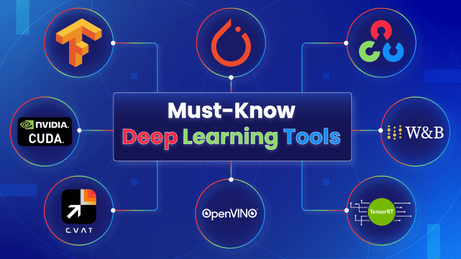
In 2025, the rise of Artificial Intelligence (AI) and Machine Learning (ML) has made deep learning an essential tool in industries ranging from healthcare to finance, marketing, and beyond. Deep learning tools are designed to build and deploy neural networks that mimic the brain’s learning processes to solve complex problems such as image recognition, speech processing, and autonomous driving. These tools use advanced algorithms to make predictions, recognize patterns, and improve decision-making, which is revolutionizing numerous sectors.
As AI adoption continues to accelerate, choosing the right deep learning tool is critical. With a wide variety of platforms available, companies need to consider factors like ease of use, scalability, integration with existing systems, and the complexity of the problems they need to solve. In this blog post, we will explore the top 10 deep learning tools of 2025, offering a comparison of their features, pros, cons, and suitability for different use cases.
Top 10 Deep Learning Tools in 2025
1. TensorFlow (by Google)
Short Description:
TensorFlow is one of the most popular open-source deep learning frameworks that powers machine learning applications across industries. Developed by Google Brain, it is designed to handle large-scale machine learning tasks and enables the development of robust deep learning models.
Key Features:
- Open-source and widely supported
- Extensive libraries and tools for neural networks
- Cross-platform support (Windows, Linux, macOS)
- Strong integration with Python
- Support for both CPUs and GPUs
- TensorFlow Lite for mobile and embedded applications
- Easy to deploy models on production systems
Pros:
- Excellent community support and documentation
- Highly flexible for different use cases
- Great for scaling models in production
- Advanced support for reinforcement learning
Cons:
- Steeper learning curve for beginners
- Can be resource-intensive on certain hardware
- Requires proper optimization for small-scale projects
2. PyTorch (by Facebook)
Short Description:
PyTorch is an open-source deep learning framework that has gained significant popularity for its simplicity and ease of use, particularly for research purposes. It provides dynamic computation graphs and is ideal for prototyping.
Key Features:
- Dynamic computation graph (easier for debugging)
- Native support for CUDA (GPU acceleration)
- Seamless integration with Python
- Strong ecosystem for NLP and computer vision
- Rich library for neural networks
- Scalable to large datasets and systems
- Flexible and beginner-friendly
Pros:
- More intuitive and flexible than TensorFlow
- Widely used in academia and research
- Strong support for GPU-based training
- Easy to debug and develop with
Cons:
- Lacks some production-level features compared to TensorFlow
- Smaller community support compared to TensorFlow
- Documentation can be inconsistent at times
3. Keras
Short Description:
Keras is an open-source software library that simplifies the creation of neural networks. Initially developed as an interface for TensorFlow, Keras is now a standalone deep learning tool with easy-to-use APIs.
Key Features:
- User-friendly API for quick prototyping
- Built-in support for both CPU and GPU
- Modular, extensible, and easy to scale
- Supports convolutional and recurrent networks
- Integration with other tools like TensorFlow and Theano
- Simplified model building with pre-built layers
Pros:
- Highly readable and simple to use
- Ideal for beginners in deep learning
- Great for fast prototyping
- Strong community and documentation
Cons:
- Less control over fine-tuning models compared to TensorFlow
- Limited flexibility for highly customized models
- Not as suitable for larger production models
4. Apache MXNet
Short Description:
Apache MXNet is an open-source deep learning framework that focuses on efficiency and scalability. Developed by Apache, it offers support for both symbolic and imperative programming.
Key Features:
- Distributed training and GPU support
- Supports both static and dynamic computation graphs
- Built-in tools for model deployment
- Optimized for multi-GPU and multi-machine environments
- Cross-platform support (Linux, macOS, Windows, mobile)
- Easy integration with cloud platforms (AWS)
Pros:
- Efficient and scalable for large projects
- Supports multiple languages (Python, Scala, R, Julia)
- Strong integration with cloud services
- Excellent performance for deep learning on GPUs
Cons:
- More complex to use for beginners
- Smaller community than TensorFlow and PyTorch
- Documentation can be challenging for new users
5. Caffe
Short Description:
Caffe is a deep learning framework focused on speed and modularity. It is widely used in image classification tasks and supports convolutional and fully connected networks.
Key Features:
- High-speed performance for training models
- Strong support for convolutional neural networks (CNNs)
- Pre-trained models available for fast deployment
- Cross-platform support (Linux, Windows, macOS)
- Ability to deploy models on mobile devices
Pros:
- High performance, especially in image classification tasks
- Efficient in handling large-scale datasets
- Strong community support for deep learning practitioners
Cons:
- Limited support for non-vision tasks
- Not as flexible as other frameworks like PyTorch and TensorFlow
- Lacks dynamic computation graph capabilities
6. Microsoft Cognitive Toolkit (CNTK)
Short Description:
CNTK is Microsoft’s open-source deep learning framework that aims to optimize performance for deep learning models, particularly for enterprise-level applications.
Key Features:
- Efficient multi-GPU and multi-machine scaling
- Highly optimized for training large models
- Good support for recurrent and convolutional neural networks
- Integration with Windows and Azure
- Strong performance in speech and language models
Pros:
- Outstanding performance on large-scale datasets
- Optimized for use on enterprise systems
- Easy integration with other Microsoft services and products
Cons:
- More challenging to use for beginners
- Smaller user base compared to TensorFlow and PyTorch
- Limited community support
7. Theano
Short Description:
Theano is an older, but highly influential deep learning library. Developed by the Montreal Institute for Learning Algorithms (MILA), it offers high-performance numerical computations.
Key Features:
- Efficient symbolic differentiation and optimization
- GPU acceleration support
- Rich integration with NumPy
- Ability to create custom deep learning layers
- Strong optimization for matrix operations
Pros:
- Excellent performance for matrix computations
- Good for research and academic purposes
- Strong support for GPU-based training
Cons:
- No longer actively maintained
- Requires deep understanding for custom model building
- Documentation is less user-friendly for beginners
8. DL4J (DeepLearning4J)
Short Description:
DL4J is a deep learning library for Java and Scala that is widely used for big data applications. It integrates with Hadoop and Spark, making it ideal for large-scale data processing tasks.
Key Features:
- Supports deep learning and reinforcement learning
- Seamless integration with Hadoop and Spark
- Built for Java and Scala environments
- Wide range of machine learning algorithms
- Strong GPU and multi-threaded support
Pros:
- Ideal for Java and Scala developers
- Strong support for big data integration
- Open-source with solid community support
Cons:
- Limited to the Java ecosystem
- Not as flexible as Python-based frameworks like TensorFlow
- Lacks high-level abstraction for model building
9. H2O.ai
Short Description:
H2O.ai is an open-source platform that enables the creation and deployment of machine learning models. It supports both supervised and unsupervised learning and has built-in support for deep learning models.
Key Features:
- Automated machine learning (AutoML) tools
- In-memory computation for high-speed processing
- GPU support for large models
- Integration with popular data science platforms
- Built-in model interpretability tools
Pros:
- Excellent for building production-ready models
- AutoML simplifies the model selection process
- Great for large datasets and big data
Cons:
- Limited customization options for complex models
- Primarily focused on enterprise applications
- Less flexibility than TensorFlow or PyTorch
10. RapidMiner
Short Description:
RapidMiner is a no-code machine learning platform that provides a visual interface for building deep learning models. It is widely used in both academic research and business applications.
Key Features:
- Drag-and-drop interface for building models
- Support for various machine learning and deep learning algorithms
- Integration with cloud platforms like AWS and Azure
- Strong collaboration tools for teams
- Pre-built templates and workflows for fast model deployment
Pros:
- Ideal for non-coders and business analysts
- Great for quick prototyping
- Strong collaboration and deployment features
Cons:
- Less control over advanced model tuning
- Limited scalability for large-scale deep learning projects
- Can be slow for large datasets
Comparison Table
| Tool Name | Best For | Platform(s) Supported | Standout Feature | Pricing | Rating (G2/Capterra) |
|---|---|---|---|---|---|
| TensorFlow | Advanced machine learning models | Windows, Linux, macOS | Scalability and flexibility | Free | 4.5/5 |
| PyTorch | Research and prototyping | Windows, Linux, macOS | Dynamic computation graphs | Free | 4.7/5 |
| Keras | Beginners and quick prototyping | Windows, Linux, macOS | Simple API for neural networks | Free | 4.6/5 |
| Apache MXNet | Large-scale deep learning | Windows, Linux, macOS | Distributed training support | Free | 4.3/5 |
| Caffe | Image classification tasks | Windows, Linux, macOS | Speed and performance | Free | 4.2/5 |
| CNTK | Enterprise-level deep learning | Windows, Linux | Performance on large datasets | Free | 4.4/5 |
| Theano | Academic research | Windows, Linux | Symbolic differentiation | Free | 4.1/5 |
| DL4J | Big data applications | Linux, macOS | Integration with Hadoop and Spark | Free | 4.3/5 |
| H2O.ai | Production machine learning | Windows, Linux, macOS | AutoML capabilities | Free | 4.6/5 |
| RapidMiner | Business analysts and prototyping | Windows, macOS, Linux | No-code machine learning | Free / Paid | 4.5/5 |
Which Deep Learning Tool is Right for You?
When choosing the best deep learning tool in 2025, you should consider factors such as the complexity of your projects, your familiarity with programming languages, your hardware capabilities, and your team’s needs.
- For beginners: Tools like Keras and RapidMiner provide intuitive interfaces and simple workflows, perfect for quick prototyping.
- For research and innovation: PyTorch offers flexibility and ease of use, making it the top choice for research-driven tasks.
- For enterprise-grade applications: TensorFlow, Apache MXNet, and H2O.ai are ideal for handling large-scale, production-level workloads.
Conclusion
As we move further into 2025, deep learning tools continue to evolve, becoming more powerful and specialized for different industries. Whether you are a researcher looking to build cutting-edge models, a business trying to integrate AI into your operations, or a developer interested in scalable solutions, these top 10 deep learning tools will serve as your go-to platforms. Be sure to explore demos or free trials before committing to a solution, and choose the one that best aligns with your project’s needs.
FAQs
- What is deep learning?
- Deep learning is a subset of machine learning that uses neural networks to simulate the human brain’s processes for decision-making, pattern recognition, and predictions.
- How do I choose the best deep learning tool for my project?
- Consider your team’s expertise, the complexity of your tasks, available resources, and scalability requirements.
- Is TensorFlow the best deep learning tool?
- TensorFlow is a top contender due to its flexibility, scalability, and strong community support, but alternatives like PyTorch may be more suitable for research-focused tasks.
- Are there any free deep learning tools?
- Yes, most of the tools listed in this blog (TensorFlow, PyTorch, Keras, etc.) are open-source and free to use.
- What industries use deep learning tools?
- Deep learning is used in healthcare, finance, automotive, entertainment, and many other sectors for tasks like predictive analytics, computer vision, and natural language processing.