MOTOSHARE 🚗🏍️
Turning Idle Vehicles into Shared Rides & Earnings
From Idle to Income. From Parked to Purpose.
Earn by Sharing, Ride by Renting.
Where Owners Earn, Riders Move.
Owners Earn. Riders Move. Motoshare Connects.
With Motoshare, every parked vehicle finds a purpose.
Owners earn. Renters ride.
🚀 Everyone wins.
Introduction
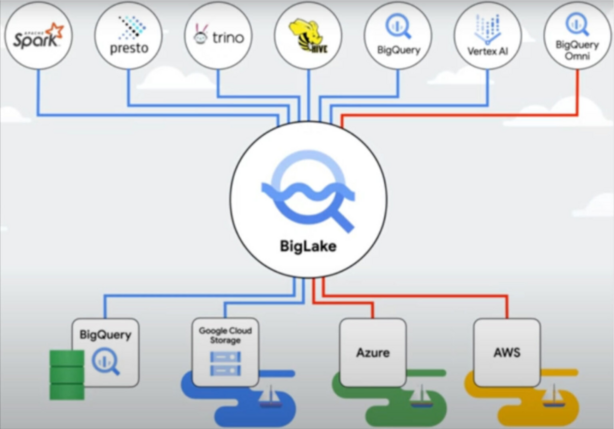
Data Lake Platforms are central repositories designed to store vast amounts of raw, unstructured, and structured data. They enable businesses to collect, store, and analyze data from different sources in its original format, which is crucial for data-driven decision-making. As the need for data-driven insights continues to grow in 2025, Data Lake Platforms are becoming essential for enterprises to handle and derive valuable insights from big data.
In 2025, companies are increasingly leveraging data lakes for tasks like advanced analytics, machine learning, and real-time data processing. Selecting the right Data Lake Platform is critical for success. When evaluating tools, organizations should consider factors like scalability, ease of integration, cost-effectiveness, security, and support for real-time analytics.
This blog post highlights the top 10 Data Lake Platforms tools in 2025. These platforms are designed to handle large volumes of diverse data types, making them invaluable assets in industries such as healthcare, finance, retail, and tech. Each tool is assessed based on its features, pros, cons, and more to help businesses choose the best fit for their needs.
Top 10 Data Lake Platforms Tools for 2025
1. Amazon S3 (Simple Storage Service)
Short Description
Amazon S3 is a scalable, secure, and highly durable cloud storage service that allows businesses to store and retrieve any amount of data at any time. It is widely used as a foundation for Data Lake architecture due to its cost-effective storage options and integration with AWS analytics tools.
Key Features
- Fully managed service with automatic scaling.
- High durability with 99.999999999% (11 9’s) durability.
- Integrated with AWS analytics tools like Athena, Redshift, and EMR.
- Access control and security features including encryption.
- Versioning and lifecycle policies to manage data storage.
Pros & Cons
Pros:
- Seamless integration with AWS ecosystem.
- Extremely reliable and secure.
- Scalable to accommodate massive amounts of data.
Cons:
- Can become expensive at scale.
- Complex management for non-technical teams.
2. Microsoft Azure Data Lake Storage
Short Description
Azure Data Lake is a high-performance, scalable data lake service built on Azure Blob Storage. It supports the storage of structured, semi-structured, and unstructured data, enabling powerful analytics with Azure’s suite of tools.
Key Features
- High scalability and integration with Azure analytics services.
- Fine-grained security and access control.
- Built-in support for massive parallel processing.
- Advanced data analytics and machine learning capabilities.
Pros & Cons
Pros:
- Deep integration with Azure tools and services.
- Excellent security and compliance standards.
- Optimized for large-scale analytics.
Cons:
- Requires expertise in the Azure ecosystem.
- High complexity for simple use cases.
3. Google Cloud Storage
Short Description
Google Cloud Storage offers a unified object storage solution, making it ideal for storing data lakes. It’s highly scalable and provides seamless integration with Google Cloud’s machine learning and analytics tools.
Key Features
- Supports multi-region and geo-redundant storage.
- Seamless integration with Google Cloud BigQuery and Dataproc.
- Strong security and encryption options.
- Cost-efficient pricing based on usage.
Pros & Cons
Pros:
- Robust integration with Google’s data analytics tools.
- Scalable and cost-effective for large data volumes.
- Excellent security features, including encryption.
Cons:
- Limited native integration with non-Google services.
- Can become expensive if not managed correctly.
4. Cloudera Data Platform
Short Description
Cloudera Data Platform (CDP) provides a unified data lakehouse solution, combining the best of data lakes and data warehouses. It enables enterprises to manage, process, and analyze massive amounts of data at scale.
Key Features
- Multi-cloud and on-premise deployment options.
- Advanced analytics with Apache Hadoop and Apache Spark.
- End-to-end data pipeline management.
- Security and governance features built-in.
Pros & Cons
Pros:
- Comprehensive toolset for data management and analytics.
- Strong enterprise-level security and compliance.
- Flexible deployment options (cloud and on-premise).
Cons:
- Can be complex for small businesses.
- Higher cost compared to cloud-native solutions.
5. IBM Cloud Object Storage
Short Description
IBM Cloud Object Storage is a highly scalable and cost-effective cloud solution that enables businesses to store vast amounts of unstructured data in a secure environment. It’s often used to build Data Lake architectures for analytics.
Key Features
- Cost-effective and scalable storage options.
- Integration with IBM Watson for AI and analytics.
- Advanced security and data protection features.
- Multi-cloud and hybrid cloud deployment capabilities.
Pros & Cons
Pros:
- Competitive pricing for enterprises.
- Easy integration with AI and analytics tools.
- Strong data protection and compliance features.
Cons:
- Slower performance for certain use cases.
- Limited third-party integrations compared to AWS or Azure.
6. Snowflake Data Cloud
Short Description
Snowflake offers a cloud-native Data Lakehouse platform, combining the flexibility of a data lake with the performance of a data warehouse. It’s designed for high-performance analytics and seamless scalability.
Key Features
- Single platform for structured and semi-structured data.
- Instant elasticity and scalability.
- Native support for machine learning workflows.
- Secure data sharing and collaboration.
Pros & Cons
Pros:
- Seamless integration of data lakes and data warehouses.
- Flexible and scalable architecture.
- Easy to use with minimal setup.
Cons:
- Higher pricing at scale.
- Limited support for non-SQL workloads.
7. Databricks Lakehouse Platform
Short Description
Databricks Lakehouse Platform is a unified analytics platform that combines the best of data lakes and data warehouses. It allows organizations to store and analyze large datasets in real-time.
Key Features
- Unified platform for data engineering, analytics, and machine learning.
- Optimized for Apache Spark for fast data processing.
- Real-time data streaming and analytics capabilities.
- Supports Delta Lake for reliable data lakes.
Pros & Cons
Pros:
- Best for real-time analytics and machine learning.
- Unified environment for big data and AI workloads.
- Strong performance and scalability.
Cons:
- Requires expertise in Apache Spark.
- High learning curve for new users.
8. Hadoop Distributed File System (HDFS)
Short Description
Hadoop HDFS is an open-source, distributed storage system that provides high throughput access to data. It’s commonly used for storing large datasets in Data Lakes, especially in big data environments.
Key Features
- Highly scalable and fault-tolerant storage system.
- Supports massive data processing with Hadoop ecosystem tools.
- Open-source, with wide community support.
- Optimized for batch processing.
Pros & Cons
Pros:
- Open-source and cost-effective.
- Great for batch processing and big data workloads.
- High fault tolerance and scalability.
Cons:
- Requires significant infrastructure management.
- Not ideal for real-time analytics.
9. Dell ECS (Elastic Cloud Storage)
Short Description
Dell ECS is a multi-cloud data storage solution that provides highly scalable object storage. It is used by businesses to build secure and reliable Data Lakes, with a focus on modern applications and data management.
Key Features
- Multi-cloud, hybrid cloud, and on-premise deployment options.
- Advanced security and encryption options.
- Scalable to handle petabytes of data.
- Integration with analytics and AI platforms.
Pros & Cons
Pros:
- Highly scalable and secure.
- Great for managing large amounts of unstructured data.
- Flexible deployment options.
Cons:
- Complexity in managing multiple cloud environments.
- Higher cost for small businesses.
10. Oracle Cloud Infrastructure (OCI) Object Storage
Short Description
OCI Object Storage provides high-performance cloud storage, ideal for building Data Lakes. It supports large-scale data processing, analytics, and integration with Oracle’s database and AI tools.
Key Features
- Integrated with Oracle’s cloud-native analytics tools.
- High availability and low latency.
- Scalable storage for big data.
- Advanced security and governance features.
Pros & Cons
Pros:
- Great for Oracle-centric environments.
- High scalability and performance.
- Integrated with Oracle’s analytics and AI platforms.
Cons:
- Best suited for Oracle ecosystem users.
- Pricing may be prohibitive for small businesses.
Comparison Table
| Tool Name | Best For | Platform(s) Supported | Standout Feature | Pricing | G2 Rating |
|---|---|---|---|---|---|
| Amazon S3 | Large-scale enterprises | Cloud | Scalability and integration | Custom | 4.5/5 |
| Microsoft Azure Data Lake | Azure-centric orgs | Cloud | Deep integration with Azure | Custom | 4.6/5 |
| Google Cloud Storage | Google Cloud users | Cloud | Integrated with BigQuery | Custom | 4.7/5 |
| Cloudera Data Platform | Large enterprises | Multi-cloud, On-prem | End-to-end data management | Custom | 4.3/5 |
| IBM Cloud Object Storage | Enterprises & SMBs | Cloud | AI and analytics integration | Custom | 4.4/5 |
| Snowflake | Data-driven orgs | Cloud | Data lakehouse architecture | Custom | 4.6/5 |
| Databricks | Data scientists | Cloud | Real-time data analytics | Custom | 4.7/5 |
| HDFS | Big data environments | On-prem, Cloud | Open-source and fault tolerance | Free | 4.2/5 |
| Dell ECS | Enterprises | Multi-cloud, On-prem | Flexible cloud deployment | Custom | 4.4/5 |
| Oracle OCI Object Storage | Oracle ecosystem users | Cloud | Oracle integration | Custom | 4.5/5 |
Which Data Lake Platforms Tool is Right for You?
Decision-Making Guide
- Small Enterprises or Startups: Opt for cost-effective and easily manageable platforms like Google Cloud Storage or Amazon S3. These platforms offer good scalability at affordable prices for smaller operations.
- Data Science and AI-centric Organizations: If your focus is on machine learning and real-time analytics, platforms like Databricks or Snowflake are ideal, offering integrated tools for data processing and analysis.
- Large Enterprises: For organizations with complex data management needs, platforms like Cloudera or Oracle Cloud Infrastructure provide the necessary scalability and enterprise-level features.
Conclusion
In 2025, choosing the right Data Lake Platform is more critical than ever. As data grows in volume, variety, and complexity, having the right tools to manage and analyze this data will determine the success of your analytics and business intelligence initiatives. These top 10 platforms offer varying levels of scalability, security, and integration, so carefully assess your organization’s needs, whether you’re managing vast amounts of unstructured data or seeking real-time analytics capabilities. Explore demos, check out customer reviews, and select a tool that aligns with your budget, technical expertise, and business goals.
FAQs
Q1: What is a Data Lake Platform?
A Data Lake Platform is a centralized repository used to store and manage large volumes of raw data, often from various sources. It supports unstructured, semi-structured, and structured data, enabling advanced analytics and machine learning.
Q2: How do Data Lake Platforms differ from Data Warehouses?
Data Lakes store raw, unprocessed data in its native format, while Data Warehouses store structured and processed data for business reporting and analytics.
Q3: Are Data Lake Platforms secure?
Yes, most Data Lake Platforms come with robust security features such as encryption, access control, and audit logging to ensure data security and compliance.
Q4: What industries use Data Lake Platforms?
Industries like healthcare, finance, retail, and technology widely use Data Lake Platforms for big data analytics, AI, and machine learning applications.
Q5: Are there free Data Lake platforms available?
Some platforms like HDFS are open-source and free, though many commercial options like Amazon S3 and Snowflake offer free trials or lower-cost tiers for smaller operations.