Source: msdynamicsworld.com | Original coverage date: August 14, 2019
JEDI Contract Put on Hold
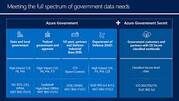
The U.S. Department of Defense’s $10 billion Joint Enterprise Defense Infrastructure (JEDI) cloud contract was placed on hold in mid-2019, following public statements from President Trump suggesting the bidding process may have favored Amazon Web Services. According to reporting by Politico at the time, the pause opened the door for rival bidders to reassert their positions. Oracle had been among the most vocal opponents of the contracting process, arguing publicly against Amazon’s perceived advantage. With Amazon’s frontrunner status now under scrutiny, Microsoft was seen as positioned to mount a stronger challenge for what would have been one of the largest U.S. government cloud contracts on record.
Azure Dedicated Host: Single-Tenant Physical Servers for Compliance
Azure Compute principal program manager Ziv Rafalovich announced the preview of Azure Dedicated Host, a service that deploys Windows and Linux virtual machines onto a single-tenant physical server. Unlike standard multi-tenant VM deployments, Dedicated Host gives organizations full visibility and control over the underlying hardware, which is particularly valuable for regulated industries that must demonstrate workload isolation for compliance audits.
Key features announced at the time included:
- Azure Hybrid Benefit extension: Customers with existing on-premises SQL Server and Windows Server licenses can apply Azure Hybrid Benefit to Dedicated Hosts, reducing overall hosting costs.
- Portal-based setup: Dedicated Hosts can be provisioned directly through the Azure portal without requiring additional tooling.
- Compliance-oriented design: The single-tenant model helps satisfy isolation requirements common in healthcare, finance, and government workloads.
Alongside the Dedicated Host announcement, the Azure Global team published new blueprint samples that include control mappings aligned to NIST SP 800-53 Revision 4. These blueprints cover policy areas such as account management, separation of duties, remote access controls, audit and review procedures, and denial-of-service protection — giving teams a head start on automating compliance enforcement within their Azure environments.
New Relic Adds Azure Database Integrations
The New Relic monitoring platform expanded its Azure integrations to cover three managed database services:
- Azure Database for MySQL
- Azure Database for PostgreSQL
- Azure Database for MariaDB
These integrations allow operators to consolidate telemetry from databases, containers, and servers into a single observability view. Within the New Relic One dashboard, teams can monitor all three database engines side by side, write custom NRQL queries against the collected data, and configure alert conditions based on performance thresholds. The additions reduce the operational overhead of switching between separate monitoring tools for different database engines running in Azure.
Azure Databricks Pre-Purchase Plan and Regional Expansion
Azure Databricks — already integrated with Azure SQL Data Warehouse and Azure Machine Learning — introduced a pre-purchase pricing model effective August 6, 2019. Under this model:
- Customers commit to a one- to three-year term and receive up to a 37 percent discount compared to pay-as-you-go rates.
- Rather than paying for reserved capacity on an hourly basis, customers receive a pool of pre-purchased Databricks Units (DBUs) that can be consumed at any time during the commitment period, providing greater scheduling flexibility for batch and streaming workloads.
Simultaneously, Azure Databricks expanded its regional footprint to 26 regions with the addition of South Africa and South Korea, broadening availability for teams operating in those geographies.
New Developer Tools in Azure Cloud Shell
Azure Compute program manager Alfred Sin announced several additions to Azure Cloud Shell, the browser-based command-line environment that gives developers immediate access to Azure tooling without local installation. The new tools added in this update included:
- Puppet Bolt: An open-source, agentless task runner for automating ad-hoc workflows and orchestration tasks across nodes.
- HashiCorp Packer: A tool for automating the creation of machine images across multiple platforms from a single configuration source.
- Azure Functions Core Tools CLI: Enables local-style debugging of Azure Functions directly from Cloud Shell.
Incremental updates were also shipped to Azure CLI, Azure PowerShell, and the Java Development Kit (JDK) bundled within Cloud Shell.
Pacemaker Support and RHEL High Availability in Azure Marketplace
Alfred Sin also highlighted the availability of Pacemaker, the open-source cluster resource manager, for managing high-availability compute clusters on Azure. For Linux workloads specifically, Red Hat Enterprise Linux (RHEL) Pay-As-You-Go images with the High Availability Add-On became available in Azure Marketplace, providing a flexible consumption model for HA-enabled RHEL deployments. A similar marketplace offering was announced for RHEL images pre-configured with SAP packages, addressing the needs of enterprise SAP on Azure deployments.
Summary
The first full week of August 2019 brought a broad set of Azure updates spanning government contracting, compliance infrastructure, observability integrations, analytics pricing, and developer tooling. The JEDI contract pause was the highest-profile news, but the Dedicated Host announcement and NIST blueprint samples were arguably more immediately actionable for enterprise DevOps and compliance teams building regulated workloads on Azure.