This article is based on reporting originally published on Security Boulevard and covers Sonatype’s Nexus Lifecycle integration with Atlassian Bitbucket.
The Case for Automating Dependency Security
Modern software development depends heavily on open source components. Every third-party library or framework added to a codebase introduces potential security risk, especially if that dependency is not kept up to date. As development organizations scale and try to ship faster, manually tracking and remediating vulnerable dependencies becomes impractical.
According to Sonatype’s 2019 State of the Software Supply Chain Report—which analyzed more than 36,000 open source components from the Maven Central Repository—exemplary development teams are significantly more likely to use automated tools to manage their open source software (OSS) dependencies. Those same teams also report a substantially lower rate of vulnerable component usage, demonstrating a clear correlation between automation and improved security posture.
Where Developers Work: Source Control Management Systems
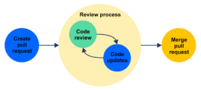
Source control management (SCM) systems—such as GitHub, GitLab, and Atlassian Bitbucket—are central to modern development workflows. They are typically the first place where code is shared, reviewed by peers, and evaluated by automated tools. This makes SCMs a natural integration point for security and dependency management tooling.
Bringing security checks directly into the SCM layer means developers encounter policy violations and remediation guidance at the earliest possible moment—before vulnerable code is merged into a main branch or deployed to production.
The Problem with Existing Automated Dependency Solutions
A growing number of tools can automatically open pull requests to upgrade vulnerable dependencies. However, many teams report quickly disabling these integrations. The most common complaints include:
- Alert noise: Tools that generate large volumes of pull requests or notifications overwhelm developers and lead to “alert fatigue,” making it harder to prioritize genuine risks.
- Lack of policy context: Generic tools typically suggest upgrading to the next non-vulnerable version without considering whether that version aligns with an organization’s approved open source policies.
- False positives: Without precise vulnerability intelligence, tools may flag components that do not actually pose a risk in the context of how they are used.
- Haphazard updates: Blindly upgrading dependencies to the latest version can introduce breaking changes or compatibility issues without any guarantee of meaningful security improvement.
Sonatype Nexus Lifecycle and Automated Pull Requests for Bitbucket
Sonatype’s Nexus Lifecycle integrates with several SCM platforms, including Atlassian Bitbucket. The Bitbucket integration supports automated pull requests that are designed to address the shortcomings described above. Key characteristics of this approach include:
- Policy-aware remediation: Rather than suggesting the next available non-vulnerable version, Nexus Lifecycle evaluates candidate upgrades against your organization’s configured open source policies before recommending a fix.
- Nexus Intelligence data: Remediation guidance is backed by Sonatype’s proprietary vulnerability and component intelligence database, which is intended to reduce false positives compared to community-sourced vulnerability feeds alone.
- Reduced noise: By filtering recommendations through policy rules and accurate component data, the integration aims to surface only actionable pull requests—minimizing the volume of irrelevant alerts developers need to process.
- Automated dependency maintenance: Pull requests are opened automatically when a violation is detected, lowering the manual burden on developers and security teams.
How Policy-Driven Automation Differs from Generic Upgrades
A standard automated dependency tool might detect that lodash 4.17.4 has a known vulnerability and immediately open a pull request to upgrade to lodash 4.17.21. A policy-driven tool like Nexus Lifecycle performs additional checks:
- Is the proposed upgrade version itself on the organization’s approved list?
- Does the new version introduce any new policy violations (e.g., license incompatibilities)?
- Is the vulnerability actually exploitable given how the component is used in this project?
- Does the organization’s policy require upgrading, or is a workaround acceptable?
This additional context is what separates policy-driven automation from simple version bumping, and it is the primary reason teams are less likely to disable such integrations due to noise.
Getting Started: Integrating Nexus Lifecycle with Bitbucket
To take advantage of automated pull requests for Bitbucket with Nexus Lifecycle, your team will generally need:
- An active Sonatype Nexus Lifecycle license with SCM integration enabled.
- Atlassian Bitbucket (Cloud or Data Center—confirm which editions are supported with Sonatype directly).
- An open source policy configured in Nexus Lifecycle that reflects your organization’s risk tolerance, approved licenses, and component standards.
- Repository-level configuration to connect Bitbucket repositories to Nexus Lifecycle scans.
Once configured, Nexus Lifecycle monitors repositories for policy violations and opens targeted pull requests with remediation details, including the recommended upgrade version and the policy rationale behind the recommendation.
Key Takeaways
- Automating open source dependency management at the SCM layer is an increasingly common practice among high-performing development teams.
- Generic automated upgrade tools often create more problems than they solve due to noise and lack of policy context.
- Policy-driven tools like Sonatype Nexus Lifecycle aim to generate only actionable, context-aware pull requests in Atlassian Bitbucket.
- Integrating security into the developer workflow—rather than treating it as a downstream gate—reduces the cost and friction of remediating vulnerabilities.
For more information on Sonatype’s SCM integrations and open source policy management, visit the Sonatype product page.