The market for IT and DevOps incident management software has grown steadily as organizations adopt on-call culture, SRE practices, and shift toward always-on service delivery. Tools in this space help engineering teams detect, triage, escalate, and resolve production incidents faster—directly impacting reliability and customer experience.
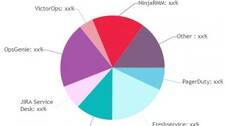
This article provides an independent overview of the incident management software landscape, covering the major platforms, their core capabilities, and how teams typically evaluate them. It draws on the context of a 2019 market report summary originally published on indiancolumnist.com and syndicated by HTF Market Intelligence, which identified key vendors active in this segment.
What Is IT/DevOps Incident Management Software?
Incident management software provides the workflows, alerting, escalation, and communication infrastructure needed to respond to IT and application failures. In a DevOps context, these tools are tightly integrated with monitoring systems, CI/CD pipelines, and collaboration platforms like Slack or Microsoft Teams.
Core capabilities typically include:
- Alert ingestion and deduplication – Receiving signals from monitoring tools (Datadog, Prometheus, Nagios, etc.) and suppressing alert noise.
- On-call scheduling and escalation policies – Routing incidents to the right engineer at the right time, with fallback escalation chains.
- Incident timelines and postmortem support – Capturing a chronological record of events to support blameless post-incident reviews.
- Integrations – Connecting with ticketing systems, observability stacks, version control, and chat tools.
- Reporting and SLA tracking – Measuring mean time to acknowledge (MTTA), mean time to resolve (MTTR), and other reliability metrics.
Key Platforms in the Market
The following platforms were identified as significant players in the incident management software market. Descriptions reflect each tool’s publicly known positioning as of the original publication context.
PagerDuty
PagerDuty is one of the most widely adopted on-call and incident response platforms. It offers sophisticated alert routing, escalation policies, on-call scheduling, and an event intelligence layer that uses machine learning to reduce alert noise. It integrates with hundreds of monitoring and observability tools and is commonly used by SRE and platform engineering teams.
Atlassian Jira Service Management (formerly Jira Service Desk)
Jira Service Desk—now rebranded as Jira Service Management after Atlassian’s acquisition of OpsGenie—combines ITSM ticketing with incident management workflows. It is particularly strong in organizations already using the Atlassian ecosystem (Jira Software, Confluence, Bitbucket). Its incident management capabilities were significantly enhanced by the OpsGenie integration.
OpsGenie
OpsGenie, acquired by Atlassian in 2018, focuses specifically on on-call management and alert routing. It supports flexible escalation policies, multiple notification channels (SMS, voice, push, email), and integrates with over 200 monitoring tools. Post-acquisition, it has been unified with Jira Service Management.
VictorOps (now Splunk On-Call)
VictorOps was acquired by Splunk and rebranded as Splunk On-Call. It emphasizes team-based incident response with a shared incident timeline, chat-based collaboration within incidents, and deep integration with the Splunk observability stack. It is well-suited to teams that prefer a collaborative, war-room-style incident workflow.
ServiceNow
ServiceNow is an enterprise ITSM platform with a mature IT Incident Management module. It is more commonly found in large enterprises with formal ITIL processes. Its strength lies in deep workflow automation, CMDB integration, and compliance reporting, though it is generally considered heavier and more process-oriented than developer-focused tools like PagerDuty.
Freshservice
Freshservice is a cloud-based ITSM tool from Freshworks that includes incident, problem, change, and asset management. It targets mid-sized organizations looking for an approachable, SaaS-delivered alternative to ServiceNow. Its incident management module follows ITIL conventions while offering a clean user interface.
Samanage (now SolarWinds Service Desk)
Samanage was acquired by SolarWinds and rebranded as SolarWinds Service Desk. It provides IT service management with incident and problem management, integrated asset management, and a service portal. It is commonly used by IT operations teams in SME environments.
NinjaRMM (now NinjaOne)
NinjaRMM (rebranded as NinjaOne) is primarily a remote monitoring and management (RMM) platform targeting managed service providers (MSPs). While it includes alerting and ticketing capabilities relevant to incident management, it serves a somewhat different use case than pure-play incident response tools.
Other Notable Platforms
- DERDACK Enterprise Alert – An on-premises and cloud alerting platform with strong support for complex enterprise environments and multi-channel notifications.
- SunView ChangeGear – An ITSM platform with ITIL-aligned incident and change management modules.
- Symantec (now Broadcom) – Symantec’s IT management portfolio was acquired by Broadcom; its positioning in the incident management space has evolved significantly since 2019.
- Web Help Desk (SolarWinds) – A ticketing and asset management tool geared toward IT support teams in education and small enterprise environments.
How the Market Segments
Incident management tools broadly segment across several dimensions relevant to buyers:
By Organization Size
- Large enterprises tend to gravitate toward ServiceNow, PagerDuty, or Jira Service Management, which offer enterprise-grade access controls, audit trails, and integrations with complex infrastructure stacks.
- SMEs and scale-ups often favor Freshservice, OpsGenie, or VictorOps/Splunk On-Call for faster deployment, lower overhead, and more flexible pricing.
By Primary Use Case
- On-call and alerting – PagerDuty, OpsGenie, Splunk On-Call
- ITSM / help desk – ServiceNow, Freshservice, Jira Service Management, SolarWinds Service Desk
- MSP / RMM – NinjaOne, Web Help Desk
- Enterprise on-premises – DERDACK, SunView
By Delivery Model
- SaaS / cloud-first – PagerDuty, OpsGenie, Freshservice, Splunk On-Call
- On-premises or hybrid – DERDACK, some ServiceNow deployments
What to Evaluate When Choosing a Platform
When assessing incident management tools, engineering and IT operations teams should consider the following criteria:
- Integration depth – Does the tool connect natively with your existing monitoring, logging, and observability stack?
- Alert routing flexibility – Can you define complex escalation policies, time-based routing, and override schedules?
- Notification channels – Does it support SMS, voice calls, push notifications, and chat integrations your teams actually use?
- Incident collaboration – Does the platform support a shared incident channel, stakeholder updates, and a live incident timeline?
- Postmortem workflows – Are there built-in tools for retrospectives, or does the tool export data to support your existing postmortem process?
- Reporting and metrics – Can you measure MTTA, MTTR, on-call load, and incident frequency over time?
- Pricing model – Is it per-user, per-seat, or usage-based? How does it scale as your team grows?
- Compliance requirements – For regulated industries, does the tool support audit logs, role-based access, and data residency options?
Market Context
The 2019 HTF Market Intelligence report that inspired this article highlighted strong global demand for incident management software across North America, Europe, and Asia-Pacific, driven by increasing digital service complexity and enterprise adoption of DevOps practices. Since then, consolidation has continued—OpsGenie and Jira Service Desk merged into Jira Service Management, VictorOps became Splunk On-Call, and Samanage was folded into SolarWinds Service Desk—reflecting a maturing market where ITSM and DevOps-oriented incident response converge.
For DevOps and SRE teams, the practical implication is that tool selection increasingly comes down to cultural fit and ecosystem alignment: teams in the Atlassian ecosystem will often default to Jira Service Management and OpsGenie, Splunk users may lean toward Splunk On-Call, and teams seeking a best-of-breed on-call solution independent of observability vendor lock-in frequently choose PagerDuty.
Summary
The IT/DevOps incident management software market encompasses a broad range of tools—from lightweight on-call schedulers to full ITSM suites. The right choice depends on team size, existing toolchain, workflow maturity, and compliance requirements. As the market continues to consolidate and vendors expand their platforms, revisiting your tooling decisions annually is worthwhile to ensure your incident response capabilities keep pace with your infrastructure complexity.